
I. Global Sportswear Market: Key Growth Trends and Industry Outlook
1. Overall Size and Growth Expectations (Market Size and Growth Rate)
Global Sportswear market size reached approximately USD 206.6 billion in 2024, according to authoritative industry reports, and is expected to continue its upward trajectory in 2025 (projected at USD 220.3 billion). Long-term forecasts toward 2030 and 2032 also indicate substantial and sustained growth.
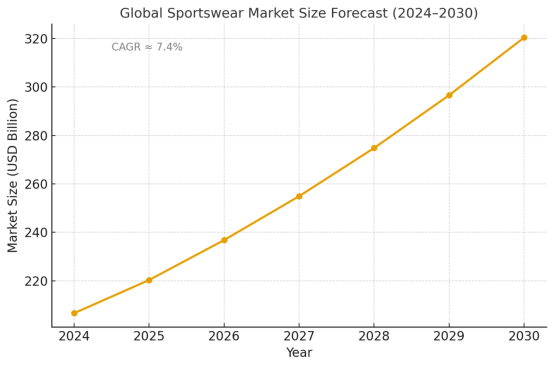
Growth Drivers: The sector is projected to maintain a higher CAGR than most traditional apparel categories over the next few years (2025–2032) (example reporting range: 7%+) – primarily driven by functional apparel, online channel expansion and healthy lifestyles.
2. Regional Landscape and Consumption Differences
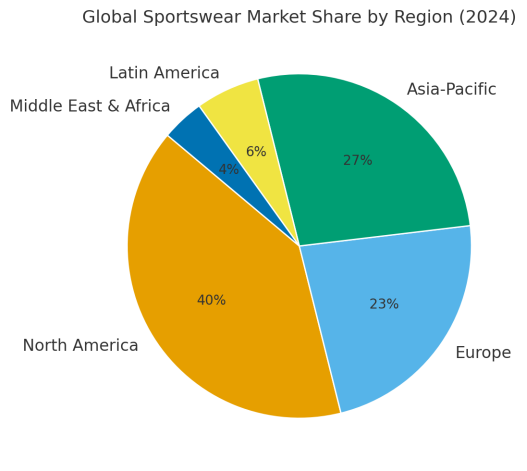
Regional Dominance: North America will remain the largest single regional market in 2024 (accounting for close to/above 40%), driven by mature retail channels, fitness culture, and the penetration of smart wearables. The Asia Pacific (China/India, etc.) has high growth potential in the medium to long term, driven by urbanization, investment in sports, and e-commerce penetration.
Channel differences: Despite the continued expansion of e-commerce, physical retail still holds an important position in the demand for trying on/immediate needs (especially clothing size and function testing); at the same time, multi-channel strategies are becoming standard practice for leading brands.
3. Key Market Trends (Functionality, Sustainability, Smart Technology, and Brand Communication
A. Continued Expansion of Functionality and “Sports in Everyday Life”: Consumer demands for features such as quick-drying, antibacterial properties, compression, and seamlessness continue to drive demand for technical fabrics, extending sportswear from professional settings to everyday/lifestyle scenarios.
B. Sustainability and Material Traceability Become Procurement Thresholds: Brands and retailers are incorporating sustainable materials (such as rPET, recycled nylon, and organic cotton) and third-party certifications (GRS, OEKO-TEX) as part of supplier evaluation criteria; buyers are increasingly valuing material traceability and carbon footprint disclosure in bidding and long-term partnerships.
C. Smart Wearables and Digital Products: Smart features (embedded sensors, data collection, and motion feedback) are growing rapidly in the high-end and specific market segments, bringing new requirements for fabrics, electronic accessories, and testing.
- Shift in Brand Communication and Retail Strategies: Brands are placing greater emphasis on content marketing, community building, and experience (experiential retail, social media-driven new product launches), while simultaneously promoting direct-to-consumer (DTC) and omnichannel models to improve gross margins and control over consumer data.
The past decade has seen a surge of new entrants into the sporting goods market, including general apparel brands (which have strategically expanded their product lines to include sportswear) and specialty brands, each offering precise value propositions for specific market segments such as running, yoga, cycling, or fitness apparel. This specialization has allowed challenger brands to gain a deeper understanding of consumer identity, with consumers preferring brands that are “tailored to me” rather than “made for everyone.” Coupled with lower barriers to entry, this specialization has fueled the rise of challenger brands. This reshaping of the industry landscape is also reflected in these competitors surpassing industry giants like Adidas and Nike in revenue growth and market share increases. From 2019 to 2024, publicly traded challenger brands are expanding faster than the major industry giants; during this period, the market share of the two giants has only decreased by 3 percentage points.
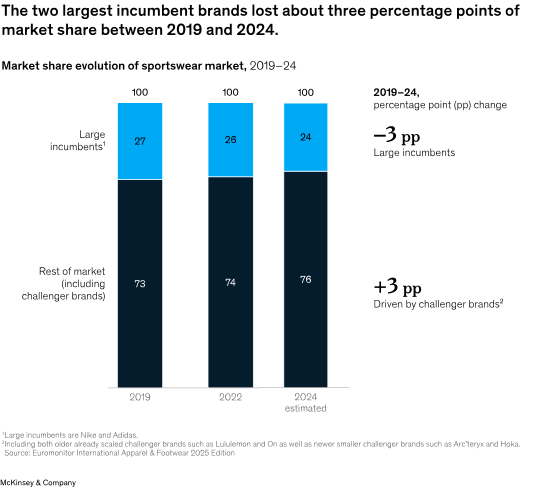
How do emerging brands expand their market share so rapidly? From a macro perspective, they focus on pursuing specific growth areas and expand their influence in a variety of ways: creating a more distinctive value proposition, providing visible innovation with platform potential, using cultural marketing, and leveraging wholesale and select retail channels.
4. Conclusion
The global sportswear market remains in a period of steady expansion, with functional fabrics, sustainable materials, smart wearables, and digital brand operations being the most important growth engines in the coming years. For custom sportswear manufacturers and activewear factories, the ability to respond quickly to small batches, material certification, and production transparency will determine whether they can become long-term OEM/ODM partners for international brands.
II. Export Market Hotspots: Differentiation Opportunities in Europe & America vs. Southeast Asia
Introduction: A Crossroads of Choice
The global sportswear market is being redrawn by two forces: on one hand, the pursuit of ultimate experience and values; on the other, the embrace of a large population and growth dividends. Your choice will directly determine your product development path, supply chain configuration, and brand story. We stand at this strategic crossroads. Mature markets like Europe and America, and emerging markets like Southeast Asia, are exhibiting drastically different business logics.
1. European and American Markets: Value-Driven High Ground Game
The European and American markets have entered a typical “value-driven” stage. Consumers are no longer just buying a piece of sportswear, but also a lifestyle, a value recognition, and an experience of cutting-edge technology.
(1)Sustainability and Environmental Ethics: From “Add-on” to “Entry Permit”
Especially in the European market, sustainable development has permeated from marketing rhetoric to the core of products and business logic.
Hot Materials: Recycled polyester (rPET), organic cotton, and bio-based materials (such as algae fiber) have become standard features of high-end brands.
Data Insights: According to the 2023 McKinsey State of Fashion report, “Sustainability has gone from a marginal topic to a core operating principle” . This means that suppliers without environmental qualifications will be excluded from the list of candidates for high-quality buyers.
Implications for the Manufacturing End: You need to build a transparent and traceable green supply chain. This directly relates to your ability to obtain key certifications such as GRS (Global Recycling Standard) and BLUESIGN® – which are the core issues we will explore in depth in Chapter 5: Export Certification Systems and Key Points for Buyer Factory Inspections.
(2)Performance Innovation and Technological Empowerment: Paying for the “Ultimate Experience”
European and American consumers are professional “technology connoisseurs” who are willing to pay a premium for innovations that can improve athletic performance.
Hot Topics: Phase change materials (intelligent temperature regulation), graphene (lightweight antibacterial and thermally conductive), and fabrics that are seamlessly integrated with smart wearable devices.
Trend Forecast: The authoritative trend agency WGSN emphasized in its “2025 Spring/Summer Sportswear Trend Forecast” that “sensory technology” will become key, that is, clothing will deeply interact with human perception through material technology.
Implications for the Manufacturing End: This requires sportswear factories and custom activewear suppliers to act not only as manufacturers, but also as integrators of material technology and providers of sustainable design solutions.
(3)Niche Scenarios and Personalized Customization: The Triumph of Long-Tail Demand.
The highly segmented sports scenarios have given rise to “small blockbuster” products that are far removed from the mass market.
Hot categories: Hiking/camping (Gorpcore style), women’s specialized sports (such as maternity yoga wear), and personalized designs serving many DTC brands.
Market Analysis: According to The NPD Group, “the growth of the sportswear market is driven by outdoor activities such as hiking and camping, rather than traditional gym activities” .These brands usually have small order volumes, but have extremely high requirements for design, quality, and rapid response capabilities.
Implications for the manufacturing end: Serving such customers tests the activewear factory’s flexible supply chain and customization capabilities, especially for private label sportswear and DTC brands that demand speed and precision. How to achieve efficient production of “small batches and multiple batches” and ensure stable delivery times? This is the core challenge that Chapter 7: The Path to Achieving Stable Delivery Times and Flexible Supply Chains aims to address.
2. Southeast Asian Market: A Growth Paradise of Scale and Cost-Effectiveness
The Southeast Asian market presents a different picture: a young population, a rapidly expanding middle class, and widespread digital consumption, making it a race between scale and cost-effectiveness.
(1). High cost-performance ratio and e-commerce drive: Efficiency battle under the logic of blockbuster products.
Price sensitivity is high, online channels are the absolute main force, and the response speed of the supply chain is required to the extreme.
Hot products: T-shirts and tights with basic functions (such as moisture-wicking and quick-drying), as well as fashion styles that can spread quickly on social media.
Data support: The report “Google, Temasek, and Bain – e-Conomy SEA 2023” continues to show that the GMV of Southeast Asian e-commerce is growing rapidly, and fashion categories are the main driving force .
Implications for the manufacturing end: Low minimum order quantity (MOQ), spot supply and rapid reorder capability are the core competitiveness. Your entire sportswear OEM manufacturing process needs to be optimized for this purpose to compress the cycle from sampling to shipment to the limit.
(2). National Fitness Craze and Sports Leisure: Sports as a Social Currency
Sports is a new fashion and social activity in Southeast Asia, which has led to the popularity of sports leisure.
Hot Product Categories: Fashionable sportswear with bright colors and bold designs, as well as customized team sportswear (football, basketball, etc.) and gym membership clothing.
Consumer Insights: Mintel Market Research points out that “in countries such as Indonesia and the Philippines, the significant increase in healthy lifestyles and sports participation has directly driven the sales of sportswear”
Implications for the Manufacturing End: Strong printing, embroidery and other post-processing capabilities, as well as the efficiency in handling standardized and large-scale customized orders, are key to capturing this market segment.
(3). Tropical Functional Needs: Climate-Determined Product Definition
The unique tropical climate fosters rigid functional requirements.
Hot Features: Extreme breathability and quick-drying, high UV protection, lightweight and portable.
Implications for Manufacturing: Your fabric library and product development must be tailored accordingly. This requires close integration with the functional fabric innovations discussed in Chapter 3 to develop solutions that achieve the optimal balance between cost and performance.
3. Strategic Summary and Action Guidelines
To more clearly illustrate the strategic differences between the two markets, we have summarized the following key dimensions:
| Dimensions | European and American markets | Southeast Asian markets |
| Core Drivers | Value, Concept, Technology | Cost-effectiveness, Scale, Trend |
| Typical Clients | High-end brands, DTC brands, niche outdoor brands | Cross-border e-commerce sellers, local retailers, gyms, schools |
| Product Focus | Environmentally friendly materials, innovative technology, design | Basic functions, trendy styles, durability |
| Price Range | Mid-to-high-end | Affordable for the general public |
| Key Certifications | GRS, BLUESIGN®, Oeko-Tex, etc | Basic commodity inspection, some certificates of origin |
| Supply Chain Model | Flexible, small batch, fast response | High efficiency, large scale, spot/fast turnover |
| Cost Logic | High R&D and certification costs | Raw materials and manufacturing costs are the core. |
Conclusion:
As we have seen, the “global dominance” strategy is no longer effective. Your market selection is not simply a matter of geographical sales; it determines the core capabilities you need to build and the supply chain partners you need to match.
If you are targeting Europe and America, you need a partner with deep expertise in sustainable manufacturing, technological innovation, and flexible delivery.
If you are focusing on Southeast Asia, you need a supply chain expert with extensive experience in cost control, efficiency optimization, and large-scale customization.
The green technology barriers in Europe and America, along with the agile supply chain systems serving Southeast Asia, help clients from diverse backgrounds successfully expand into their respective target markets.
And the implementation of all these strategies begins with a thorough understanding of the next key element: building future-oriented product capabilities.
III. New Trends in Functional Fabric Innovation and Sustainable Manufacturing
Introduction:
The Evolution from “Clothing” to “Equipment” Modern sportswear has long since transcended the rudimentary stages of simply covering the body and enhancing aesthetics, evolving into a “second skin” and “functional equipment” for the human body. Its core value is shifting from brand logos to the technological barriers and environmental commitments hidden within fibers and weaving. For B2B buyers and private label activewear brands, choosing the right custom sportswear supplier means securing a robust fabric R&D and sustainable manufacturing system behind it.
1. The Rise of Functional Fabrics: A Revolution from “Comfort” to “Performance”
According to data from Allied Market Research, the global market size for functional sportswear fabrics is projected to grow from $28.5 billion in 2023 to $43 billion in 2030, representing a CAGR of 6.1%. This means that fabric innovation has become a core element of competitiveness in sportswear exports.
Functionality is the foundation of sportswear. Current innovation is moving towards smarter, more specialized, and more human-centered designs.
(1). Intelligent Temperature Control System: Ensuring a Always Comfortable Feel
Core Technology: Phase Change Material (PCM): Microcapsules encapsulate PCM, which absorbs heat and melts into a liquid state when body temperature is too high, and releases heat and condenses into a solid state when body temperature is too low, dynamically maintaining the skin’s microclimate temperature within a comfortable range. This is crucial for outdoor sports and gear used in environments with large temperature differences.
Carbon Nanotube/Graphene Coating: Utilizing its excellent thermal conductivity, it quickly and evenly dissipates excess heat from localized areas of the body, preventing stuffiness, while also giving the fabric antibacterial properties.
Application Scenarios: High-end yoga apparel, marathon gear, hiking and trekking series.
Value to Buyers: Creating a “seamless wearing” experience, enhancing athletic performance and comfort, is a key technological path to product premiumization.
(2). Comprehensive Protection and Enhancement
Core Technologies: Bionic Protection: Researching the protective structures of animals in nature, such as sharkskin-inspired micro-textured fabrics to reduce water resistance, and lotus leaf-inspired superhydrophobic technology to provide strong stain and water repellency.
Energy Return and Muscle Support: Through special high-elasticity fiber weaving technology, some vertical impact force during exercise is converted into lateral propulsion force, providing precise pressure and support to core muscle groups and delaying fatigue.
Application Scenarios: Racing swimwear, professional training compression clothing, multi-purpose training apparel.
Value to Buyers: Infusing products with the core attribute of “enhanced athletic performance,” directly meeting the core needs of professional athletes and serious sports enthusiasts.
(3). Biosensing and Digital Integration
Core Technology: Conductive Fiber Integration: Conductive materials such as silver fibers are woven into the fabric to form flexible circuits for transmitting physiological data such as heart rate and respiratory rate, and seamlessly connecting with smart devices.
Flexible Sensor Areas: Flexible, washable sensor module areas are reserved or integrated in specific parts of the clothing (such as the chest and cuffs) to achieve unobtrusive monitoring.
Application Scenarios: High-end smart sportswear, professional sports uniforms, health monitoring clothing.
Value to Buyers: Entering the “smart wearable” market, enabling products to leap from “passive protection” to “active interaction,” demonstrating strong market foresight and premium pricing power.
2. Sustainable Manufacturing: From Concept to Production
System Global sportswear brands (such as Nike, Adidas, and Patagonia) have all proposed the goal of a “Carbon Neutral Supply Chain.”
This not only drives fabric innovation but also directly influences the supplier selection criteria of foreign trade buyers. Sustainability is no longer a marketing gimmick but a rigid requirement concerning corporate survival and market access. It is driving a revolution across the entire supply chain, from raw materials to finished products.
(1) Applications of Recycled and Eco-friendly Fabrics
Representative Materials:
- rPET (Recycled Polyester), Recycled Nylon: Polyester and nylon recycled from ocean plastic bottles and discarded fishing nets, their quality is comparable to virgin materials, and carbon emissions can be reduced by approximately 30%. Global Recycled Standard (GRS) certification is the gold standard for tracing their origin.
- Bio-based Materials: New fibers synthesized using renewable biomass resources such as corn, sugarcane, algae, and even mycelium through bio-fermentation technology. The core advantage of these materials is their biodegradability, addressing “microplastic pollution” and waste problems at their source.
- Natural Innovative Fibers: In addition to organic cotton, Lenzing’s Tencel™ Lyocell fiber originates from sustainably managed forests, with an environmentally closed-loop production process. The fabric has a silky feel and excellent moisture absorption and breathability, making it widely popular.
- Export Trends: European buyers explicitly require GRS (Global Recycled Standard) certification during the inquiry stage.
(2) Low Energy Consumption and Green Manufacturing Processes
- Digital Printing Replaces Traditional Dyeing: Compared to traditional water-based printing, digital printing eliminates the need for plate making, reduces water consumption by up to 90%, and offers richer colors and greater design flexibility.
- Dope-Dyeing Technology: By adding masterbatch directly to the fibers and employing technologies such as supercritical carbon dioxide fluid dyeing, a dyeing process with almost zero water and zero chemical emissions is achieved, representing a disruptive change in the printing and dyeing industry.
- Laser Engraving and Enzyme Treatment: Using lasers to create patterns on clothing replaces traditional washing, and using enzymes for fabric finishing replaces chemical reagents, significantly reducing energy consumption and pollution.
(3) Circular Design and Supply Chain Transparency
- Circular Design Concept: Considering the product’s “end point” during the design phase, such as using single materials and easily disassembled structures, facilitates efficient recycling of clothing at the end of its lifespan.
- Supply Chain Transparency: Through blockchain or digital traceability systems, overseas customers can track the origin and production process of fabrics. Extending product lifespan by improving fabric strength and manufacturing quality reduces waste at its source.
(4) Export Buyer Perspective: From Functionality to Responsibility
In European and American markets, functionality and sustainability have become equally important procurement criteria.
Buyers are not only comparing performance, but also evaluating suppliers’ social responsibility and production traceability.
| Procurement Standards | Buyer Concerns | Factory Response Strategies |
| Functionality | Fabric performance test reports (moisture wicking, quick-drying, elongation, color fastness) | provision of third-party testing reports (SGS / Intertek) |
| Environmental Concerns | Proportion of environmentally friendly materials, carbon footprint assessment | obtaining GRS and OEKO-TEX certifications; disclosure of energy consumption data |
| Social Responsibility | Employee benefits, production safety | provision of BSCI or WRAP audit certificates |
About Our Custom Sportswear Services
As an experienced activewear manufacturer specializing in OEM & ODM sportswear production, we provide full-service solutions from fabric sourcing, design development, and sampling to bulk manufacturing.
Our factory supports custom yoga wear, running leggings, gym apparel, and plus-size sportswear, helping brands build high-quality, sustainable collections with flexibility and efficiency.
Whether you’re an emerging brand looking for small-batch manufacturing or an established retailer seeking scalable production, we offer professional, transparent, and fast-response OEM solutions tailored to your market needs.
IV. Demystifying the Entire OEM Manufacturing Process for Sports Apparel (From Sampling to Packaging)
OEM/ODM sportswear manufacturing is not just about contract production; it’s about “engineering the realization of a brand” — turning design ideas into market-ready custom activewear collections.
For sportswear brands, a clear understanding of the manufacturing process is crucial for mitigating risks and ensuring products meet expectations. An excellent OEM factory can not only replicate designs but also assist in optimizing patterns, controlling costs, and guaranteeing delivery times.
Below is a transparent breakdown of the entire sportswear OEM process, from initial sampling to final shipment.
1.Overview of the entire OEM production process
| Stage | Core Process | Customer Engagement | Output | Average Cycle |
| Product Communication and Design Confirmation | Style, Fabric, Logo, and Process Requirements Coordination | ✅ High | (Tech Pack) | 1–3 days |
| 2.Sampling and Modification | Sample Development, Fabric Testing, and Process Confirmation | ✅ High | Physical Sample | 5–10 days |
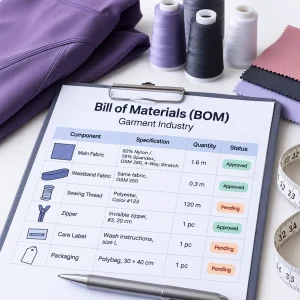
| 3.Material Procurement and Testing | Fabric, Accessories, and Parts Availability and Quality Inspection | Medium | Bill of Materials (BOM) Confirmation | 5–7 days |
| 4.Mass Production | Cutting, Sewing, Ironing, and Quality Control Tracking | Medium | Finished Garment Batch | 15–25 days |
| 5.Quality Inspection and Packaging | Size, Appearance, and Functional Testing and Finished Product Packaging | ⚙️Low | Finished Product Inspection Report + Packaging and Shipment | 3–5days |
| 6.Shipping and After-Sales Service | Shipping Documents, Logistics Tracking, and Return Order Communication | Low | Export documents and customer feedback | 2–3days |
2. Sampling Stage
Purpose: To verify the feasibility of the design and the feasibility of the manufacturing process.
| Content | Description | Customer Focus |
| Tech Pack | Includes design drawings, size chart, fabric/accessory requirements, logo placement. | Completeness and ease of understanding are crucial |
| Fabric Confirmation | Provides existing stock fabrics or custom-developed functional fabrics | Hand feel, weight, stretch, breathability are important. |
| Sample Garment Production | Typically 1-2 sample garments showcasing the craftsmanship and pattern | Consistency with the original design is essential |
| Sample Modifications | Supports 2-3 rounds of modifications | Factory response speed and sampling communication efficiency are crucial |
3. Fabric Procurement and Material QC
Fabric and Accessories Management System
| Item | Testing Standard | Factory Implementation Specifications | Common Certifications |
| Moisture Absorption and Quick-Drying Properties | ASTM E96 / ISO 11092 | Laboratory testing per batch | SGS / Intertek report |
| Color Fastness | ISO 105-C06 | Comparison of 5 washes at 40℃ | AATCC standard |
| Tensive Recovery Rate | ASTM D5034 | Dynamic fatigue test | Self-inspection + random inspection |
| Environmental Safety | OEKO-TEX Standard 100 | Full-process environmental testing | GRS / OEKO certification |
4. Mass Production Stage
Production Process Breakdown
| Process | Main Equipment | Quality Monitoring Method | Quality Monitoring Method |
| Cutting | Automatic CAD layout, automatic cutting machine | Accuracy ±2mm | Random sampling |
| Sewing | Flat stitch, overlock stitch, four-needle six-thread machine | Thread spacing, stitch spacing, uniform stitching | Patrol inspection |
| Printing/Embroidery | Digital printing, heat transfer printing, 3D embroidery machine | Color stability | Visual inspection + color difference meter |
| Ironing | Steam ironing equipment | Temperature control, anti-indentation | First piece inspection |
| Pre-QC | Quality control personnel inspect each piece | Size deviation ≤1cm | Sampling report |
5. Final Inspection & Packing
✅ Pre-shipment Inspection Checklist
| Test Items | Test Standards | Judgment Basis |
| Appearance and Seams | No obvious loose threads, wrinkles, or damage | Appearance Standard Table |
| Size Deviation | ≤±1cm (Tops) / ≤±1.5cm (Bottoms) | Gauge Measurement |
| Color Difference | ΔE ≤ 1.5 | Colorimeter Detection |
| Functional Testing | Quick-drying, elasticity, and breathability tests | Laboratory sampling inspection |
| Packaging Consistency | Includes hang tags, size labels, and barcodes | Manual verification before shipment |
6. Shipping and After-Sales Service
| Process | Description | Output Documents |
| Logistics Method | Sea Freight / Air Freight / Express (DHL, FedEx) | Tracking Number and Packing List |
| Export Documents | Commercial Invoice, Packing List, Bill of Lading, Certificate of Origin | Electronic PDF |
| Customer Inspection | Supports Third-Party (SGS / BV / ITS) | Inspection Report |
| After-Sales Service | Quality Issues Repair, Reproduction, Reorders | Service Record Form |
7. Factory delivery time management and risk control mechanism
| Potential Risks | Preventive Measures | Factory Response Plans |
| Fabric Delays | Establish long-term raw material supply partnerships | material preparation and inventory mechanisms |
| Slow Sampling Feedback | Dedicated sampling team | 24-hour response mechanism |
| Unstable Quality | Dual quality control system | IQC+FQC |
| Shipping Delays | ERP scheduling + milestone tracking | weekly customer reports |
A rigorous, transparent, and professional OEM process is the only bridge connecting exceptional design with perfect products. It can’t guarantee your order will be delivered on time, to the required quality, or within budget, but it ensures a worry-free, secure, and reliable partnership.
Ⅴ. Export Certification System and Key Points for Buyer Factory Inspections
In the global sportswear supply chain, compliance and quality are the “hard thresholds” for brands selecting suppliers.
For OEM/ODM factories, having a complete export certification system and passing buyer audits are not only passports to the international market, but also symbols of corporate strength, sustainability, and social responsibility.
1.Overview of the Export Certification System
A list of mainstream international certification categories
| Certification Type | Main Certification System | Scope of Application | Buyer Focus |
| Quality Management System (QMS) | ISO 9001 | Whole production process | Stable quality, standardized production |
| Environmental and Social Responsibility (ESG) | BSCI / WRAP / SEDEX / SA8000 | Social responsibility and employee rights | Worker welfare, safety, anti-child labor |
| Environmentally Friendly and Sustainable Fabrics (Sustainability) | GRS / OEKO-TEX / RCS | Fabric and accessories environmental compliance | Recycling ratio, chemical safety |
| Product Safety & Performance Testing | SGS / Intertek / TUV / AATCC | Fabric properties, color fastness, breathability | Third-party testing |
| Brand-Specific Factory Audit (Buyer Audit) | Nike / Adidas / Decathlon / Lululemon / Target | Brand internal compliance standards | Factory hardware, systems, social responsibility |
2. Fabric & Sustainability Certifications
| Certification Name | Full Name | Main Standard Content | Significance to Export Buyers |
| GRS | Global Recycled Standard | 20% recycled materials, traceable raw material origin, environmentally friendly production process | A traceability certification highly valued by European buyers |
| OEKO-TEX Standard 100 | Textile Safety Certification | Prohibition of harmful chemicals (such as formaldehyde, azo dyes) | Essential safety standard for the North American market |
| RCS | Recycled Claim Standard | Verification of recycled material content | Highly recognized by mid-range brands |
| Bluesign® | Environmental Production Standard | Chemical management + clean production | Preferred by high-end brands (Patagonia, Mammut) |
| GOTS | Global Organic Textile Standard | Organic cotton textile standard | Increasing demand from buyers of natural fiber sportswear |
3. Social Responsibility and Factory Compliance Certifications
| Certification System | Core Review Points | Buyer Usage Scenarios | Review Cycle |
| BSCI(Business Social Compliance Initiative) | Employee working hours, wages, fire safety, anti-discrimination, environmental management | European brands, chain retailers | updated every 12 months |
| WRAP(Worldwide Responsible Accredited Production) | Anti-child labor, fair wages, working conditions | North American sports brands | 1-year validity |
| SEDEX / SMETA | Supply Chain Ethics Review | UK retailers, OEM exporters | 6–12 months |
| SA8000 | International Standard for Social Responsibility | High-end European and American clients | 1-year review |
4. Buyer Audit Process & Focus Areas
| Factory Audit Dimensions | Core Focus Areas | Required Evidence | Strategic Value |
| 1. Quality and Technical Capabilities | Can the factory consistently produce products that meet standards | – Standard sample garments,- QC records- Equipment maintenance records | Demonstrating professionalism and reliability is the foundation for cooperation |
| 2. Social Responsibility (Human Rights) | Does the factory treat its employees legally and ethically? | – Employee labor contracts, working hours and wage records- – Social security payment certificates – Fire drills, safety training records- Employee interview preparation |
Demonstrating corporate ethics and sustainability is key to building long-term trust。 |
| 3. Environmental Health and Safety (EHS) | Does the factory provide a safe and environmentally friendly working environment? | – Environmental permits, wastewater treatment records – Material Safety Data Sheets (MSDS) – Occupational health examination reports- Fire safety facility inspection records |
Demonstrating social responsibility and risk management capabilities meets the requirements of high-end brands |
5. Conclusion: From Compliance to Trust
In an era of global supply chain standardization and sustainable transformation, possessing a comprehensive certification system and verifiable factory audit capabilities is not only a ticket to enter the European and American markets, but also the cornerstone for winning long-term brand trust.
Compliance is the bottom line, transparency is an advantage, and continuous improvement is the key to competitiveness.
VI. Cost and Pricing Logic: The Real Accounting of Sports Apparel Manufacturing
Cost accounting in the apparel industry is the cornerstone of all pricing decisions between apparel buyers and factories. Whether it’s a global fashion brand planning its next collection or a small manufacturing company quoting prices for its own-brand clients, an accurate cost statement can determine profitability, competitiveness, and sustainability. It’s more than just a string of numbers; it’s a strategic tool that can influence buyer confidence and supplier profit margins.
At the heart of apparel cost accounting lies answering the question: What exactly are the costs involved in producing this garment? From fabric selection and labor costs to machine depreciation and shipping expenses, every detail is crucial. Buyers rely on cost statements to assess the reasonableness of prices, while factories use them to justify their prices and maintain profit margins. When both parties understand these variables, negotiations become easier, faster, and more transparent.
1. Cost Analysis of Sports Apparel: Three Core Components
We break down the factory cost of a sportswear garment into three overlapping components, as clearly illustrated in the diagram below:

(1)Direct material costs (fabric and accessories)
This is the most basic and variable cost, typically accounting for 40%-60% of the total cost.
• Main Fabric: This accounts for the largest portion of the cost. The price is determined by fiber type (regular polyester vs. rPET/bio-based), weaving process, weight, functional treatments (such as moisture-wicking and UV protection), and sustainability certifications (such as GRS certification).
• Auxiliary Fabrics: Such as linings and interlinings.
• Accessories: Including zippers (YKK has a significant price difference compared to other brands), sewing thread, buttons, labels (care labels, main labels), hang tags, and packaging materials (plastic bags, cartons), etc.
(2)Direct labor and manufacturing costs
This is the cost of transforming materials into finished garments, reflecting the factory’s efficiency and craftsmanship.
• Cutting, sewing, and finishing fees: Calculated per piece or per process. Process complexity is the main driving factor:
• Basic T-shirts: Fewer processes, lower cost.
• Multi-layered composite jackets: More processes, requires specialized equipment, significantly increasing cost.
• Special Processing Fees:
• Printing/Embroidery: Calculated based on the number of colors, area, and process (water-based, plastisol, digital printing, 3D silicone printing). Digital printing has high start-up costs but is suitable for complex patterns; traditional printing has a lower unit price for large volumes.
• Other Processes: Such as bonding, lamination, laser engraving, etc.
(3)Indirect development and operating costs
This is the most easily overlooked, but it is the “hidden cost” that supports the steady operation of the entire manufacturing system.
• Sampling and Development Costs: This includes pattern making fees, labor costs for sample garment production, sample garment fabrics and accessories, and logistics costs. This fee may be charged separately or allocated to the bulk order cost.
• Quality Control Costs: This includes the manpower and time invested in the IQC (Incoming Quality Control), IPQC (In-Production Quality Control), and FQC (Final Quality Control) teams.
• Management, Marketing, and Infrastructure Costs: This includes the factory management team, sales team, utilities, factory rent, equipment depreciation, etc.
• Certification and Compliance Costs: Audit fees, training fees, and system maintenance fees for various certifications (such as GRS, BSCI, BLUESIGN®) are necessary investments for serving high-end brands.
2. Pricing Logic: More Than Just a Stack of Costs
Beyond total cost, manufacturers’ pricing also follows this business logic:
(1)Order Scale Effect
Core Principle: The larger the order quantity, the lower the development and fixed costs (such as plate fees and machine setup fees) per unit, thus obtaining a better unit price.
Factory Perspective: We are happy to provide more competitive tiered pricing for potential clients.
(2)Value Pricing vs. Strategic Pricing
Value Pricing: For ODM projects requiring significant technical support, joint development, or orders necessitating the use of specialized sustainable production lines, pricing reflects the added value we provide.
Strategic Pricing: Sometimes, to build long-term relationships with promising potential clients, we may offer more competitive pricing for initial projects, focusing on the future.
(3)Market and Risk Premium
In a market with highly volatile raw material prices, quoted prices will include a certain risk buffer.
For “rush orders” with extremely tight delivery deadlines, more resources need to be mobilized to ensure delivery, resulting in corresponding rush fees.
3.Cost Optimization Suggestions for Buyers
Instead of solely focusing on price reductions, it’s better to collaboratively optimize costs at the source. Below is a win-win strategy for you:
Comparison Table of Cost Optimization Strategies for Sports Apparel
| Optimization Strategies | Specific Practices | Potential Impacts and Risks | Win-Win Recommendation Index |
| 1. Design Adjustment | Simplify processes, reduce unnecessary printing and embroidery, and use standard accessories | Significantly reduces costs with almost no impact on quality.Recommended! | ★★★★★ |
| 2. Increase Order quantity | Consolidate orders, reduce the number of colors/sizes, and achieve large-scale production | One of the most effective ways to reduce costs. Win-win! | ★★★★★ |
| 3. Alternative Fabrics | Choose more cost-effective fabric options while ensuring performance meets standards | Requires balancing function and cost, and in-depth communication with manufacturers | ★★★★☆ |
| 4. Extend Delivery Time | Give factories sufficient production time | Avoid rush fees, streamline production plans, and ensure quality | ★★★★★ |
| 5. Reduce Labor Costs | Find the factory with the lowest quote | Significantly increases risks related to quality, delivery time, and communication. Not Recommended! | ★☆☆☆☆ |
In conclusion: Price is not a function of cost, but a function of trust.
In the global supply chain game, the lowest price doesn’t necessarily mean the best value.
Truly sustainable cooperation stems from a shared understanding and respect for cost logic between buyers and sellers. A seemingly slightly higher price may actually encompass:
A rigorous quality control system, reducing your risk of defective products.
A stable supply chain, ensuring on-time delivery.
Environmental and ethical compliance, protecting your brand reputation.
A professional technical team, providing you with solutions.
These are the ultimate values of professional processes and certifications; they are not costs, but investments that safeguard your business.
VII. Pathways to Achieving Stable Delivery Times and Flexible Supply Chains
Stable delivery times and a flexible supply chain are core indicators of a sportswear manufacturing factory’s maturity.
For international buyers, on-time delivery means inventory safety and sales rhythm;
For manufacturers, stability is not only about productivity, but also a systematic capability. In our factory’s export cooperation over the past decade, we have consistently prioritized “delivery time stability and customer trust” as core management indicators. Through digital systems, tiered production capacity layout, and rapid response team mechanisms, we have gradually formed a flexible supply chain system that adapts to the pace of global buyers.
1. From planning to execution: How we achieve stable delivery times
In our view, delivery time is not a “promise,” but rather the result of systematic capabilities.
Our production system is built around five key links:
- Precise Capacity Forecasting
Use an ERP+MES system to track production schedules in real time; allocate production lines in advance based on the seasonality and complexity of customer orders; and ensure priority delivery to existing customers during peak seasons through a “pre-lock capacity mechanism”.
- Material Readiness System
Sign annual cooperation agreements with core fabric suppliers (including functional fabrics and GRS eco-friendly yarn factories); establish a “common fabric inventory pool” so that cutting can be started within 3 days after order confirmation; conduct monthly “material arrival risk assessments” to ensure that the delivery time of key materials is controllable.
- Digital Transparency (Visualization of Digital Production)
The MES system covers every stage from cutting to sewing; production progress, equipment utilization rate, and abnormal downtime can all be monitored in real time; customers can track production status through project codes to achieve information transparency.
- Quality and Delivery Balance (Q+T System)
Implement a “process quality control system” to intervene in QC at the cutting and semi-finished product stages to reduce rework; assign dedicated project managers to key customer orders to track progress milestones throughout the process.
- Logistics Coordination
Established fixed-slot agreements with two long-term international freight forwarders; secured export periods in advance to mitigate port congestion risks; 90% of export order delivery times were kept within ±2 days.
Key Performance Indicators:
On-time Delivery Rate: 97.4% (2024)
Emergency Order Response Time: Shipped within 10 days at the fastest
Order Information Transparency Coverage: 100%
2. Flexible Manufacturing: System Capabilities to Meet Diverse Customer Needs
As global buyers increasingly favor smaller, faster orders and lighter, more diversified product lines, our factory has been building a flexible manufacturing system since 2022.
- Modular Line Layout
Each production line can switch styles within 4 hours to adapt to different sports categories (yoga wear, running wear, outdoor jackets, etc.).
- Rapid prototyping and digital 3D sampling
With a self-built pattern-making team and a digital sample system, virtual samples can be completed within 48 hours, shortening the sample approval cycle by 40%.
- Shared fabric and accessories resource library
Establish a stock of 100+ types of sports performance fabrics (including GRS and OEKO-TEX certified) to support rapid initiation of low MOQ orders.
Dedicated production capacity is set up for cross-border e-commerce and DTC brands, with a delivery time of 15-20 days.
3. Risk management mechanism for delivery guarantee
Stable delivery doesn’t mean the absence of risk, but rather the ability to “cope with uncertainty.”
We proactively address potential issues by establishing a Delivery Risk Alert System:
- Dual Sourcing: Maintaining at least two qualified suppliers for each key fabric;
- Safety Stock Policy: Reserving 5% of regular fabric for core customer orders;
- Time Buffer Management: Automatically reserving 3-5 days of flexibility for bulk orders;
- CAPA System: Immediately initiating corrective actions and progress reviews if production delays exceed 8 hours;
- Monthly Delivery Review Meetings: Analyzing the causes of production anomalies (materials, equipment, manpower) and continuously improving.
Internal Goals: Maintaining a delay rate of <3%, while achieving an average customer delivery satisfaction rate of over 95% for three consecutive years.
4. Case Study:
- Rapid Response Delivery” Collaboration Practices of European Independent Sports Brands
Client Background:
We have a client who is an independent yoga apparel brand from the Netherlands, primarily targeting the European women’s market, emphasizing “lightweight comfort, natural colors, and sustainable fabrics.” The brand mainly operates online directly.
When looking for a supplier, they hoped to find a partner who could provide design support, control quality, and respond quickly to market trends.
Collaboration Challenges: The client plans to launch a new yoga apparel collection in the spring of 2024, featuring three main products: high-waisted yoga pants, seamless sports vests, and short-sleeved cover-ups.
They face three major challenges:
- Difficulty in design collaboration – They hope that factories can provide professional pattern making and color matching advice;
- High requirements for quality stability – The fabric needs to be highly elastic, anti-pilling, and skin-friendly;
- Tight deadline – The new series needs to be designed, sampled, and mass-produced within two months to catch the spring market window.
Our Solution:
In response to customer needs, our factory has implemented the “Yoga Quick OEM Program,” which ensures rapid delivery while maintaining quality through an integrated collaborative system from design to shipment.
(1) Co-design Phase
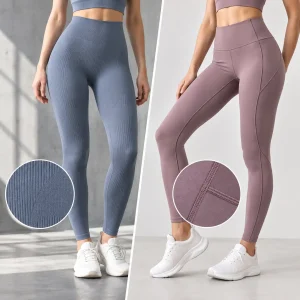
Our professional design team provided three visual schemes (covering color scheme, fabric texture, and style structure) based on the client’s brand colors and European fashion trends. The client ultimately selected two main color schemes: soft matte pink and cool gray-blue, and used our recommended high-elastic nylon + spandex double-sided fabric, which combines support and breathability.
- Rapid Sampling and Sample Confirmation
Utilizing a digital pattern-making system (3D CLO), virtual samples are generated within 48 hours; physical samples are shipped to the Dutch client within 5 days; client confirmation is immediate, requiring no further modifications.
(3) Production and Quality Control: Fabric preparation from sample signing to cutting takes only 3 days, leveraging the factory’s intelligent cutting system for efficient layout; the QC team is involved throughout the process, rigorously controlling everything from fabric inspection and sewing density to four-way tensile testing; production cycle is completed within 20 days.
(4)Packaging and Export Collaboration: The client provides their own brand hangtags and care labels, while the factory handles assembly and packaging; shipments are sent to the Port of Rotterdam via a partner freight forwarder, with full logistics tracking.
Results and Customer Feedback:
| Project | Goals | Actual Results |
| From sampling to shipment cycle | ≤30 days | Delivery completed within 30 days |
| Order quantity | 3,200 pieces (6 SKUs) | All shipped on time |
| Fabric inspection pass rate | ≥98% | ✅ Actual test result: 99.4% |
| Customer renewal rate | – | ✅ Two additional orders placed within 3 months |
Customer Reviews:
“We chose this factory because they didn’t just make yoga clothes — they helped us shape our brand aesthetics. From fabric testing to the final stitch, everything was handled professionally.
Now, all the yoga outfits on our website are designed and produced by them, and the customer feedback has been amazing.”
VIII. Five-Year Forecast: Smart Manufacturing and Green Supply Chain
1. Industry Trend Overview: The Era of “Dual-Engine Drive” in Manufacturing
In the past, environmental protection often meant higher costs and compromises; in the future, thanks to technological revolution, green and efficient will become two sides of the same coin. Smart manufacturing makes sustainable production economically feasible, while green supply chains provide the data foundation and ethical direction for smart manufacturing. The convergence of these two forces will define the next era of manufacturing.
.png "2025 Global Sportswear Factory White Paper: Export Opportunities, OEM/ODM Trends, and Sustainable Supply Chain Forecast 5")
With the deep integration of artificial intelligence, the Internet of Things and sustainable development concepts, the manufacturing industry is shifting from “production-driven” to “data-driven + responsibility-driven”.
| Driving Forces | Core Changes | The Impact on Manufacturers |
| Digitalization | The widespread adoption of MES, AI scheduling, and digital prototyping | reduces time costs and increases capacity utilization. |
| Personalization | Small-batch, rapid response, and flexible production become the norm | requiring quick changeovers and intelligent process management |
| Sustainability | Global brands are implementing carbon emission and material traceability requirements | necessitating the establishment of green supply chain systems |
| Globalized | decentralized customer backup supply across multiple regions | requires multi-site collaboration and transparent delivery |
2. The Implementation Trend of Smart Manufacturing
Intelligent manufacturing is no longer a “future concept” but is gradually becoming a “basic configuration” for mid-to-high-end sportswear factories.
- Digital Prototyping and Virtual Design (3D Sampling)
- 3D sample systems (such as CLO and Browzwear) allow customers to remotely confirm styles within 48 hours
- Reduce sample communication costs by approximately 40% and accelerate time-to-market
- Intelligent production scheduling (AI Scheduling)
- The MES system, combined with AI algorithms, can dynamically allocate production lines based on order urgency and process complexity
- Improving scheduling accuracy and equipment utilization
- Smart Quality Control (Smart QC)
- Machine vision is used to inspect key parameters such as stitch density and stitch uniformity
- data is transmitted back to the QC system in real time to form a closed loop for production improvement
- Data Transparency Management
- Customers can track order progress, shipment status, and quality inspection reports through a dedicated account
- enhancing trust and collaboration efficiency.
Forecast: By 2030, intelligent manufacturing will shorten the overall delivery time of sportswear factories by an average of 25%–35%, reduce inventory waste by 20%, and increase customer repurchase rate by more than 30%.
3. The Rise of Green Supply Chains: From “Environmentally Friendly Option” to “Cooperation Barriers”
Sustainable manufacturing is transitioning from a brand’s “slogan” to an “entry standard” for export cooperation.
Increasingly, international buyers are requiring suppliers to possess the following qualifications during the bidding process:
- Material Traceability: Using fabrics certified with GRS, OEKO-TEX, REACH, etc.
- Energy Efficiency: Gradually replacing factory lighting systems with LED and energy-efficient equipment
- Waste Reduction: Implementing fabric scrap recycling and reuse programs;
- Carbon Footprint Management: Measuring the carbon footprint of each product through Life Cycle Assessment (LCA).
Global Trend Forecast: By 2027, over 80% of suppliers for European sportswear brands will be required to have sustainability certifications; by 2030, ESG reports may become a mandatory document for B2B cooperation.
4. Our Strategic Action Plan (Our Factory’s Roadmap)
To embrace this “dual-engine” transformation, we are progressively advancing the following strategic projects:
(1)Comprehensive Upgrade of Digital Production System (2025–2026)
Implement AI-assisted production scheduling and intelligent warehousing systems; achieve full-process digital tracking from sampling to shipment.
(2)Green Fabrics and Energy-Saving Manufacturing (2025–2027)
Establish long-term partnerships with multiple GRS and OEKO-TEX certified fabric manufacturers; aim to achieve a 70% usage rate of environmentally friendly fabrics by the end of 2026.
(3)Circular Packaging and Carbon Reduction Project (2026–2028)
Promote recyclable packaging bags and cardboard box alternatives; monitor carbon emissions for each product and gradually incorporate them into customer reporting systems.
(4)Establishment of a “Green Supply Chain Collaboration Platform” (2027–2030)
Create an environmentally friendly ecosystem from fabrics to garments to logistics; support customers in co-creating ESG projects (such as the “Traceable Sportswear Program”).
✅ Goals and Vision: By 2030, we will become a sportswear manufacturing plant with “dual certification of intelligence and sustainability,” serving global sports brands and retailers in a more transparent, efficient, and greener manner.
5. Conclusion: Choosing partners is choosing the future
The next five years will be a period of redefining the value of manufacturing. The manufacturing partners you choose, their technological roadmaps and environmental strategies, will profoundly impact your brand’s competitiveness, resilience, and long-term value.
At Luckpanther, we view smart manufacturing and green supply chains as a “battle for the future” that we must win. We invite visionary individuals like you to join us in this profound transformation, not only to address future challenges but also to proactively define our future market.
(By partnering with us — a professional custom sportswear factory and activewear OEM manufacturer — you are not just choosing a supplier, but a path to the future of sustainable, high-performance activewear. Let us work together to build a sustainable core competency for your brand for the next five years.)
IX. Conclusion | Making sportswear manufacturing more efficient and reliable
In today’s new phase of global manufacturing, the sportswear industry is evolving from “mass production” to “intelligent collaboration.” Customers are no longer solely focused on price and capacity, but are placing greater emphasis on efficiency, transparency, sustainability, and trust.
Over the past decade, the relationship between sportswear brands and suppliers has undergone a fundamental transformation—from simple outsourcing collaborations to co-creative, long-term value partnerships. This trend is precisely the direction our factory is continuously moving in.
1. Our Core Belief: Manufacturing is More Than Just Production
We firmly believe that the core of manufacturing is not the workshop and the machines, but the commitment to quality, timeliness, and responsibility.
Every piece of sportswear, from fabric selection and sample design to craftsmanship and final packaging,
embodies the brand philosophy of our clients and the experience of our consumers.
Therefore, we insist on three things:
Efficiency: Using digital systems to make production faster and more precise;
Stability: Using professional processes to ensure on-time delivery of every order;
Trustworthiness: Winning long-term cooperation through transparent communication and continuous improvement.
2. Our Manufacturing Philosophy: Customer-Centric Flexible Innovation
Faced with global market changes, we continuously optimize every step from sampling to delivery.
Whether it’s a startup brand with small-batch customization or a stable international chain client,
we adhere to the core manufacturing philosophy of “flexible response + stable delivery.”
This system allows us to:
- Respond to fast-response orders within 10 days
- Provide differentiated design and environmentally friendly fabric solutions for different markets
- Continuously optimize delivery time, quality, and inventory structure based on data.
3.Our Future Vision: Making Manufacturing a Sustainable Value Co-creation
Over the next five years, our goal is not only to become a more efficient OEM factory, but also an Innovation Partner for sportswear brands.
We will continue to:
- Advance the construction of intelligent manufacturing systems to achieve fully visualized production
- Expand the application of green fabrics to create a low-carbon manufacturing system
- Build a responsible supply chain ecosystem with global customers.
We believe that true sustainability is not just about environmentally friendly materials, but about making the entire collaboration process—from design to delivery—more efficient, reliable, and transparent.
4. Closing Remarks
In the future global sportswear market, competition will become increasingly fierce, but speed, quality, and trust will always remain the three key factors in winning customers. We are committed to leveraging our professional manufacturing capabilities, open collaborative attitude, and continuously innovative supply chain system to work with global partners to ensure that every piece of sportswear becomes—the result of efficient manufacturing, a symbol of trustworthy cooperation, and the starting point for a sustainable future.