What Are Apparel AQL Inspections?
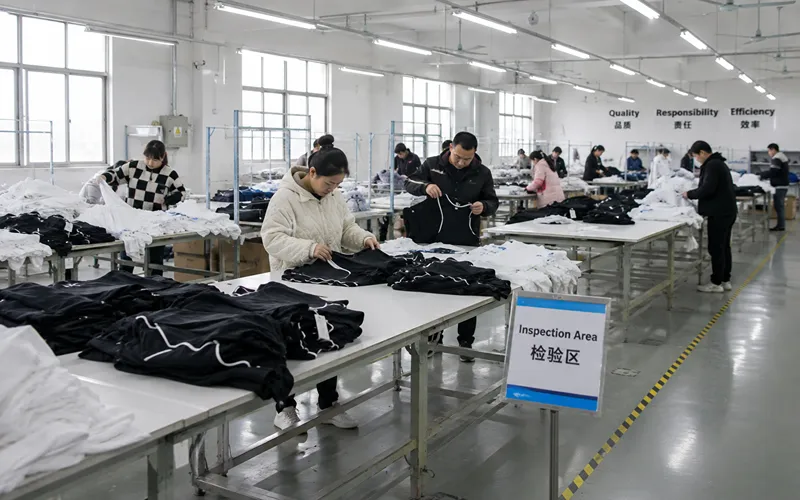
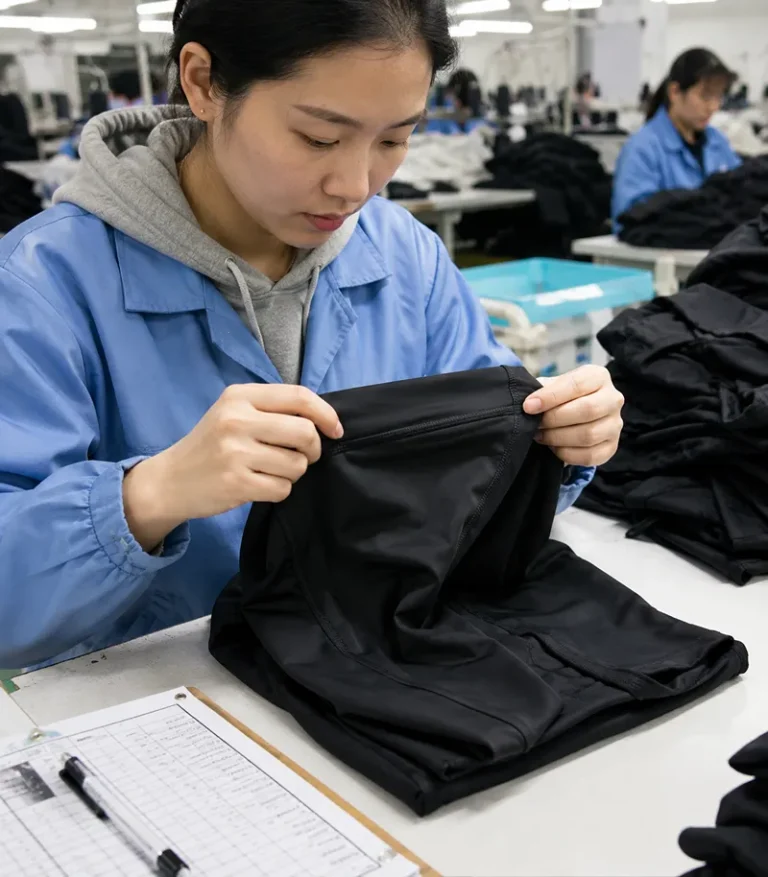
AQL stands for Acceptance Quality Limit. It’s a statistical tool. Factories and buyers use it to decide if a production lot passes or fails — without checking every single piece.
Why not check everything? Because checking 1,000 garments one by one takes forever. And it costs a lot of money. So inspectors pull a random sample instead. The math is based on standards like ANSI/ASQ Z1.4, which most apparel QC teams follow.
Now here’s the part everyone gets wrong:
AQL 2.5 does not mean a buyer accepts 2.5% defective garments. It is a statistical acceptance limit used with a defined sample size and acceptance/rejection numbers.
In plain English: AQL 2.5 helps determine the acceptance and rejection limits for the inspected sample. It does not mean that 2.5% of your whole order can be defective.
How Many Garments Should Be Inspected?
This is the question every buyer asks us first: “I ordered 1,000 pieces. How many will the inspector actually look at?”
The answer isn’t a flat percentage. It follows a simple chain:
Lot Size → Inspection Level → Code Letter → Sample Size
Here’s how it works, step by step.
Example: A 1,000-Piece Leggings Order
Say a buyer orders 1,000 leggings from us. We use General Inspection Level II — that’s the standard level most sportswear factories default to, unless the buyer asks for something stricter.
Lot size 1,000 lands in the 501–1,200 range. That range maps to code letter J. Code letter J gives us a sample size of 80 pieces.
Lot Size | Inspection Level | Code Letter | Sample Size |
501–1,200 | General II | J | 80 |
So the inspector checks 80 leggings, not all 1,000. That might sound small. But it’s a proven statistical method, not a shortcut — it’s the same standard used across the apparel industry.
Don’t assume a bigger order means a bigger percentage checked. It doesn’t work that way. The sample size is determined by the lot size and inspection level — not by simply checking a fixed percentage of the order.
Developing a new activewear order? Talk to our team about production and quality control before you move into bulk.
Critical, Major, and Minor Defects: What Counts?

Not all defects are equal. AQL inspections sort them into three buckets:
Level | Apparel Example |
Critical | Sharp object left inside garment, exposed pins, safety hazard |
Major | Open seam, broken zipper, measurement outside tolerance |
Minor | Loose thread, small cosmetic mark |
Sounds simple? Here’s where a lot of buyers get tripped up — and where our experience as a China sportswear manufacturer actually matters.
Take a crotch seam opening on leggings. At first glance, an inspector might want to log it as a minor issue. It’s just a seam? Wrong. We’ve seen buyers push back on this classification, and they’re right to. A crotch seam opening isn’t cosmetic — it affects how the leggings hold up during a squat, a lunge, a workout. That’s a durability and function problem. So we always classify it as major, not minor. For activewear, defect classification should consider how the garment performs under stretch and movement, not just how the defect looks on the inspection table.
This lines up with how third-party inspection bodies like QIMA define defect classification — severity is based on impact, not appearance alone.
What Makes an Apparel Order Pass or Fail?
An apparel order passes AQL when the number of defects found in the inspected sample stays within the agreed acceptance limits. If defects reach the rejection number for any category, the lot fails the inspection.
Let’s go back to our 1,000-piece leggings order. Sample size: 80 pieces (code letter J, remember?). Now the inspector checks those 80 pieces and compares what they find against two numbers: Ac (Accept) and Re (Reject).
If defects found stay at or below the Ac number, the lot passes. If defects hit the Re number, the lot fails. That’s it — no guesswork.
Here’s what a passing inspection looks like for our 80-piece sample:
For this 80-piece sample, the lot passes with up to five major defects and seven minor defects. Six major defects or eight minor defects would reject the lot. A single critical defect would also fail the inspection if the buyer has specified zero tolerance.
Defect Type | AQL | Pass If Found | Fail If Found |
Critical | Zero tolerance* | 0 | ≥1 |
Major | 2.5 | ≤5 | ≥6 |
Minor | 4.0 | ≤7 | ≥8 |
These limits apply to this specific example: a 1,000-piece lot, General Inspection Level II, normal single sampling. Different lot sizes, inspection levels, or sampling plans can produce different sample sizes and Ac/Re limits.
Now here’s what a failing inspection looks like:
Defect Type | Found | Re Limit | Result |
Major | 6 | 6 | Fail |
With five major defects, the lot would still pass. At six, it fails. That one-defect difference is enough to change the inspection result. That’s why we always tell buyers: it’s not about zero defects. It’s about staying under the line.
What Should an Apparel AQL Inspection Cover?

AQL determines how the lot is sampled and accepted; the inspection checklist determines what is actually checked on those garments. For sportswear, that checklist should cover both appearance and performance.
- Measurements — waist, inseam, garment length, checked against the tech pack tolerance. Measurement issues can also start with incorrect size grading before bulk production.
- Construction — seam strength, stitching quality, and seamless bonding where bonded construction is used.
- Fabric — holes, stains, shade variation between panels
- Trims & branding — zipper function, label placement, logo alignment
- Function — stretch and recovery, how seams and zippers hold up under movement
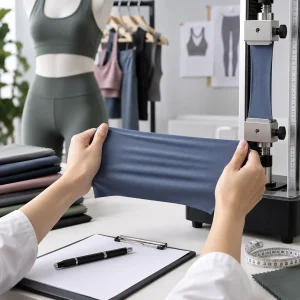
Passing a visual check isn’t enough for performance apparel. A pair of leggings can look perfect laid flat on the table. No stains, straight stitching, everything lines up. But if the fabric loses recovery after a stretch test — meaning it doesn’t snap back to shape — that’s still a major defect. Nothing looked wrong until someone actually pulled on it.
This is why we run stretch and recovery tests on activewear, not just a flat-table visual scan. Leggings live and die on how they perform in motion, not how they look folded in a box. A factory that only checks appearance is missing half the job.
What Happens If Your Apparel Order Fails AQL?
A failed inspection doesn’t mean your order goes in the trash. Here’s the process we walk buyers through:
Fail → Review defects → Sort affected goods → Rework → Re-inspection → Approve shipment
First, we look at exactly which defects pushed the lot over the limit. Sometimes it’s something fixable — loose threads, a label sewn on crooked, a missing hang tag. In those cases, we sort the goods, rework the affected pieces, and run a re-inspection. Most orders recover this way.
But sometimes the problem runs deeper. If there’s a serious sizing issue across many pieces, a fabric defect from a bad dye lot, or a structural problem in how the garment is built, rework won’t fix it. In that case, we sit down and figure out how many pieces are actually affected — sometimes it’s a small portion of the order, sometimes it’s most of it.
Should I ship an order that failed AQL?
Not just on the factory’s word. A buyer shouldn’t approve shipment based on a verbal “it’s fixed now” from the factory. Confirm the corrective action in writing, then re-inspect based on how serious the original defects were. Groups like Intertek outline this same corrective-action-then-verify approach for a reason — it protects both sides.
How to Avoid AQL Disputes Before Production

Most AQL disputes we’ve seen didn’t happen at inspection. They happened months earlier — at the PO stage, when nobody wrote things down clearly enough.
Quality problems are easier to prevent during clothing product development than to negotiate after final inspection. Get these four things confirmed in writing on your PO or QC sheet:
- AQL level (2.5? 4.0? Pick one and put it in writing)
- Defect classification (what counts as major vs. minor for your specific product)
- Measurement tolerance (exact numbers, not “close enough”)
- Approved sample (the physical piece everything gets compared against)
Here’s our honest advice, from years of sitting on the factory side of these conversations: