
Apparel Chemical Testing

Apparel Chemical Testing: What Tests Does Your Clothing Need?

Apparel chemical testing checks clothing materials for restricted substances such as azo dyes, formaldehyde, and phthalates. The tests you need depend on the fabric, prints, trims, and the market where your products will be sold.

A leggings fabric may pass testing, but that doesn’t mean its printed logo or elastic waistband is covered by the same report.

When reviewing the BOM, we check whether the main fabric, elastic bands, and printed logos come from different suppliers. This helps us identify which components need separate report checks.

Table of Contents

What Chemical Tests Are Required for Apparel?

The most common apparel chemical tests cover 6 groups of substances. Not every garment needs all six. Use the table below to identify which materials may need closer review. 

Chemical Test

Main Concern

Where Buyers Should Check

Azo dyes

Release of restricted aromatic amines

Dyed fabrics and prints

Formaldehyde

Residues from textile finishing

Finished fabrics

Phthalates

Restricted plasticizers

PVC prints, plastisol, and coatings

Heavy metals

Restricted lead, cadmium, or other metals

Prints, dyes, and metal trims

PFAS

Restricted fluorinated substances

Water-repellent fabrics and finishes

APEOs

Residues from textile processing

Dyed, washed, and finished fabrics

What Determines Which Tests You Need?

Buyers should check three types of requirements before choosing tests:

  • Legal restrictions: EU REACH and other market regulations set limits for specific chemicals. For example, REACH restricts certain azo dyes that release listed aromatic amines above 30 mg/kg in applicable textiles.
  • Customer RSL: A brand’s Restricted Substances List may set stricter limits or require additional tests beyond local laws.
  • Voluntary testing: Brands may request extra screening for chemicals not already covered by applicable laws or their RSL.

A request for a “full chemical test” is not enough to define the testing scope.

Our advice: Before contacting a testing lab, prepare your target market, customer RSL, and material list. Mark any prints, coatings, or metal trims that may need extra checks. This gives the lab a clear starting point for selecting relevant tests.

Which Clothing Components Need Separate Chemical Testing? 

Which Clothing Components Need Separate Chemical Testing

A passing fabric test does not automatically cover the finished garment. Prints, coatings, elastic bands, and trims may use different chemicals or come from different suppliers. Buyers should check whether existing reports cover these parts before requesting more tests.

Dyed and Finished Fabrics

Check whether the report covers the approved fabric, including its dyeing and finishing processes. If the supplier changes the dye formula or finishing chemicals, review whether the existing test results still apply.

Prints and Coatings

Prints and coatings may be applied after the base fabric has been tested. Check whether the existing report covers the final printed or coated material. If not, review the added chemicals and decide whether further testing is needed. 

Elastic Bands and Bra Components

Elastic waistbands, silicone grips, and foam bra cups may come from separate suppliers. Check their material specifications and available reports, especially for components that have prolonged skin contact.

Zippers, Snaps, and Other Trims

Metal trims may need checks for restricted metals. Nickel release is particularly relevant to certain metal components designed for direct and prolonged skin contact in the EU. Labels and other textile trims should also be reviewed when their materials or treatments differ from the main fabric.

What Are the Chemical Testing Requirements for the EU and US?

EU apparel buyers must check applicable REACH restrictions, while US requirements depend on federal and state laws, product type, and age group.

Market

Key Regulations

What Buyers Should Check

EU

REACH and applicable PFAS restrictions

Restricted chemicals in fabrics, prints, and trims

US

Applicable federal rules; CPSIA requirements for children’s products

Age group and applicable chemical limits

California

Proposition 65

Exposure to listed chemicals and warning requirements

In the EU, REACH restricts certain substances, but there is no single certificate that proves full compliance. Check the ECHA restrictions list.

In the US, children’s clothing may need additional testing and certification under applicable CPSC rules.

Chemical testing is not the same as certification. OEKO-TEX STANDARD 100 is voluntary and does not replace legal compliance checks. See our guide to sustainable fabric certifications for activewear.

How Do You Read an Apparel Chemical Test Report?
How Do You Read an Apparel Chemical Test Report

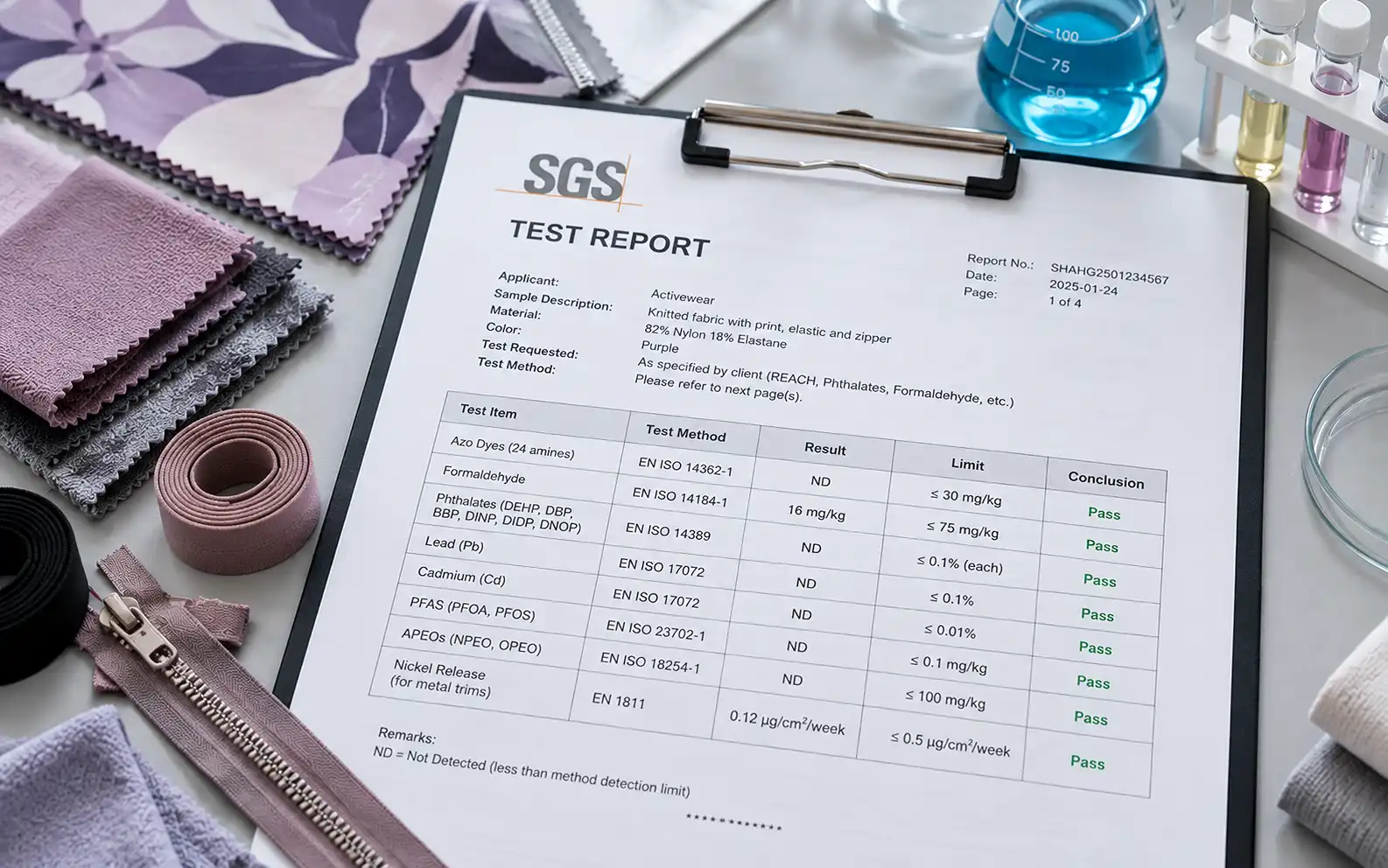
A passing test report is useful only if the tested material, method, and limits match your order requirements. Start with these 5 fields. 

Term

What It Means

What Buyers Should Check

Test Method

Standard used to measure a substance

Is it suitable for the required test?

Result

Measured amount, often in mg/kg

Does it meet the required limit?

Limit

Maximum permitted or accepted amount

Is it based on law or your RSL?

ND

Not detected above the stated detection or reporting threshold

Is that threshold low enough?

Pass/Fail

Verdict against a stated limit

Was the correct limit used?

ND does not mean zero. For example, if a lab reports formaldehyde as ND with a reporting limit of 16 mg/kg, the result cannot confirm compliance with a lower limit.

A Pass result also needs context. The lab may have used a different limit from your brand’s RSL. Always compare the stated limit with your requirements.

Before accepting the report, confirm that the sample description matches the material or component used in your order. Check its composition, color, and supplier details where available. The laboratory should also have suitable competence and accreditation for the relevant testing.

Our tip: If the report cannot be linked to your approved material, ask the supplier for supporting records first. Request additional testing if the existing evidence cannot confirm compliance.

When Should You Test or Retest Materials During Production?

Check chemical compliance before bulk production, not after garments are finished. Testing should follow material approval and production changes, with additional checks based on risk. Chemical checks are one part of sportswear quality control.

Production Stage

What Buyers Should Do

Material sourcing

Request relevant test reports before approving fabrics, prints, and trims.

Sampling

Check whether final prints, coatings, and trims are covered by existing reports.

Before bulk production

Close any testing gaps before cutting. Hold materials that have unresolved compliance issues. 

When Is Retesting Needed?

Not every material change requires a full retest. Review the affected chemicals and existing evidence first.

What Changed

What to Check

New fabric or trim supplier

Material specifications and report coverage

New dye, ink, or coating formula

Relevant restricted substances

New dye lot with the same recipe

Customer RSL and batch-testing requirements

New target market

Applicable chemical limits and test methods

No material changes

Report validity and customer requirements

Our advice: Ask your sportswear manufacturer to report changes in dyes, inks, and finishes before production. Review the affected tests before approving the new materials.

FAQ About Apparel Chemical Testing

The brand is responsible for defining its compliance requirements, while the manufacturer can arrange testing and provide material records. Both sides should agree on who approves test reports and handles failures before production. The legal responsibility for compliance depends on the market and each party's role.

Hold the affected material and identify the failed substance. If production has started, trace which batches used that material. Ask the supplier to correct the issue and confirm compliance through appropriate follow-up testing before releasing the affected products. 

The brand or manufacturer pays according to their agreed terms. There is no universal rule that the factory must cover every test. Confirm who pays for initial testing, buyer-requested tests, and retesting after a failure. Include these terms in your manufacturing agreement.

Conclusion

Apparel chemical testing works best when the testing scope is clear before production. Agree on the requirements early, and resolve any failed results before releasing materials.

Need help reviewing chemical testing requirements for your custom sportswear? Our team can help you identify the right checks for your materials. Contact us now.

Chelsea Lin Avatar

Chelsea Lin

Senior Activewear Production & Product Development Specialist

Chelsea Lin is an activewear production specialist with over 10 years of experience in sportswear manufacturing, product development, and quality management. She specializes in leggings, yoga wear, sports bras, and custom activewear development.

Her expertise covers fabric evaluation, technical development, sampling, production management, and AQL-based quality inspections, helping brands improve material selection, garment performance, and production consistency.

Areas of Expertise: ✓ Activewear Manufacturing: Experience in OEM/ODM production, garment construction, and bulk production management. ✓ Fabric & Material Selection: Skilled in evaluating performance fabrics, including nylon, polyester, spandex blends, and sustainable materials. ✓ Quality Control: Knowledge of AQL inspection, stitching quality, fabric testing, and production consistency.
Fact Checked & Editorial Guidelines

Related Posts

Planning a Custom Sportswear Order?

Share your product type, quantity, and customization needs. We’ll tell you what to confirm before sampling and quote.