What Are the Best Fabrics for Golf Shirts?
The table below compares 5 common golf shirt fabrics. Actual performance also depends on fabric weight, knit structure, and finishing.
Fabric | Drying Speed | Stretch Potential | Feel |
Fast | Depends on knit | Smooth or textured | |
Polyester-Spandex | Fast | Usually high | Flexible |
Cotton | Slower | Depends on knit | Soft, natural |
Cotton-Polyester | Varies by blend | Depends on knit | Soft to smooth |
Nylon-Spandex | Generally fast | Usually high | Smooth, soft |
1. Polyester: Best for Lightweight Performance Golf Shirts
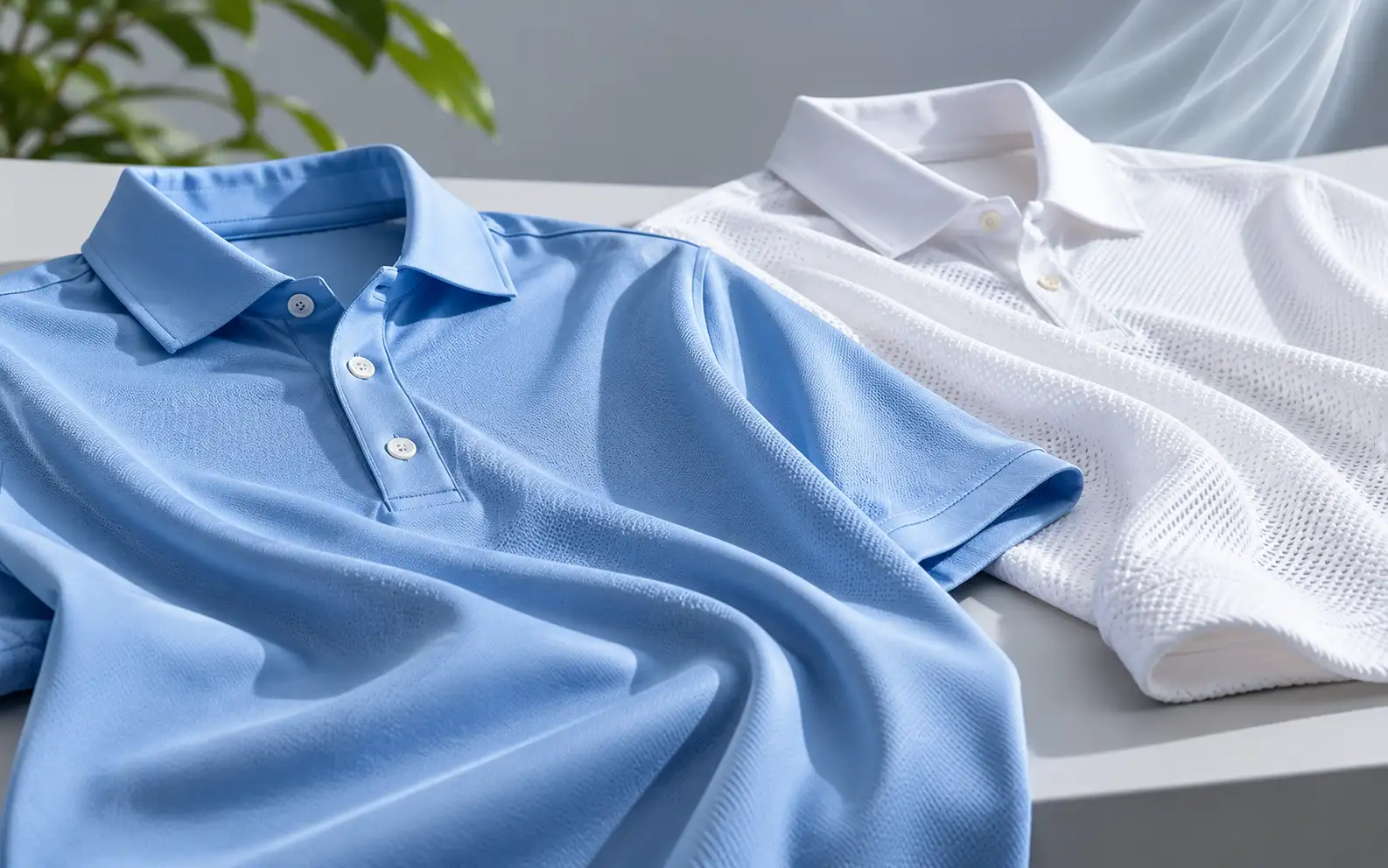
Polyester dries quickly and is easy to care for. It also resists shrinking and wrinkling. Polyester is common in performance polos and team uniforms.
But not all polyester fabrics feel the same. A tight knit may trap heat, while an open piqué or mesh structure can improve airflow.
Two shirts can both use 100% polyester but feel very different.
2. Polyester-Spandex: Best for Stretch Golf Polos
Polyester-spandex is a strong option for golf shirts that need extra flexibility. It allows the fabric to stretch during a swing without restricting movement.
But more spandex does not always mean better performance. Too much stretch can affect the shirt’s drape and fit. The knit structure also plays a role.
Stretch recovery is just as important. During fabric approval, a useful check is to mark a 10 cm section across the fabric width. Stretch each sample by the same amount. After the same recovery time, measure how closely it returns to 10 cm. Repeat the test to check for lasting deformation. Poor recovery can leave the shirt looking loose after regular wear.
3. Cotton: Best for Soft, Casual Golf Shirts
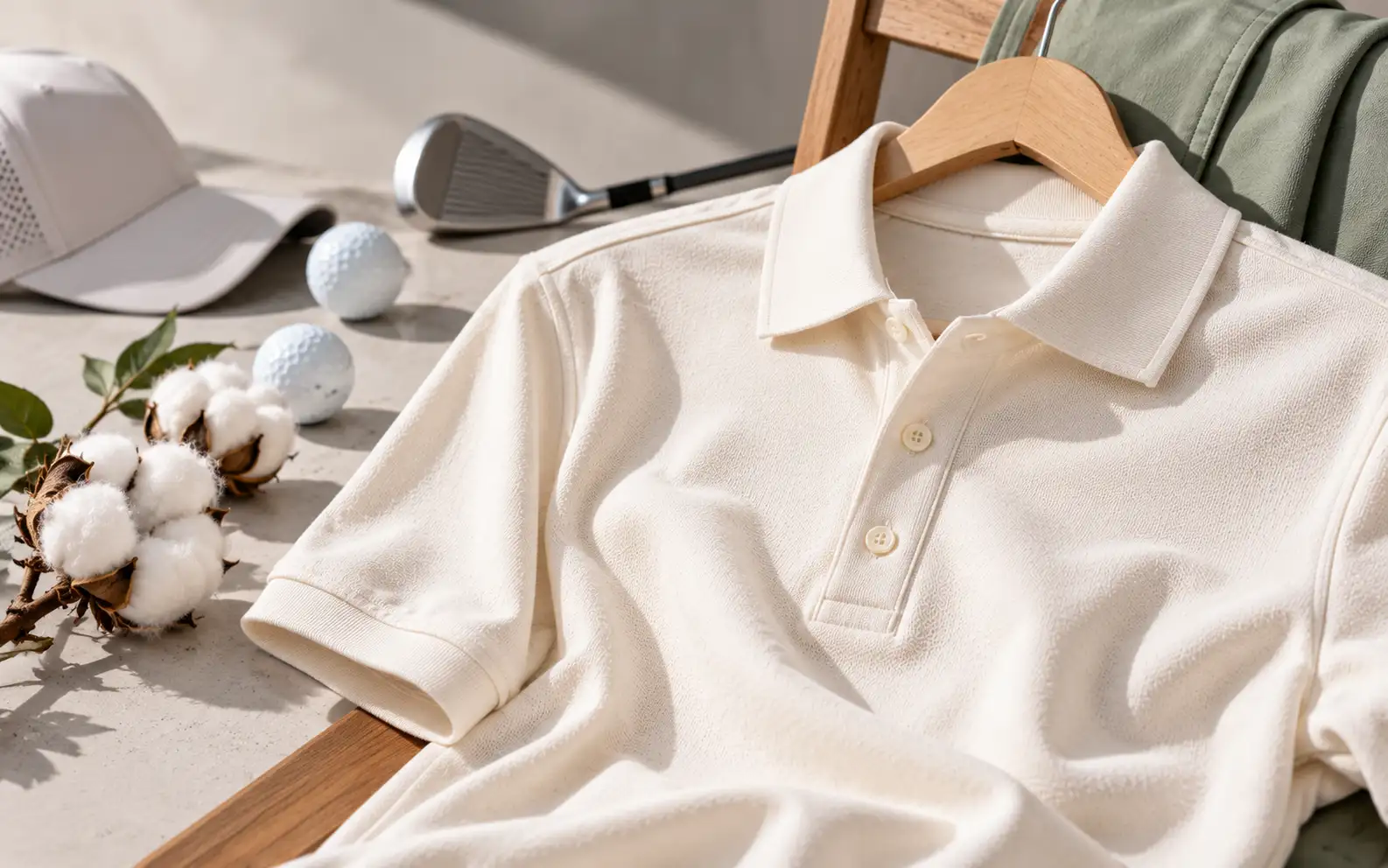
Cotton has a soft, natural feel. It works well for lifestyle golf polos, clubhouse wear, and casual collections.
Its main drawback is moisture retention. Cotton absorbs sweat but dries more slowly than polyester. During a long round in hot weather, the shirt may feel damp and heavy.
Choose cotton when softness and everyday comfort come first. For golf shirts made for intense activity or humid conditions, a quick-drying fabric is usually more practical.
4. Cotton-Polyester Blends: Best for Everyday Golf Polos
Cotton-polyester blends offer a middle ground between natural comfort and easy care. The blend ratio helps determine how the shirt feels and performs.
A cotton-rich blend often feels softer and absorbs more moisture. A polyester-rich blend generally dries faster and resists wrinkles better.
Before choosing a ratio, decide which quality matters most. A casual club polo may benefit from more cotton. A shirt designed for frequent play may need a higher polyester content.
5. Nylon-Spandex: Best for Smooth, Flexible Golf Shirts

Nylon-spandex offers a smooth hand feel and flexible fit. It suits golf polos that aim for a softer, more refined finish.
Compared with basic polyester fabrics, nylon blends can offer a different surface feel and drape. However, the final result depends on the yarn, knit, and finishing.
Nylon-spandex may also cost more than basic polyester fabrics. Snagging can be a concern with loose knit structures or exposed yarn loops, so check the fabric’s surface before choosing it.
What Fabric Weight and Knit Structure Work Best for Golf Shirts?
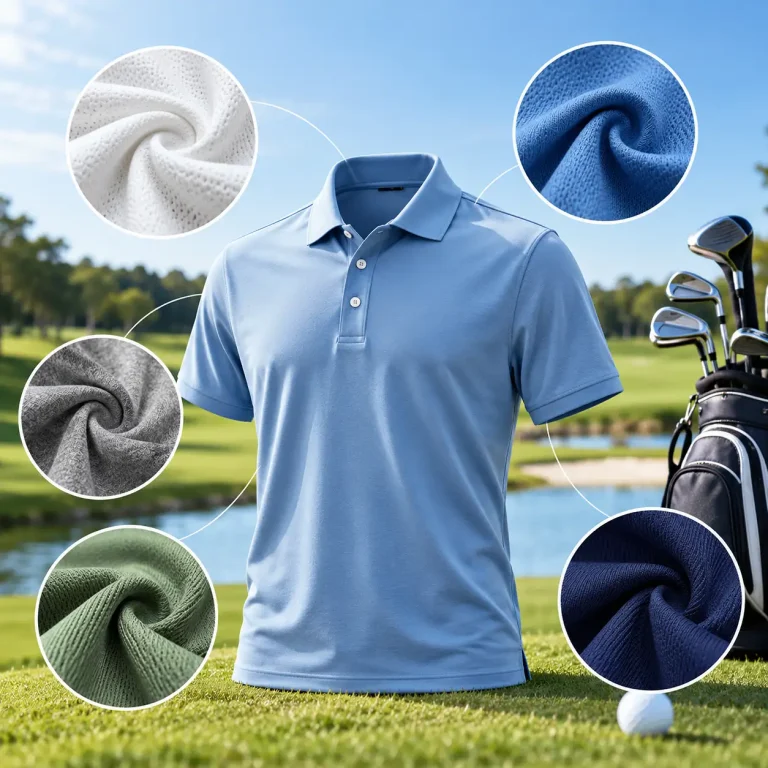
Fiber content alone does not determine how a golf shirt feels or fits. Fabric weight and knit structure also affect its drape, texture, and overall appearance.
Choosing the Right GSM
SM means grams per square meter. It measures fabric weight per unit area, which can be tested using ASTM D3776/D3776M. Here are three useful ranges for golf shirts:
- 130–160 GSM: Lightweight summer polos. They can feel cooler in hot weather, but thin fabrics may lack coverage, especially in white or pale colors.
- 160–190 GSM: A practical starting range for many performance polos. It offers a balance of fabric weight, coverage, and drape.
- 190–220 GSM: Heavier polos with a more substantial feel. They can create a structured look but may feel too warm for summer play.
If you are unsure where to start, try sampling around 170–180 GSM. Then adjust based on the fabric’s knit and intended use.
Before bulk production, confirm the GSM of the actual fabric against the approved specification.
Piqué vs Jersey Knit
Piqué has a raised, textured surface. It gives golf polos a classic look and can create a firmer, more structured feel. The texture also adds visual depth to plain colors.
Jersey has a flatter, smoother surface. It often creates a softer drape and a cleaner appearance. It works well for modern golf polos with a relaxed or close-fitting silhouette.
Neither knit is always more breathable. Airflow depends on the fabric’s density, yarn, and construction.
If you want a traditional polo look, start with piqué. If you prefer a smooth, modern finish, try jersey. Try both fabrics in the same polo design. Compare the drape, collar shape, and fit.
What Should You Check Before Approving Golf Shirt Fabric?
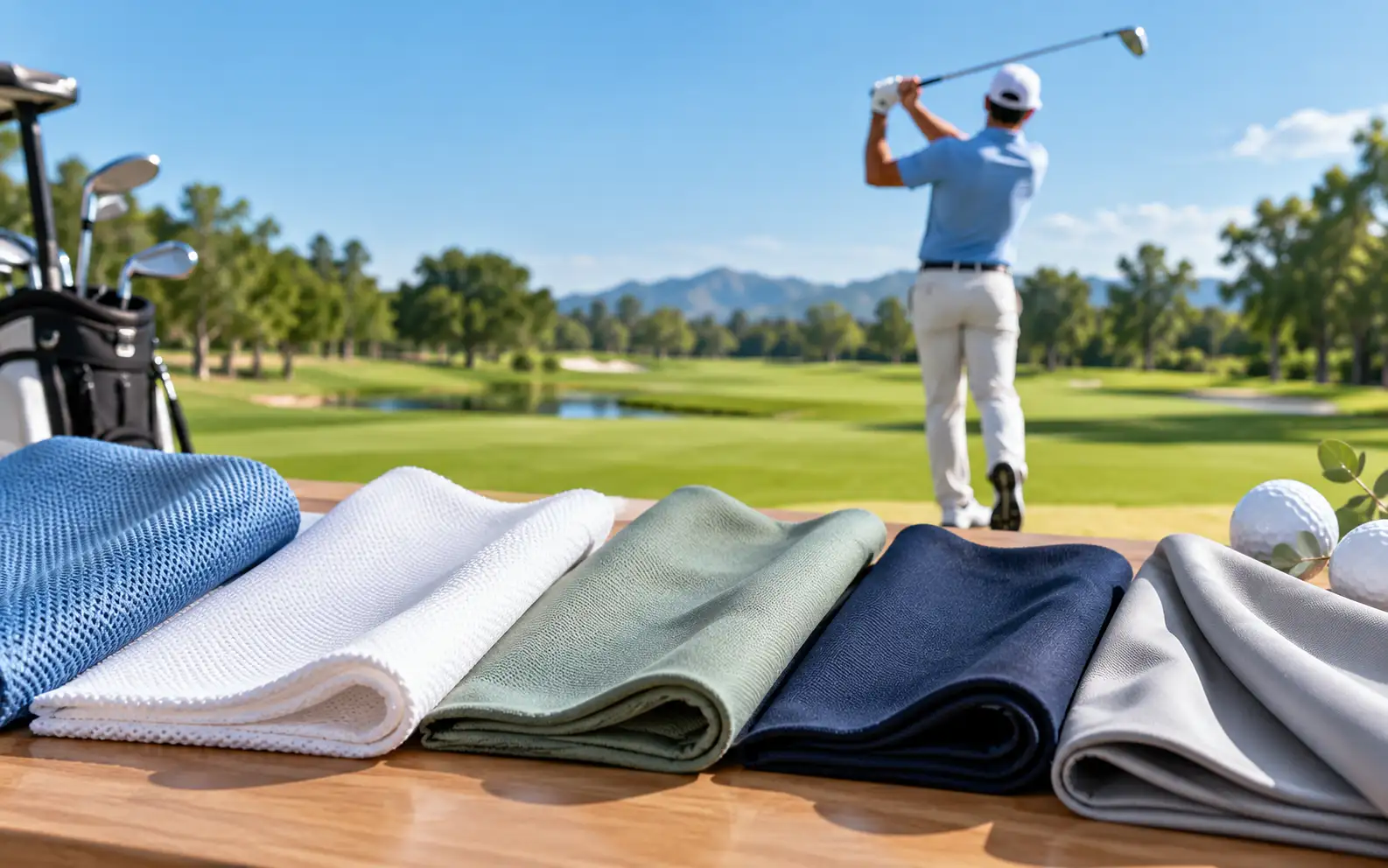
A fabric may look good on a swatch card but perform differently in production. These six checks help you spot common problems before placing a bulk order.
Check | Why It Matters | What to Check |
Shrinkage | Prevents unexpected size changes | Measure fabric length and width before and after washing |
Pilling | Affects surface appearance | Check pilling resistance after repeated rubbing |
Reduces fading and color transfer | Check color change and staining after washing and exposure to perspiration | |
Helps the fabric retain its shape | Check for permanent deformation after repeated stretching | |
Moisture Management | Verifies sweat-handling claims | Review wicking and drying test results |
Sample Fit | Confirms the fabric works in the finished polo | Check collar shape, placket flatness, and fit after washing |
Pay close attention to the finished polo. Even if the fabric passes material tests, the collar may curl or the placket may pucker after washing. These problems can affect the shirt’s appearance and may require changes to the collar construction or placket reinforcement. A sportswear manufacturer should be able to make these adjustments during sample development.