What Should a Garment BOM Include?
Before sending a BOM to your factory, check that these seven fields are included for each material.
BOM Field | What to Record |
Component | Main fabric, elastic, thread, labels, packaging |
Material Specification | Composition, construction, GSM, width or dimensions |
Material Code | Supplier reference or approved material ID |
Color / Size | Color code and applicable sizes |
Consumption & Unit | Quantity per garment in meters, pieces, or sets |
Supplier | Buyer-nominated or factory-sourced |
Approval Status | Approved, pending, or awaiting replacement approval |
Two fields deserve extra attention.
Consumption. Don’t leave this blank in the final BOM. If you don’t know the fabric usage yet, we can estimate it from the pattern and confirm the amount before ordering.
Approval status. Mark materials that still need your approval. This helps us separate approved materials from those that need further checking.
Material consumption, waste allowance, and supplier MOQ can be confirmed during development and sourcing.
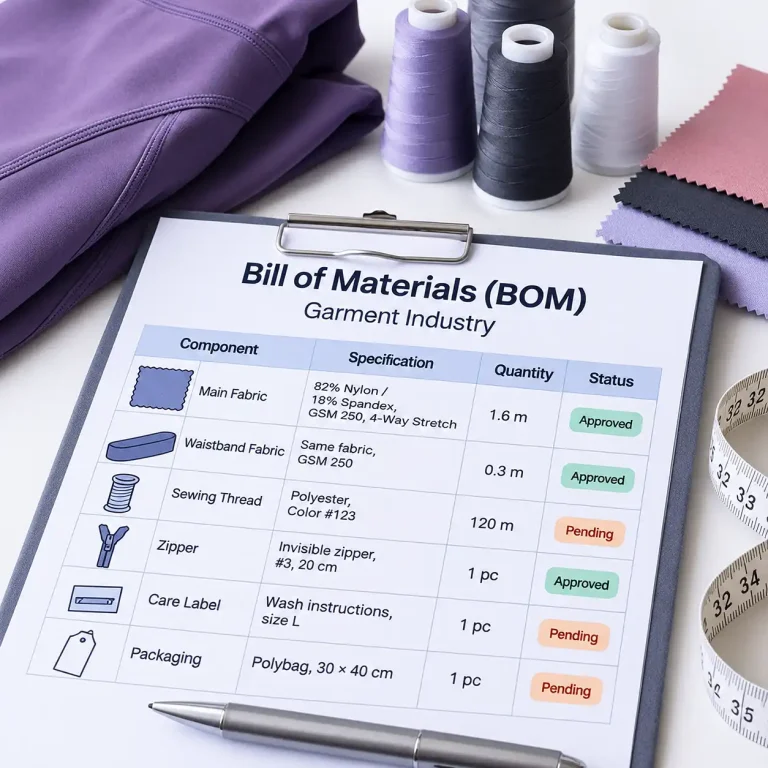
Example Bill of Materials for Custom Leggings
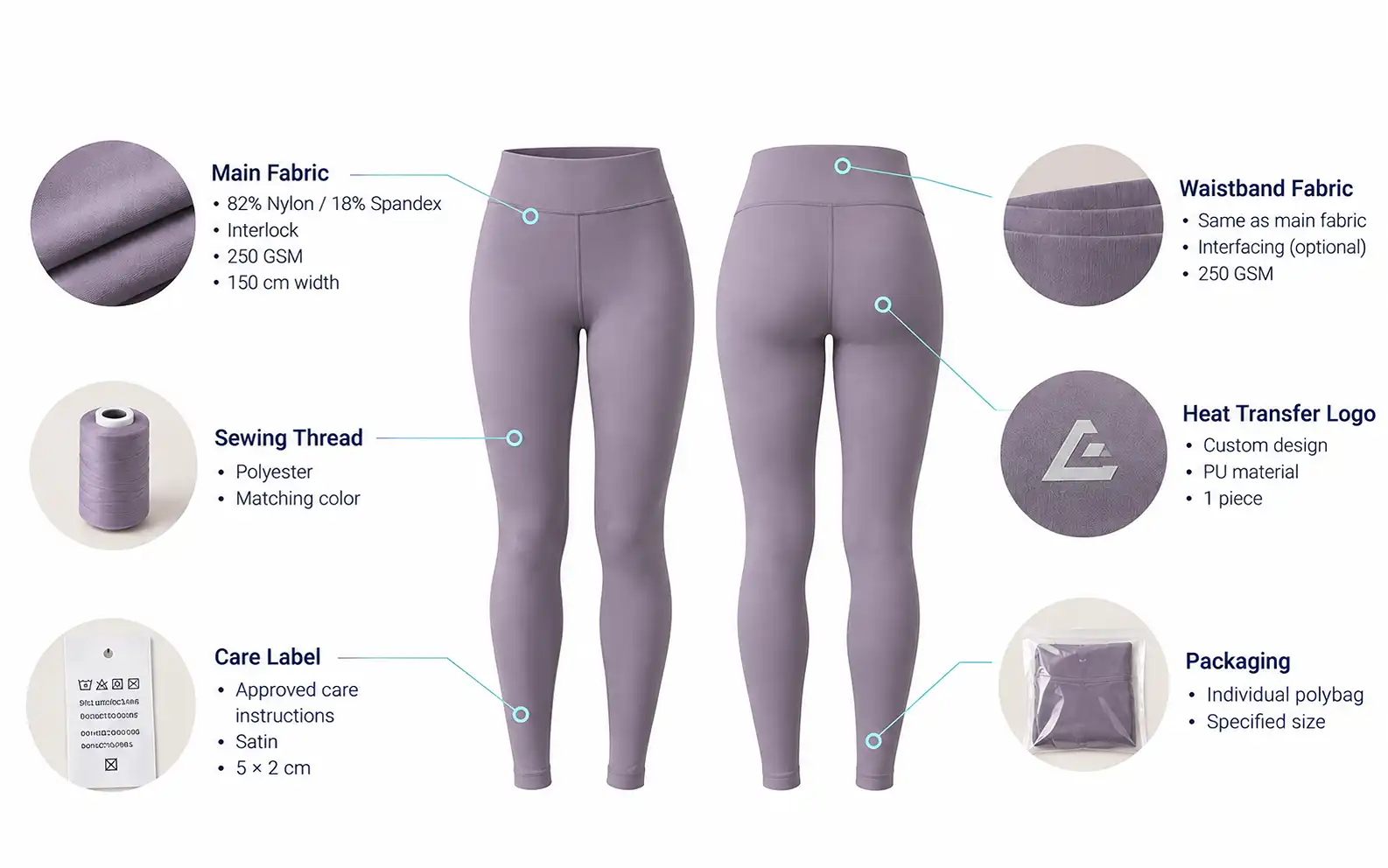
Here is a sample BOM for custom leggings with a wide waistband and a heat transfer logo. This example shows how to organize the materials. Final specifications and fabric usage still need confirmation.
Component | Specification | Usage | Status |
Main Fabric | 82% Nylon / 18% Spandex, interlock | Pattern-based, TBD | Pending |
Waistband Fabric | Same approved fabric code as body | Pattern-based, TBD | Pending |
Sewing Thread | Polyester, matching approved color | TBD (meters) | Pending |
Heat Transfer Logo | Approved artwork, 1 piece | 1 piece | Approved |
Care Label | Approved care instructions | 1 piece | Pending |
Packaging | Individual polybag, specified size | 1 piece | Pending |
Note: This is an illustrative BOM, not approved production data. TBD means the details still need confirmation. Fabric width, GSM, material codes, and color references should be added before final approval. Approval statuses are examples only.
For leggings, fabric consumption depends on the pattern, size range, and cutting layout. We calculate the required amount from the pattern and marker, then account for cutting waste before confirming the material order. This is one detail worth checking when comparing China leggings manufacturers.
The final BOM should show the approved material details and usage for each component, not just a list of what goes into the garment.
Who Prepares the BOM: Brand or Manufacturer?
The brand and manufacturer can prepare a BOM together, but the brand should approve the final material choices before production. Who fills in the details depends on how the materials are sourced.
You supply the materials. You choose the fabric and supplier. We check material usage and whether the fabric works with the planned construction. If we find a problem, we flag it before production.
We source the materials. You share your fabric requirements, colors, and design details. We suggest suitable options and provide material specifications. Once you approve a material, we add its details to the BOM.
We handle product development. We help build the BOM from your design or reference sample. We confirm material codes, suppliers, and usage. You review the final choices, including fabrics, trims, and branding details.
For new brands, a finished BOM isn’t required for the first inquiry. Share the details you already have, and mark missing information as “TBC” (to be confirmed). We can complete the remaining fields during development.
How Does a BOM Affect Material Sourcing and MOQ?
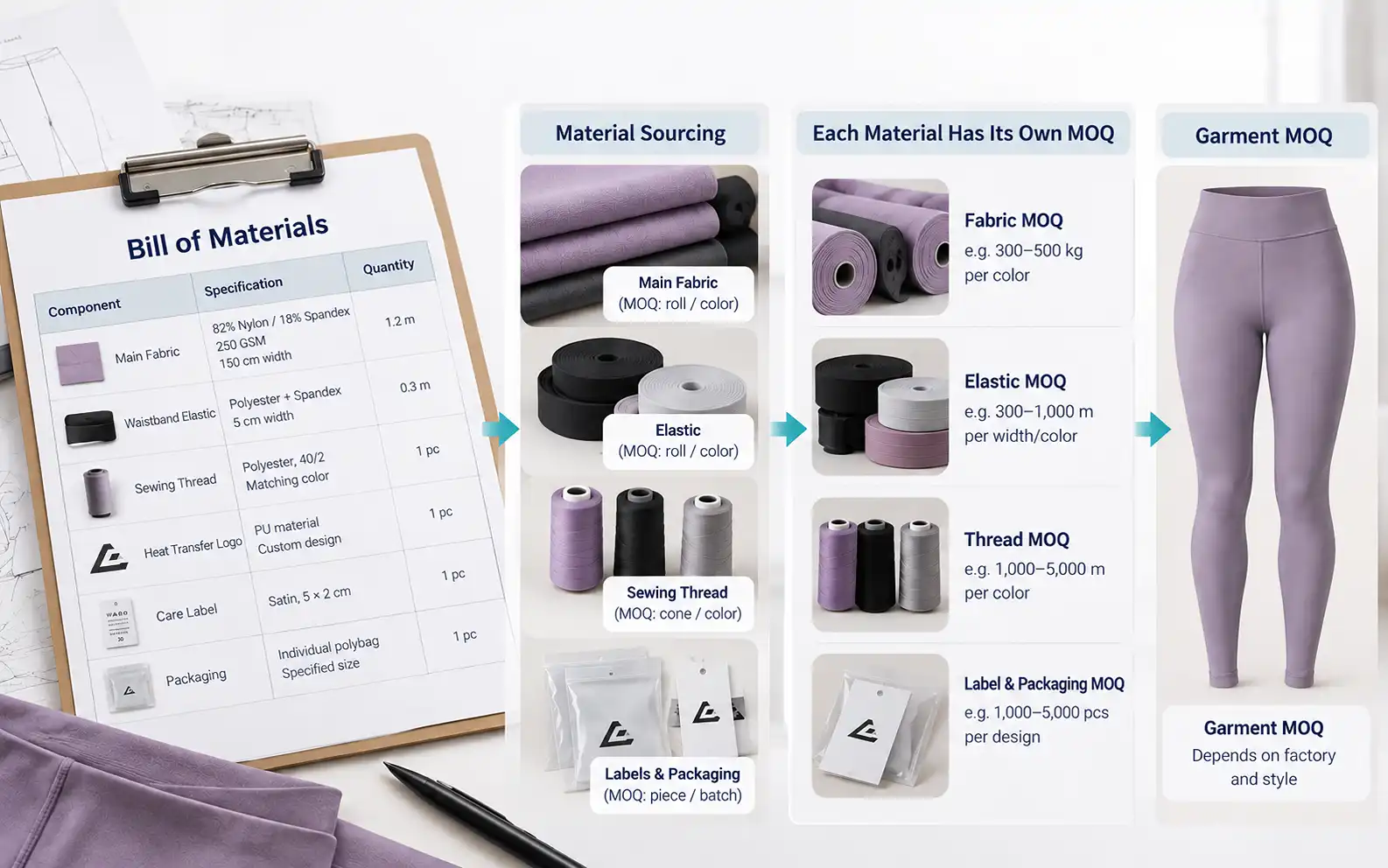
For wholesale sportswear orders, a BOM helps identify materials with their own purchasing minimums, even when the order meets the factory’s garment MOQ.
Say your sports bra order meets the factory’s garment MOQ. But the BOM includes an underband elastic with your brand name woven into it. The elastic supplier may require a larger quantity than your order needs.
Fabric can have similar limits. Custom-dyed colors may each have their own minimum. Splitting a small order across several colors can leave each color below the fabric supplier’s requirement.
Here’s what we suggest:
- Share materials across styles. Use the same elastic specification for several colors or products where possible.
- Identify custom items early. Flag woven logos, special elastics, and custom-dyed fabrics in the BOM.
- Allow alternatives where suitable. Mark trims that could use an approved stock option instead.
A clear BOM lets us check these material limits before you finalize the order quantity or color breakdown.
What Should Buyers Check Before Approving a BOM?
Before approving a BOM, make sure the factory knows which material version to use, what changes are allowed, and when your approval is required. A BOM should not be marked final while key materials still show “TBC” or pending approval.
Lock the approved version. Check that the BOM matches the latest approved samples and material records. An older fabric or logo version should not remain on the final list.
Agree on substitutions. If a supplier cannot provide an approved material, decide who can authorize a replacement. Don’t let a similar-looking fabric or trim become an automatic substitute.
Decide when to resample. A change in fabric stretch, weight, or construction may affect garment fit. Ask the factory to check whether a new sample is needed before accepting the replacement.