How Much Difference Between a Sample and Bulk Is Acceptable?
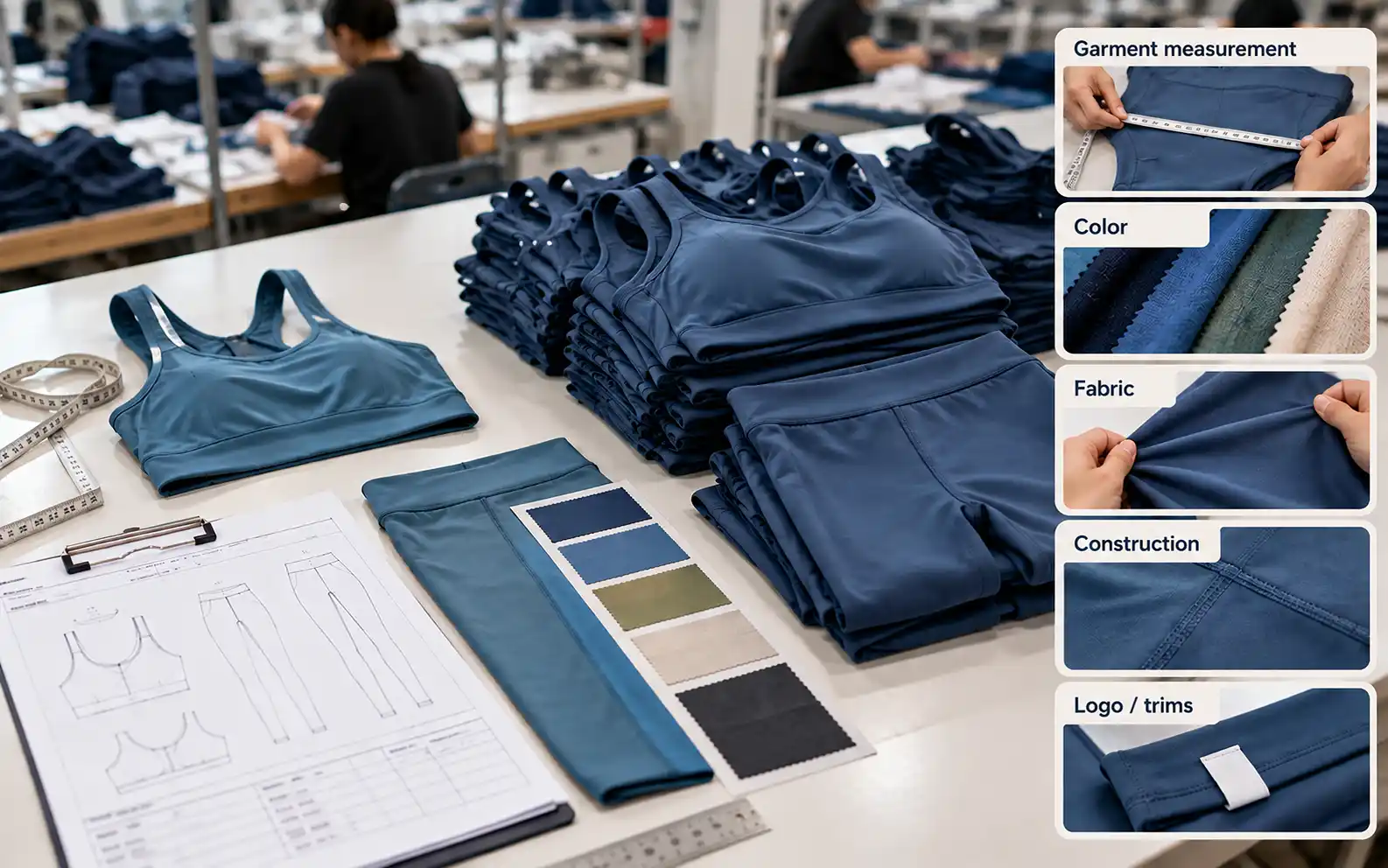
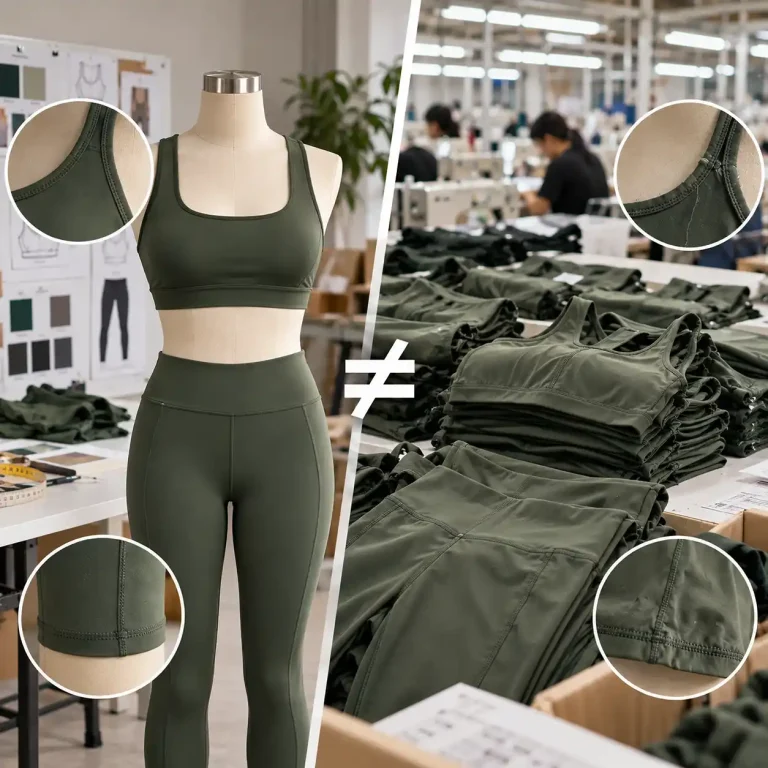
A difference between an approved sample and bulk production is not automatically a defect. It becomes a quality issue when the bulk garment falls outside the approved tolerance or production standard.
A sample is usually made one piece at a time by a sample sewer. Bulk garments move through a production line. Small variations can happen. The question is whether those variations stay within what the buyer approved.
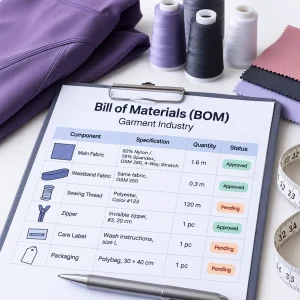
In our production, we confirm the tolerance and key standards with the buyer before bulk cutting. The approved sample, measurement spec, fabric standard, and other approval records should provide the reference.
When something looks different, check it against the approved record:
Difference | What to Check |
Garment measurement | Approved measurement spec and tolerance |
Color | Approved lab dip or color standard under the agreed lighting condition |
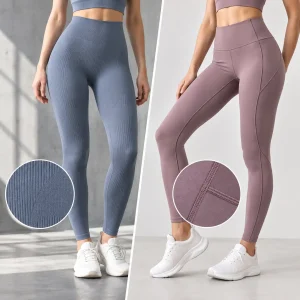
Fabric | Approved fabric swatch, GSM, stretch, and recovery requirements |
Construction | Approved sample and final tech pack |
Logo / trims | Approved artwork, placement, size, and trim reference |
If the bulk result is outside the agreed standard, investigate it before accepting the order. If it is within the approved tolerance, the difference may be normal production variation.
7 Reasons Your Bulk Order Doesn’t Match the Approved Sample
Once you confirm the difference is outside the approved standard, the next step is to find where it started. Here are seven common causes we check when tracing sample-to-bulk differences in activewear production.
1. Bulk fabric changed
Bulk fabric can differ from the sample because it is often produced in a different dye lot, even when the fabric code and supplier stay the same.
Sample fabric may come from a small development batch. The bulk lot can feel thinner or slicker. It may stretch more or recover slower. GSM and shade can also shift.
We compare the bulk fabric with the approved fabric standard before cutting. Any meaningful difference should be reviewed before the fabric enters production.
If you need to verify stretch and recovery, see our fabric stretch test guide.
2. Fabric shrinkage
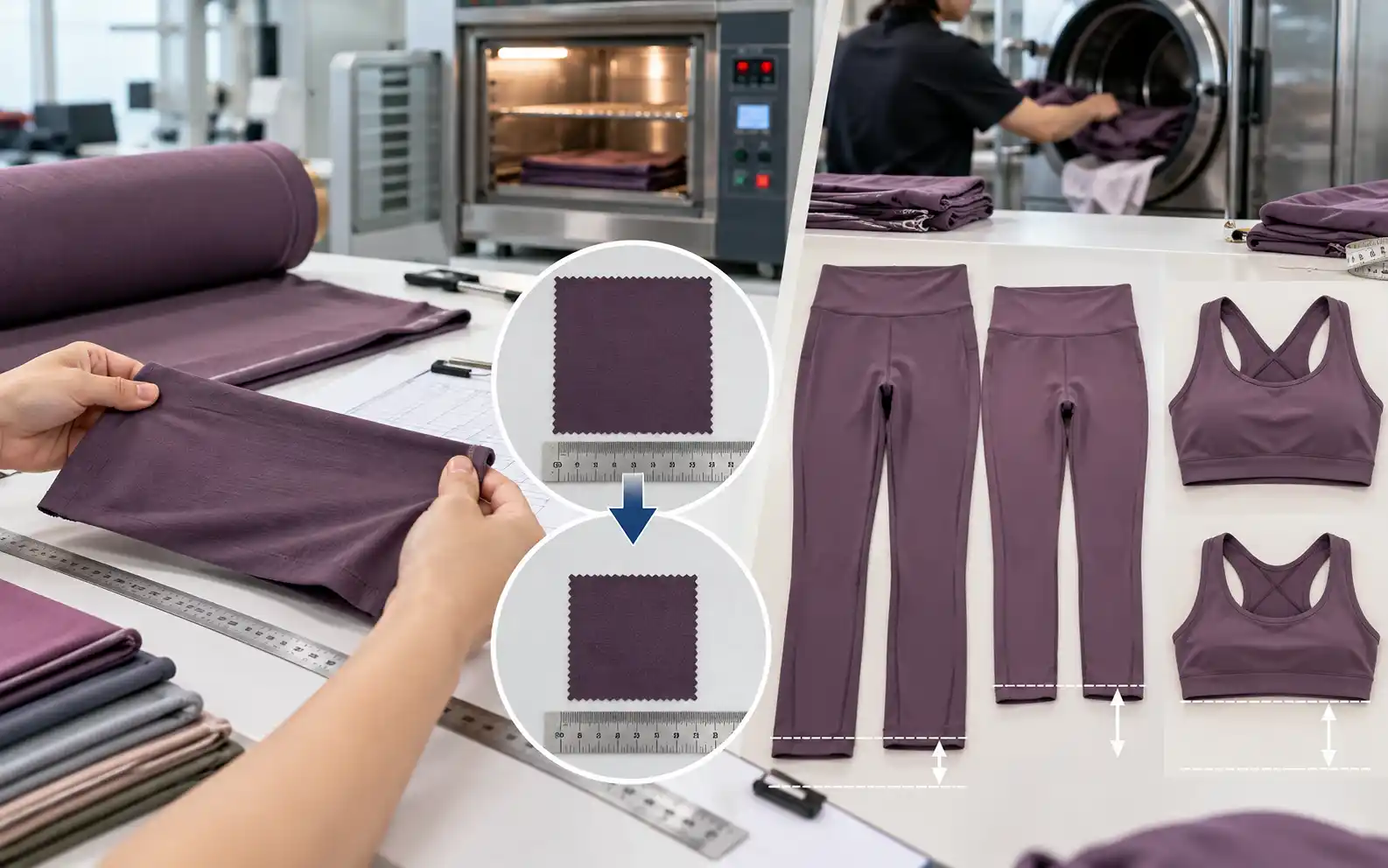
Fabric shrinkage can change the final measurements even when the pattern stays the same. Knit fabric needs time to relax after it comes off the roll. Washing, heat setting, and finishing can change its dimensions further.
The results are easy to spot in activewear. Leggings may come out with a shorter inseam. The waistband may feel tighter. A top may lose some body length.
We test bulk fabric shrinkage before cutting and compare the result with the approved requirement. Any result outside that limit needs review before production moves forward. For an affected order, ask the factory for the bulk fabric shrinkage result.
3. Wrong pattern/spec version
A bulk order can follow the wrong specifications when an outdated pattern or production file reaches the cutting or sewing team. Sampling often takes a few rounds. V1 becomes V2, and V3 is finally approved. But the cutting team may still receive the V2 pattern. The sewing line may also have an old measurement sheet.
This creates a frustrating situation: the approved sample is correct, but the bulk order is not. The problem is not the sample itself. It is version control between sample approval and production.
At bulk handoff, we make sure the pattern, spec sheet, and tech pack all match the approved version. We also tag the approved sample with its version number.
Changes made during sampling also need a clear record before approval. Our sample revision feedback guide explains how to track them.
4. Cutting variation
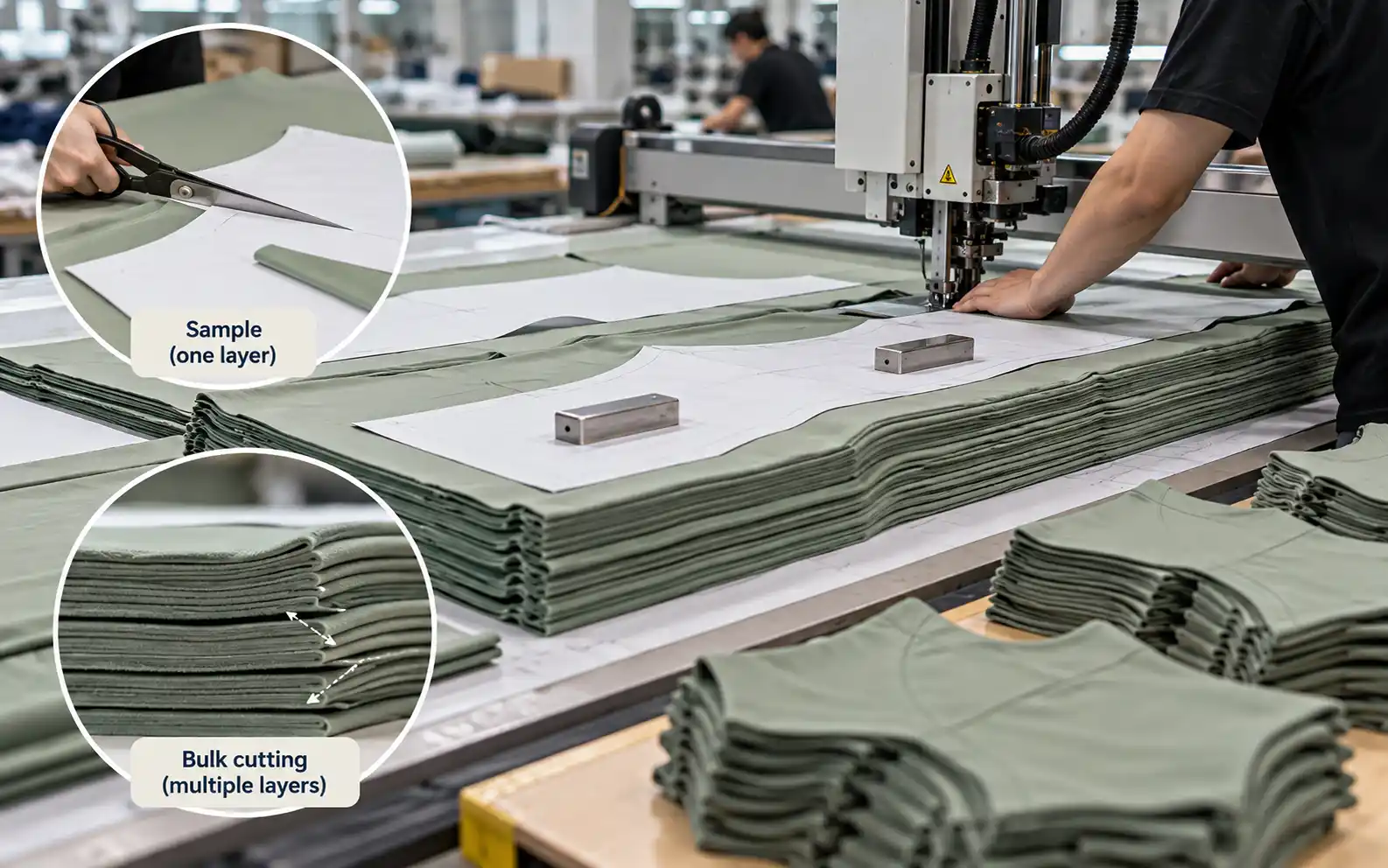
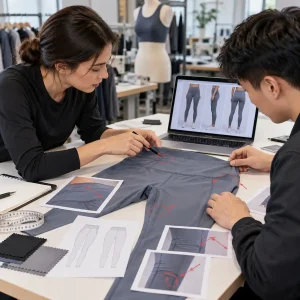
Bulk cutting can create measurement variation because multiple fabric layers are spread and cut at the same time. A sample, by contrast, is usually cut one piece at a time.
Fabric may not be spread flat. Layers can shift as the knife moves. The grain can also move out of position.
That’s why we let knit fabric rest for 24 hours before cutting. We check the top, middle, and bottom layers of the first lay against the pattern. Then we spot-check 10% of cut panels before they go to the sewing line.
6. Trims/branding changed
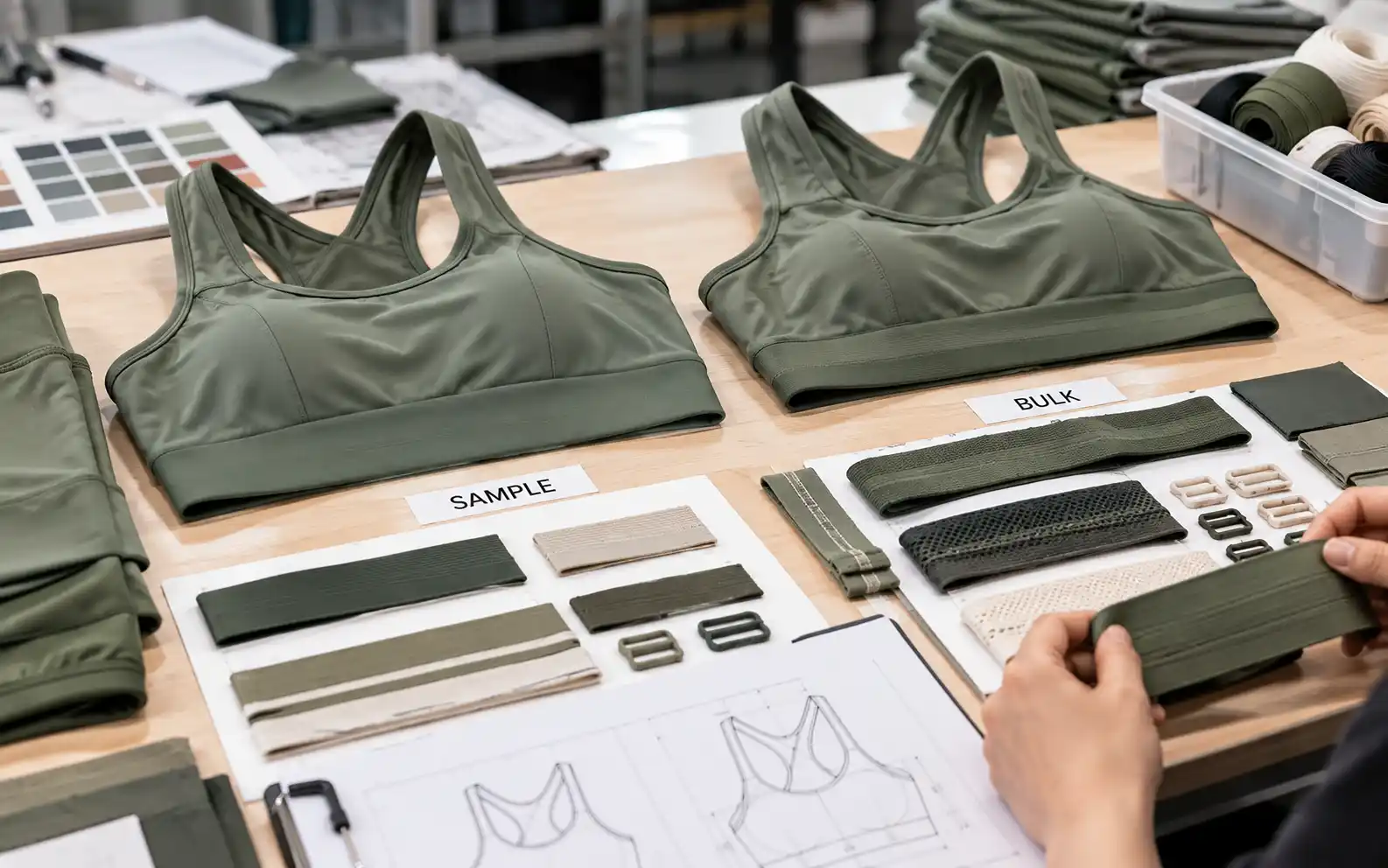
Replacing an approved trim can change the fit, function, or appearance of the bulk garment, even when the main fabric and pattern stay the same.
Let’s say the sample used elastic A, but bulk production switches to elastic B. It may look similar but stretch differently and change the waistband fit. A thinner drawcord may slip. Different padding can change the shape of a sports bra. A heat-transfer logo may also change in size, color, or position.
For each order, we keep a trim card with the approved specifications and physical swatches. Incoming bulk trims are checked against this reference before production starts.
7. Production variation wasn’t caught early
When the same defect appears across many pieces, we first trace where it started and why it was not caught earlier.
A defect may appear in the first few pieces. If no one catches it, the line keeps running and the same problem can spread across a large part of the order. At that point, it is no longer only a production issue. It also points to a failure in inline control.
Our first check happens on the first finished pieces, before the line runs at full speed. We check again during production, not only at final inspection. See our sportswear quality control guide for how these checks work at different production stages.
What Should You Do If the Bulk Order Is Already Different?
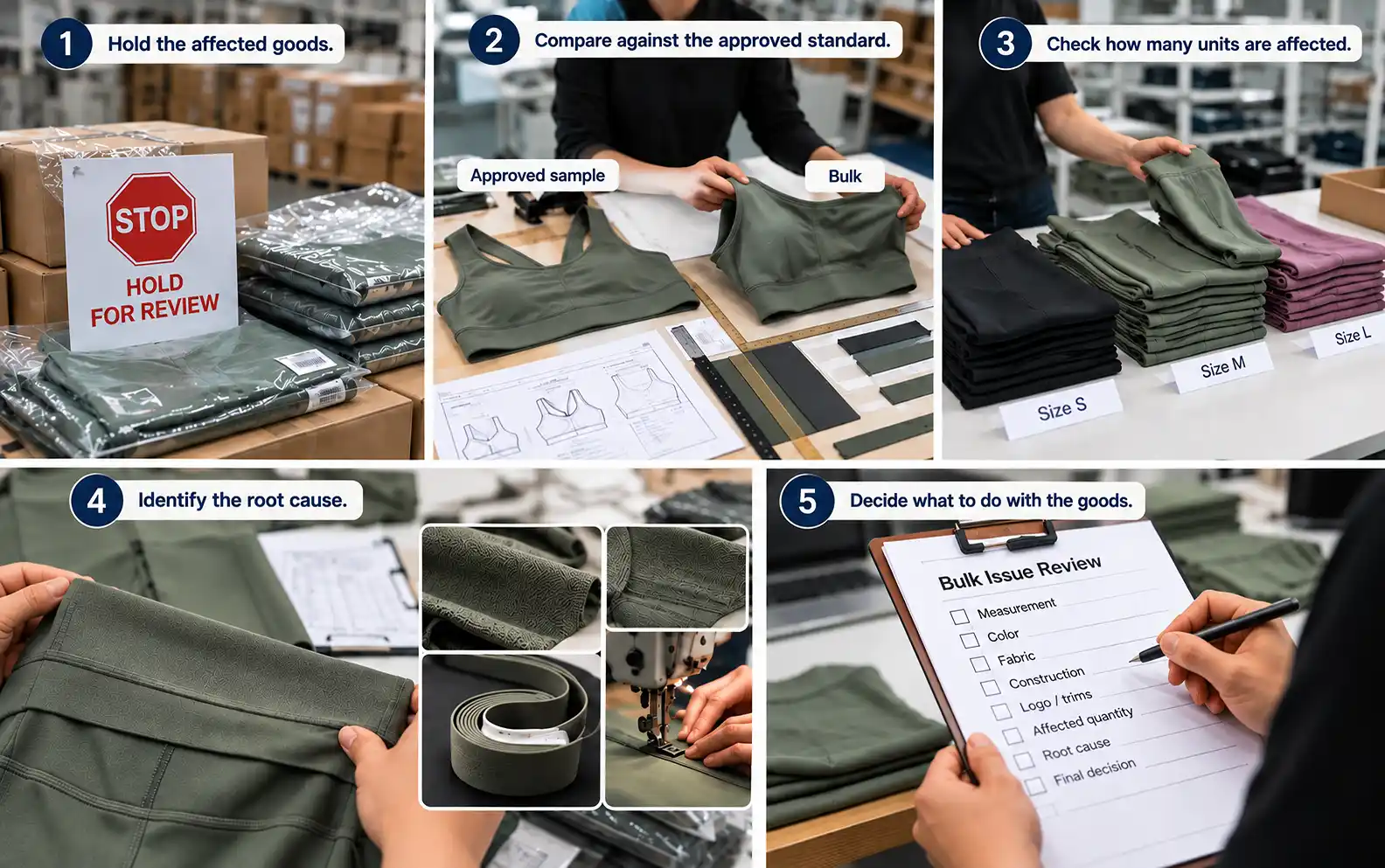
If a bulk order does not match the approved sample, use these five steps before accepting the goods or discussing a final solution. This is the same order we use when handling a production issue with a client.
Step 1: Hold the affected goods.
Hold the affected goods and stop shipment until the problem is reviewed. Once the goods leave the factory, fixing them takes longer and costs more.
Step 2: Compare against the approved standard.
Pull out the approved sample, tech pack, measurement spec, and fabric and trim approvals. Check the garment against all of them. Photos alone are not enough. Color can shift on screen, and fabric performance needs physical checking.
Step 3: Check how many units are affected.
Pull pieces from different cartons, sizes, and colors. Is it an isolated issue, one production batch, or the whole order? The answer decides what happens next.
Step 4: Identify the root cause.
Use what you found in Steps 2 and 3 to trace the root cause. Fix the cause before discussing the final solution.
Step 5: Decide what to do with the goods.
Use the table below as a starting point.
Finding | Possible Decision |
Within agreed tolerance | Accept |
Minor repairable issue | Rework |
Limited affected quantity | Sort and replace |
Major functional or spec failure | Remake and corrective action |
Put the final decision in writing, including responsibility, corrective action, and the revised delivery date.
How to Prevent Sample-to-Bulk Differences Before Production
The most effective way to prevent sample-to-bulk differences is to lock the production standard before bulk cutting starts. Each approved item should be final, documented, and shared with the production team. We do not start bulk until this step is complete.
Use this checklist before you give the go-ahead:
- Final approved sample: Tagged with the date and version number.
- Final pattern version: Matches the approved sample.
- Measurement spec and tolerance: Confirms the allowed range at key measurement points.
- Approved bulk fabric: Matches the approved fabric standard.
- Approved trims: Recorded with the correct specifications and references.
- Artwork and logo placement: Confirms the approved file, size, color, and position.
- Construction details: Recorded in the final tech pack.
The approved sample should not work alone. Bulk production should follow the approved sample together with the final tech pack, measurement tolerances, and trim approvals.
The goal is simple: what you approve should be what you receive. Working with a wholesale sportswear manufacturer that controls both development and bulk production can make that handoff easier to manage.
For an upcoming activewear order, tell us what you’re developing and what stage the project is at. We’ll see whether it fits our production capabilities.