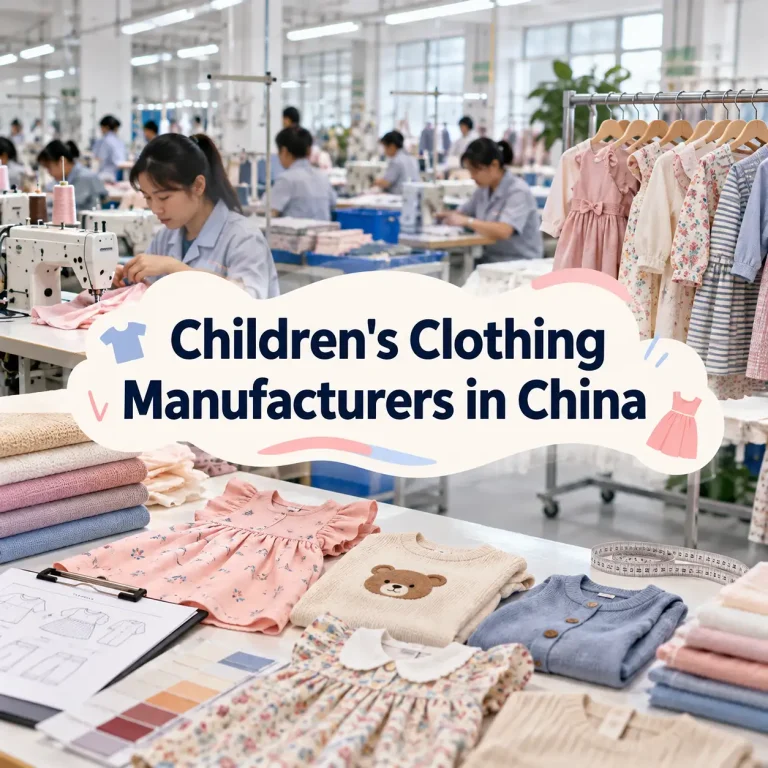
12 Children’s Clothing Manufacturers in China
Here is a closer look at each supplier, including the types of orders they may be best suited for.
1. HAPA Garments
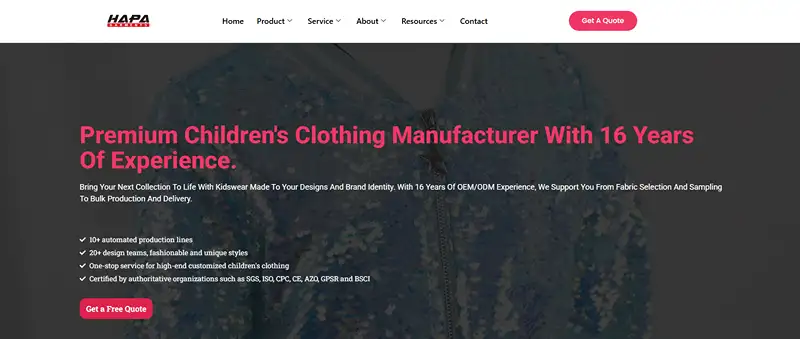
HAPA is a strong pick if your kids’ collection needs decoration. We mean sequins, beading, crystals, and tie-dye on dresses and matching sets. These details add extra steps to sampling, and HAPA builds its offer around them.
The published MOQ starts at 150 pieces per style or color, with mixed sizes allowed. This gives smaller brands room to test new designs before placing larger orders. Custom fabrics and trims may change the minimum.
Before approving an embellished dask for close-up photos of the finished decoration and its reverse side. Check whether the factory can keep the bead pattern, spacing, and placement consistent across different garment sizes. These details are easy to overlook in a single sample.
2. SuzyKids
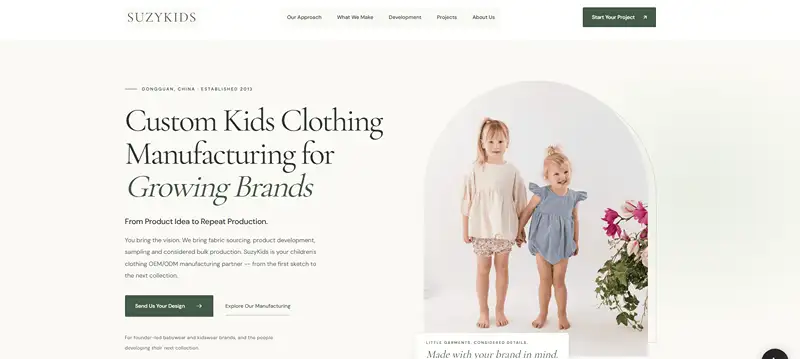
SuzyKids is a better fit for babywear than general kidswear. Its work centers on rompers, baby hoodie onesies, swaddles, muslin wraps, and soft pajamas, often in bamboo or organic cotton.
SuzyKids puts more emphasis on product development than ready-made styles. You don’t need a finished tech pack. Sketches, reference samples, or photos can get the process started. That helps new brands with a clear idea but no technical files yet. Once you receive the first sample, use clear sample revision feedback to explain any changes the factory needs to make.
MOQ, lead time, and sample costs are not published. You’ll need to request these details based on your designs and order quantities. We suggest sending quantities per style and color in your first message to make supplier comparisons easier.
3. MK Kids
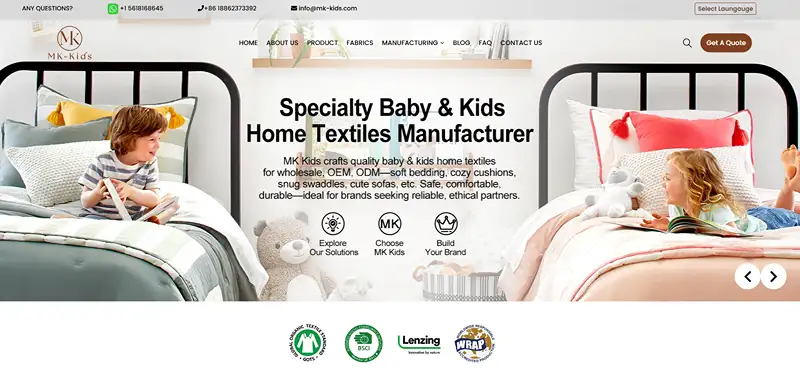
We’d call MK Kids a generalist, and that shapes who should pick it. Its range runs from baby rompers and kids’ dresses to denim jeans, swimsuits, towels, and even nurse scrubs.
Our concern is production depth. Ask which products are sewn in MK Kids’ own workshop and which are outsourced. Request a short production video for your product type or examples from past orders. This will tell you more about its experience than a long product catalog.
You get one dedicated contact who shares photos and videos on WhatsApp. For a first-time founder, that can make production easier to follow. EXW and FOB quotes also let you compare factory charges separately from international freight.
4. LuckPanther
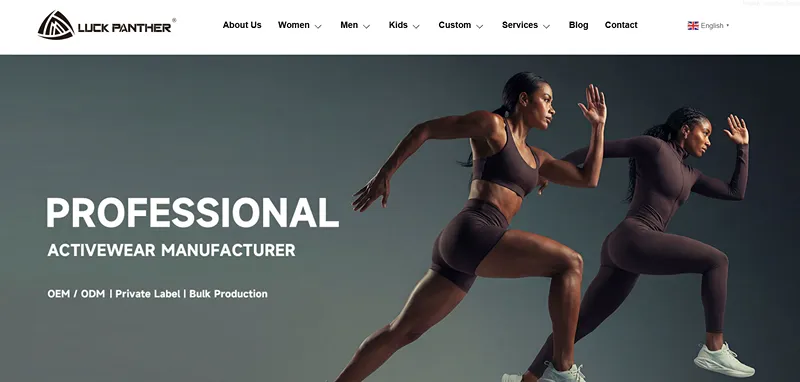
LuckPanther is our own factory, so we’ll be clear about our fit. We focus on children’s activewear and casual sportswear, not newborn rompers or baby bedding.
Our main concern is keeping bulk production consistent with the approved sample. We confirm four things before production: fabric specifications, measurements, seam construction, and branding details. Even a small change in fabric stretch or logo placement can affect the finished garment.
Children’s size grading deserves extra attention. One approved sample size doesn’t guarantee the same fit across the full size range. We recommend checking measurements on both the smallest and largest sizes before bulk production.
5. TPC Textile
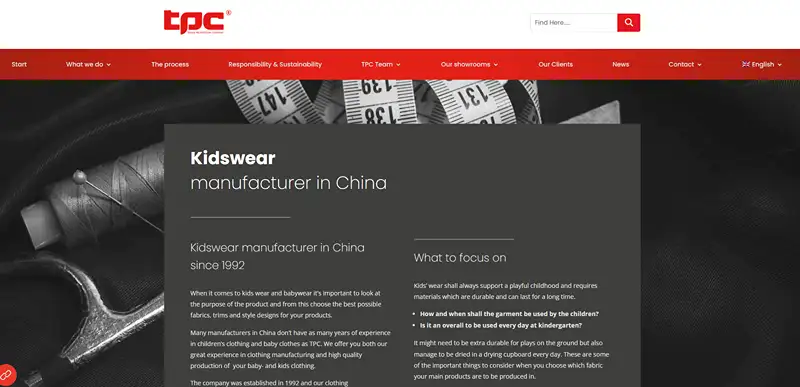
TPC works more like a production manager than a single factory. Its team sources fabrics and trims, places orders with garment factories, and sends QC staff to monitor production. This gives brands one team to manage several parts of the process.
We like how TPC thinks about kids’ clothes. The questions start with how the garment will be used. Is it daily kindergarten overalls? Will it be worn for play on the ground and dried in a drying cupboard every night? Those answers drive the choices on fabric, abrasion resistance at the knees, stretch at the leg opening, and room to grow.
6. Guangzhou Gaoteng Garment
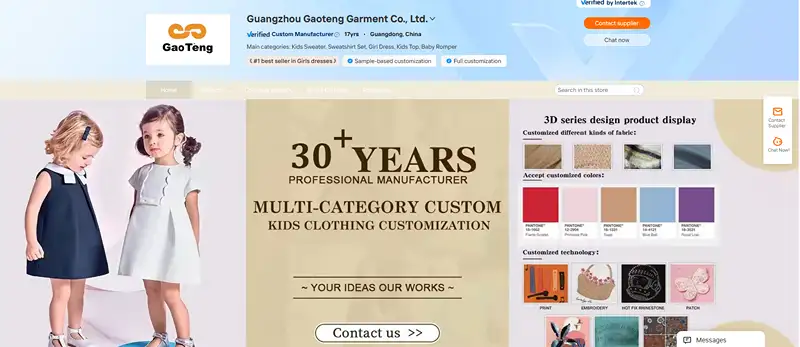
Gaoteng’s strength is fashion-led girlswear. Dresses, knit sweaters, and coats are its main products. It also offers family-matching sets. Decorative details help these styles stand out. But they can also cause problems.
Start with beads and sequins. Loose decoration is a real risk on kids’ clothes. Ask how the factory attaches each piece. Request test results for the strength of these attachments. Check bows, buttons, and snaps too. A good-looking sample does not mean every detail is secure.
Chiffon needs a different check. It can feel scratchy around the neck and underarms. Look closely at the lining and seams. Have a child in the target age group try on the sample under adult supervision. Check how it feels when they move. This helps you judge comfort, but safety testing is still needed.
7. AEL Apparel
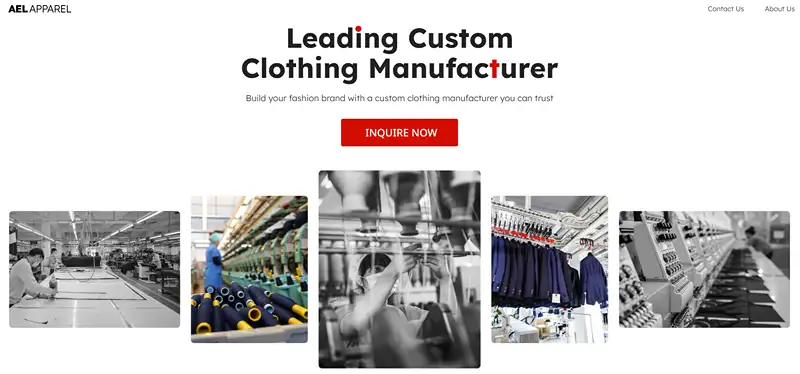
One detail in AEL’s order process caught our attention: the deposit comes before the prototype review. For a first order, we would clarify this step. Ask whether you can pay for sampling separately. Also confirm what happens to the deposit if the sample is not approved.
Kids’ clothing is one of several categories at AEL. We would focus on its printing, sublimation, and embroidery services. These could work well for kids’ tees and sweatshirts with bold graphics.
Print quality is the key thing to test. On small sizes, a large print can feel stiff against a child’s chest or crack after washing. Wash the sample several times. Check the print size and placement on each garment size. Don’t just scale down artwork from an adult tee.
If you’re exploring manufacturers in China for other categories, see our guides to sportswear manufacturers, leggings manufacturers, and hoodie manufacturers.
8. Yubei Apparel
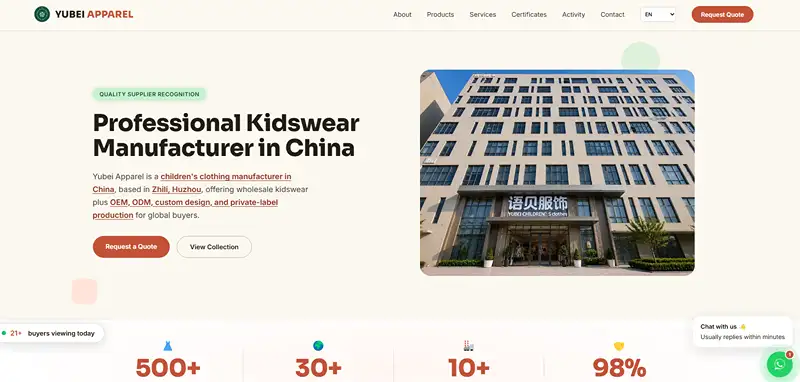
Yubei offers both ready-stock and custom girlswear. Its seasonal collections include faux-fur vests, shearling jackets, and matching pants. Ready stock works well for testing kidswear trends. But ask if you can choose your own size mix. Fixed-size packs may leave you with unsold pieces.
Restocking is the bigger concern. Popular sizes can sell out during the winter season. Ask which styles can be reordered and whether the fabric and color will match. A jacket that no longer matches its pants can leave you with incomplete sets.
For custom orders, check whether Yubei can adjust jacket lengths, waistbands, and fit across age groups. We would test a small stock order first, then request custom samples before committing to production.
9. Taian Lianchuang Textile
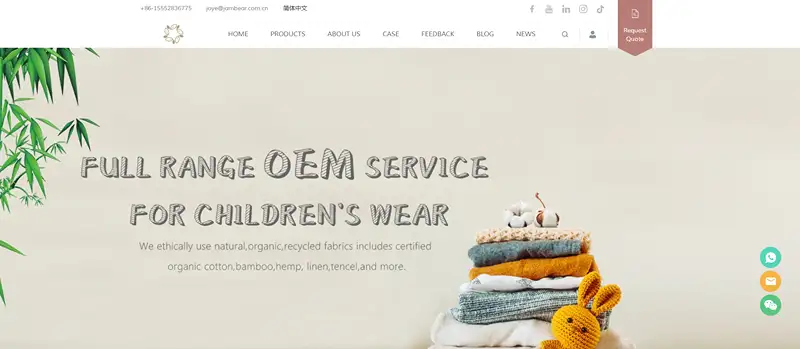
A babywear collection often needs more than one type of garment. Rompers need easy diaper changes. Sleep sacks need safe neck openings and well-finished zippers. Pajamas need enough room for movement. Taian Lianchuang offers all three, but we would not judge them by the same sample.
Our first question would be whether Taian Lianchuang can develop these products as one collection. Ask for a sample of each style using the same fabric and print. Then compare the color, fabric feel, and construction across the set. Each garment should still be approved separately, even when the materials match.
10. SIUKID
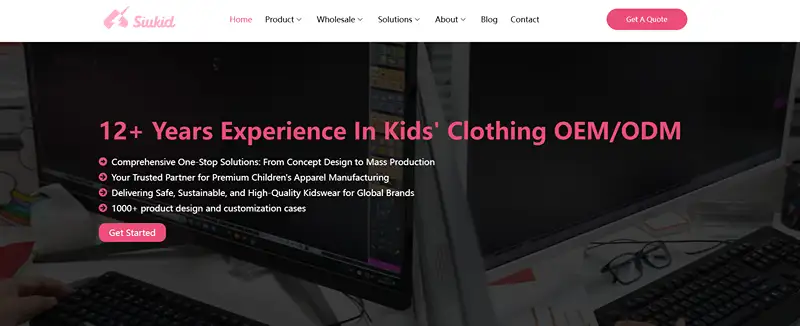
SIUKID offers more than standard cut-and-sew production. It says it can produce or source fabrics. It also offers dyeing services and works with subcontractors. That flexibility caught our attention. But it raises one question: who actually makes each part of your order?
A collection with dyed fabrics, printed T-shirts, and woven jackets may pass through several production stages. Ask SIUKID whether it uses one approved color standard across those stages. Also confirm who signs off on fabric shades before cutting begins.
For orders involving subcontractors, request a clear approval process. If a fabric shade or print changes, who informs you and waits for approval? We would pay more attention to how these changes are controlled than to the number of services listed on its website.
11. Zhucheng Huibo Knitting
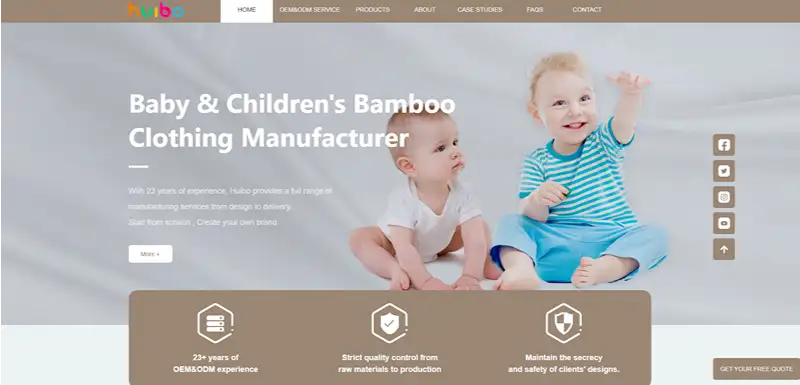
The closure is the product on many baby garments. A zipper footie or snap romper sells on how easily a parent can use it at 3 a.m. That is where we would focus our checks.
For zippers, check whether the pull has a cover at the chin. For snaps, request attachment-strength test results. Fold-over cuffs also deserve attention. Turn the sample inside out and check for loose threads that could catch a baby’s fingers.
We would consider Huibo for practical babywear, especially footies and rompers designed for easy dressing. Before placing an order, check closure quality and request the safety test results required for your target market.
12. Muhong Apparel
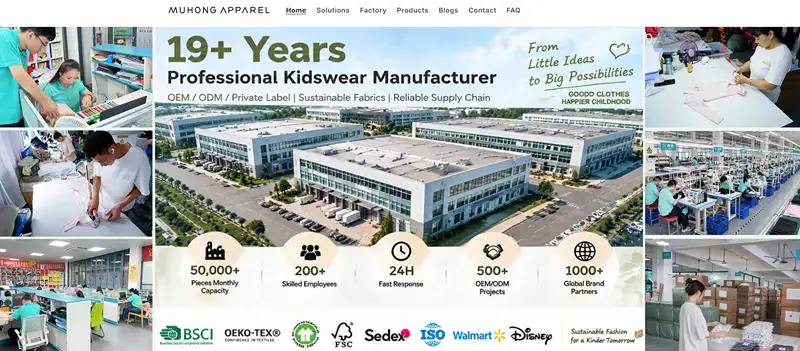
Muhong’s family and pet matching pajamas caught our attention. One print must work on baby bodysuits, kids’ pajamas, adult tops, and pet clothing. Ask how Muhong adjusts the print size and placement for each garment. Pet clothing also needs its own patterns. We would use one color standard for the whole collection.
Muhong offers 95% organic cotton or 95% bamboo viscose, both blended with 5% elastane. Jersey, rib, waffle, and fleece can feel very different. Ask for the GSM and shrinkage results for each fabric before production.
Confirm which sizes go in each pack. Also check whether barcodes go on each garment or the full set. This helps avoid repacking later. We would consider Muhong for brands selling family matching pajamas. It is a better fit for coordinated sets than simple, single-piece basics.