What Each T-Shirt Manufacturer Specializes In
Manufacturer | Main T-Shirt Type | Fabric Focus | Custom Options |
LuckPanther | Running & training tees | Polyester, polypropylene & performance blends | Performance fabric, fit, color, logo & private label |
Mingxing Clothing | Graphic, boxy & oversized tees | Cotton jersey, organic cotton & blends | DTG, DTF, screen/puff print, neckline & fit |
YC Apparels | Basics, retail & repeat-order tees | Cotton, blends & custom-sourced fabrics | Fabric spec, color, trims, labels & repeat programs |
Secxon Clothing | Basic to heavyweight cotton tees | 135–280 GSM cotton, organic cotton & cotton-spandex | Fabric weight, large color range, fit & branding |
Runtang Textile Co., Ltd. | Basic, fashion & performance tees | Jersey, rib, interlock, slub & pique | Knit structure, dyeing, finishing, fit & branding |
Standford Garment | Basic, polo & custom knitted tees | Cotton, cotton-poly, dry-fit polyester & cotton-spandex | Pantone dyeing, print, embroidery, sizing & labels |
Qianshiwear | Oversized & cut-and-sew streetwear tees | Cotton jersey & heavyweight knits | Drop shoulder, panels, seam details, wash & graphics |
YALI Clothing | Basic, fashion & private-label tees | Cotton, blends & custom fabrics | OEM/ODM, fit, trims, wash, print & private label |
FeiXiang Apparel | Basic, fashion & promotional tees | Cotton, polyester & blended knits | Fit, artwork, labels, retail packaging & branding |
JUNSHEEN | Regular, oversized & extended-size tees | Cotton, blends & custom-developed fabrics | Pattern, size grading, materials, decoration & labels |
Related Reading:
- 12 Best Yoga Wear Supplier China for International Clothing Brands
- Top 10 China Leggings Manufacturers: A B2B Sourcing Guide
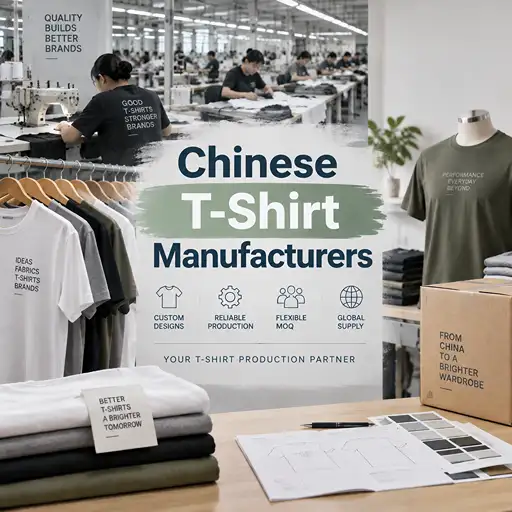
10 Chinese T-Shirt Manufacturers
Each manufacturer on this list brings something different to T-shirt production. The sections below look at their key strengths, where they fit best, and what is worth checking before you choose.
1. LuckPanther — Better for Performance-Led T-Shirt Lines
A basic cotton tee is easy to source in China. The challenge starts when your collection also includes running or training tops. These styles need different fabrics and tighter performance controls.
This is where LuckPanther stands out. One current workout tee uses 88% polyester and 12% polypropylene instead of basic cotton or polyester jersey. The fabric is developed for a lightweight and breathable feel. Custom orders can start from 100 pieces per item per color, although the MOQ can change with the fabric and process.
Quality checks also happen before the order reaches final inspection. LuckPanther uses first-piece and in-line inspections during production. Final inspection can follow AQL 2.5. This helps catch repeated sewing, measurement, or workmanship problems while there is still time to correct them.
Shortlist LuckPanther if your collection mixes basic tees with running, gym, or other performance styles. If you only need large volumes of basic blank cotton tees, a factory focused on basic knitwear may be a better fit.
2. Mingxing Clothing — Small-Batch Custom & Graphic Tees
A new T-shirt brand may want to test several designs without ordering 500 pieces of each. Mingxing Clothing gives smaller brands more room to do this.
Its standard MOQ is 100 pieces per design per color. Sizes can be mixed within that quantity. Some projects can start from 50 pieces per design per color, depending on the fabric and customization. Samples take about 10–15 working days. Bulk production takes around 25–30 working days.
Mingxing also has a strong focus on graphic and streetwear tees. Options include screen printing, DTG, DTF, puff printing, and heat transfer. Buyers can also adjust the body length, width, sleeves, neck rib, and grading for boxy or oversized fits.
For a new streetwear brand, this gives you room to test different graphics and fits in smaller runs. A buyer sourcing only large volumes of basic tees may not need this level of flexibility.
3. YC Apparels — Better Visibility During Bulk Production

There is often a long gap between sample approval and final shipment. YC Apparels gives buyers more visibility during this stage. Its production update process stands out among the Chinese T-shirt manufacturers on this list.
Buyers can receive updates at around 50% and 80% of production. YC can also share QC reports and inspection photos. The 50% check is useful. If the same sewing or measurement problem keeps appearing, there is still time to correct it before most of the order is finished.
YC also supports repeat T-shirt orders that need the same fabric, color, and trims. We would ask how these approved standards are saved for the next order. A tech pack records the specification, but it may not prevent changes between different fabric lots.
4. Secxon clothing — More Fabric Choices Before Development
Secxon caught our attention for its fabric range. The factory lists more than 500 fabric options, including many choices for T-shirts.
For cotton tees, buyers can choose from 180, 230, 250, and 280 GSM fabrics. Its 280 GSM single jersey has a 107-color chart. Cotton-spandex blends are also available when more stretch is needed. Organic cotton options range from 135 to 190 GSM.
“Heavyweight cotton” is still too vague for an RFQ. A 250 GSM and a 280 GSM jersey can feel and drape very differently. We would request two or three fabric swatches before choosing one. GSM alone should not decide the fabric.
Secxon is more useful when the T-shirt fabric has not been locked yet. Buyers who already have an exact nominated fabric may not need such a large fabric range.
5. Runtang Textile Co., Ltd. — Fabric Development Under One Roof
Runtang goes further upstream than a typical cut-and-sew factory. Its production covers knitting, dyeing, fabric finishing, and garment making. Fabric changes can be made before the T-shirt reaches the sewing line.
An existing jersey may have the right basic spec but still feel wrong. The buyer may need a softer surface, more structure, better stretch, or a different texture. Runtang works with single jersey, rib, interlock, slub, pique, and fiber blends. This gives buyers more ways to adjust the fabric itself.
For us, the value goes beyond having a large fabric catalog. When sourcing custom T-shirts in China, buyers can discuss fabric problems with the same supplier making the garment. This can reduce the back-and-forth between a textile mill and a sewing factory.
6. Standford Garment — Better Suited to Washed & Vintage Tees
Standford Garment is more relevant when the garment wash is part of the T-shirt design. Its range includes acid-wash, mineral-wash, vintage, faded, and oversized tees.
Washed T-shirts need careful development. Washing can change the color, surface, measurements, and seam shape. A good wash is not just about getting the right shade. The finished tee also needs to keep the approved look and fit.
We would confirm the wash standard before bulk production. A reference color alone may not be enough. The buyer should also agree on an acceptable shade range and finished appearance. This becomes more important when one collection uses several washed colors.
7. Qianshiwear — Better for Panelled T-Shirt Construction
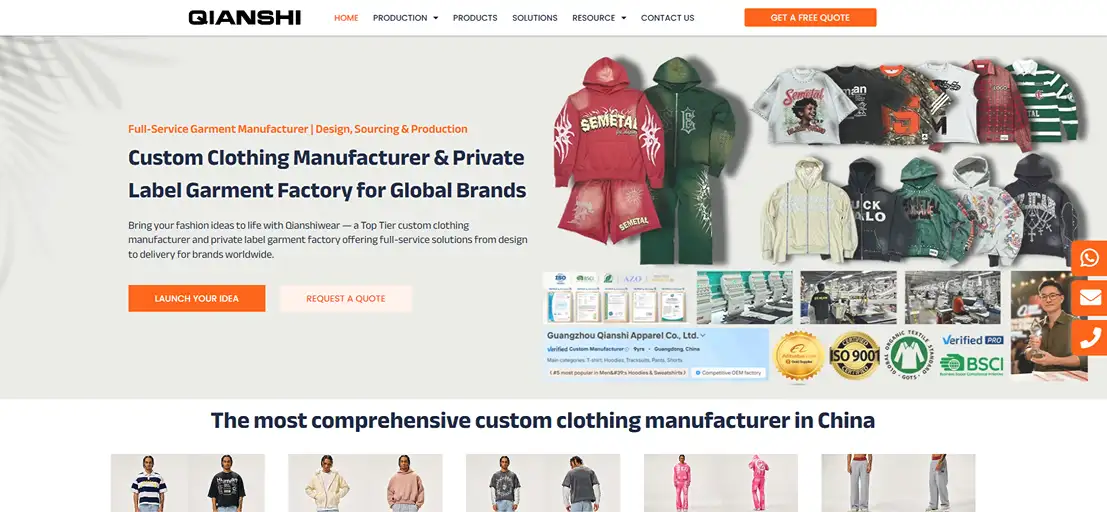
Qianshiwear stands out to us for its cut-and-sew T-shirt construction. Its examples include curved panels, diagonal seams, and other designs that require separate fabric pieces to line up during sewing.
This matters more than it may seem. On a panelled tee, the seam itself becomes part of the design. We would check where two panels meet, whether the seam follows the intended line, and whether the left and right sides stay balanced. Poor alignment is much easier to notice than on a basic T-shirt.
For this type of order, we see Qianshiwear as a better match for brands developing construction-led streetwear, rather than brands that only need a standard tee with a graphic added.
8. YALI Clothing — More Than One Sourcing Route

YALI gives buyers three ways to source T-shirts: custom OEM, private label ODM, and wholesale blanks. The right route depends on how much product development your brand has already completed.
A brand with a finished tech pack can use OEM and develop the T-shirt to its own specs. A buyer without a finished design can start with YALI’s ODM styles and make changes. Wholesale blanks are another option when the main need is branding rather than product development.
We would decide the sourcing route before asking for a quote. Changing a blank is not the same project as developing a T-shirt from scratch. The fabric, pattern work, sampling, and cost structure can be very different.
9. FeiXiang Apparel — Better for Retail-Ready T-Shirt Orders
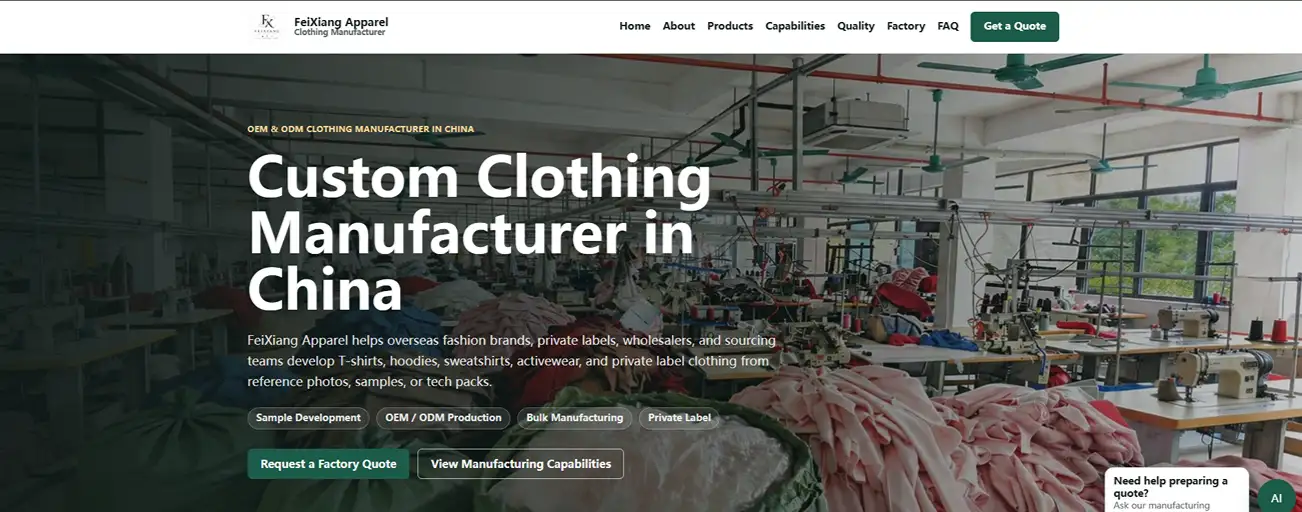
FeiXiang may suit buyers who need T-shirts ready for retail after they leave the factory. Its production review can include folding, poly bags, stickers, barcode labels, hangtags, and carton marks.
These details look small, but mistakes can create extra work after delivery. A wrong barcode may stop stock from entering a warehouse. The wrong folding size can also affect the bag and carton setup.
We would send the packing guide together with the T-shirt tech pack. It should show the fold method, label position, barcode, bag size, and carton mark. These details are easier to correct before packing starts.
10. JUNSHEEN — A Flexible Option, but Verify Before Scaling
JUNSHEEN is worth considering for brands that want to test a T-shirt before placing a larger order. Some custom programs start at 100 pieces per style and color. Its T-shirt range includes regular, oversized, and extended-size fits.
The factory also keeps approved patterns, graded size sets, and material records for repeat orders. We see value in this. Reorders can go wrong when the factory only follows an old tech pack. The original production records give the team another reference.
However, these records do not guarantee repeat quality. We would compare the first order with the reorder. Check the fabric feel and finished measurements first. Then check the collar shape and decoration position.
JUNSHEEN may work well for brands that want to start small and scale one T-shirt style. The real test comes when order volume grows. The product should still match the first approved order.
T-Shirt Details to Confirm Before You Choose a Factory
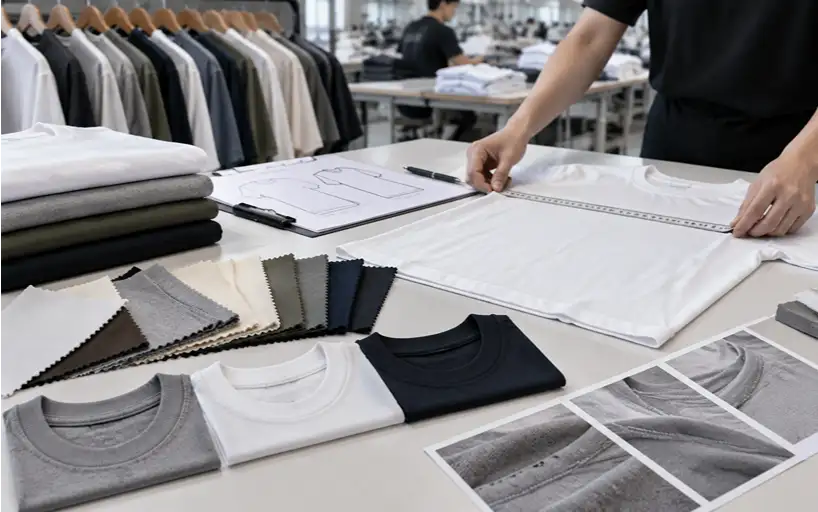
Before comparing factories, make sure they are quoting the same T-shirt. A lower price can simply mean the factory is working from a different fabric or construction standard.
1. Give the Factory a Clear Fabric Target
“100% cotton” is not a complete fabric spec. Define the knit structure, hand feel, surface, and finish as well. If feel is important, approve a swatch instead of relying on words such as “soft” or “premium.”
2. Define the Fit With Numbers
“Boxy” and “oversized” are not production specs. The chest, body length, shoulder, and sleeve measurements should be defined before sampling.
A reference T-shirt can also be measured and used as the starting point. This removes much of the guesswork during pattern development.
3. Set a Clear Collar Standard
The collar can change the whole look of a T-shirt. Rib width, neck opening, and recovery should be checked together.
A collar that looks clean on a new sample may become loose or wavy later. In our production checks, the collar is one area we look at again after washing.
4. Specify the Artwork Position
“Center chest” is too vague for bulk production. Print placement should use fixed measurement points, such as the neckline, HPS, or center front.
This is especially important across different sizes. The same artwork position may need adjustment to keep the design visually balanced.