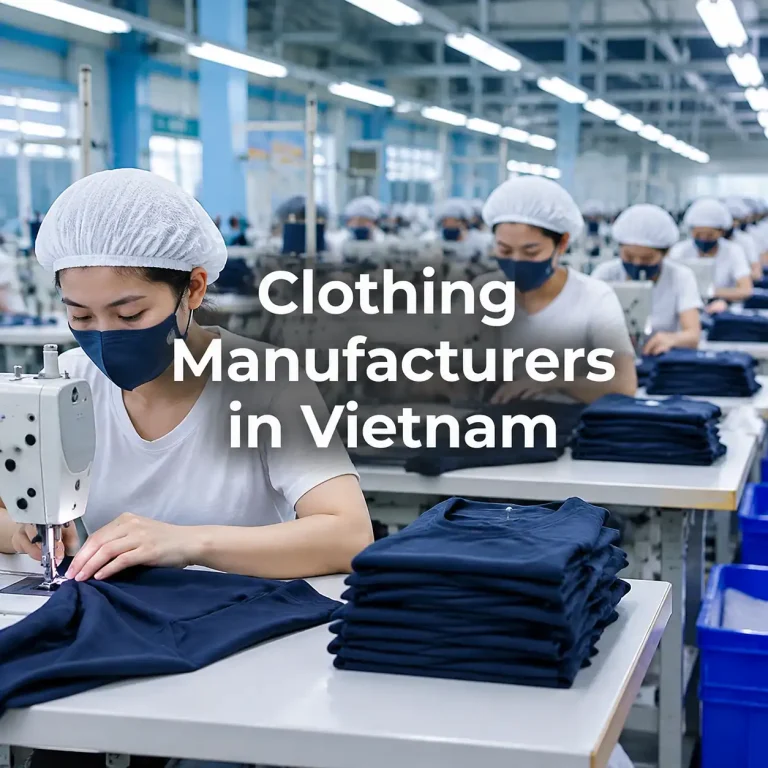
What Makes Vietnam a Major Clothing Manufacturing Hub?
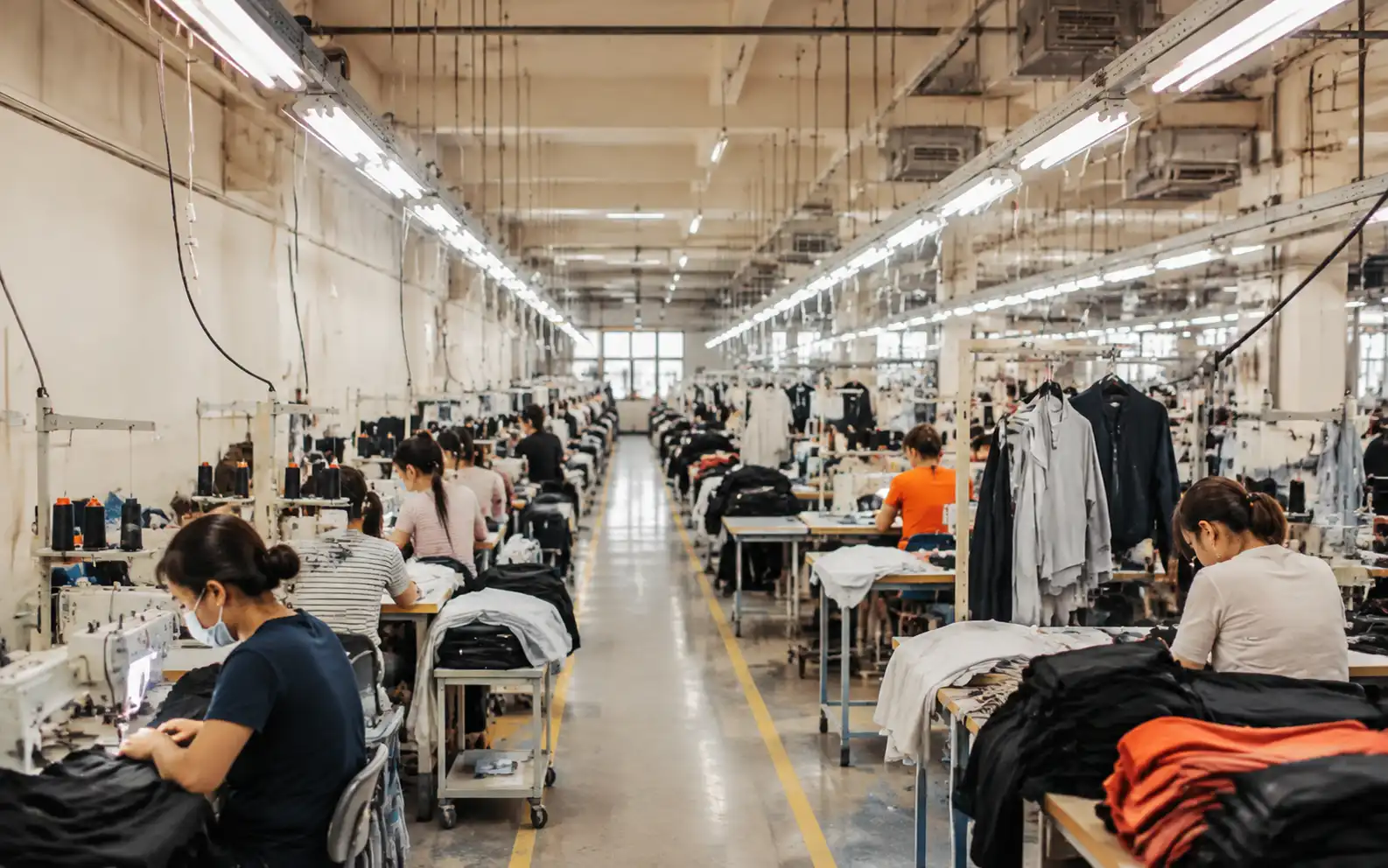
Vietnam has a broad export base, but factory skills, sourcing routes and order terms vary. These differences matter when you compare suppliers.
A Strong Export-Oriented Apparel Industry
Vietnam is an established apparel exporter. Its main markets include the US, EU, Japan and South Korea. Buyers often look at three factors:
- Competitive labor costs, although total cost also depends on productivity, materials and order size.
- Possible tariff benefits under CPTPP and EVFTA when the product meets the relevant rules of origin.
- Social compliance audits or certifications, such as amfori BSCI, SMETA and WRAP. Their scope and status vary by facility.
Vietnam can suit steady, repeat programs, but it is not always the lowest-cost option. Compare the full product and landed cost before moving an order.
Different Strengths in Knitwear and Woven Garments
Knit and woven garments need different production skills. A factory with strong knitwear lines may not have the same experience in tailored woven styles.
Knit garments can shrink or twist after washing. Ask how the factory tests shrinkage and controls fabric relaxation before cutting.
Woven garments such as shirts and trousers need accurate patterns, sewing and pressing. Tailored suits also require more specialized construction skills.
An Established Supply Chain for Garment Production
Factories may handle cutting and sewing in-house but outsource printing, embroidery or finishing. Do not assume every process is done at the same site.
Many factories source some fabrics and trims from overseas, including China, South Korea and Taiwan. Imported materials can affect lead time and cost. They can also affect tariff eligibility under trade agreements.
Before placing an order, confirm:
- Where will the fabric and trims be sourced?
- Are the materials in stock or made to order?
- Can the supplier provide origin documents if you plan to claim a tariff preference?
Suggested Reading:
- 10 Sportswear Manufacturers in Vietnam: Who Fits Your Order?
- 10 Clothing Manufacturers in China by Apparel Specialty
Vietnam Clothing Manufacturers: A Side-by-Side Comparison
The manufacturers below differ in product focus, production models and the level of public information available. Use the table to shortlist suppliers, then verify the details for your own order.
Manufacturer | Main Product Focus | Production Model / Services | Key Manufacturing Strength |
TNG Investment and Trading JSC | Jackets, padded jackets, coats, trousers | CMT, FOB, ODM | Outerwear production and in-house product development |
Viet Tien Garment Corporation | Shirts, trousers, suits, jackets | OEM, ODM, FOB | High-volume woven garment production |
Garment 10 Corporation | Knitted jackets, pullovers, woven shorts, shirts, uniforms | CM, FOB, ODM | Multi-factory production across knitwear and woven garments |
Song Hong Garment JSC | Padded jackets, down jackets, quilted garments | Export garment manufacturing | Padded outerwear, quilting and polyester wadding |
Duc Giang Corporation | Coats, blazers, shirts, trousers | OEM, product development | Material sourcing and structured garment construction |
Nha Be Garment Corporation | Men’s suits, women’s formalwear, tailored jackets | Contract manufacturing, own brands | Tailoring equipment and structured garment production |
Hoa Tho Textile & Garment JSC | Dress pants, casual pants, workwear, uniforms, knitwear | Export garment manufacturing | Trouser production and in-house spinning operations |
TG Apparel JSC | Safety workwear, uniforms, outdoor clothing, insulated garments | Custom garment manufacturing | Functional apparel and large-scale production |
GENVIET Factory | Jeans, denim jackets and other denim garments | OEM, ODM, FOB, private label | Denim washing, finishing and product development |
Khoa Vu Trading Co., Ltd. | Dresses, skirts, shirts, shorts, yoga clothing | OEM, MTO | Custom knitwear and woven garment production |
10 Clothing Manufacturers in Vietnam
1. TNG Investment and Trading JSC
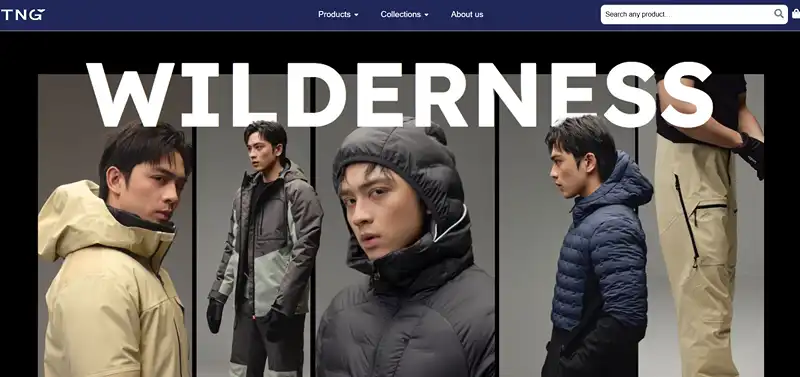
TNG’s strongest public product evidence is in jackets and outerwear. Its ODM range includes padded jackets, coats and trench coats for men, women and children. Export shipment records also show jackets, trousers, polos and bibs. This range is relevant to brands developing cold-weather or sports outerwear.
TNG offers ready-design options that buyers may be able to adapt. Check which styles are still active before building a collection around the catalog. The latest collection information located for this review was from 2024/25.
TNG has worked under CMT and FOB models and has in-house pattern and sample teams. Under CMT, the buyer supplies the materials. Under FOB, confirm which materials TNG sources and which are buyer-nominated. Also check whether the quoted factory has made your type of jacket.
2. Viet Tien Garment Corporation
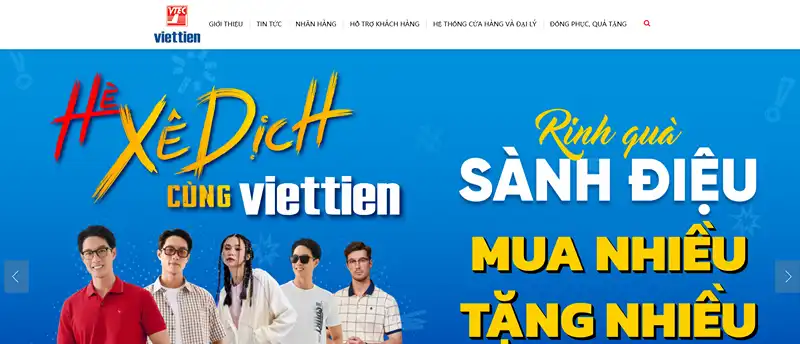
Published industry data reports annual capacity of about 13.7 million shirts and 13.9 million dresses and trousers for Viet Tien. Its range also includes suits and jackets. Treat these figures as reported capacity, not open capacity for new orders.
Viet Tien’s scale may suit larger woven-garment programs. It does not prove that every factory accepts small orders or makes every product. Check the product range and order terms for the facility assigned to your style.
Viet Tien is expanding its FOB and ODM work. If you need fabric sourcing or design support, confirm which services are available for your product. Ask whether pattern changes and sample development are included in the quoted scope.
For shirts, focus on collar shape, placket alignment and sleeve measurements. For trousers, check waistband fit, seam quality and pressing. These product-specific details are more useful than judging the supplier by capacity alone.
3. Garment 10 Corporation
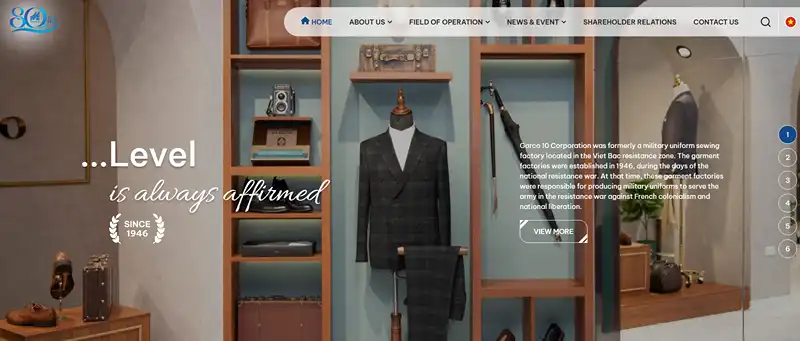
Garment 10 operates through a network of member factories. The key question is how your order will move through that network. The answer can affect quality control, timing and responsibility for problems.
Export records show both knitted and woven garments, including knitted jackets, pullovers and woven shorts. Treat Garment 10 as a group of specialized factories rather than one uniform production site. Confirm whether the full order stays at one plant or moves between facilities.
Garment 10 lists CM, FOB and ODM services. These models place different responsibilities on the buyer and factory. If the factory sources materials, agree who handles late or defective supplies. If you provide the fabric under CM, confirm who checks it before cutting.
Garment 10 reports amfori BSCI and Better Work involvement. These do not automatically cover every factory in the group. Check the current status and facility scope of the relevant audit or program before relying on it.
4. Song Hong Garment JSC
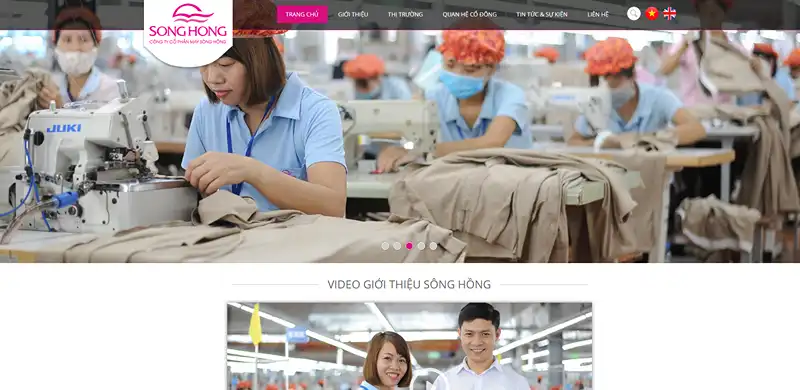
Song Hong’s 2024 annual report identifies separate facilities for padded jackets, quilted garments and related processes. This makes its outerwear production setup more specific than a general garment product list.
Song Hong 3 makes padded and quilted jackets and handles seam sealing. Song Hong 4 produces padded jackets and polyester wadding.
Song Hong 8 handles polyester wadding, quilting, embroidery and printing. This combination may suit orders that need several decorative or padded processes. However, the listed capabilities sit across different facilities, not necessarily one production line.
For down jackets, ask whether the factory has made the same filling type and quilting layout. Request a comparable production reference. Check how it controls filling distribution, seam leakage and quilting consistency.
5. Duc Giang Corporation
For coats and blazers, request an itemized quote. Material choices and construction details can change the cost sharply.
Third-party directories report European labels among Duc Giang’s customers. Treat those listings as leads, not proof of a direct production relationship. A customer name alone does not show which products or services the factory supplied.
Ask for separate costs for shell fabric, lining, interlining or filling, trims and labor. A single total makes supplier quotes hard to compare. A lower price may reflect a different material specification or a different scope of work.
For structured garments, ask how the factory controls fusing and pressing. Poor fusing can cause blazer fronts to bubble or lose shape. Check whether the quote includes the required interlining and finishing steps.
6. Nha Be Garment Corporation

Nha Be produces men’s suits, women’s formalwear and tailored garments. Its listed equipment includes automatic welt-pocket machines, sleeve-setting machines and fusing presses. These machines support detailed tailoring operations.
This equipment is relevant to buyers developing structured formalwear. However, machine lists do not confirm the construction level a factory can deliver. Ask which jacket constructions it currently produces.
For tailored suits, confirm whether the factory offers fused, half-canvas or full-canvas construction. Also check its experience with your required wool blend, lining and interlining. Do not assume all three construction options are available.
7. Hoa Tho Textile & Garment JSC
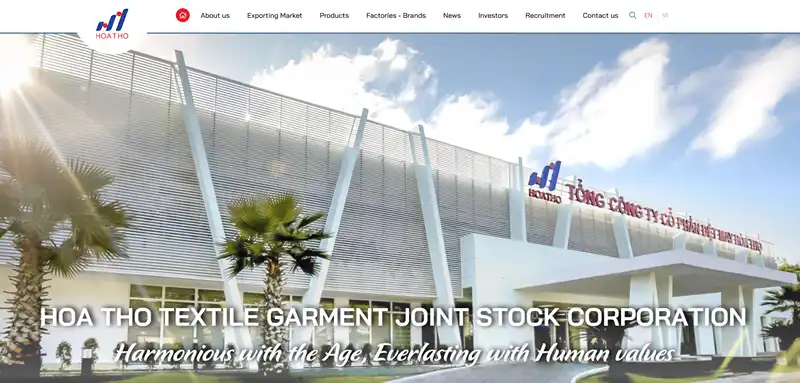
Hoa Tho has separate production facilities for different garment categories. Its Duy Xuyen factory makes dresses and casual pants, with a reported annual capacity of 900,000 pieces. Dien Ban produces workwear, uniforms and knitwear, with a reported capacity of 5.52 million pieces.
Hoa Tho also operates three spinning factories. Its yarn range includes CVC, TC, recycled and other blended yarns. This may interest buyers with repeat cotton- or polyester-blend programs. Yarn production does not mean the group can supply every finished fabric.
8. TG Apparel JSC
TG Apparel produces safety workwear, uniforms, active outdoor clothing and insulated garments. This product mix points to functional apparel rather than basic fashion tops.
The company reports four factories, more than 4,500 workers and annual output above 10 million garments. These figures indicate scale, but they do not show how much capacity is open for a new order.
TG Apparel lists WRAP, BSCI, RDS, GRS and other standards. They cover different areas, from social compliance to material claims. Check the current certificate, scope and facility before using it as a qualification for your order.
9. GENVIET Factory
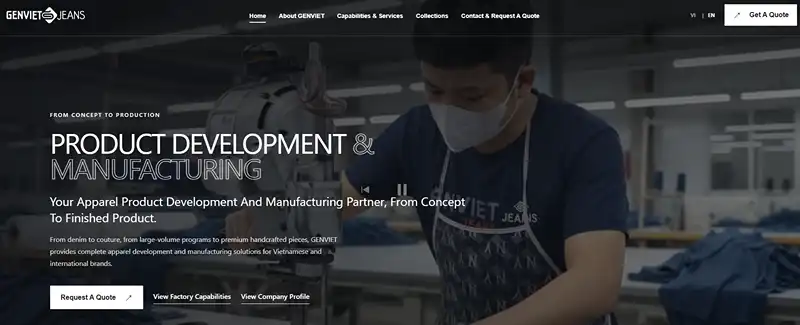
GENVIET has experience in both denim manufacturing and retail. Its own jeans brand gives it exposure to consumer preferences, popular fits and denim finishes. This may help when developing a new denim collection.
GENVIET offers denim washing, laser effects and product finishing, alongside product development and manufacturing. When we assess a denim supplier, wash consistency is one of the first things we look at. Ask how it controls color, hand-feel and shrinkage across production batches.
10. Khoa Vu Trading Co., Ltd.
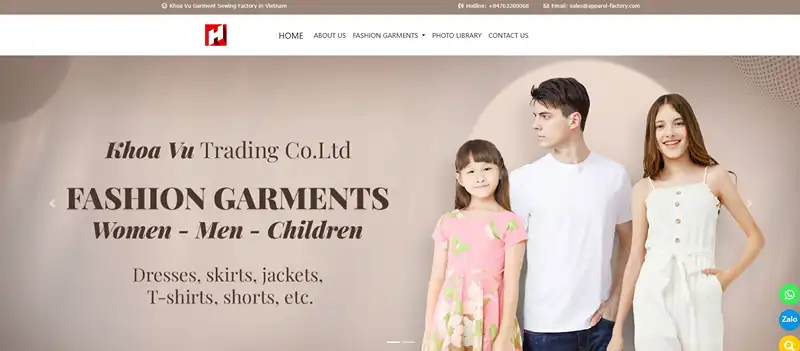
Khoa Vu produces knit and woven garments, including dresses, skirts, shirts, shorts and yoga clothing. It also offers Make-to-Order (MTO) and OEM services.
Its published MOQ information is not consistent across all pages. The company information states 100 pieces, while several product listings show 500 pieces. Do not use the lower figure as a general MOQ for every style.
A men’s cotton twill shirt listing supports a 7-day sample order. Khoa Vu also gives a general bulk lead time of 60–100 days, depending on quantity, design and requirements. Treat these as published references, not guaranteed timelines for every custom order.