What Is the Difference Between CMT and FPP Manufacturing?
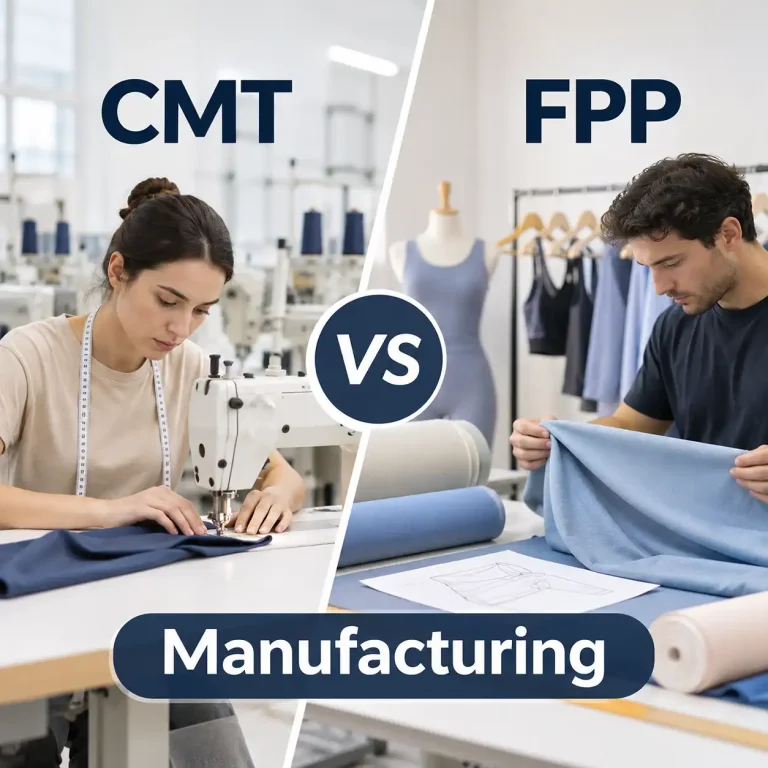
CMT mainly covers garment production using materials you arrange. FPP covers a broader service, including material sourcing and production. The main difference is who manages the materials and how much work the factory handles.
What Is CMT Manufacturing?
In CMT, the factory cuts, sews, and finishes your garments. You supply the fabric and trims, or arrange them through your chosen suppliers.
This works well when you already have reliable materials. For example, you may have a nylon/elastane fabric you trust. You arrange delivery to the factory, and the factory turns it into leggings.
What Is FPP Manufacturing?
FPP covers a broader range of services. You provide the product specifications, and the factory manages agreed material sourcing and garment production.
When sourcing from a China sportswear manufacturer, confirm which materials the factory can purchase locally and which require external suppliers.
CMT vs FPP Comparison
Comparison | CMT | FPP |
Fabric sourcing | Usually buyer | Usually factory |
Trims and accessories | Buyer or agreed supplier | Usually factory |
Garment production | Factory | Factory |
Production QC | Factory, as agreed | Factory, as agreed |
Material coordination | Mainly buyer | Mainly factory |
FPP does not have a fixed service scope across all manufacturers. One quotation may include sampling and packaging, while another may charge for both separately. The service scope should be clear before production begins.
CMT vs FPP: Which Is More Cost-Effective?

A lower quote does not always mean a lower production cost. CMT and FPP quotes often cover different services. You need to compare the total cost, not just the price per piece.
Why CMT Quotes Are Usually Lower
A CMT processing quote is usually lower because material costs are billed separately. Your budget must also cover fabric procurement, material delivery, and any applicable import or handling charges.
These costs can add up, especially when materials come from several suppliers.
What Does an FPP Quote Include?
An FPP quote usually combines material and production costs into one package. Check whether the quoted amount covers all required materials and services.
But FPP does not mean everything is covered. Sampling, testing, and packaging may cost extra. Ask the factory for a clear breakdown before comparing prices.
CMT vs FPP Cost Comparison
Cost Item | CMT | FPP |
Fabric and trims | Buyer pays separately | Usually included |
Cutting and sewing | Included | Included |
Material freight | Often separate | Depends on quote |
Material waste | Confirm allowance and responsibility | Confirm allowance and responsibility |
Sampling | Confirm separately | Confirm separately |
Testing and inspection | Confirm separately | Confirm separately |
Packaging | Depends on quote | Depends on quote |
How to Compare the Total Cost
Use the same fabric specifications, order quantity, packaging requirements, and delivery terms for both quotes. Add all excluded costs before comparing the totals. See how to get an accurate custom sportswear quote before confirming your order.
CMT may cost less if you already source fabric at competitive prices. FPP may cost less if the factory can secure better material rates or reduce shipping costs.
CMT vs FPP: Who Controls Materials and Quality?
The main difference is who manages material sourcing and related risks.
Control Under CMT
You choose the fabric supplier and arrange delivery. But you also manage supply risks. Late or insufficient fabric can delay production. If the material fails inspection, you usually need to resolve it with your supplier.
Control Under FPP
We source materials based on your requirements. You can specify fabric content, GSM, color standards, and testing needs. Any changes to approved materials require your consent.
A Custom Leggings Example: 82% Nylon / 18% Elastane
For black leggings, the material checks differ:
- CMT: We check incoming fabric width, weight, and shade before cutting. Rolls that fail the agreed checks are held for review.
- FPP: We provide a lab dip for color approval and a fabric sample for quality checks. Bulk fabric must meet the approved specifications.
We aim to use one dye lot per order. If multiple lots are needed, we check for shade differences before cutting.
Settle Responsibility Early
Before production, confirm:
- Who pays for defective fabric?
- Who covers normal cutting waste?
- Who pays for rework?
Put these terms in writing to avoid disputes later.
You may interested in: Compression vs Encapsulation Sports Bras
Which Manufacturing Model Should You Choose?

Choose based on what your team can manage, not just your brand’s size or age. Use this table to find a suitable starting point.
Your Situation | Better Starting Point | Why |
You have reliable fabric suppliers | CMT | You manage sourcing directly |
You have no dedicated sourcing team | FPP | Factory coordinates materials |
You want to use nominated materials | CMT or FPP | Both can follow agreed sourcing rules |
You prefer one production contact | FPP | Less supplier coordination |
You manage materials for repeat orders | CMT | Fits your existing supply chain |
You need sourcing support for a new collection | FPP | Factory coordinates agreed material sourcing |
When Does CMT Make More Sense?
CMT is particularly useful when you need to maintain consistency across repeat production runs. You can continue using an established fabric source and keep material purchasing under your control.
When Is FPP the Better Choice?
FPP simplifies development when a collection uses several fabric types, trims, and packaging specifications. You can work from one production plan instead of coordinating each material order separately.
Not sure which model fits? Send us your tech pack and material sourcing requirements. We can review which option suits your order.
What Should You Confirm Before Choosing a Manufacturer?
Before placing an order, verify these 4 points with your manufacturer. You can also use this clothing factory audit checklist to assess production capacity and quality controls.
- Scope of Work and Extra Charges: Which production services are included in the agreement? Identify any separately charged services and additional fees before signing.
- Material Approval: Can the factory replace an approved fabric or trim without your consent? Include a written approval requirement for all material substitutions.
- MOQ and Lead Time: Confirm the MOQ per style and color. Check material sourcing time and production time separately. Custom-dyed fabrics may need extra time for lab dips and bulk dyeing.
- Quality Responsibility: How will failed inspections be handled? Use ISO 2859-1:2026 as a reference for AQL sampling. Agree on rework and replacement terms before bulk production.
Ask the manufacturer to include these terms in the production agreement before you place the order.