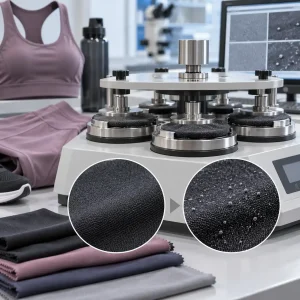

What Is a Color Fastness Test?

Here’s where color fastness gets tricky: the same fabric can pass one test and struggle with another.
A black fabric might score 4–5 after washing, so the shade still looks almost unchanged. Put that same fabric through a wet rubbing test and the result could drop to 2–3 because dye transfers under friction. Neither result cancels out the other. They are measuring two different risks.
This matters with activewear. Sweat, moisture, repeated washing, and skin contact can expose problems you would never spot by looking at a fabric swatch. If you’re sourcing these products from a sportswear manufacturer, wet rubbing and perspiration results deserve extra attention, especially for black, navy, and other deep shades.
There is no single “color fastness score” you can use to approve a fabric. You need the right test for the way the garment will actually be worn.
Which Color Fastness Tests Matter for Apparel?
Test | What It Checks | Buyer Should Check It When |
Washing | Fading and staining | Garment is designed for regular washing |
Rubbing | Color transfer from friction | Using dark shades or contrast panels |
Perspiration | Change/staining from sweat | Fabric sits against skin during exercise |
Light | Fading from light exposure | Garment is made for prolonged outdoor use |
Not every order needs the same level of attention. With activewear, we pay closer attention to wet rubbing and perspiration on black, navy, red, and other deep shades. These are the combinations where a fabric that looks fine on the sample table can still cause trouble in use.
Washing Fastness
Don’t judge this result by fading alone. Color change and staining are separate results. If the shade stays stable but the staining grade is weak, we would still flag it before bulk approval.
This matters even more when dark and light materials appear in the same garment.
Rubbing Fastness
Dry and wet results can be quite different. A Grade 4 dry result doesn’t make us ignore a Grade 2–3 wet result. For dark activewear that will face sweat and friction, the wet grade is the number we’d question before production moves forward.
How to Read Color Fastness Grades
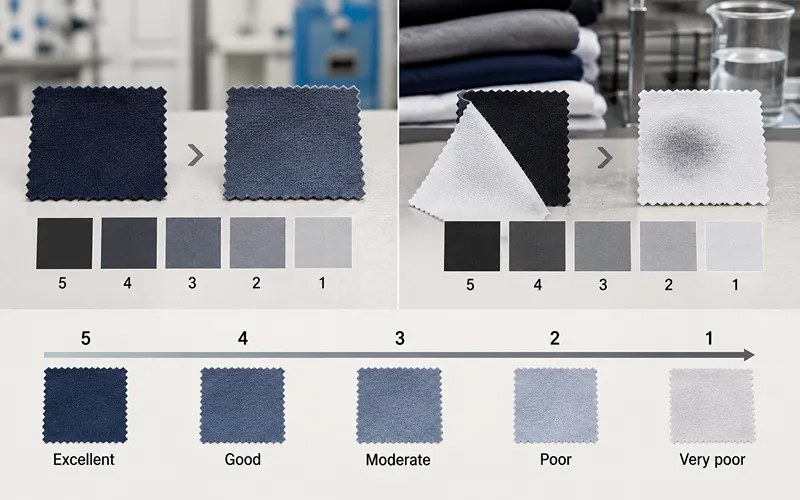
Depending on the test, two results you may see on a color fastness report are color change and staining.
Color change asks: did the original fabric fade? Staining asks: did that fabric transfer color onto something else? Each result is graded separately.
Both are commonly rated on a 1–5 scale. Under the ISO 105 system, separate grey scales are used to assess color change and staining. You may also see intermediate grades such as 4–5 or 3–4 on a test report.
Grade | General Meaning |
5 | Excellent |
4 | Good |
3 | Moderate |
2 | Poor |
1 | Very poor |
Here’s the part buyers get wrong most often: a grade by itself doesn’t tell you pass or fail.
A grade only means something next to two other pieces of information: which test method was used, and what grade your spec actually requires. That’s why a lab report showing “Pass” isn’t enough on its own.
Example: How a Buyer Should Read the Result
Test | Required | Result | Decision |
Washing – Color Change | ≥ 4 | 4–5 | Pass |
Washing – Staining | ≥ 4 | 4 | Pass |
Dry Rubbing | ≥ 4 | 4 | Pass |
Wet Rubbing | ≥ 3–4 | 3 | Review / Fail* |
The numbers above are examples, not universal pass criteria. The final decision should follow the requirement written into your buying specification.
Not sure what to put in your spec? Tell us the fabric, color, and product use — we’ll help you set the right tests and grades.
Why Color Fastness Tests Fail
Most color fastness failures come down to a handful of repeat offenders.
Poor dye fixation or washing-off
If the dye isn’t properly fixed during processing, or excess dye isn’t removed well enough afterward, color can transfer during washing or rubbing. The exact cause varies with the fiber and dye system, but poor fixation and washing-off are two places worth checking after a failed result.
Dark and saturated colors carry more risk
Black, navy, and deep red can be harder to control, especially under wet rubbing. Dye selection, fixation, washing-off, fiber type, and finishing can all affect the result. In one black leggings development, the fabric reached Grade 4 for washing but only Grade 2 for wet rubbing.
Sample and bulk use different dye lots
This one catches buyers off guard. A pre-production sample may come from a small development batch, while bulk fabric is dyed in a separate production lot. Color and fastness performance can shift between the two, even with the same fabric spec on paper.
Requirements never get confirmed before production starts
If nobody agrees on the test method and required grade upfront, the factory has no clear acceptance target. Testing becomes a guessing game after the fact.
Testing happens too late
Some orders only test fastness on finished garments, after cutting, sewing, and trims are added. By then, a failure can mean dealing with finished goods instead of correcting the fabric before cutting.
One example from close-to-skin styles: a sports bra can look perfectly fine after washing but still stain a light-colored lining when exposed to sweat. Perspiration fastness and wash fastness measure different risks, so passing one doesn’t guarantee the other.
How to Avoid Color Fastness Problems Before Bulk Production
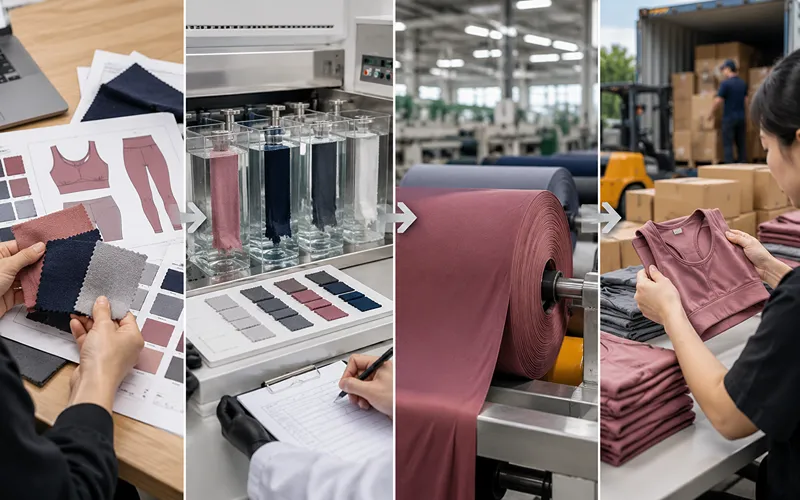
This is where the reading turns into action. Four checkpoints, in order.
Before sampling
Decide which tests apply to your product and set the requirement before development starts. Write it into your tech pack or testing specification. Don’t leave “color fastness” as a vague line item. (If you’re still budgeting the development stage, see our guide to clothing samples cost to understand what can affect your sampling expenses before bulk production.)
Before bulk production
Confirm the acceptable grade for each test, not just “color fastness: pass.” Put a number on it. The required grade should be set for each test before bulk production starts.
After bulk fabric arrives
Test the actual bulk fabric, not just the sample. This step matters most for risk colors — black, navy, red, and other dark or saturated shades. Bulk dye lots can behave differently even with the same fabric spec. A passing sample report does not automatically approve the bulk dye lot.
Before shipment
Check the test report against your requirement. Three things need to line up: the test method used, the grade achieved, and the grade you required. Color fastness results should also be reviewed alongside the final AQL inspection, since a passed inspection does not replace fabric performance testing.