Compression vs Encapsulation Sports Bras: Key Differences
Comparison | Compression | Encapsulation |
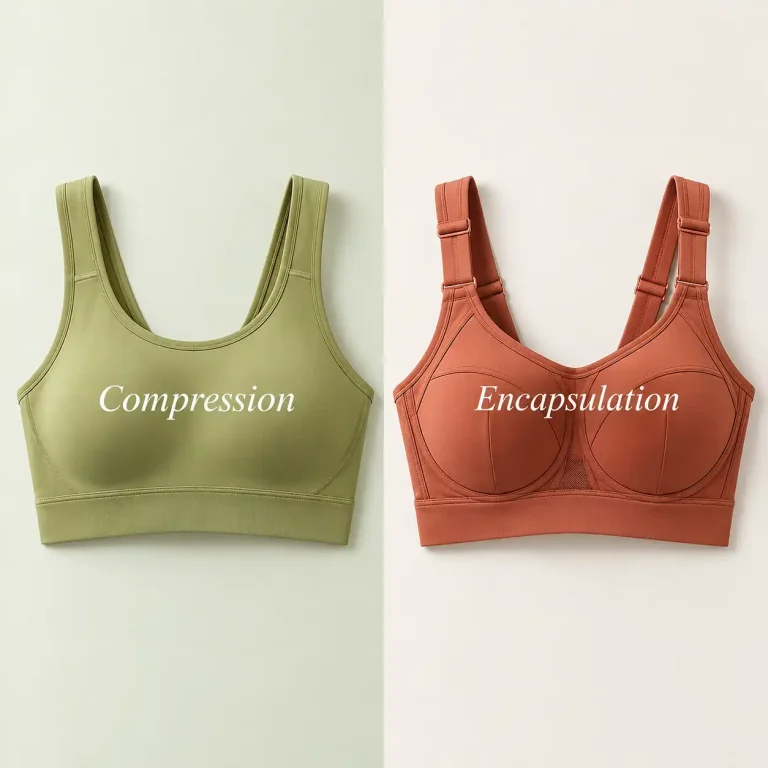
Support mechanism | Holds the bust close to the chest | Supports each breast individually |
Cup construction | Usually no individually shaped cups | Separate shaped or molded cups |
Pattern structure | Often fewer panels and seams | Shaped cups with additional support components |
Fabric requirements | Stretch and recovery influence compression | Cup stability depends on fabric and lining |
Main development challenge | Controlling pressure without restricting movement | Maintaining cup shape and breast separation |
Two sports bras look similar on the outside but require different patterns, internal components, and sampling work. Ask your manufacturer to confirm the construction before comparing quotations.
How Do Compression and Encapsulation Affect Sports Bra Support?
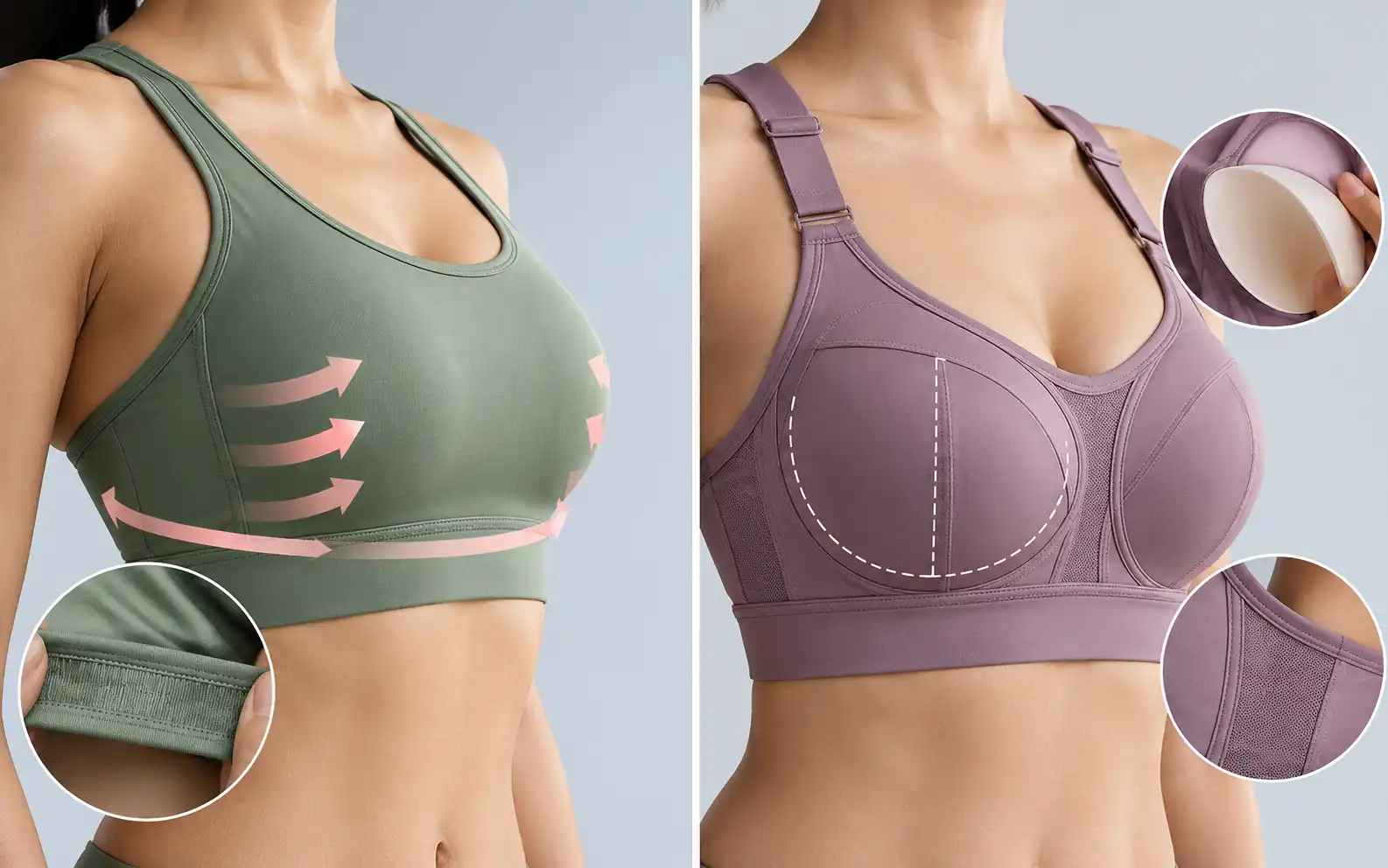
Research on compression and encapsulation sports bras has found differences in breast–torso movement during running. Each construction therefore needs to be evaluated under the intended activity conditions.
Compression: Pressure and Underband Stability
Compression relies on controlled pressure across the bust. The fabric provides the hold, while the underband helps keep the bra in place.
In our sample fittings, we’ve seen bras lose support even when the main fabric had enough stretch and recovery. The underband gradually rode up during movement. We first checked the band circumference and elastic tension rather than replacing the fabric. A small change to the band construction can sometimes solve the problem without changing the entire pattern.
More pressure does not always mean better support. A tighter front panel may reduce movement but also make breathing uncomfortable. The goal is to maintain enough hold for the intended activity without excessive pressure.
Encapsulation: Cup Fit and Individual Support
Encapsulation bras can look well fitted while standing still but allow too much movement during exercise. Gaps along the cup edge or movement inside the cup can reduce support.
One problem we’ve encountered during sample development is cup grading that adds width without enough depth. Adjusting cup depth and panel lines can be more effective than simply adding fabric.
Hybrid Construction: Combining Both Support Methods
Hybrid sports bras combine shaped cups with compression panels. The cups support each breast separately, while compression helps limit overall movement.
If you need individual cup support and a firmer overall hold, hybrid construction is another option. Compression panels still cannot correct a poorly fitted cup.
Choosing the Right Construction for Your Sports Bra Line
Start with your customer, not the style name. What activities will the bra support? What bust sizes will your collection cover? Those answers help narrow the construction options before sampling begins.
Product concept | Construction to evaluate | Main development concern |
Yoga and studio bra | Compression | Comfort and freedom of movement |
Compression or Hybrid | Support without excessive pressure | |
Encapsulation or Hybrid | Movement control during high-impact activity | |
Fuller-bust sports bra | Encapsulation or Hybrid | Cup capacity and size coverage |
Minimal-seam sports bra | Compression | Consistent fit with fewer seams |
The table gives you a starting point, not a fixed rule. A study of 98 sports bras found that measured support did not always match the support level stated by the brand.
A yoga collection may need shaped cups for a more defined silhouette. A running bra may use compression alone if its support meets the intended activity requirements.
Development cost also affects the choice. Compression styles often use fewer pattern pieces, but achieving the right pressure across the size range can still take several revisions. Encapsulation requires separate cup development, which may add pattern work and fitting sessions. Neither construction has a guaranteed shorter sampling time.
We suggest starting with one core construction for a first sports bra collection. Once the fit and size range are approved, the same development work can support additional styles. Developing several constructions at once means managing separate patterns, fittings, and revisions.
To compare development options, share your target activity, planned size range, reference design, and expected order quantity with a sports bra manufacturer. We can then review which construction is practical to sample first.
📋Suggested Reading: Seamless vs Seamed Leggings: Which Is Better for Your Brand?
Fabric, Cup Construction, and Fit Development

Once you choose a construction, fabric specifications, internal components, and pattern measurements need to be confirmed before sampling. These decisions are part of clothing product development, which a reference photo alone cannot cover.
Fabric Stretch and Recovery
Compression bras need fabric with enough resistance to control movement without excessive pressure. Spandex percentage alone cannot determine support. Knit structure, stretch direction, and recovery also matter.
We compare fabric swatches for stretch and recovery before selecting materials. A double-layer front can add hold, while a single-layer back reduces bulk. Both options need fit checks.
Cup, Underband, and Strap Construction
Compression designs often use a continuous front panel and elastic underband. Band width and tension can be adjusted without tightening the entire bra.
Encapsulation offers two common cup options. Molded cups create a smooth shape but are harder to modify. Seamed cups allow easier adjustments to cup depth and panel shape during sampling.
Strap placement also affects fit. Straps set too far outward may slip, while those too close to the neck can cause pressure.
Pattern Development and Size Grading
Compression patterns use negative ease, meaning garment measurements are smaller than body measurements. The reduction must match fabric stretch and the intended support level.
Encapsulation requires separate adjustments to cup volume and band measurements. Simply enlarging the entire pattern can distort the cup shape.
We recommend checking the smallest, middle, and largest planned sizes before approving the grading.
Testing Compression and Encapsulation Sports Bra Samples
Don’t judge a sample on the hanger. Fit and movement tests reveal problems that may not appear when the bra is worn standing still.
What to Check | Compression | Encapsulation |
Pressure | Excessive tightness or rubbing | Cup edges digging into the bust |
Movement | Bust shifting up or sideways | Bust moving inside the cups |
Fit shape | Underband rolling or riding up | Cup wrinkles, gaps, or overflow |
Support during wear | Pressure becoming uneven or support weakening | Cups shifting or losing their intended position |
Size check | Consistent support across the size range | Cup fit and band stability in each size |
We use front and side views during movement tests to check how the bra shifts. After wear, we also look for persistent pressure marks and ask about discomfort.
Before revising a failed sample, identify the likely cause:
- Cup gaps or wrinkles: Check cup depth, seam shape, and fabric stretch.
- Underband rolling: Review band circumference, elastic tension, and construction.
- Straps slipping: Check strap length, placement, and elasticity.
- Support weakening during wear: Compare fabric recovery with the pattern’s negative ease.
- Excessive heat or moisture: Review fabric properties, lining layers, and test conditions.
We record the problem and proposed adjustment in the fit report before making changes. That gives us a clear reference when checking the next sample.