What Is the MOQ for Custom Activewear?
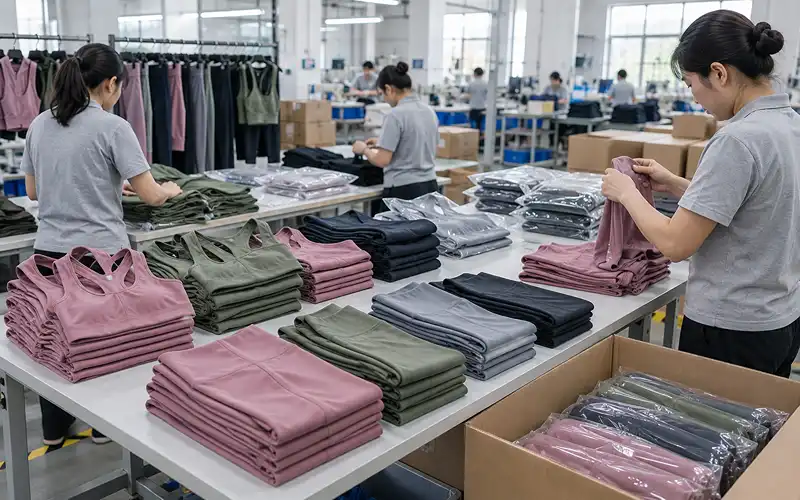
A custom activewear MOQ often starts at around 100 pieces per style, but factories may set an additional minimum for each color. Sizes are usually easier to mix within the same style and color.
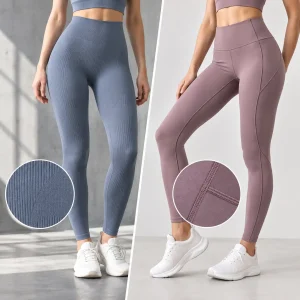
For example, a 100-piece leggings order could be split into:
-
50 pcs brown + 50 pcs olive
-
XS–XL mixed across each color
At LuckPanther, we confirm the MOQ by style and color before quoting. This matters when comparing suppliers. A “100-piece MOQ” may mean 100 pieces in total at one factory, but 100 pieces per color at another.
What Actually Determines Your MOQ?
Your MOQ is usually set by the least flexible part of the order — not by how many garments the factory can sew.
For a custom legging, the sewing quantity may be easy to handle. The limit may come from a fabric that needs a full dye lot, a custom waistband elastic, or a molded logo that must be produced in batches.
Stock materials usually give you more room to lower the MOQ. Once you switch to custom-dyed fabric or made-to-order trims, you also need to meet the supplier’s minimum.
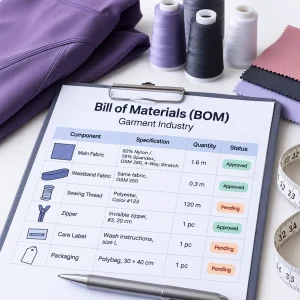
This is why the BOM should be checked before the MOQ is confirmed. One material or trim can set the minimum for the entire style.
How MOQ Works Across Styles, Colors, and Sizes
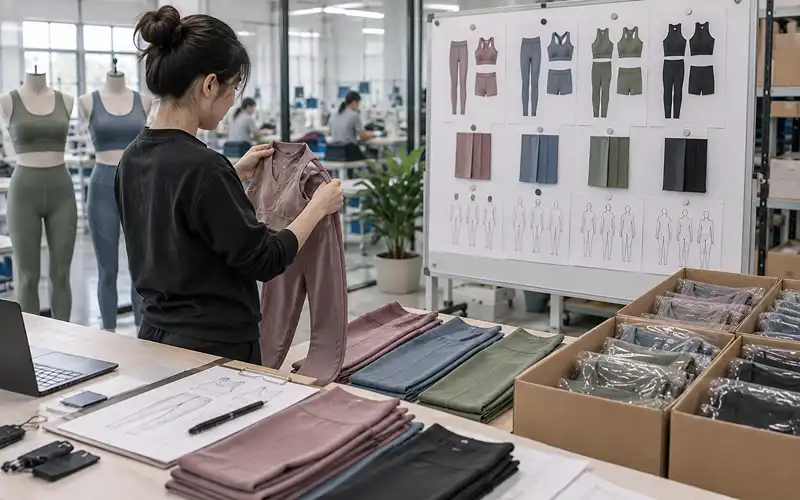
Factories do not look only at your total order quantity. They also look at how many separate production batches that order creates.
A 300-piece leggings order can be very different depending on the design mix:
| Order Setup | Production Quantity |
|---|---|
| 1 style × 2 colors | 150 pcs per color |
| 2 styles × 2 colors | 75 pcs per style/color |
| 3 styles × 2 colors | 50 pcs per style/color |
The key is knowing what counts as a new style. Changing the size does not normally create one. Changing the pattern or construction often does. A different waistband, added pockets, or a flare leg can turn one collection into several separate production runs.
For MOQ planning, calculate your order as Style → Color → Size. A 300-piece PO may look large on paper, but the factory may actually be producing six batches of only 50 pieces each.
Planning several styles or colors in one order? Share your quantity breakdown with us before sampling. We can check where the MOQ may become a problem.
Low MOQ vs Unit Cost: What Changes?
Low MOQ usually raises the unit cost because setup work is divided across fewer garments. Cutting preparation, print setup, machine adjustment, and QC still take time even when the production run is small.
Not every cost falls when you order more:
| Cost | What Happens as Quantity Increases |
|---|---|
| Cutting setup | Cost is spread across more pieces |
| Logo printing / embroidery | Setup cost per piece falls |
| Sewing | Longer runs reduce repeated line setup |
| Fabric consumption | Marker planning can use fabric more efficiently |
| Fabric price | May stay the same until the next supplier price tier |
This last point matters when comparing 100 pieces with 300 pieces. Tripling the quantity does not mean the unit price will drop by the same percentage. The saving depends on which costs can actually be spread or reduced.
What to Confirm Before Placing a Low-MOQ Order
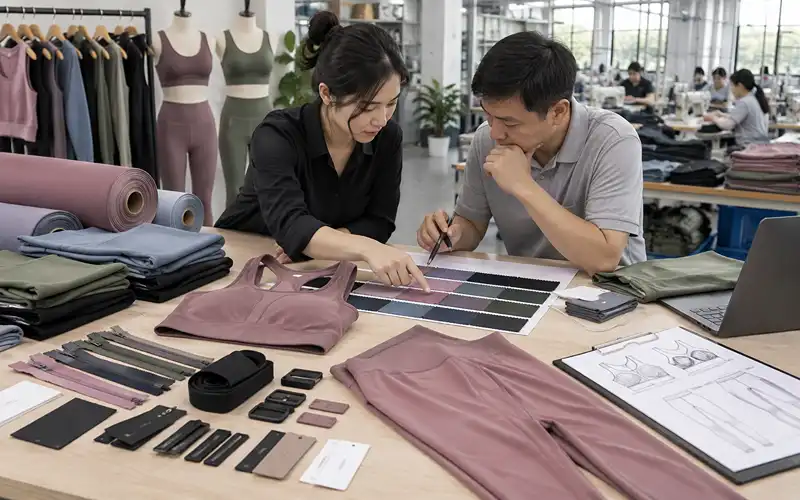
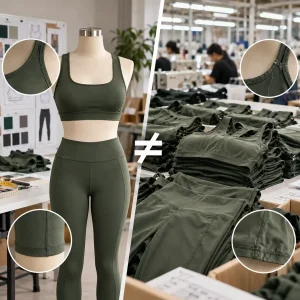
A factory agreeing to a low MOQ does not always mean you are getting the same production terms as a larger order. Check what has changed before you approve the order.
Ask these questions:
-
Will you use bulk production fabric or available stock fabric? Stock fabric may make a small run possible, but the available colors and specifications can be limited.
-
Are any trims being replaced? Check zippers, elastic, drawcords, labels, and logo materials against the approved sample.
-
Is there a small-order surcharge? Ask for it as a separate cost instead of judging the order only by unit price.
-
Can the same materials be reordered later? This matters if the first run sells and you need the next batch to match.
-
Will the lead time change? A small order may still wait for fabric, trims, or a production slot.
The key question is not only “Can you accept my quantity?” Ask “What has to change for you to accept it?”