
What Is DTG Printing and When Does It Work for Sportswear?
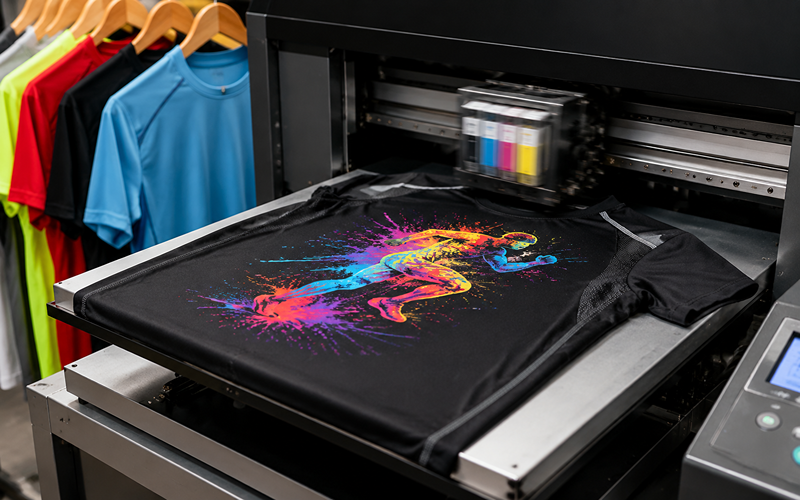
DTG stands for Direct-to-Garment. Picture a big inkjet printer, but it prints straight onto fabric instead of paper. No screens. No setup plates. Just a file and a printer.
How it works, step by step:
- Garment gets pretreated
- Printer lays down ink, layer by layer
- Heat press cures the print
Where DTG wins:
- Soft hand feel on cotton
- Great for photo-quality, full-color designs
- No minimum order. Even one piece works
Where DTG struggles:
- Polyester and poly-heavy blends
- Polyester’s loose knit lets ink slip into the gaps between fibers. That ink washes out in the first cycle.
- Prints look dull fast on performance fabric
Our real test: what happened with an 80% polyester order
A client once pushed us to run DTG on an 80% polyester activewear batch. We ran a sample trial first, not the full order. We test wash durability the same way textile labs do, using the AATCC TM61 accelerated laundering standard. The results were rough. Over 15% of the shirts failed our stretch test, and the ink flaked right off the synthetic fibers. We switched them to sublimation before shipping the full run. That one test saved a warehouse full of returns.
If your team is facing a similar fabric decision, we’re happy to run the same sample test before you commit to a full order. Contact us, and let’s get it right the first time.
What Is Screen Printing and When Should Sportswear Brands Use It?
Screen printing pushes ink through a fine mesh screen, one color at a time. It’s the oldest method on this list, and still one of the most reliable for bulk orders.
How it works, step by step:
- A screen is made for each color in the design
- Ink gets pushed through the mesh with a squeegee
- The garment cures under heat, usually around 320°F
Where screen printing wins:
- Best per-unit cost at scale
- Holds up past 100 wash cycles when cured properly
- Solid, opaque colors that stay true batch after batch
This is why many Chinese sportswear manufacturers use screen printing for bulk orders with repeated 1–4 color designs.
Where screen printing struggles:
- High setup cost for small orders
- Standard inks aren’t stretchy, so they can crack on spandex or high-stretch fabric unless you switch to silicone ink
- Not ideal for photo-detail or gradient designs
What Is Sublimation Printing and Why Is It Common in Sportswear?
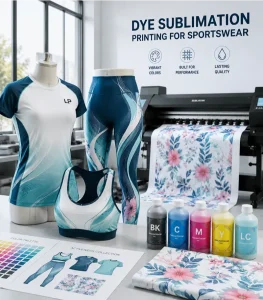
Sublimation turns solid dye into gas, then bonds that gas directly into polyester fibers. There’s no ink sitting on top of the fabric. The dye becomes part of the fiber itself.
How it works, step by step:
- Design gets printed onto transfer paper with sublimation ink
- Paper and garment go under a heat press together
- Heat turns the dye into gas, which fuses into the polyester
Where sublimation wins:
- The print becomes part of the fabric. It won’t crack, peel, or fade.
- Handles full-color, all-over designs with no extra cost per color
- Stays breathable, since there’s no ink layer sitting on the surface
Where sublimation struggles:
- Only works on polyester or high-poly blends
- Only works on white or very light-colored garments, since the dye is transparent
- Cotton and cotton blends won’t take the dye at all
One thing we always check first: dye safety certification. Buyers shipping to the EU or US often ask for this upfront. We use dye suppliers with OEKO-TEX Standard 100 certification. This standard tests fabric for over 1,000 restricted substances. It proves the fabric is safe for skin contact.
Which Printing Method Works Best for Different Sportswear Fabrics?
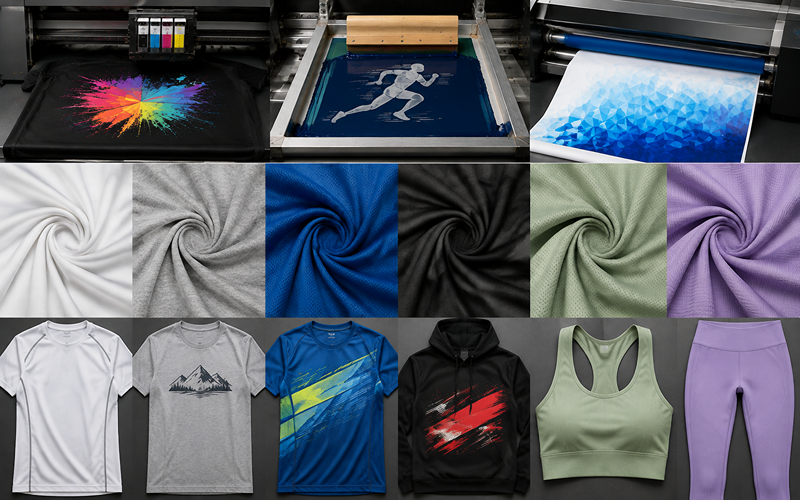
Buyers ask us this question more than any other. The truth is simple. The fabric decides the method, not the other way around.
Here’s how we match fabric to print methods on our own floor.
Polyester
Sublimation wins here almost every time. The dye becomes part of the fiber, so it won’t crack, peel, or fade. DTG and screen printing both struggle on 100% polyester. Ink sits on top instead of bonding into the fabric.
📌Our pick: Sublimation, unless the garment is dark. Then we switch to screen printing with the right ink.
Cotton and cotton blends
DTG shines here. It’s soft, detailed, and works for even one piece. Polyester struggles with DTG because the loose knit lets ink wash out fast, but cotton doesn’t have that problem. The ink bonds well and stays put.
📌Our pick: DTG for small runs or detailed art. Screen printing once the order passes 100 pieces.
Nylon and spandex
This is where things get tricky. Stretch fabric needs ink that stretches too. Standard screen printing ink isn’t stretchy and can crack on spandex unless you use silicone ink instead. Sublimation avoids this problem entirely, since the dye becomes part of the fiber and moves with it.
📌Our pick: Sublimation first. Silicone-ink screen printing as a backup for logo-only designs.
Moisture-wicking and mesh fabrics
These fabrics are built to breathe. A thick ink layer defeats the purpose. We’ve seen buyers complain that a print made their “breathable” shirt feel stiff and hot.
📌Our pick: Sublimation, since it adds zero thickness. If sublimation isn’t possible, we keep DTG ink layers as thin as the design allows.
Why this matters more heading into 2027
We’re already seeing early activewear trends 2027 point toward more technical, blended fabrics. Think recycled polyester mixed with spandex, or hybrid mesh panels. These fabrics are less forgiving than plain cotton. Picking the wrong print method won’t just look bad. It’ll fail a wash test and cost you a reorder.
Quick fabric guide
Fabric | Best Method | Backup |
100% Polyester | Sublimation | Screen printing (light ink) |
Cotton / cotton blend | DTG | Screen printing (bulk) |
Nylon / spandex | Sublimation | Silicone-ink screen printing |
Moisture-wicking mesh | Sublimation | Thin-layer DTG |
Planning a line around these newer blends? Talk to us before you finalize your fabric choice, and we’ll run the compatibility tests early to help you avoid a costly reprint.
DTG vs Screen Printing vs Sublimation for Different Sportswear Products
Fabric isn’t the only thing that decides the print method. The product itself matters too. A jersey and a hoodie face totally different stress in real life.
Team jerseys and running shirts
These get washed constantly and stretched during play. Sublimation bonds dye directly into the fiber, so it won’t crack, peel, or fade under that kind of stress. It also handles full-color numbers, names, and gradients without extra cost. We run almost every jersey order through sublimation for exactly this reason.
Gym tees and casual training shirts
Most of these are cotton or cotton-heavy blends. DTG handles detailed graphics well here, and it works even for a single test sample. One client started with a 20-piece DTG sample run before committing to a full order. Once they hit 150 pieces, we moved the reorder to screen printing and cut their per-unit cost by nearly half.
Leggings and compression wear
This is one of our biggest categories. A lot of our China leggings orders come in as poly-spandex blends, and that combination is unforgiving on print choice. Standard screen printing ink isn’t stretchy and cracks on spandex unless silicone ink is used. We learned this the hard way years ago on an early order that came back with cracked logos after a handful of washes. Now we default to sublimation for leggings, since the dye becomes part of the fabric and moves with the stretch instead of fighting it.
Hoodies and fleece
Heavier fabric changes the game. Thick fleece can soak up ink unevenly, which mutes the design. We’ve found screen printing gives the most consistent result here, especially for simple one or two color logos. DTG only makes sense on lighter-weight hoodies with finer detail.
Swimwear and all-over print gear
These need full coverage and zero bulk. A thick ink layer would feel stiff against skin and ruin the fit. Sublimation is really the only method built for this job. It adds no texture and covers the entire garment edge to edge, which is why we don’t even offer DTG or screen printing as an option for full all-over swimwear designs.
Quick product guide
Product | Best Method | Why |
Jerseys, running shirts | Sublimation | Survives stretch and heavy wash |
Gym tees (cotton) | DTG or screen printing | Depends on order size |
Leggings, compression wear | Sublimation | Moves with spandex, no cracking |
Hoodies, fleece | Screen printing | Even coverage on thick fabric |
Swimwear, all-over prints | Sublimation | Zero added bulk |
How Order Quantity Changes the Best Printing Method

Order size changes everything. The same design can cost twice as much per piece if you pick the wrong method for your quantity.
Under 50 pieces: DTG
DTG wins here. There’s no setup cost, so price per shirt stays low even at one piece. This flexibility is invaluable for startups, limited-edition drops, or market testing new designs. We’ve seen brands test five design variations at 10 pieces each this way, before committing to a full order.
50 to 150 pieces: Depends on design
This is the gray zone. Below 50 units, DTG or heat transfers are usually more economical, since screen setup costs dominate the per-unit price. Above that, screen printing starts catching up, especially for simple one or two color designs. We run the numbers both ways before quoting.
150 to 500 pieces: Screen printing
Screen printing usually takes over. Typical screen printing MOQ starts around 100 to 150 pieces per design, per color. As a wholesale activewear manufacturer, this is the range where we see the most repeat orders.
500+ pieces: Screen printing or sublimation
Screen printing wins for simple designs at this scale. For all-over polyester prints, sublimation still wins too, since there’s no per-color setup fee.
What Should You Test Before Bulk Production
Skipping sample testing is the most expensive mistake we see, especially for new brands placing their first order. A few hundred dollars on samples can save thousands on a failed bulk run.
- Wash durability: We never approve a DTG sample on a poly-blend without running a stretch and wash test first. This catches cracking or ink flaking before it hits 500 pieces.
- Color accuracy: We always request a physical swatch match, not just a digital proof. This matters most for brands with strict Pantone requirements across reorders.
- Stretch and flex points: Any garment with spandex needs a flex test too. We stretch the printed area by hand and check for cracking around seams and sleeves before signing off.
- Hand feel: A print can pass durability tests and still feel wrong on skin. We ask buyers to touch and wear the sample first. Stiff or rubbery prints get rejected here, not after 500 pieces ship.
- Fabric and ink compatibility: This is the step for new brands to never skip. We test the exact fabric batch going into full production, not a similar one from last season.
What’s Next
DTG vs Screen Printing vs Sublimation isn’t really a hard choice once you know your fabric, order size, and how the garment gets worn. Match those three things first, and the right method becomes obvious.
At Luckpanther, we’re not steering you toward whichever machine we happen to own. We pick the method that fits your fabric and order, then back it with wash tests and stretch tests before a single bulk unit gets printed.
If you’re sourcing prints for your next sportswear collection, we’d be glad to walk through your fabric and order details with you. Reach out to Luckpanther, and let’s find the print method that actually holds up on your product.