Understand How Dye Sublimation Printing Works
Dye sublimation turns solid ink into a gas. There’s no liquid stage at all. Think of dry ice turning straight into fog. It’s the same idea, just with ink and fabric.
The gas bonds with the polyester fibers at a molecular level. Once it cools, the ink is locked inside for good. It won’t crack. It won’t peel. The fabric still feels soft too, since nothing sits on top like a coating.
We run this process daily in our factory. Here’s what surprises first-time buyers. The design looks dull on the transfer paper. Don’t panic. The real color shows up after the heat press does its job.
Production Process
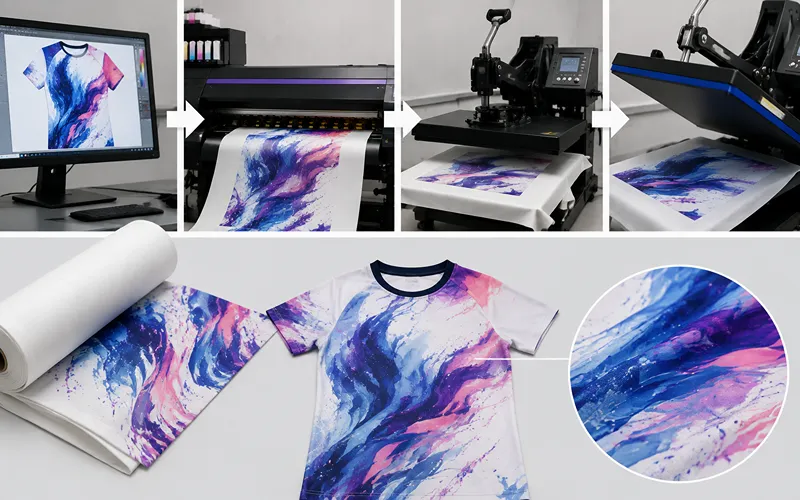
The process runs through four clear steps.
- Print the design. Your artwork gets printed in reverse (mirrored) onto special transfer paper using sublimation ink.
- Position the fabric. We lay the paper against the polyester fabric with precise alignment. Even a small shift here can throw off the whole print.
- Apply heat and pressure. This is where the magic happens. Sublimation dyes need heat in the range of about 170°C to 230°C to change from solid to gas. In our own production line, we test and log the exact time and temperature for every new fabric batch. A 10-degree difference can mean the gap between rich color and a faded print.
- Cool and lock in. Once the heat is removed, the polyester fibers close back up. The ink is now trapped inside the fabric. It’s not sitting on the surface.
This is exactly why sublimation dominates activewear. It handles the stretch, sweat, and washing that performance fabric goes through. And activewear trends 2027 are leaning hard into bold colors and photo-realistic graphics. That means sublimation is only going to matter more for brands planning next year’s line.
7 Factors to Evaluate Before You Order
Now that you know how sublimation works, let’s get practical. These are the 7 things we check with every buyer before production starts.
1. Fabric Composition
This is the first thing we check when a buyer sends us a design. It’s also the most common mistake we see.
Sublimation ink only bonds with polyester. Cotton fibers can’t hold the ink, so color sits on top and washes out fast. We recommend at least 65% polyester for solid, lasting color. Below 50%, prints look faded even before the first wash.
For best results, we suggest 100% polyester sportswear fabric. It bonds fully with the ink at a molecular level. That’s why jerseys and compression gear are almost always pure polyester or a high-poly blend.
Fabric weight matters too, not just fiber content. Light mesh reacts differently to heat than a thick knit. We adjust press time for each, based on years running both. Before you order, ask your supplier for the exact fabric composition. Don’t accept “polyester blend” as an answer. Ask for the percentage.
2. Design Complexity and Color Requirements
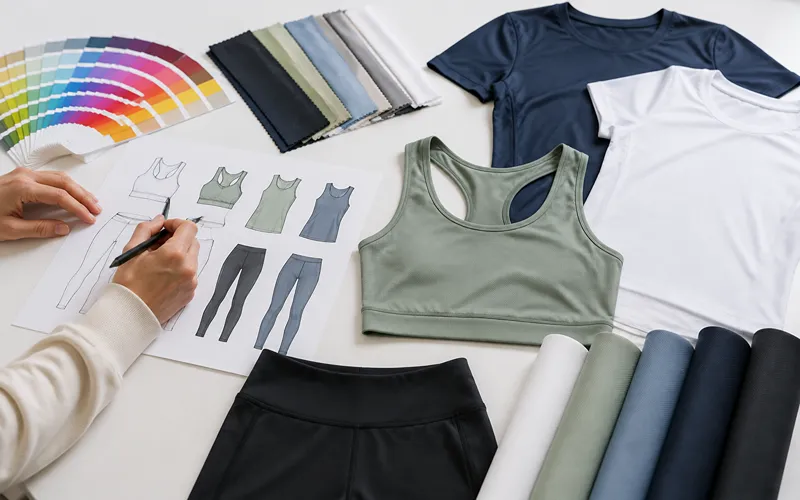
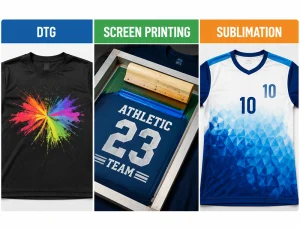
Screen printing charges per color. More colors mean more screens and more cost. Sublimation works differently. It’s digital, so it prints unlimited colors in one pass. A gradient costs the same as a simple two-color logo.
We see brands make the wrong call here. If your design is a small chest logo with one or two colors, sublimation isn’t worth it. Screen printing or embroidery costs less for that job. We tell buyers this upfront, even if it means less work for us.
Sublimation earns its cost on complex, full-coverage designs. Think all-over camo, gradient jerseys, or photo-realistic graphics. We’ve printed designs with over 50 colors in one run, at no extra charge.
Many Chinese sportswear manufacturers, LuckPanther included, run digital lines built for this kind of complex, multi-color work. Send us your design early. We can tell you in a day if sublimation is the right fit for it.
3. Order Volume and MOQ
Order size changes which method makes sense. This trips up a lot of first-time buyers.
There are two paths. Digital sublimation prints straight from file to fabric. Roller sublimation runs large rolls through a heated drum. Digital works well for small runs. Roller sublimation gets cheaper at scale.
In our sportswear factory, we set MOQ at 300 to 500 pieces per design for roller sublimation. Below that, setup costs eat your margin fast. Digital can run smaller, sometimes under 100 pieces. But cost per unit stays higher, since there’s less volume to spread the setup fee across.
Here’s a real number. A setup fee runs $150 to $300 per design. On a 100-piece order, that adds $2 to $3 per shirt. On a 1,000-piece order, that same fee barely shows up in your cost.
We always ask new customers one question first. Is this a test order or a full run? If you’re testing a design, we run it on digital and keep the batch small. If it already sells, we move it to roller and bring your cost down.
4. Production Lead Time
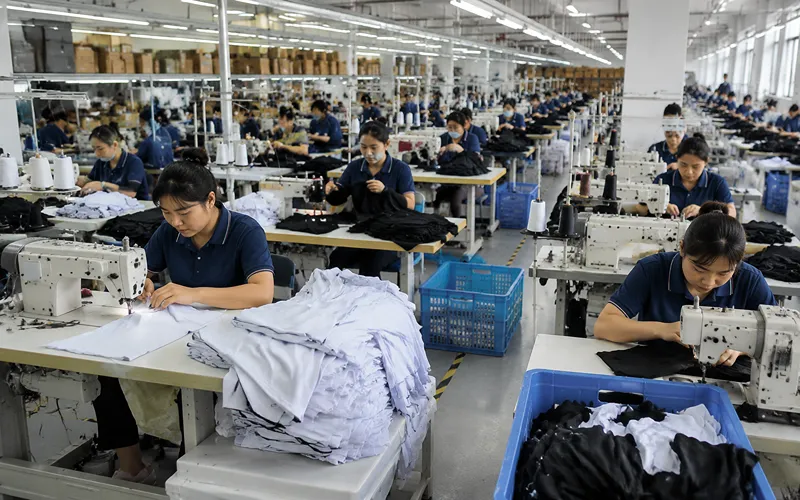
Here’s a realistic timeline. Sampling takes about 10 days after we confirm details and get payment. Bulk production runs 30 to 45 days, depending on order size. For a tight launch date, we can run an express order in around 40 days from order to shipment.
Sublimation adds extra steps compared to plain-dyed garments. We print the transfer paper, run the heat press, then cut and sew. For custom leggings and other fitted pieces, cutting happens after printing, not before. This keeps the pattern lined up across every seam.
Color matching takes time too. We run a swatch against your Pantone reference before bulk production starts. Skip this step, and you risk a full batch that doesn’t match your brand colors.
Busy, multi-color prints, like an all-over design on custom yoga wear, add a day or two to sampling. More colors mean more checks before we scale up.
📌Our advice: build in buffer time, especially for a first order with a new supplier. Confirm your fabric and design early. That keeps your timeline on track.
5. Color Accuracy and Consistency
Color is measured with a number called Delta E. It shows how far a printed color sits from your target. Most brands accept 1.0 to 2.0 for the main fabric. Below 1.0, the human eye usually can’t tell the difference.
In our factory, we test every bulk order with a spectrophotometer, not just a visual check. Eyes get tricked by lighting. A color can look right under a factory bulb and look off in daylight. This is called metamerism, and it’s a common reason batches get rejected.
Here’s our process for custom activewear orders. We match your file to a Pantone TCX code, the textile-specific system. We make a lab dip, a small dyed swatch, and get your sign-off first. Once approved, that swatch becomes the reference for every unit after it.
Batch consistency matters just as much. If you order 500 t-shirts across three runs, each run needs to match the first. We keep the approved swatch on file and test new fabric against it before cutting starts.
6. Durability and End-Use Requirements
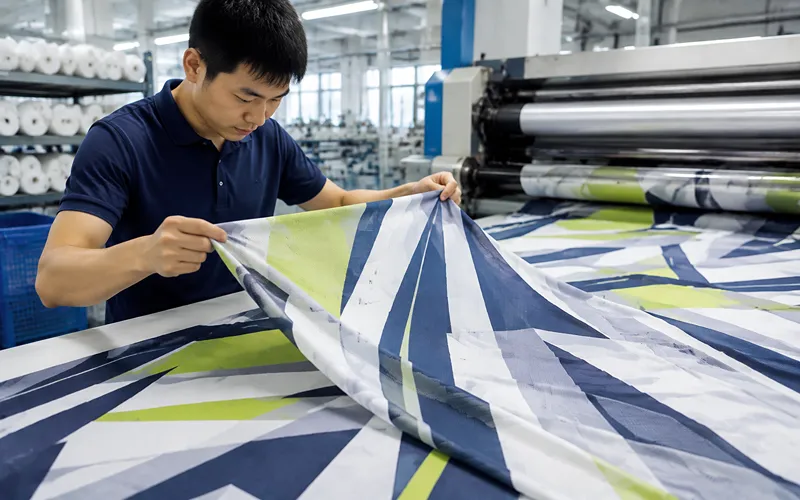
Sublimation ink doesn’t sit on top of the fabric. It bonds inside the fiber. So it won’t crack, peel, or flake, even under heavy stretch. Compression wear puts this to the test daily, since the fabric flexes hard with every move.
In our factory, we wash and test every new fabric and ink combo before bulk production. We follow AATCC 61, the industry standard for colorfastness testing (AATCC). It simulates dozens of wash cycles in about 45 minutes and rates fading on a 1 to 5 scale. Good sublimation prints on polyester score 4 to 5, meaning little to no visible fading.
Sublimation isn’t right for everything, though. It works best on stretch-heavy, performance pieces like leggings, jerseys, swimwear, and compression wear. Garments that need a soft, worn-in cotton feel are a poor fit, since sublimation only bonds with polyester.