How Should a Factory Test Fabric Stretch?
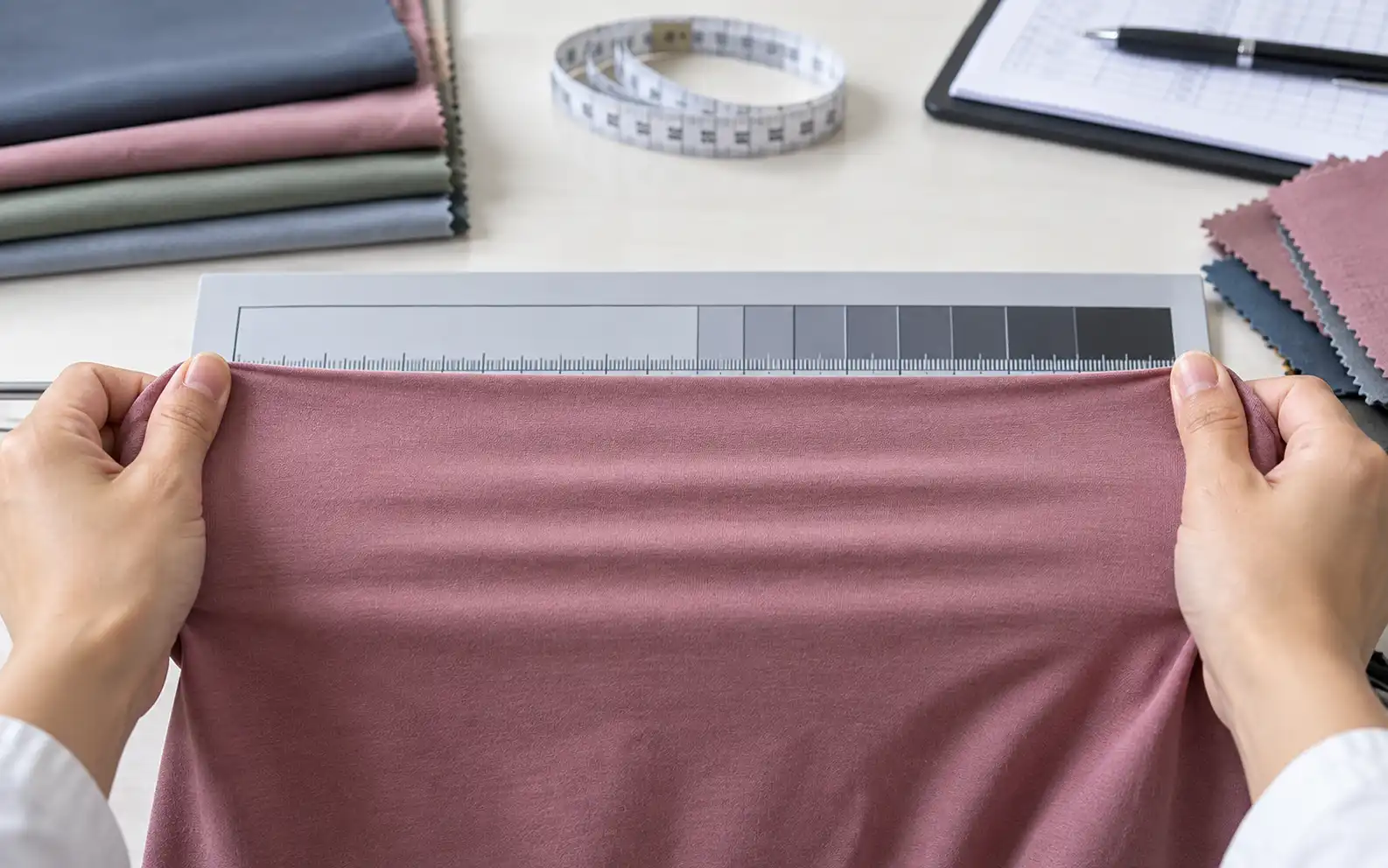
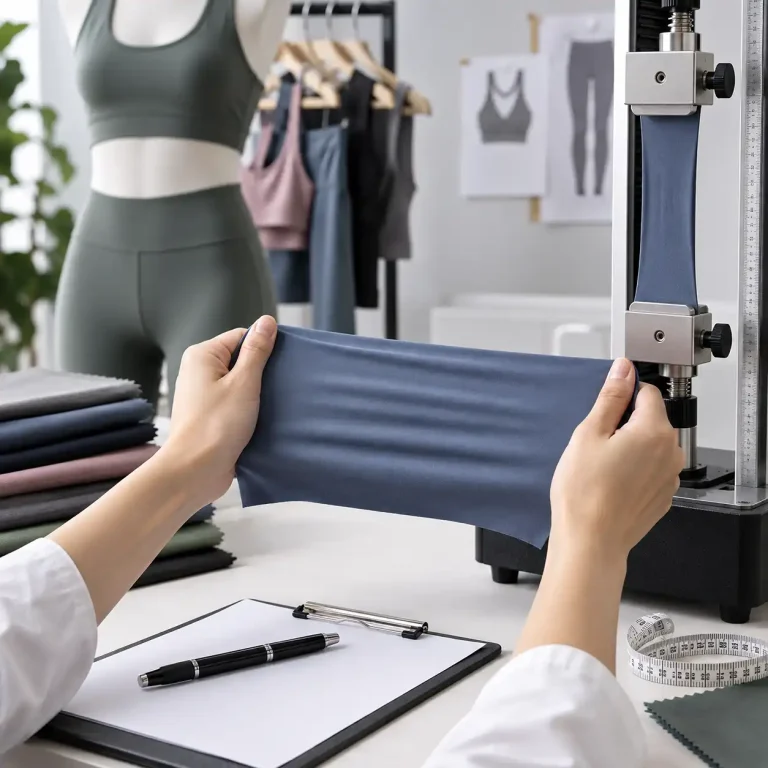
A useful fabric stretch test should record stretch direction, stretch percentage, and consistent test conditions. This creates a clear reference for fabric approval and later fabric lots.
“4-way stretch” or “good stretch” alone does not give enough information to compare two fabrics.
1. Test Both Fabric Directions
Widthwise and lengthwise stretch should be checked separately. The results can be very different.
This matters when the pattern is placed on the fabric. For leggings, crosswise stretch affects movement around the hips and thighs. Lengthwise stretch can affect movement through the knee and leg.
Testing both directions shows how the fabric will work with the garment pattern, rather than just confirming that it stretches.
2. Record the Stretch Percentage
The result should be measurable. For example:
Widthwise stretch: 55%
Lengthwise stretch: 30%
Stretch percentage is calculated as:
(Stretched Length − Original Length) ÷ Original Length × 100
If a 20 cm section stretches to 30 cm, the stretch is 50%.
These numbers give the approved fabric a measurable stretch reference.
3. Keep the Test Conditions Consistent
A stretch percentage means little if the test changes each time. Sample size, fabric direction, applied force, and test method can all affect the result.
For an in-house comparison, the same method should be repeated for each fabric lot. For standardized testing, ASTM D2594/D2594M provides a method for measuring stretch and growth in knitted fabrics under defined conditions.
Stretch, Recovery, and Fabric Growth
A 50% stretch result only shows how far the fabric extends. It does not show how much extension remains after release.
For example, a 20 cm section may stretch to 30 cm. After the specified recovery period, it measures 20.5 cm. That extra length indicates fabric growth. Recovery describes how well the fabric returns toward its original size.
On leggings, poor recovery can cause bagging around the knees and seat. Growth at the waistband can also reduce its hold.
For a sports bra, the underband needs to regain tension after stretching. Too much growth can make the band less stable, even when the stretch percentage meets the target.
For fabric approval, we check stretch and recovery together. The fabric needs enough extension for movement without losing the shape or tension required by the garment. A higher stretch percentage does not automatically mean better activewear performance.
How Much Stretch Does Activewear Need?
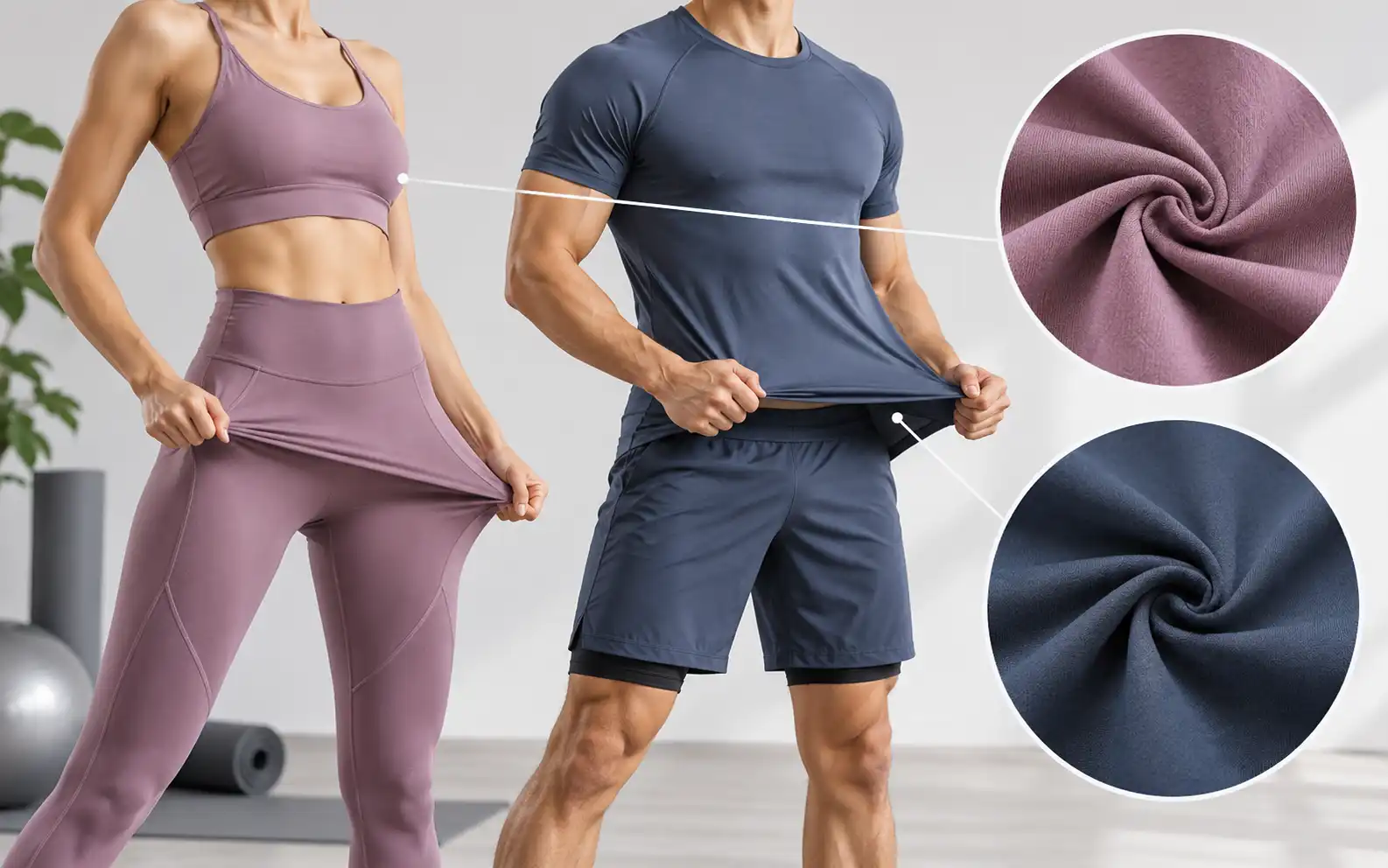
There is no single stretch percentage for every activewear product. The pattern, fit, and level of compression all change the target.
Based on the ranges we commonly work with during activewear development:
Product | Stretch Reference | Main Requirement |
Leggings | 50–75%+ | Hip, thigh, and knee movement |
Sports Bra | 30–50%+ | Controlled stretch for support |
25–50%+ | Upper-body movement without excess looseness | |
30–50%+ | Controlled extension and pressure |
These are development references, not pass/fail standards. The same stretch percentage can work differently with different patterns.
If you are comparing China leggings manufacturers, ask how the factory sets the fabric stretch target together with the legging pattern, rather than approving fabric by composition alone.
Negative ease is one reason. A garment designed smaller than the body relies on the fabric to extend to the intended fit. Knit fabric stretch and recovery should therefore be considered when matching the fabric to the pattern.
This is why stretch requirements should be set during clothing product development, together with the fabric and pattern. Changing the stretch level later may require changes to finished measurements or pattern reduction.
Developing a new legging style? See how we handle fabric, fit, and pattern development as a custom leggings manufacturer.
Why Similar Fabrics Can Stretch Differently
Two fabric swatches may both say 75% nylon / 25% elastane, 220 GSM. That does not mean they will give the same stretch result.
The difference can come from several parts of fabric production:
- Knit construction: Interlock, jersey, and rib structures allow the yarn loops to move differently. Stitch density also changes the available extension.
- Elastane setup: The same elastane percentage can use different yarn sizes, deniers, or feeding conditions.
- Knitting tension: Changes in loop formation can make the finished fabric tighter or more open.
- Dyeing and finishing: Heat setting and finishing can change fabric width and density before the fabric reaches garment production.
This creates a common sourcing problem. A replacement fabric can match the original fiber content and GSM on paper but still have a different stretch result.
For fabric approval, composition and GSM are useful filters, not proof of equal performance. Fabric construction and measured stretch need to be checked separately.
What If Bulk Fabric Does Not Match the Approved Stretch?
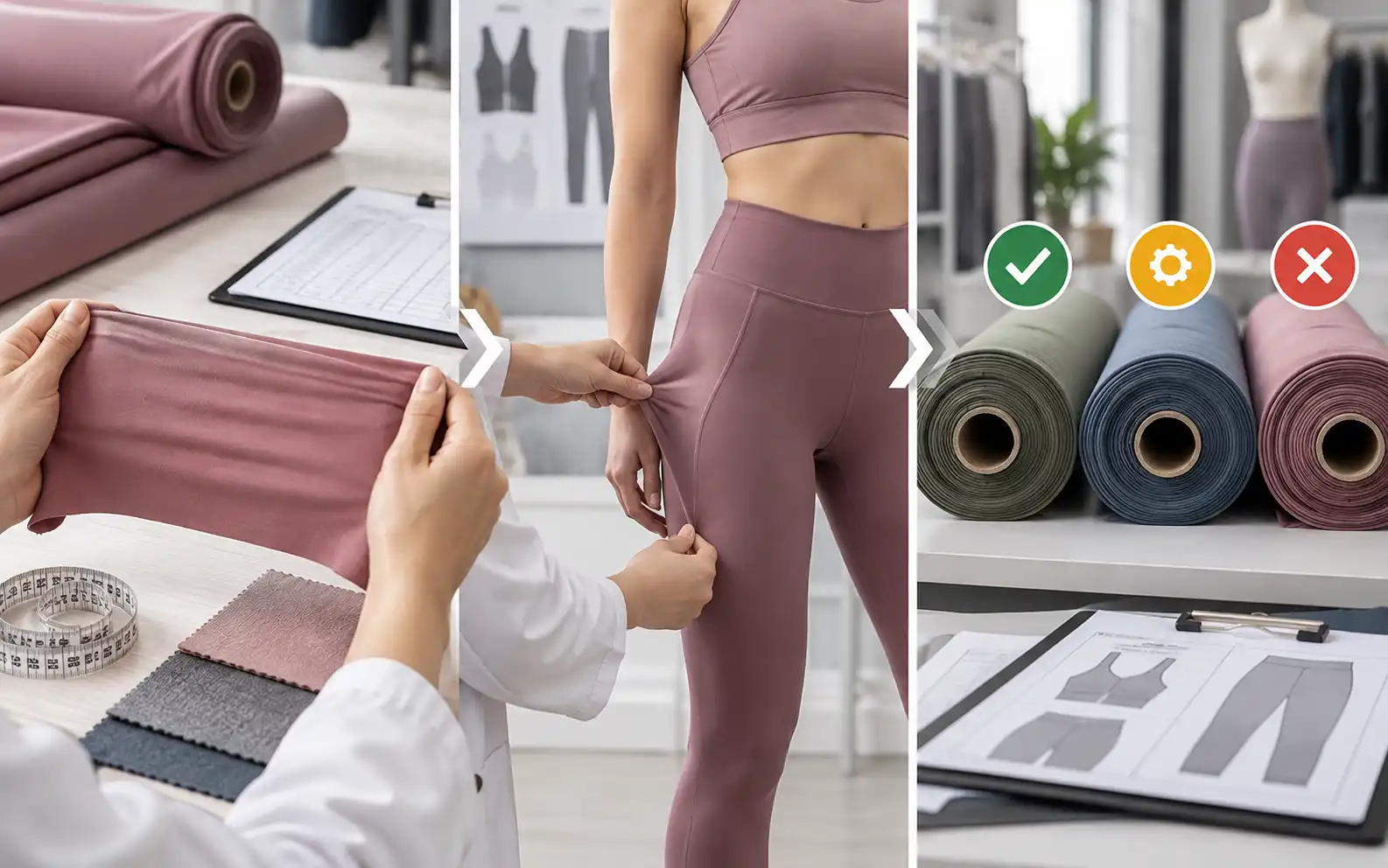
A stretch mismatch should be resolved before the fabric moves into cutting. Once the panels are cut, the options become much more limited.
We normally separate the decision into three steps:
1. Confirm the mismatch
Retest several rolls to see whether the difference is isolated or appears across the fabric lot. Record how far each result is from the approved target.
2. Check the garment impact
A small difference does not automatically mean the fabric must be rejected. Make a trial garment from the affected fabric and check the finished measurements, fit, and required tension.
Do not change the pattern just to make an out-of-target fabric work. Any pattern adjustment changes the approved product specification and should be reviewed separately.
3. Set the disposition
The result should lead to a clear production decision:
- Release: The variation does not change the required fit or function.
- Adjust: A controlled change is needed and approved before cutting.
- Hold or replace: The fabric cannot meet the approved requirement.
A stretch mismatch is not an automatic rejection. It is a hold point until its effect on the finished garment is confirmed. Stretch verification should also be part of the wider sportswear quality control process when fabric performance can affect the finished garment.