What Is Four Needles Six Threads Stitching?
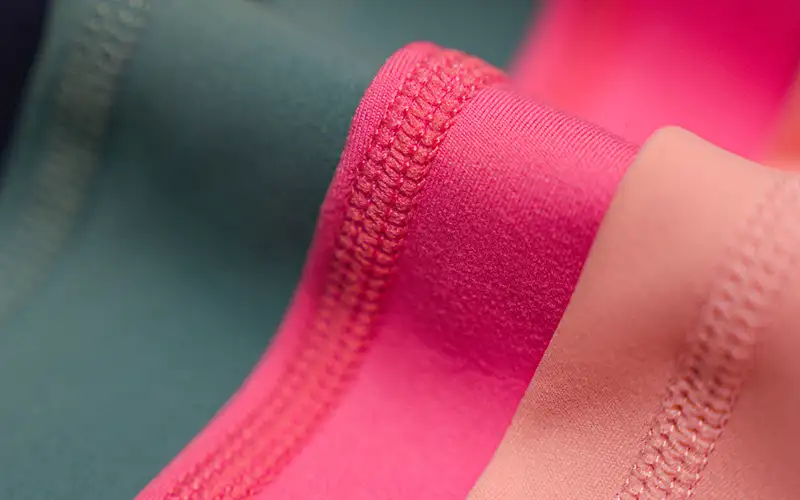
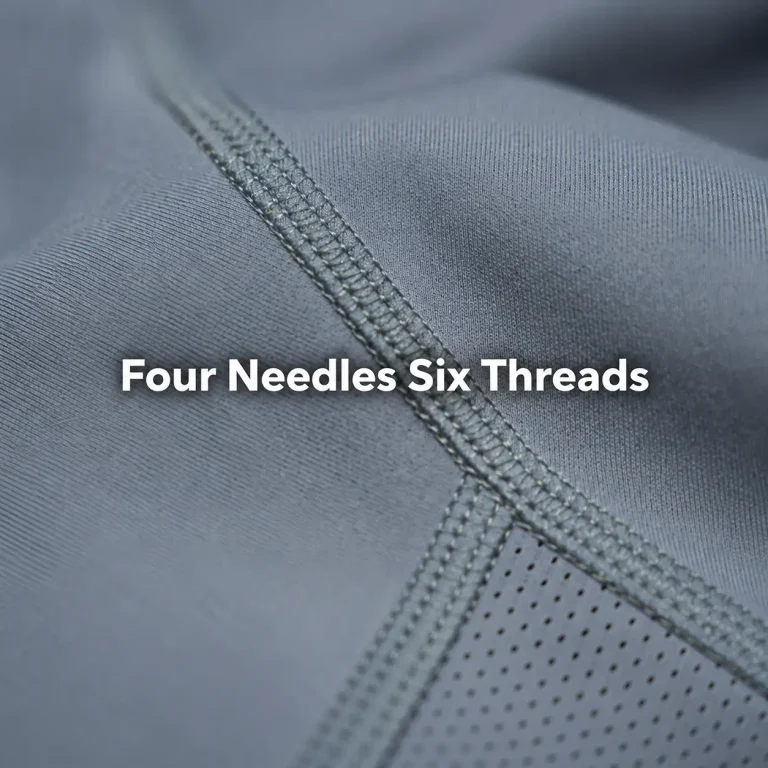
Four needles six threads is a sewing technique that uses four needles and six threads to join two fabric panels. It creates a flat seam that can stretch with the fabric, reducing the raised seam allowance found in some conventional seams.
This technique is commonly called flatlock stitching in activewear manufacturing. However, flatlock is a broader term. Not every flatlock seam is made with four needles and six threads.
In our factory, we distinguish between the stitching method and the finished seam. A tech pack that only says “four needles six threads” may not fully describe the required result. We recommend adding a seam reference photo or an approved sample so the factory can match the intended construction.
Four Needles Six Threads vs. Overlock: What’s the Difference?
The main difference is how the two methods join fabric. Four needles six threads creates a flatter seam with less bulk against the skin. Overlock stitching joins fabric edges and wraps thread around them, usually leaving a raised seam allowance inside the garment.
Both methods can stretch with activewear fabrics, but their seam structures and uses differ.
Comparison | Four Needles Six Threads | Overlock |
Seam structure | Flat seam with little raised bulk | Joined edges with a seam allowance |
Stretch | Supports stretch when matched to the fabric and thread | Depends on stitch type, thread, and settings |
Seam thickness | Usually flatter against the skin | Can feel bulkier where seam allowances overlap |
Common uses | Close-fitting leggings and compression wear | General garment assembly and side seams |
Key concern | Stitch balance and seam flexibility | Seam strength, stretch, and allowance width |
Where Should Four Needles Six Threads Be Used in Activewear?
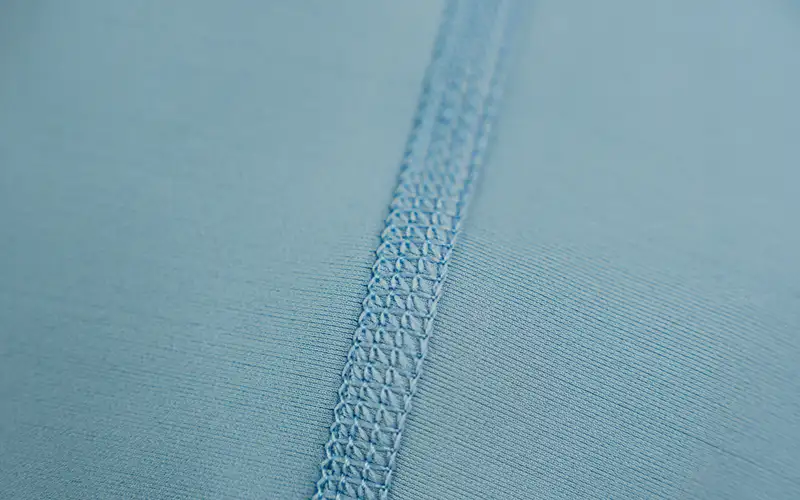
The best seam placement depends on the garment’s construction and how the panels move during exercise. The table below shows where this stitching method may be used in different activewear styles.
Activewear | Where It May Be Used | Why It Matters |
Inseams and selected leg panel seams | Helps reduce rubbing along the inner thighs and allows seams to stretch during squats. | |
Compression Wear | Seams joining fitted body panels | Helps seams move with tight fabric without creating bulky ridges against the skin. |
Selected side panels and back seams | Reduces raised seams in areas that stay in close contact with the body during exercise. | |
Fitted body panels and sleeve seams | Allows seams to follow arm and shoulder movement with less bulk. |
In our factory, we pay closer attention to panel shape when working with four needles six threads. A straight leggings inseam is different from a curved panel seam. On a tight curve, the fabric edges may be harder to keep flat during sewing.
For this reason, we check the seam shape on the actual sample rather than approving a stitching method from the design drawing alone.
When Is Four Needles Six Threads Not Necessary?
Not every activewear seam needs four needles six threads. In some areas, other stitching methods provide a better fit or finish.
- Loose-fitting garments: Relaxed workout T-shirts and training shorts often use overlock seams. Their looser fit means a flat seam may offer little extra comfort.
- Hems and bindings: Legging hems often use coverstitch for a neat, stretchable finish. Necklines and armholes may need binding or other edge-finishing methods.
- Structural seams: Sports bra underbands and elastic attachments need stitching that holds the elastic securely. The seam must stretch without letting the elastic shift or twist.
In our production work, we pay special attention to elastic attachments. A flat seam alone does not ensure that the elastic stays in place during movement. We select the attachment method based on the elastic width, stretch, and how it sits against the fabric.
How Can Buyers Check Four Needles Six Threads Quality?
Check the finished seam under both normal and stretched conditions. A visual inspection alone may miss problems that appear when the fabric is pulled.
Check | What to Look For |
Stitch lines | Even spacing and seam width, with no skipped stitches or loose loops. |
Seam surface | No puckering, twisting, or uneven fabric edges. |
Stretch test | No broken threads, stitch damage, or unusual seam opening during stretching. |
Needle damage | No broken fabric yarns or enlarged needle holes. |
If a seam fails during sample testing, document the defect in your sample revision feedback before requesting another sample. For example, skipped stitches may involve needle condition, needle size, thread choice, or machine timing. Changing thread tension alone may not solve the problem.
For bulk production, include seam width and stitch appearance in your quality control checks against the approved sample. Check samples from different production batches, not just the first finished garment. Any change in fabric, thread, or sewing settings should trigger a review of the affected seam.
What’s Next
Four needles six threads can improve comfort in fitted activewear, but the stitching method alone does not guarantee a good seam. The fabric, seam design, and sewing quality all affect the final result.
At LuckPanther, we help brands choose suitable stitching methods based on their garment designs and fabric requirements. Share your tech pack or design details with us, and we can review the seam construction before sampling begins.