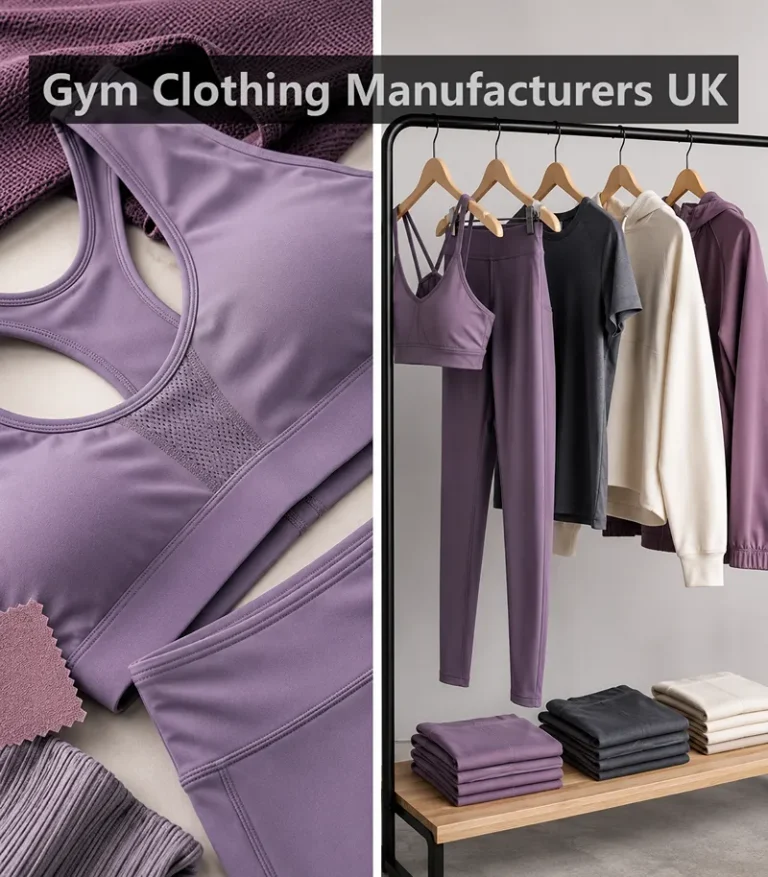
Compare 8 Gym Clothing Manufacturers UK for Your Brand
Manufacturer | UK Manufacturing | Gym Wear Capability | Main Limitation |
|---|---|---|---|
Ro & Ritzy Ltd. | No – India production | Leggings, sports bras, gym sets | No UK-based production |
Blue Associates Sportswear | Yes – limited UK production | Technical fabrics, compression wear | UK production scope varies |
Hook & Eye UK | No – China production | Custom gym sets, fitness apparel | Relies on overseas factories |
Sports & Leisure Brands Ltd. | Yes – Lincoln facility | Performance tops, training shorts | Focuses more on teamwear |
White2Label Manufacturing | UK and overseas options | White-label and custom gym wear | Low MOQ applies to selected services |
FashionWorks London | Not verified | Activewear development support | Gym wear manufacturing needs verification |
Hawthorn | No – overseas production | Gym basics, joggers, training tops | Limited evidence for technical gym wear |
Hugga Sportswear | Yes – Sheffield facility | Compression tops, printed leggings | Large-scale OEM capacity unclear |
1. Ro & Ritzy Ltd.
Here’s what stood out, and why they made our list of gym clothing manufacturers UK brands can actually consider.
MOQ and pricing. Their minimums are low. Good for a first order or a test batch. But per-unit cost climbs fast if you don’t scale up later. Budget for that.
Sampling. Because production runs through their India facility, sample turnaround takes longer than UK-based factories. Build extra time into your launch schedule. Don’t assume a two-week turnaround.
Fabric and customisation. They offer real customisation, dyeing, prints, embroidery, and organic fabric options. Just verify certifications yourself. Ask for the GOTS licence number and check it against the public database before you trust any “organic” label.
Our take: Among the gym clothing manufacturers UK startups tend to shortlist, Ro & Ritzy works well for small brands ordering their first or second run, especially if budget matters more than speed. If you need fast turnaround or strict “Made in UK” sourcing, this may not fit. For everyone else, it’s a reasonable low-risk starting point.
2. Blue Associates Sportswear
We sent Blue Associates a real inquiry: a basic legging and jacket order, standard tech pack. Here’s what we actually experienced.
For UK-made orders, their minimum sits around 50 units per style. That’s low. If you want to scale past that, their overseas network (Europe, China, Vietnam) drops the per-unit cost significantly, but minimums jump to 300+ units per style. So if you’re weighing a UK factory against a China sportswear manufacturer for your next production run, this is one of the few suppliers that lets you compare both without switching partners.
Our sample took 18 days from approved tech pack to delivery. Longer than a basic factory, shorter than most bespoke performance suppliers we’ve dealt with. Worth it if fit and fabric performance actually matter for your product.
They asked about stretch recovery and colorfastness requirements before quoting fabric, not after. Most factories skip that step entirely. Colorfastness is tested under ISO 105, the international standard used to measure how well fabric resists fading from washing, light, and sweat.
3. Hook & Eye UK
We tested Hook & Eye with a real inquiry: activewear leggings and a compression top. Here’s what we found, including the specifics that matter for a purchase decision.
They source all fabric from China. For activewear, they typically work with polyester-elastane blends, usually 80% polyester to 20% elastane for compression pieces, and 88/12 or 92/8 blends for lighter leggings. These ratios aren’t unique to Hook & Eye. They’re standard across most performance activewear factories, since higher elastane content adds stretch recovery but raises cost.
Orders start at 50 units per design or colour. That number rises with construction complexity, like bonded seams or multi-panel compression builds.
They hold SEDEX membership under SMETA audit, ISO 9001 certification, and Alibaba Gold Plus Supplier status. SMETA audits check four areas: labour standards, health and safety, environment, and business ethics.
Their pattern team checks fit before sampling starts. This matters for stretch fabric. A grading error of even half a centimetre across sizes can throw off fit consistency, especially in compression wear. It’s the kind of quality control that matters for technical pieces, like the best yoga clothes Australia shoppers expect to move and stretch properly.
Our take: Solid pick if you want UK-based communication with cost-effective overseas production. Always request the exact fabric composition and GSM on your specific order, since blends vary by product type.
4. Sports & Leisure Brands Ltd.
We asked about their gym and performance wear range. Not their general sportswear. Here’s what we found.
Their gym clothing uses polyester-elastane blends. Usually 85% to 90% polyester, with 10% to 15% elastane. More elastane means better stretch recovery. That matters for leggings and base layers that need to hold their shape wash after wash. This is where activewear trends 2027 are heading.
They build graduated compression pieces. Tighter at the extremities. Looser toward the core. Real graduated compression usually sits between 15 and 20 mmHg for athletic wear. Ask for the exact mmHg number before you order. Not every “compression legging” on the market actually hits that range.
Their mill tests moisture-wicking before approving bulk runs. The industry uses a standard called AATCC 195 for this. It measures how fast fabric pulls sweat away from skin, and how fast it dries. You can check the AATCC to see exactly what gets measured. That way you can ask suppliers for real test data, not just a marketing claim.
5. White2Label Manufacturing
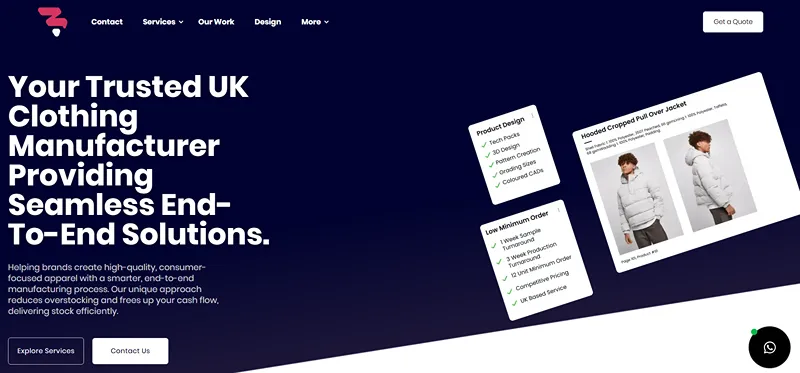
White2Label flips the usual manufacturing setup: most factories wait for a finished tech pack. White2Label builds it with you first, in-house, before any fabric gets touched.
Operating since 2018, they’ve worked with over 400 brands. MOQ starts at just 25 units per style per colour, one of the lowest we’ve seen among gym clothing manufacturers UK brands consider for a first run. Their design and production teams sit under one roof, so spec changes happen in days, not weeks.
For high-intensity training pieces, like leggings and compression tops, they work with standard polyester-elastane blends built for stretch recovery and sweat-wicking. For loungewear and low-intensity gym pieces, like joggers or oversized tees you’d wear to and from the gym, they offer modal fabric for its soft hand-feel and breathability.
6. FashionWorks London
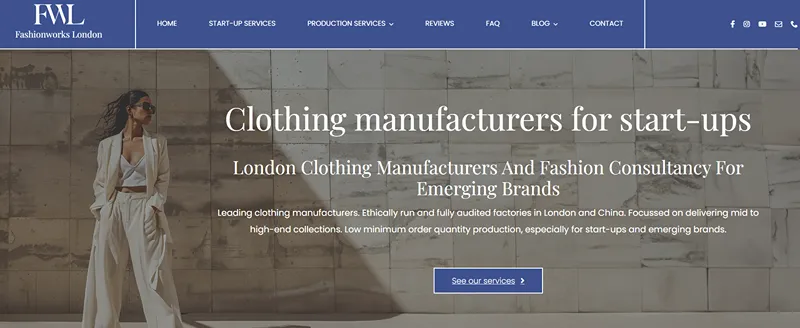
FashionWorks London looks stronger in pattern development, sampling, grading, and small production runs than in high-volume technical activewear production. For smaller brands comparing gym clothing manufacturers UK, this can be useful when the fit still needs work before bulk production.
From our production experience, even a 1–2 cm difference in the hip, rise, or waistband can change how leggings fit once the fabric stretches. This is why we would use FashionWorks first for sample development and a small pilot run.
However, we found limited public evidence of dedicated high-volume activewear production. Before ordering, we would confirm the bulk factory and check whether it uses 4-needle 6-thread flatlock machines. We would also request recent leggings or sports-bra samples and test stretch recovery, seams, and measurements after washing. These checks also matter for performance products inspired by European tennis brands.
Our assessment: FashionWorks is better suited to startups and brands needing hands-on development. For larger gym wear orders, verify its technical machinery, capacity, QC process, and sample-to-bulk consistency first.
7. Hawthorn
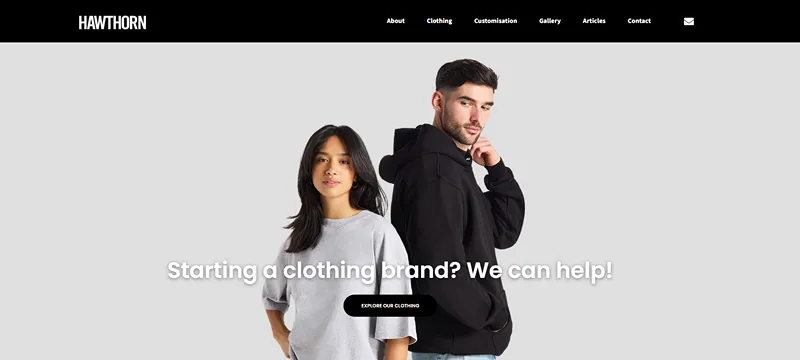
Hawthorn is a UK-based clothing company founded in 2014. Its MOQ can start at 50 pieces per design and colour, while bulk production normally takes around 4–6 weeks after sample approval.
Before approving leggings or fitted tops, we would request fabric specifications, stretch-recovery results, seam samples, and wash tests. If your design uses seamless bonding, confirm the factory has the correct bonding equipment and experience rather than assuming a general clothing factory can handle it.
Hawthorn also states that garments pass a four-stage QC process. We would still put measurable tolerances for sizing, stitching, colour, and defects into the tech pack. This gives both sides a clearer standard during final inspection.
8. Hugga Sportswear
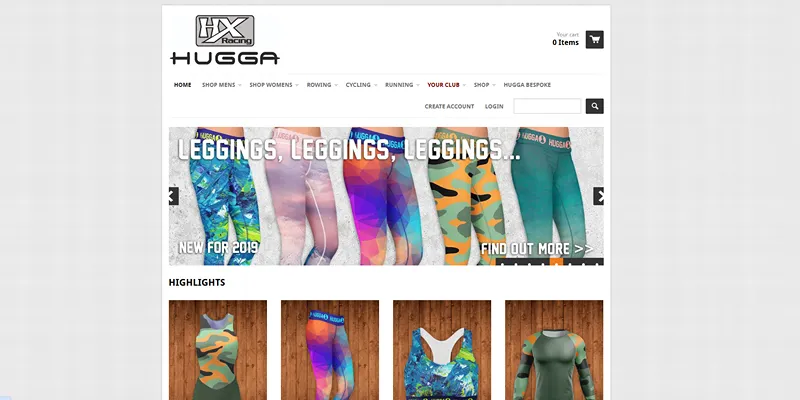
Hugga Sportswear produces fitted gym clothing in Sheffield, including leggings and compression tops. Selected made-to-order products start from 1 piece, with a stated production target of 4 weeks or less. These terms do not automatically apply to fully custom orders.
Its in-house sublimation printing suits polyester-based gym wear. Brands using nylon fabrics should confirm the available decoration methods before sampling.
We would consider Hugga for a small, UK-made collection of printed leggings or training tops. Before placing a custom order, ask for a style-specific MOQ and production schedule. Do not use its made-to-order terms to plan a new OEM collection.
What to Know Before You Start UK Production
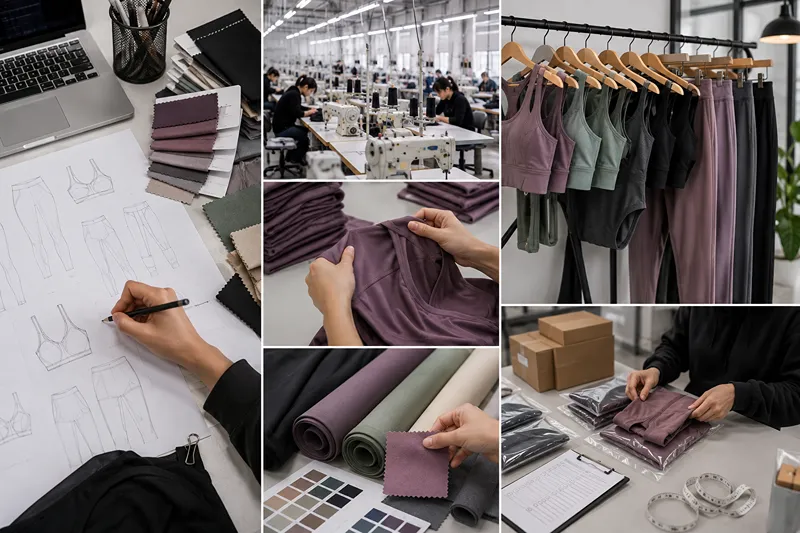
Before you sign anything, a few practical things are worth sorting out. These are the details that don’t show up on a factory’s website, but they shape how smooth your first order actually goes.
- Get payment terms in writing. Most UK factories ask for a deposit upfront, usually 30% to 50%, with the balance due before shipping. Ask exactly what triggers the final payment: approval of a pre-production sample, or the finished garments themselves.
- Ask who owns the pattern. Some factories treat a pattern they develop as their own property, not yours. This matters if you ever switch suppliers later. A pattern you don’t legally own means starting from scratch, even for a style you’ve already sold.
- Budget for sample fees separately. Samples aren’t usually free, and costs add up fast across multiple fit revisions. Ask for a per-sample cost and a rough estimate of how many rounds most first-time brands need before approval.
- Visit the factory if you can. A video call works for a first conversation, but nothing replaces walking the floor yourself. This matters most for gym clothing manufacturers UK brands sourcing technical fabric, where machinery and quality control vary a lot between factories claiming the same capabilities.
Where LuckPanther Fits
Once you’ve nailed down your UK sampling and fit, scaling up is the next hurdle, and that’s exactly where LuckPanther comes in. We specialize in activewear and gym wear production, with in-house fabric customization, GSM adjustment, and printing all under one roof, so your spec doesn’t get lost between vendors. If you’re ready to move from sample to bulk without compromising on fabric performance, get in touch with our team for a quote.