What to Check Before You Trust a Factory’s Quality Claims
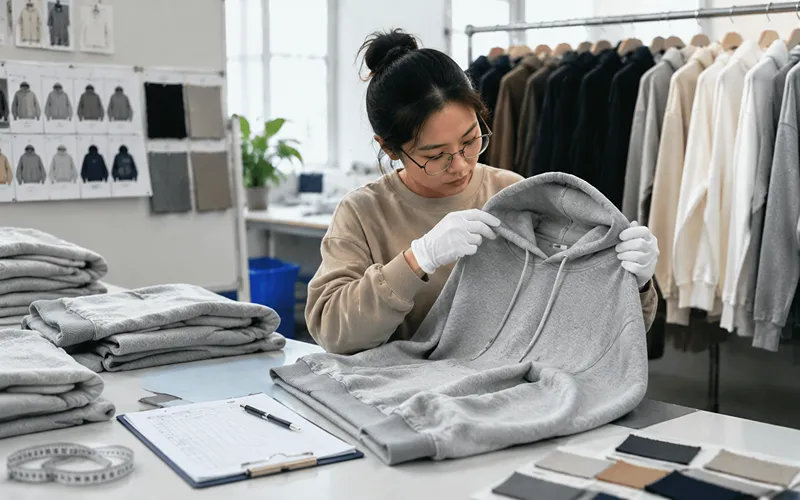
Every factory says “we have strict quality control.” That’s not enough. You need proof, not promises.
Here’s what we check, every single time, before we trust our own production line, let alone tell a client to trust it.
- In-Line Inspection
Most factories only check hoodies after they’re done. By then, fixes are expensive. We check fabric before cutting, check stitching mid-production, and do a final check before packing. Three checkpoints, not one.
- Same Fabric Batch
This one gets skipped a lot. A factory shows you a sample made from one fabric roll. Then bulk production uses a different roll, sometimes even a different supplier. The color shifts. The weight shifts. Ask your factory to lock the fabric batch before you approve the sample.
- Verified Material Standards
A trustworthy Chinese sportswear manufacturer will usually test fabric against a recognized standard, not just their own word. OEKO-TEX certification is one example buyers can ask about. It’s not required, but a factory that has it is usually more serious about consistency.
- Real Bulk Order Photos
Sample photos are easy to fake. Ask for photos from an actual 1,000-piece order, not the studio sample. Look closely at seams and print placement across different units.
Comparing the Top 10 Hoodie Manufacturers China
The table below provides a quick comparison of the key strengths of each manufacturer.
| Manufacturer | Hoodie Focus | Production Model | Better Fit For |
|---|---|---|---|
| LuckPanther | Performance & custom hoodies | OEM/ODM cut-and-sew | Activewear brands needing custom development |
| Hongyu Apparel | Heavyweight & streetwear hoodies | Full-package manufacturing | Streetwear brands using heavy fleece or terry |
| Arlisman | Heavyweight hoodies & sweatshirts | Custom + small-batch production | Brands needing 220–460 GSM options |
| Jingqi Apparel | Custom hoodies & casualwear | OEM/ODM production | Private-label casualwear collections |
| Pindon Apparel | Hoodies, jackets & streetwear | OEM/ODM full-package | Mixed hoodie and streetwear collections |
| Huilin Fashion | Low-MOQ custom hoodies | Small-batch manufacturing | Startups testing smaller orders |
| QYOURECLO | Hoodies, tracksuits & streetwear | OEM/ODM cut-and-sew | Custom streetwear collections |
| Lezhou Garment | Fleece, French terry & oversized hoodies | Full-package manufacturing | Brands needing fabric + decoration options |
| Ningbo Eleven Garments | Hoodies & casual knitwear | Custom garment production | Casualwear and basic hoodie programs |
| Guangzhou LuoQi | Custom hoodies & sweatshirts | OEM/ODM production | Private-label hoodie collections |
Suggested Reading:
- 12 Best Yoga Wear Supplier China for International Clothing Brands
- Top 10 China Leggings Manufacturers: A B2B Sourcing Guide
Deep Reviews of Hoodie Manufacturers in China
We take a closer look at each company based on hoodie customization, manufacturing capability, and brand suitability.
1. LuckPanther
LuckPanther’s strongest advantage is the combination of activewear experience and hoodie production capability.
Customization Happens in Stages
You don’t send a logo and get a finished hoodie back. It starts with fabric and fit. Then a paid sample. Bulk production only starts after you approve that sample. This matters more for hoodies than people think. Hood shape, drawstring placement, and pocket size all affect fit. Skipping the sample stage is where a lot of buyers get burned.
Fabric Ratio Is Customizable
Cotton-to-polyester ratio changes how the hoodie feels. It also affects shrinkage and how well it holds print or embroidery. LuckPanther adjusts this ratio based on use. A streetwear brand wants heavyweight, soft fleece. A fitness brand wants something lighter that layers well. We asked directly whether they adjust blend ratio per client, or just offer a fixed catalog.
LuckPanther didn’t start as a hoodie factory. The core experience is in performance fabrics like moisture-wicking blends and stretch materials. The same ISO certification and SGS fabric testing apply across all product lines, hoodies included.
2. Hongyu Apparel
We checked what actually holds up for hoodies, the kind of digging private label activewear manufacturers should expect from a real guide.
Wholesalers can start at 50 pieces across mixed styles and colors. Fully custom orders run closer to 300 pieces per item and color. That gap matters. The 50-piece number works for existing designs. It won’t apply if you want your own fabric or fit from scratch.
Hongyu works with fleece, French terry, and cotton-poly blends, for both light and heavy hoodies. Blend ratio changes more than feel. It affects shrinkage and durability too.
Sizing is one area where hoodie factories often cut corners. We confirmed Hongyu builds custom size ranges beyond S–XL. That matters for brands targeting plus-size or petite fits.
🔍Our Verdict: Hongyu earns its spot on low MOQ and real hoodie fabric range. It’s a strong pick for smaller brands testing designs. For high-volume, time-sensitive orders, confirm capacity in writing before you commit.
3. Arlisman
Arlisman lists a 460 GSM hoodie color chart, not a vague fabric description. That’s heavyweight fleece, the kind streetwear brands ask for. GSM follows a real test method. In the US, it’s governed by ASTM D3776, the standard for measuring fabric mass per area.
Arlisman uses hand-cutting and hand-stitching, with quality checks at each stage before packing. This can mean better detail work on seams and cuffs. It can also mean slower output. Fine for smaller orders. Ask directly about the timeline if you need thousands fast.
Arlisman buys fabric straight from suppliers, not through a trading company. That usually means better control over color and durability. This matters more for hoodies than lighter garments, since fleece varies a lot by supplier. It’s part of why their spec sheets go beyond vague “cotton blend” language you see across other types of sportswear and casualwear factories.
4. Jingqi Apparel
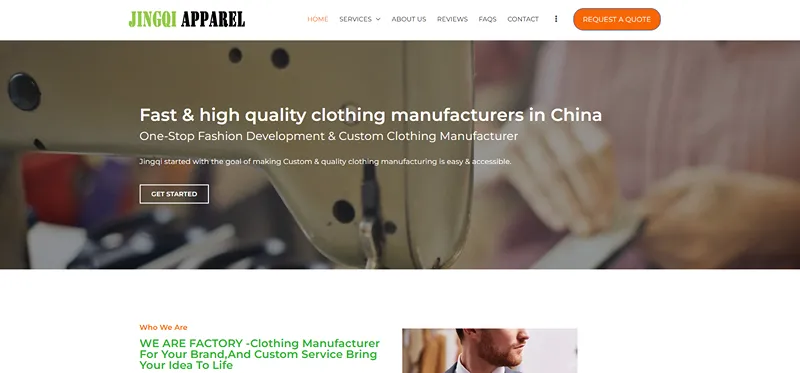
Jingqi offers digital printing and eco-washes as part of their hoodie process. Eco-wash finishing changes how a hoodie feels right out of the bag, giving it that pre-softened, broken-in look many streetwear brands want without a separate garment-dye step.
Zippers seem like a small detail until a bad one ruins a hoodie. Jingqi’s own hoodie guide walks buyers through zipper type as a specific decision point, not an afterthought bundled into “trims.” That’s a signal the factory treats hardware as part of quality, not just packaging.
Jingqi’s product range isn’t hoodie-only. The same factory produces items using polyester fabric for performance pieces and handles custom swimwear alongside apparel. That range means a brand mixing hoodies with other product categories could consolidate more of its line under one supplier instead of managing multiple factory relationships.
🔍Our Verdict: What sets Jingqi apart isn’t scale or fabric specs alone. It’s the in-house finishing and design support, the parts of hoodie production that are easy to overlook until something goes wrong. Good fit for brands that want more hand-holding without giving up customization.
5. Pindon Apparel
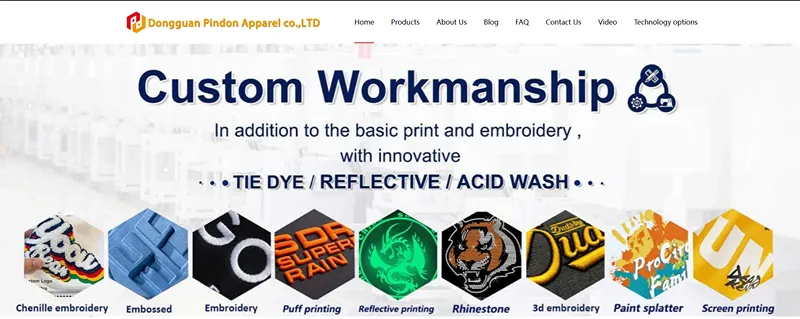
Pindon works in the 400 to 500 GSM range for oversized fits and drop-shoulder cuts. That’s genuinely heavy fleece. Oversized silhouettes need that weight to hold their shape. A lighter fabric in the same cut just looks sloppy.
Pindon lists 3D foam logo puff printing as a specific hoodie option. Puff print works best on dense, heavyweight fabric. The raised ink needs a stable surface to hold its shape over time. That pairs naturally with Pindon’s heavy fleece.
Pindon offers 7-day sampling and a 20-day bulk production lead time. That’s fast for streetwear. Here’s the catch. Fast sampling usually means fewer rounds of fit revisions. Ask how many revisions are included before the clock starts.
MOQ runs 100 pieces per color per style. Some styles allow as low as 50. That flexibility, plus fast sampling, makes Pindon a solid starting point for new brands testing a streetwear concept.
6. Huilin Fashion
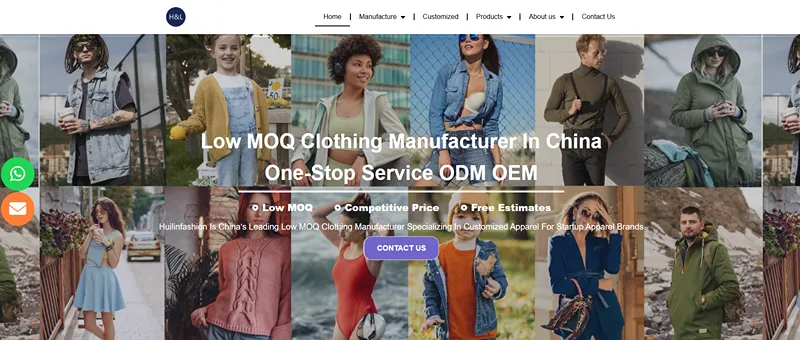
Huilin’s R&D team has a decade of pattern design experience, covering everything from initial patterns to final stitching. This matters for hoodies. A small grading error can throw off dozens or hundreds of pieces before anyone catches it, especially across a wider hoodie size range. We had a client come to us after a grading mistake at another factory made their XL fit like a Large. Nobody caught it until the shipment landed.
Huilin has worked with SHEIN, one of the biggest fast fashion players around. That means they’re built for speed and trend replication. Good if your line needs to move fast. We’ve seen brands skip a proper sample review to save a week. It usually costs more time later fixing what shipped wrong.
Huilin quotes 7 to 20 business days for delivery to most countries. That’s a real range, not a vague promise. Get it confirmed in writing for your exact destination and order size. We’ve seen quoted ranges shift once customs and peak season hit.
7. QYOURECLO
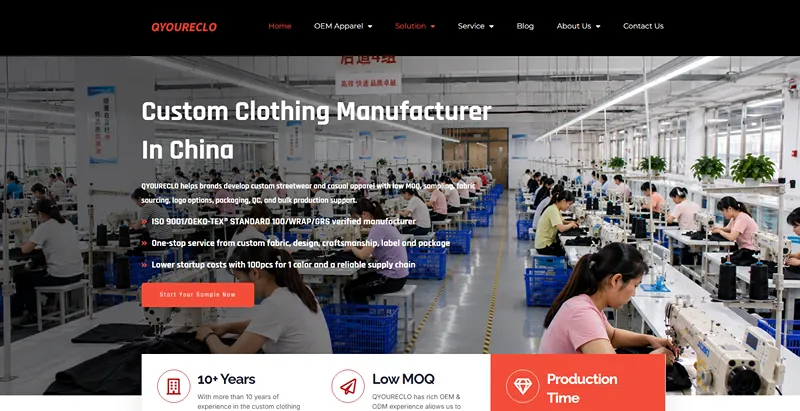
We asked how they decide GSM for a given order. Their answer went beyond a single number. 500 GSM fits cooler markets like North America or the UK, or premium streetwear positioning. It’s too heavy for lighter, entry-level lines.
Most factories sell whatever GSM you ask for. Fewer explain when a weight doesn’t fit your market. That’s a good sign for a garment factory that thinks about your product, not just your order.
Streetwear hoodies typically run 100% cotton or 80/20 cotton-poly. Hoodies built for sports need spandex for stretch. Worth confirming this with any factory claiming to handle both streetwear and custom activewear. A supplier using the same blend for every order probably isn’t tailoring fabric to function.
Sample production runs 10 to 15 days. Bulk runs 20 to 25 days. This number held steady across everything we checked. A small detail, but consistency here is a good sign. Mismatched timelines are usually a red flag.
8. Lezhou Garment
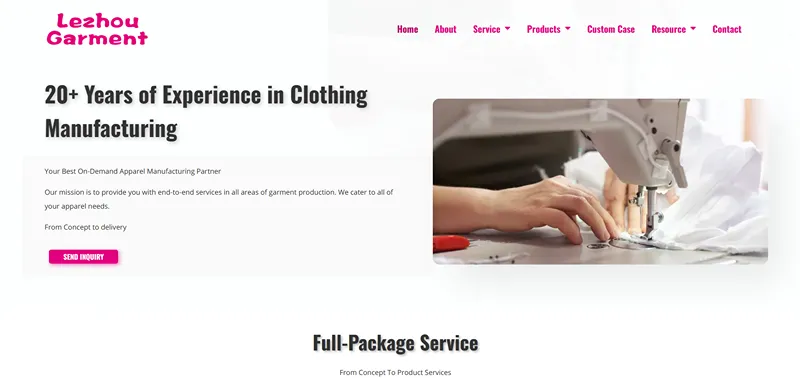
Lezhou runs its factory on Japan’s LEAN system, built to cut waste at each step. That usually means fewer defects and steadier output, not just lower cost. We’ve seen the opposite play out with clients before, a factory calling itself “efficient” while defect rates crept up unnoticed. We’d still ask for defect rate or rework numbers directly, not just the LEAN label.
Lezhou’s hoodie options include 100% cotton, 95/5 cotton-spandex, cotton-polyester, tri-blend, bamboo, and modal. The spandex blend holds shape better through washes, useful for fitted or cropped hoodies. Bamboo and modal are rarer in hoodie fabric sourcing, and give a softer hand feel for premium loungewear lines.
Lezhou states a refund policy specifically for quality issues, not just general satisfaction. We always tell clients to get this in writing before ordering. We’ve had a client rely on a verbal refund promise once. It fell apart the moment a batch shipped with real defects.
9. Ningbo Eleven Garments
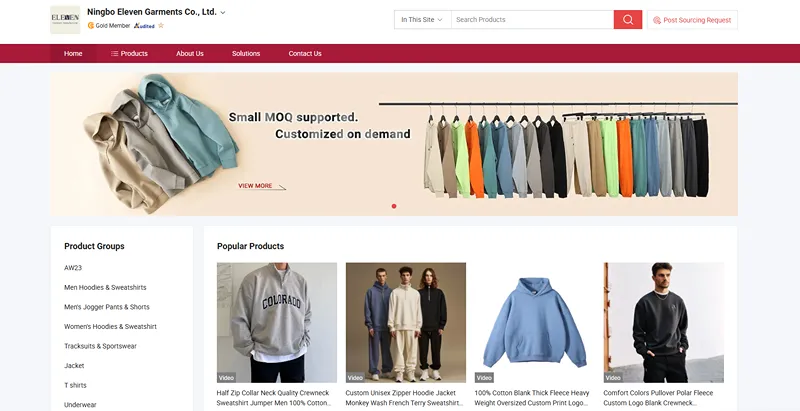
Some listings show a 2-piece minimum. Others show 50. A 2-piece minimum usually means an existing stock design. Want your own fabric, wash, or logo? Expect the higher number. Confirm MOQ for your exact build.
Their listings include monkey wash and acid wash hoodies. These aren’t simple garment dye. Monkey wash sprays chemicals on for an uneven, distressed fade. It’s a real technique, and it adds cost and lead time. If a factory offers it without mentioning either, ask directly.
We couldn’t find factory size, staff count, or certifications in their public listings. That’s not automatically bad. But it means more vetting falls on you. Ask for real production floor photos before committing.
10. Guangzhou LuoQi
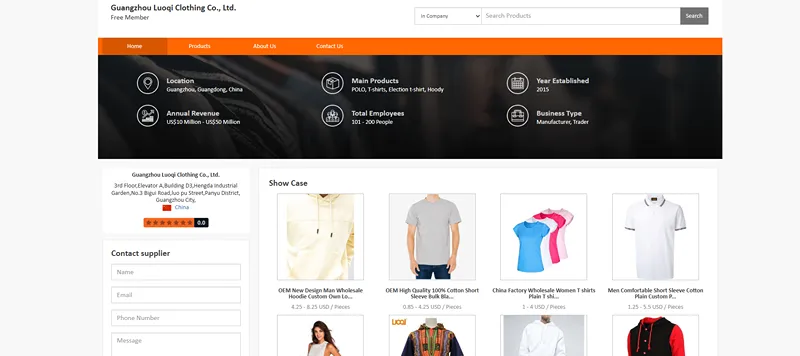
LuoQi buys raw fabric and dyes it themselves, instead of sourcing pre-dyed material. That’s real vertical integration. It can mean tighter color control batch to batch. It also means their fabric options depend on their own dye house, not a wider network. Ask to see color-matching results across two separate runs before trusting this fully.
Their catalog spans dresses, election t-shirts, dashiki, and hoodies. That breadth points to a trading-style operation, not a hoodie specialist. If you’re chasing activewear trends 2027 with performance fleece and technical fits, a generalist like this may not be the sharpest tool. Better for basic hoodies than trend-forward technical pieces.
Their hoodie listings lean toward plain pullover and zip styles, cotton-based. Not much mention of advanced trims, embroidery, or specialty washes. Fine for a simple, dependable basic. A gap if you need heavier customization.
🔍Our Verdict: LuoQi’s edge is in-house dyeing and straightforward basics, not trend-driven or heavily customized hoodies. Good for simple, cost-conscious orders. Confirm current terms directly.
How LuckPanther Ensures Quality Stays Consistent From Sample to Bulk
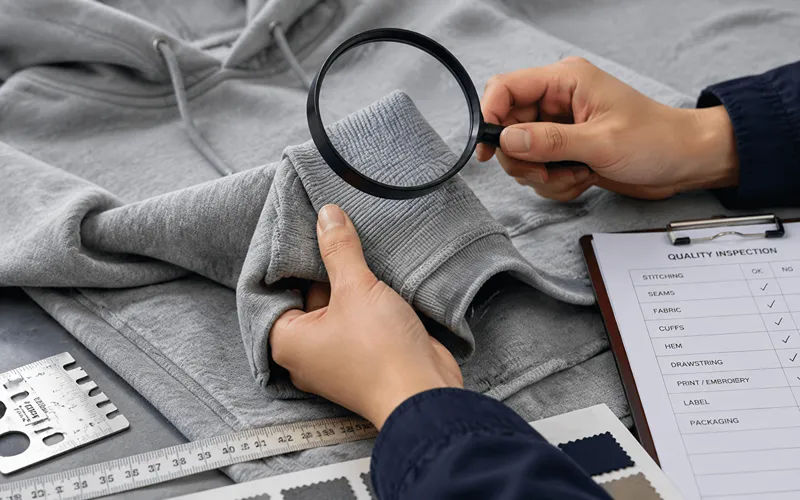
We built our hoodie process around one goal. Your 1,000th hoodie should match your 1st.
We Lock the Fabric Batch at Sample Approval
Once you approve a sample, we tag that exact fabric batch for your bulk order. This stops bulk fabric from coming off a different roll or supplier. Our fabric goes through SGS testing before cutting, so weight and composition stay verified.
Three Inspection Points, Not One
Most factories check quality once, at the end. We check fabric before cutting, stitching mid-production, and the finished hoodie before packing. This runs alongside our ISO-certified process. Catching a stitching issue on day 3 costs far less than catching it after 1,000 units are sewn.
We Grade Against AQL 2.5
Before any bulk shipment leaves, we sample-check it against AQL 2.5, the ISO-recognized standard for apparel inspection. We show you the report. We don’t just tell you it passed.
What This Looked Like for One Client
A streetwear brand came to us after a past factory’s bulk order shipped with mismatched fleece weight. Some hoodies felt noticeably thinner. We rebuilt their production with a locked fabric batch and a mid-production GSM check. Their reorder came back within 2% of the original sample weight, confirmed before it shipped.
Send us your design or an existing sample. We’ll walk you through fabric options, MOQ, and timeline, no pressure, just a straight answer. Get in touch with us to start your first sample.