Introduction: The New Era of Sportswear Manufacturing
In today’s fast-paced sportswear industry, speed, innovation, and flexibility define success. Whether you’re an emerging activewear label or a well-established global brand, choosing the right OEM/ODM sportswear factory can determine whether your next collection becomes a market hit or a missed opportunity.
The year 2025 marks a transformation in the sportswear supply chain — sustainability, rapid prototyping, and flexible production have replaced traditional mass manufacturing models.
Brands are no longer just looking for a “factory,” but for a strategic manufacturing partner — one that understands brand DNA, supports creative growth, and delivers both quality and innovation.
This guide will help you identify the key elements of selecting the right OEM/ODM sportswear partner, from design and technology to communication and sustainability — empowering your brand to grow with confidence.
1. Understanding OEM vs. ODM in Sportswear Production
Before finding your ideal partner, it’s essential to understand the difference between OEM and ODM production.
OEM (Original Equipment Manufacturing)
- You provide the design, tech pack, and logo.
- The factory produces according to your exact specifications.
- Best for established brands with strong design direction.
ODM (Original Design Manufacturing)
- The factory provides existing designs or helps develop new ones.
- Ideal for startups or retailers launching their first private label line.
- Allows for faster market entry and lower design costs.
Many successful activewear brands start with ODM, then evolve into full OEM production as they grow.
2. Global Sportswear Manufacturing Trends in 2025
According to McKinsey’s Global Fashion Report 2024, the global sportswear market is expected to surpass $510 billion by 2027, driven by health-conscious consumers, the rise of athleisure, and technological advancements.
Key trends shaping the industry include:
- Sustainability as Standard – Over 65% of consumers prefer brands using recycled or eco-friendly fabrics.
- Faster Product Cycles – Time-to-market has dropped from 9 months to under 4 months.
- Customization & Private Labels – More retailers are launching their own branded sportswear lines.
This means that flexible, innovative, and design-driven OEM/ODM factories are now the preferred partners for global brands.
3. Key Criteria for Selecting the Right Sportswear Factory
1️⃣ Product Development & Design Support
A strong factory should be more than a producer — it should be a creative partner.
Ask yourself:
- Does the factory have an in-house R&D or design team?
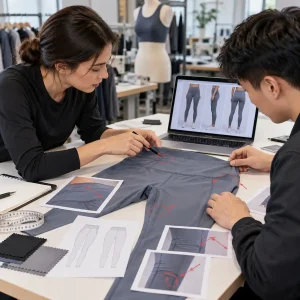
- Can it help refine patterns, fabric selection, and prototypes?
- Does it offer digital sampling or 3D virtual design?
Example: Our design department once helped a Canadian yoga brand shorten its prototype cycle by 40% using 3D visualization — achieving perfect fit in fewer sampling rounds.
2️⃣ Fabric Innovation & Sustainable Materials
Fabric defines both performance and brand identity. Leading factories offer:
- Moisture-wicking polyester/spandex blends
- Recycled materials like RPET and ECONYL nylon
- Compression and seamless knitting fabrics
- Eco-friendly textiles such as bamboo, Tencel, or organic cotton
By 2025, sustainable materials will be a decisive factor for brand trust.
Look for suppliers certified by OEKO-TEX®, GRS, or Bluesign® to ensure environmental and safety compliance.
3️⃣ Advanced Manufacturing Technology
Premium sportswear demands technical precision. Top factories invest in:
- Seamless knitting and bonded seams
- Laser-cut ventilation and reflective taping
- Compression support and anti-bacterial finishes
- Four-way stretch and ergonomic tailoring
Such capabilities enable brands to develop professional private label activewear lines — from sports bras and leggings to jackets and full activewear sets.
4️⃣ Quality Control & Certification
Quality consistency is non-negotiable.
Ensure the factory offers:
- ISO9001, BSCI, or WRAP certification
- In-house quality inspection teams
- SGS or OEKO-TEX® lab testing for colorfastness and fabric durability
Reliable factories will proactively share QC reports, videos, or inspection photos for transparency.
5️⃣ Low MOQ & Flexible Production
For small brands or DTC startups, low MOQ is critical.
Professional low MOQ sportswear factories typically provide:
- ODM stock designs starting from 100–300 pcs/style
- OEM custom production starting from 500 pcs/style
- Quick replenishment for reorders
This allows brands to test new collections efficiently while scaling up quickly for bestsellers.
6️⃣ Sustainable & Ethical Production
Modern consumers care about how products are made.
Factories aligned with global sustainability goals often:
- Use recycled fabrics and water-saving dyeing techniques
- Hold GRS, OEKO-TEX®, and GOTS certifications
- Operate solar-powered or energy-efficient facilities
This supports not just environmental goals but strengthens your brand story in marketing campaigns.
7️⃣ Communication & Project Management
Good communication saves time, money, and mistakes.
The best factories provide:
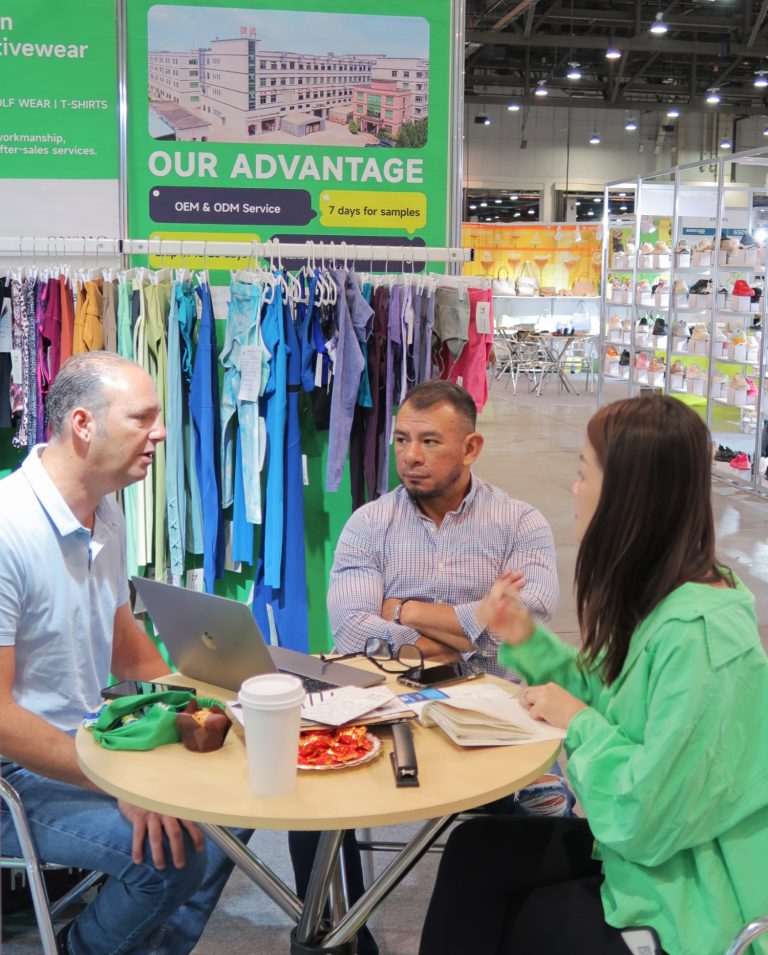
- Dedicated English-speaking project managers
- Transparent production timelines
- Real-time order updates and tracking
An efficient OEM partner acts as an extension of your brand team, not just a supplier.
4. Case Studies: Real Partnerships, Real Results
Case 1: Long-Term Client Partnership
Over the years, we’ve had the honor of working with several established international brands — helping them expand from small activewear collections into full-scale private label lines.
Through consistent quality, design collaboration, and reliable logistics support, we’ve built partnerships that go beyond production.
We are proud to contribute to our clients’ success by offering tailored OEM/ODM solutions that meet their evolving market needs.
Our goal remains simple: to help every partner grow stronger and scale faster in the global sportswear market.
Case 2: A New Client Success Story from the Netherlands
A client from the Netherlands reached out to us while searching for a reliable sportswear supplier for his yoga brand.
Our in-house design team created a full series of yoga activewear sets, carefully selecting color palettes, fabrics, and textures that reflected the client’s vision.
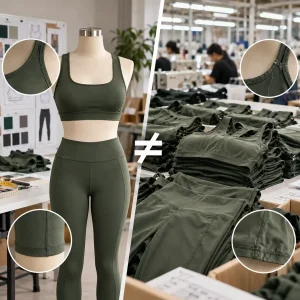
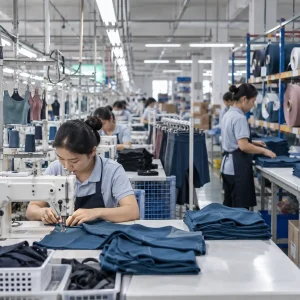
Throughout the process, our factory’s advanced equipment and skilled technicians maintained strict quality control — from fabric inspection to cutting and final stitching — ensuring each piece met international standards.
Today, all yoga wear on the client’s e-commerce platform is designed and produced by us, earning widespread recognition and excellent reviews from end customers.
This partnership showcases what happens when professionalism, creativity, and precision manufacturing meet — a perfect example of successful OEM collaboration.
5. How to Evaluate a Potential Sportswear Manufacturer
When comparing suppliers, always request:
- Company profile and certifications
- Product portfolio and sample photos
- Fabric swatches and technical data sheets
- MOQ and lead time details
- Sustainability policy or ethical compliance statement
Tip: Don’t focus solely on price. Factories offering slightly higher quotes often deliver superior quality, fewer returns, and long-term reliability.
6. The Future of Sportswear Manufacturing (2025–2030)
According to Euromonitor, by 2030 over 40% of global sportswear collections will include recycled or bio-based materials.
Meanwhile, 3D sampling, AI-assisted pattern design, and digital twin technologies will become industry standards.
This evolution means:
- Sampling timelines reduced to 7–10 days
- Material waste minimized through digital production
- Improved fit accuracy and design efficiency
For brands, these advancements lead to faster launches, better quality, and a stronger market presence.
7. Why Partnering with a Professional OEM/ODM Factory Matters
Choosing a professional OEM/ODM sportswear manufacturer isn’t just about outsourcing production — it’s about building a foundation for sustainable growth.
At LuckPanther Factory, we specialize in helping global brands turn ideas into successful collections through:
- Full-process OEM & ODM services — from design to final shipment
- Custom logo, print, embroidery, and packaging solutions
- Eco-certified fabrics — RPET, recycled nylon, OEKO-TEX®
- Low MOQ and fast sampling options
- Dedicated account managers and global logistics support
Whether you focus on yoga wear, gym apparel, outdoor performance, or sustainable collections, we provide trend-driven, production-ready solutions that align with your brand goals.
Conclusion: Turning Production into Partnership
In 2025, the competition among sportswear brands isn’t about price — it’s about partnership.
The right OEM/ODM factory doesn’t just make your products; it helps shape your brand’s future.
✅ Reliable quality & innovation
✅ Flexible MOQs & sustainable materials
✅ Collaborative design & fast delivery
✅ Transparent communication & lasting trust
Contact our team today to request a free sample, discuss your next collection, or explore OEM/ODM cooperation.
Let’s turn your vision into a performance-ready reality.

Chelsea Lin
Chelsea Lin is an activewear production specialist with over 10 years of experience in sportswear manufacturing, product development, and quality management. She specializes in leggings, yoga wear, sports bras, and custom activewear development.
Her expertise covers fabric evaluation, technical development, sampling, production management, and AQL-based quality inspections, helping brands improve material selection, garment performance, and production consistency.
- 10 Sportswear Manufacturers in Bangladesh: Beyond Low Cost October 9, 2026
- 8 USA Tennis Clothing Manufacturers Behind the Seams October 8, 2026
- Bulk Order Doesn't Match the Sample? 7 Causes in Activewear Production October 7, 2026
- 10 Jacket Manufacturers in China for Complex Jacket Production October 6, 2026
- How to Give Sample Revision Feedback to a Factory October 1, 2026
Our Fact Checking Process
We prioritize accuracy and integrity in our content. Here's how we maintain high standards:- Expert Review: All articles are reviewed by subject matter experts.
- Source Validation: Information is backed by credible, up-to-date sources.
- Transparency: We clearly cite references and disclose potential conflicts.