Step 2: Search for Manufacturers That Accept Small Orders
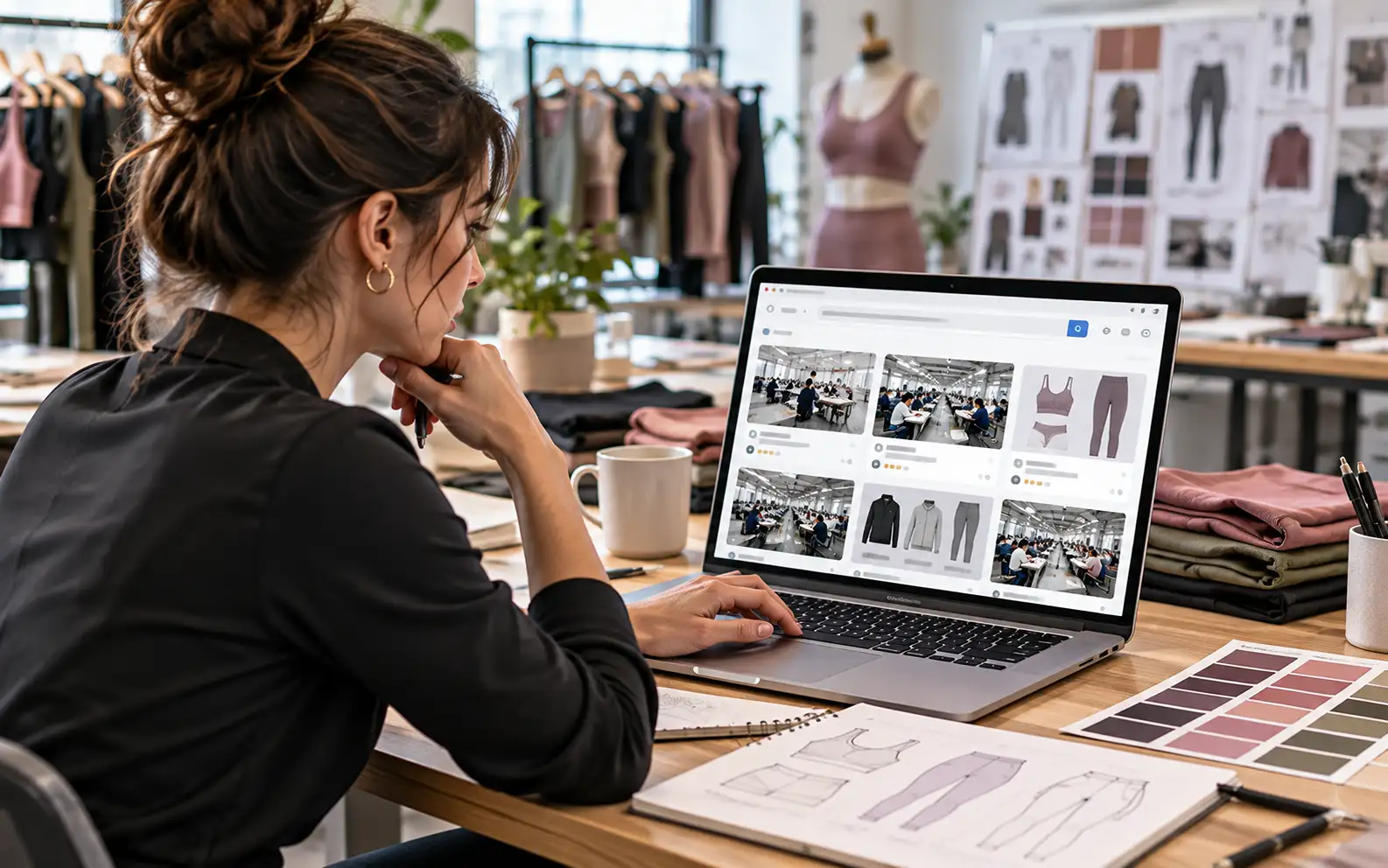
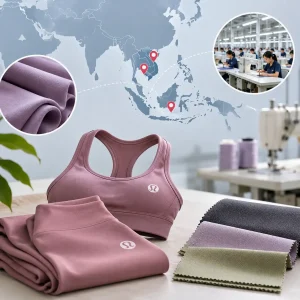
Start with Google and B2B sourcing platforms to build your first list. You can also search for Chinese sportswear manufacturers if you’re sourcing activewear from China. LinkedIn and industry directories offer more ways to find suppliers. Each channel gives you another way to reach potential manufacturers.
Search Channel | How to Use It |
Google Search | Find independent factory websites and check their main product categories. |
Alibaba / Made-in-China | Search by product type and order quantity. Confirm the MOQ directly with suppliers. |
Find clothing manufacturers and sales contacts you can reach directly. | |
Trade Shows / Industry Directories | Browse exhibitor and supplier lists for manufacturers in your product category. |
On Google, try “low MOQ activewear manufacturer,” “small batch clothing manufacturer,” or “low MOQ private label clothing.” Add your product, such as “leggings” or “hoodies,” to narrow the results.
Check whether each factory makes your type of clothing and offers the services you need, such as logo customization or fully custom production.
Build a shortlist of 5 to 8 potential manufacturers. You can check their actual MOQ requirements and production capabilities in the next steps.
Step 3: Check What the Manufacturer’s MOQ Actually Covers
A low MOQ on a factory website doesn’t always tell the whole story. A factory may advertise a 300-piece minimum, but that number alone doesn’t tell you how many pieces you can order per color. Ask what the MOQ covers when requesting a quote.
Here are four MOQ conditions you may run into:
- Per style: The minimum for each design.
- Per color: The minimum for each color within a style.
- Per fabric: The minimum quantity required for a specific fabric order.
- Custom dyeing or trims: Extra minimums may apply to special colors, labels, zippers, or drawcords.
Let’s use a quick example. You want 300 hoodies in three colors, 100 each. The factory says its MOQ is 300 per style. That sounds fine. But it also requires at least 200 pieces per color. To order all three colors, you now need 600 pieces.
Fabric can cause the same problem. If your color needs custom dyeing, the mill may require a full dye lot. That could mean buying more fabric than your small order needs.
Ask the factory: “Does your MOQ apply per style, per color, or per fabric?” Then check whether using stock fabric and standard trims would change the minimum. Their answers will help you see whether the factory can handle your actual order.
Step 4: Verify the Factory’s Production and Customization Capabilities
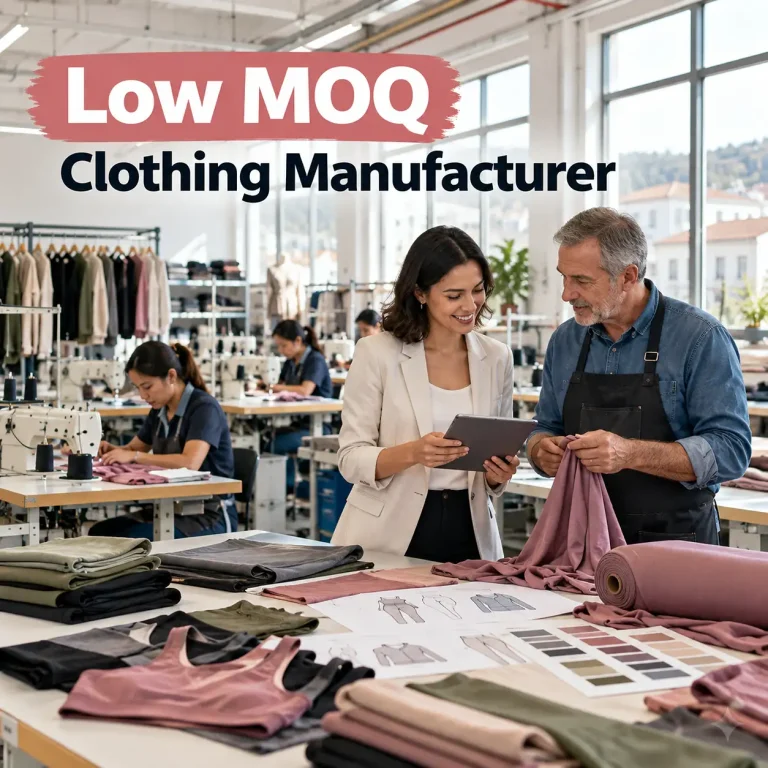
A small order still needs fabric checks, cutting, sewing, and quality inspection, just like a large order. A low MOQ means little if the factory cannot make your product properly.
Start with the product category. Whether you’re comparing China leggings manufacturers or hoodie suppliers, ask whether they regularly make the type of clothing you need. Request photos or samples of similar styles. If the factory cannot share customer designs, ask for other examples of its work. Be cautious if it cannot show relevant experience or explain how it would make your product.
Next, find out who handles sampling, cutting, and sewing. Some processes may be outsourced, which is not always a problem. What matters is who checks the work and takes responsibility for quality.
Then check customization. Can the factory change the fabric, fit, logo, and labels? Be specific about what you need rather than relying on a general list of services.
Finally, ask how the factory manages production instructions. At LuckPanther, we use confirmed specifications and written records to keep cutting, sewing, and quality checks aligned with the approved design.
Step 5: Request Quotes Using the Same Order Details
Two factories may quote very different prices for what looks like the same order. One may use lighter fabric, while another may leave out labels or packaging. You need to compare what each price actually includes.
Send every factory the same order brief. Keep these details consistent:
- Style, fabric, and customization: Same fabric composition, GSM, construction, and logo method.
- Quantity breakdown: Pieces per style, color, and size.
- Extra costs: Are samples, packaging, and shipping charged separately?
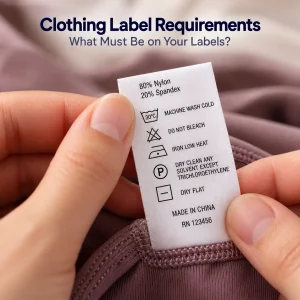
- Services included: Does the price cover labels, hangtags, and folding?
Use the order sheet from Step 1 so each factory receives the same requirements. This reduces the chance of suppliers making different assumptions.
Then compare the quotes side by side. If a factory offers a lower price by changing the fabric or construction, ask for a separate quote based on your original specifications.
Confirm what is included and what costs extra before choosing a manufacturer. A lower unit price does not always mean a lower total order cost.
Step 6: Test the Manufacturer With a Sample
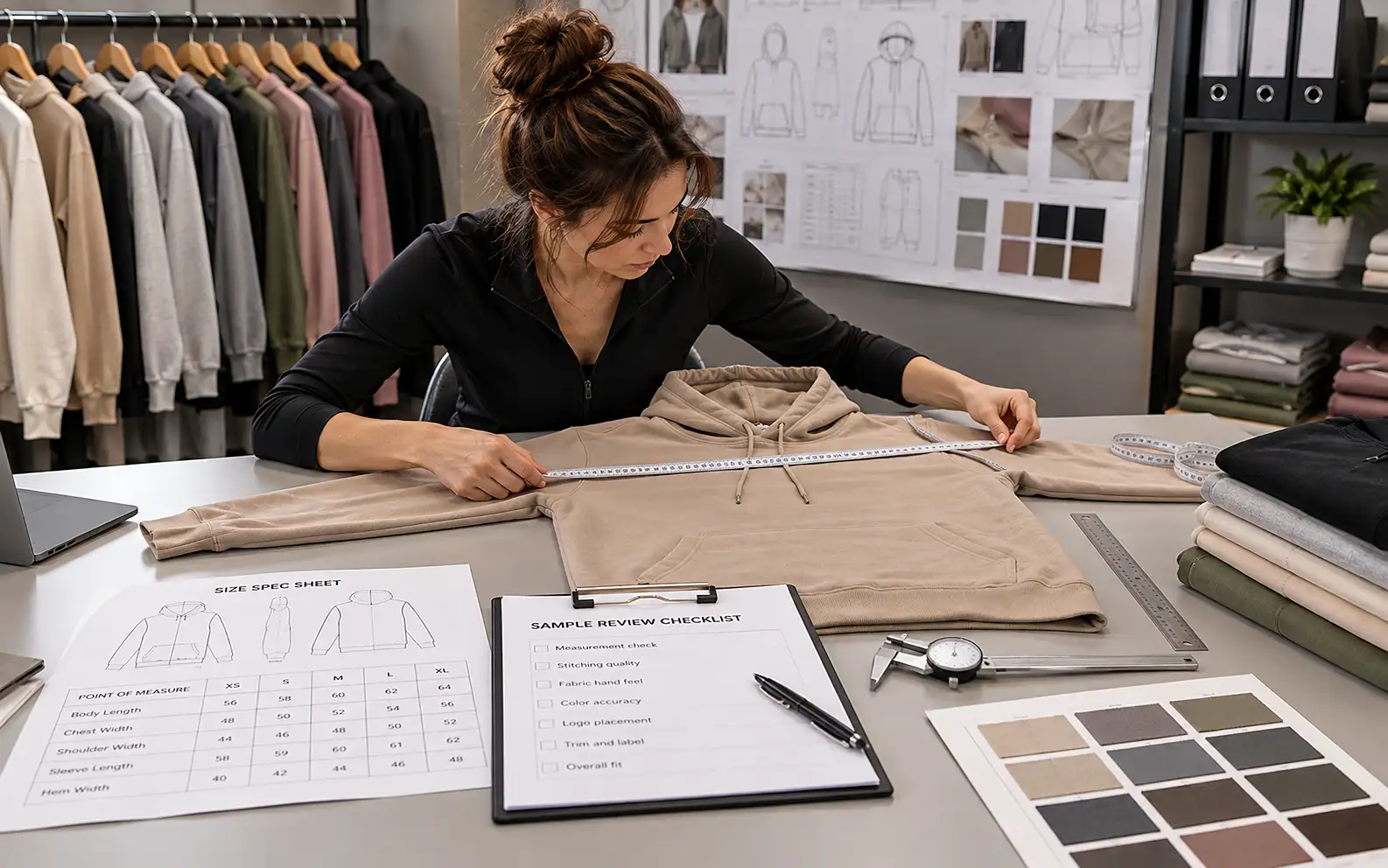
A sample does more than show you a garment. It shows you how the factory works. Check both the product quality and how the manufacturer handles your feedback.
Start with the fabric. Ask whether the sample uses the final production material. If the first sample uses a substitute fabric, ask to check the final material and confirm its fit and performance before approving bulk production.
Next, inspect the garment:
- Size: Compare key measurements with your size chart.
- Stitching: Look for skipped stitches, loose threads, and wavy seams.
- Logo: Check its position, size, and color.
- Overall finish: Check the inside of the garment, not just the outside.
Pay attention to how the factory handles sample revisions. Does it understand your comments? Are the requested changes reflected in the next sample?
Once the sample is approved, confirm which version will be used as the production reference. Keep your approved sample and ask the factory to retain one as well.
If major problems remain after revisions, reconsider the supplier before committing to a bulk order.
Step 7: Confirm Production Terms Before Placing Your Order
You have an approved sample and a quote you trust. Before paying a deposit, make sure the final order terms are clear and confirmed in writing.
Use this short checklist:
- Final MOQ and order breakdown: Pieces per style, color, and size.
- Approved sample and specs: Final sample version, measurements, fabric, and customization details.
- Payment and production terms: Deposit, balance, production start, and agreed shipping date.
- Quality inspection: Who checks the goods, when, and what sampling plan will be used? See ISO 2859-1 for acceptance sampling.
- Reorder conditions: Fabric availability, price, and minimum quantity for future orders.
Pay extra attention to reorders. A factory may accept a low MOQ for your first order, but the same conditions may not apply later. Fabric availability, supplier minimums, and material costs can change.
Ask whether the same fabric can be sourced again and what could affect the price or MOQ of a repeat order. This matters if you plan to restock a successful style.
Include the confirmed terms in your purchase order or order confirmation. Both sides should have the same record before production begins.