
What Should You Send Before Asking for a Manufacturing Quote?
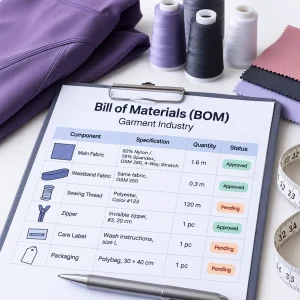
For a clothing manufacturing quote, give the factory enough information to price one defined version of your product. For sportswear, your RFQ should cover these details:
| Detail | Example |
|---|---|
| Product | Women’s high-waist leggings |
| Fabric | 75% nylon / 25% spandex, 220 GSM |
| Quantity | 500 pcs |
| Colors | Black 300 / Navy 200 |
| Sizes | XS–XL |
| Construction | Flatlock seams + crotch gusset |
| Branding | 5 cm heat-transfer logo |
| Labels | Main label + care label |
| Packaging | 1 pc per polybag |
| Quote term | FOB |
A request for “500 leggings” still leaves room for assumptions. If you need 300 black and 200 navy, state the split. Each color may have its own fabric minimum and production setup.
The same applies to fabric. “Nylon/spandex” is too broad for accurate costing. “75% nylon / 25% spandex, 220 GSM” gives the factory a specific material to price.
If a detail is not final, mark it as “to be confirmed.” The supplier can then show which part of the price is estimated and which part is based on confirmed specifications.
Not sure if your specs are ready for pricing? Send us your product details, target quantity, and reference files. We can check what is still missing before preparing your quote.
7 Details That Can Change Your Clothing Manufacturing Quote
Small changes in a sportswear design can change material use, sewing time, or the number of production steps. This is why two similar products do not always have a similar unit price. Here are seven areas worth checking when a quote changes.
1. Fabric Can Look Similar but Cost Differently
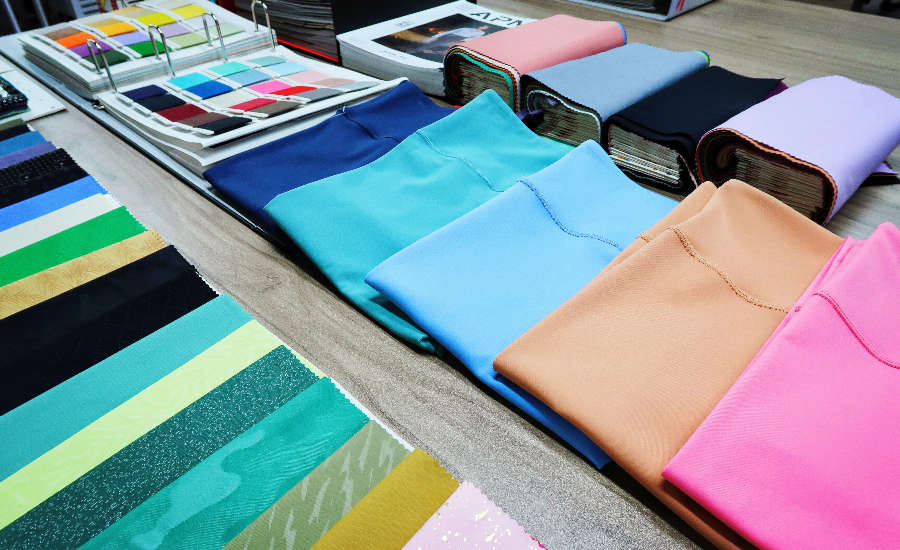
Two fabrics can both be listed as 75% nylon and 25% spandex but still have different prices. GSM, fabric width, yarn quality, dyeing, and finishing can all change the material cost.
For example, a 220 GSM brushed fabric requires an extra finishing process. A lighter 180 GSM fabric may cost less and use less material by weight. The difference becomes more visible across 500 or 1,000 pieces.
Do not compare fabric cost by composition alone. Check whether both factories are pricing the same fabric specification.
For products sold in the U.S., fiber content also needs to match the final label. The FTC Textile Fiber Rule requires certain textile products to disclose fiber names and their percentages by weight.
2. More Colors Can Raise the Price Without Raising the Quantity
Adding colors can increase your unit price even when the total order quantity stays the same.
Take a 600-piece leggings order:
-
Option A: 600 pcs in black
-
Option B: 100 pcs × 6 colors
Option B creates six smaller production runs. Each color may involve a separate fabric order, cutting batch, thread change, and color check.
This is why a quote based on 600 pieces in one color may change when the final order becomes six colors. When this happens, check the quantity per color instead of only looking at the total MOQ.
3. Factories Price Sewing Operations, Not Just the Finished Garment
Adding one feature can create several new production steps.
Take side pockets on leggings. The factory may need extra pattern pieces, more cutting work, pocket openings, and additional seams. A crotch gusset also adds pattern pieces and sewing operations.
The same applies to flatlock and bonded construction. These processes can require different machines or production setups.
This explains why two leggings that look similar from the front can have different sewing costs. Check the actual construction before comparing their unit prices.
4. A Small Logo Can Still Have Setup Costs
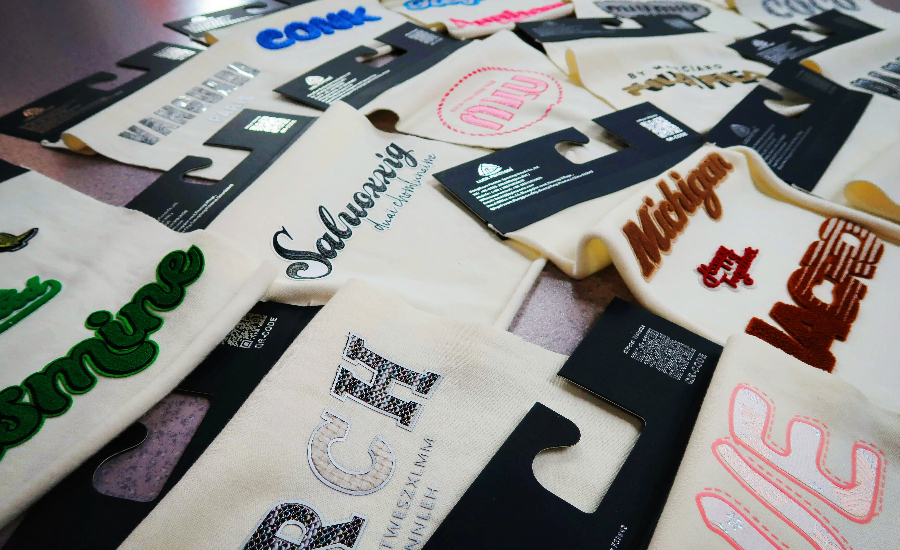
Logo cost depends on the application method, not only its size.
A simple heat-transfer logo may only need artwork setup and pressing. Screen printing can require separate screens for different colors. A custom silicone badge may need a mold before bulk production begins.
For a small order, these fixed costs are spread across fewer pieces. A $60 setup charge adds $0.20 per piece to a 300-piece order. The same charge adds only $0.06 per piece to a 1,000-piece order.
This is why logo costs should be checked separately when comparing low-MOQ quotes.
5. Size Ratio Can Change Average Fabric Consumption
A wider size range does not automatically mean every piece should cost more. The actual size ratio matters.
Consider two 500-piece orders.
Order A has most units in S, M, and L. Order B has 250 units in 2XL and 3XL.
Order B will normally use more fabric across the full order because a larger share of the garments requires bigger pattern pieces.
So, if a factory adds a surcharge for an XS–3XL range, ask how it was calculated. The size breakdown can be more useful than the size range alone.
6. Retail-Ready Labels Add More Than the Cost of the Label
A basic factory quote may include only a standard care label and polybag. A retail-ready order can require a woven brand label, size label, care label, hangtag, barcode sticker, and custom packaging.
There is also compliance work to consider.
For apparel sold in the U.S., most covered textile products must carry information such as fiber content, country of origin, and the responsible business identity. The FTC also requires care instructions for covered apparel. You can check the official FTC apparel labeling guidance.
If you need U.S.-ready labels, confirm this before approving the quote. Otherwise, label development and printing may appear as extra costs later.
7. A Lower Unit Price May Cover Less
Never compare $8.50 with $9.10 until you know what each price includes.
For example:
Quote A: $8.50 EXW The buyer takes responsibility from the factory.
Quote B: $9.10 FOB The supplier handles additional costs and export steps before the goods are loaded for shipment.
The quotes may also treat samples, packaging, testing, or logo setup differently. Some factories include them in the unit price. Others list them separately.
So the lowest number on the quotation is not always the lowest final cost. Compare the scope of the quote first, then compare the price.
At LuckPanther, we do not treat the first number as a fixed production price when key details are still open. We separate confirmed specifications from items that still need approval. This makes it easier to update the quote when the sample changes, instead of hiding the difference in a new unit price.
Why Two Manufacturers Can Quote Different Prices
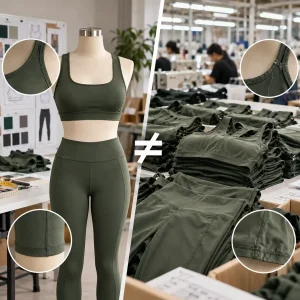
Two manufacturers can receive the same RFQ and still give you different prices. Each factory has its own fabric sources, production setup, labor costs, and QC process.
For example, two factories may quote the same 500-piece leggings order:
| Manufacturer A | Manufacturer B | |
|---|---|---|
| Fabric | Available stock | Made to order |
| Production | Standard line | Activewear line |
| QC | Final inspection | Inline + final inspection |
| Sample revision | Extra charge | 1 revision included |
| Unit price | $8.40 | $9.30 |
The $8.40 quote is not automatically the better deal. Manufacturer B may include work that Manufacturer A charges for later.
When prices differ, ask one simple question:
“What is included and excluded in this price?”
A clothing manufacturing quote is easier to compare when both factories are pricing the same scope of work.
How to Compare Clothing Manufacturer Quotes
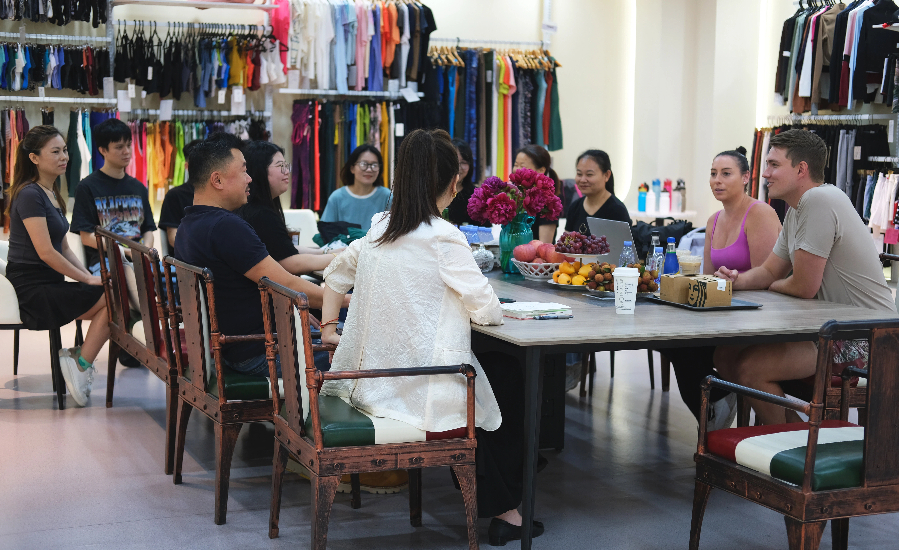
To compare clothing manufacturer quotes, put every offer into the same sheet. Check the specification, quantity, extra fees, MOQ, lead time, payment terms, quote validity, and Incoterm. Mark each item as included, excluded, or not confirmed. This helps you find cost gaps before you choose a supplier.
| What to Check | What You Need to Confirm |
|---|---|
| Product specification | Is the quoted version the same as your RFQ? |
| Unit price | Is it based on the same order quantity? |
| Extra charges | Sampling, setup, testing, or development fees |
| MOQ | Per style and per color |
| Lead time | Sample time and bulk production time |
| Payment terms | Deposit and balance |
| Quote validity | When does the quoted price expire? |
| Incoterm | EXW, FOB, CIF, or another term |
Pay attention to blank fields. A blank sample fee does not mean sampling is free. An empty testing column does not mean testing is included. Ask the supplier to mark these items in writing.
Lead time also needs a clear starting point. For example, 30 days may mean 30 days after the deposit. Another factory may start counting after fabric or pre-production sample approval. These are not the same delivery schedule.
A useful way to review the final sheet is to mark every line:
Included ✓ / Excluded ✕ / Not confirmed ?
Resolve every “?” before you approve the quote. This gives you a cleaner cost comparison and reduces price changes later.
Want to see how your current quote compares? Ask us to price the same sportswear project. We’ll quote against the same specifications, so you can compare the numbers on the same basis.