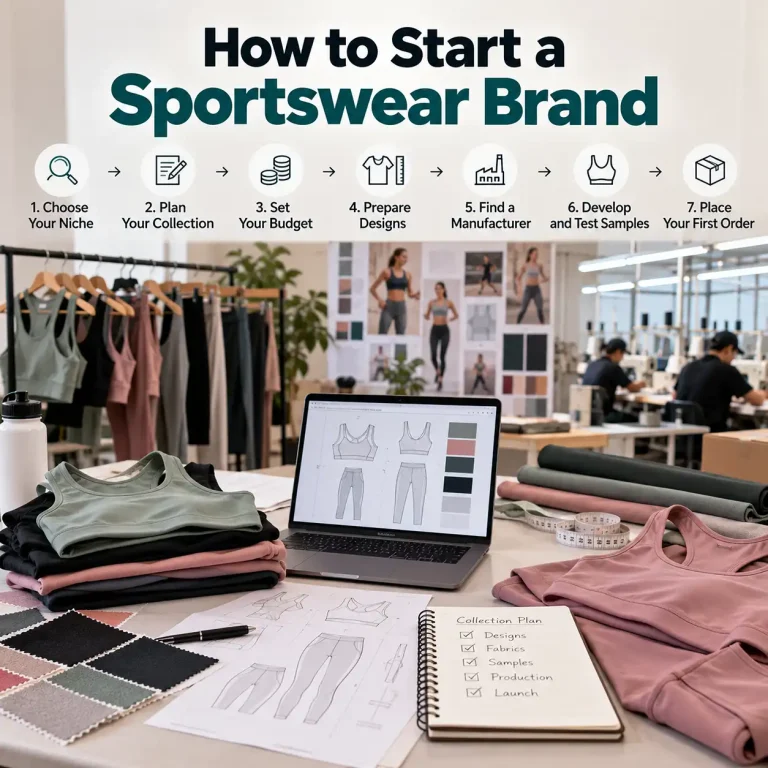
1. Choose Your Sportswear Niche and Target Customer
Before designing your first collection, decide what type of sportswear you want to sell and who will wear it. A clear target market helps you choose the right fabrics, fit, and product features.
Different activities call for different product needs:
Niche | Main Product Needs |
Soft stretch, good recovery, comfortable movement | |
Gym wear | Stretch recovery, opacity, resistance to friction |
Running wear | Lightweight fabrics, moisture management, low-friction seams |
Freedom of movement, secure fit, practical ball storage where needed |
Next, study 3–5 competing brands. Compare their best sellers, fabric choices, and customer reviews. Pay attention to repeated complaints about sizing, uncomfortable seams, or fabric losing its shape after washing. You can also explore activewear trends 2027 for new fabric and design ideas, but focus on what your target customers actually need.
For example, leggings designed for weight training need a stable waistband, good squat coverage, and a fit that stays secure during movement. Use these needs to guide your initial fabric and design choices.
2. Plan Your First Sportswear Collection
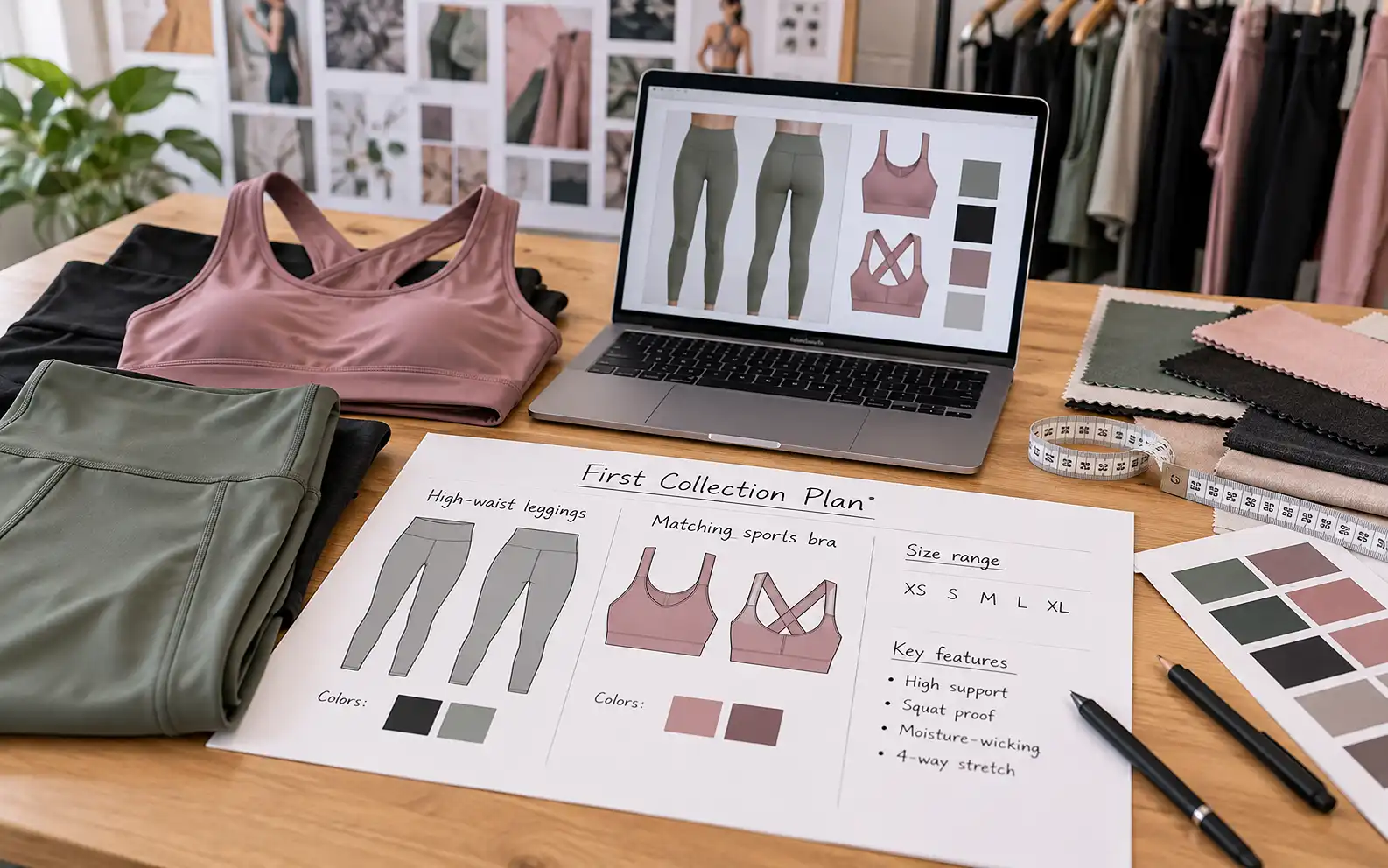
You don’t need ten different products to launch a sportswear brand. Start with two or three styles that work well together. This keeps your first collection manageable and leaves more room in your budget for product development.
For example, a small gym wear collection could include:
- High-waist leggings: the main product in your collection.
- Matching sports bra: a second product that can be sold alone or as a set.
- Two colors per style: a simple starting option if your budget and order requirements allow it.
Next, choose your starting size range. Each additional size and color combination creates another inventory item to plan for.
Create a simple collection sheet with the product name, reference images, planned colors, target size range, and key design features. You don’t need detailed technical drawings yet. You’ll use this sheet to estimate your startup budget and prepare more detailed designs in the next steps.
3. Set a Realistic Startup Budget
How much does it cost to start a sportswear brand? There is no fixed amount. Your budget depends on your product range, level of customization, and sales plans.
Use the collection sheet from Step 2 to estimate these costs:
Budget Item | What to Include |
Design and development | Technical drawings, patterns, and design revisions |
Sampling | Sample materials, sample making, and revisions |
First production order | Fabrics, trims, sewing, labels, and packaging |
Testing and compliance | Fabric testing and required product checks |
Shipping and import | Freight, duties, taxes, and customs fees |
Brand launch | Website, product photos, and initial marketing |
Contingency reserve | Unexpected changes or extra expenses |
For a closer look at what affects production costs, see our guide to leggings manufacturing cost, including how fabric, construction, and order quantity can affect your budget.
Create two columns in your budget sheet: estimated cost and confirmed cost. Start with estimates, then update each amount as you receive actual quotes.
Keep some cash available after paying for your first order. You may still need to cover storage, shipping, or customer returns before your products start selling. If funds are limited, reduce optional costs such as custom packaging or a large launch campaign.
4. Prepare Your Designs for Manufacturing
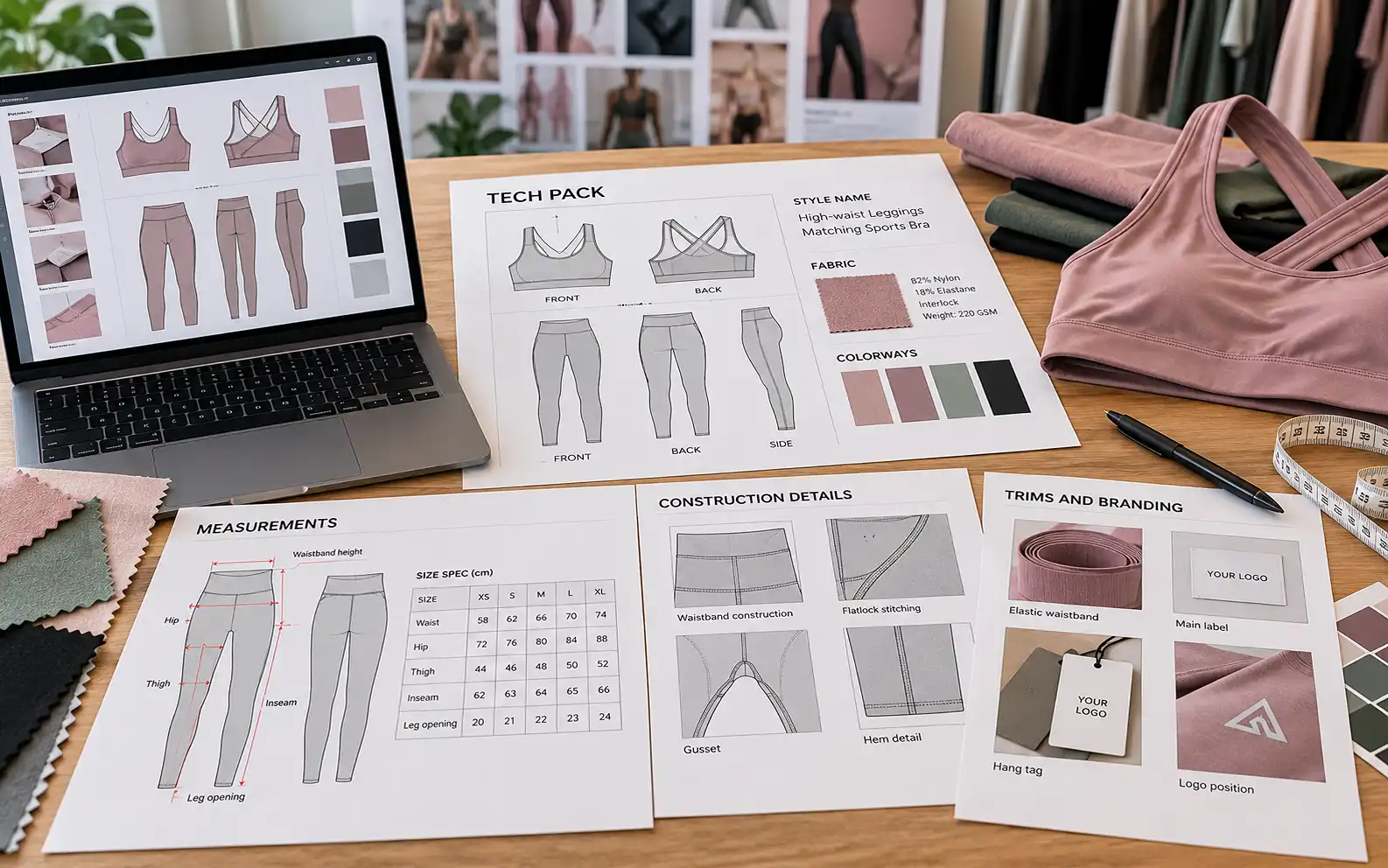
Have a sketch or reference photo but no technical drawings? You can still prepare your product ideas for development. Start by noting the details you want, such as neckline shape, waistband height, or strap placement.
A tech pack turns these ideas into clear instructions. It records the measurements, materials, and construction details needed to develop your garment.
Tech Pack Item | What to Include |
Technical flats | Front and back views with construction details |
Measurements | Key points of measure and target dimensions |
Fabric | Fiber blend, weight, stretch, and finish |
Construction | Seam types, stitching, and panel placement |
Trims and branding | Elastic, labels, and logo positions |
Colorways | Color references for each planned option |
For example, “high-waist leggings” is too vague. Add the waistband height, key measurements, and front and back views to show exactly what you mean.
If you can’t prepare a full tech pack, a technical designer can help. Some manufacturers also offer product development support.
Mark unknown details as TBC (to be confirmed) rather than guessing. These details must be settled before the design is approved for production.
5. Find the Right Sportswear Manufacturer
Look for a manufacturer with experience in the products you plan to make. A factory that mainly produces basic T-shirts may not have the same skills needed for fitted leggings or supportive sports bras.
Start with factory websites, industry directories, or trade shows. Check their product range, customization services, and production photos. Then contact a few suppliers with your collection sheet and available design files.
Before choosing a manufacturer, ask:
- Product experience: Can you show examples of similar styles you’ve produced?
- Development support: Can you help with patterns or technical details if my files are incomplete?
- In-house production: Which steps do you handle yourself, and which are outsourced?
- Order requirements: What are your minimum order requirements for each style and color?
- Communication: Who will manage design questions and updates?
A product photo alone doesn’t prove a factory has made that style. Ask how similar garments were produced and which steps the supplier handled in-house. Compare these answers before choosing a manufacturer.
You should also check whether the supplier offers OEM, ODM, or private label services. Each option gives you a different level of design control and development support.
Need more help comparing suppliers? Explore our guides to sportswear manufacturers in China, yoga wear suppliers, and China leggings manufacturers to compare factories based on your product needs.
At LuckPanther, we provide OEM/ODM manufacturing for leggings, sports bras, and other activewear. Our team supports product development, sampling, and production.
Have a design idea or collection sheet ready? You can contact our team to discuss your product requirements.
6. Develop and Test Your Samples
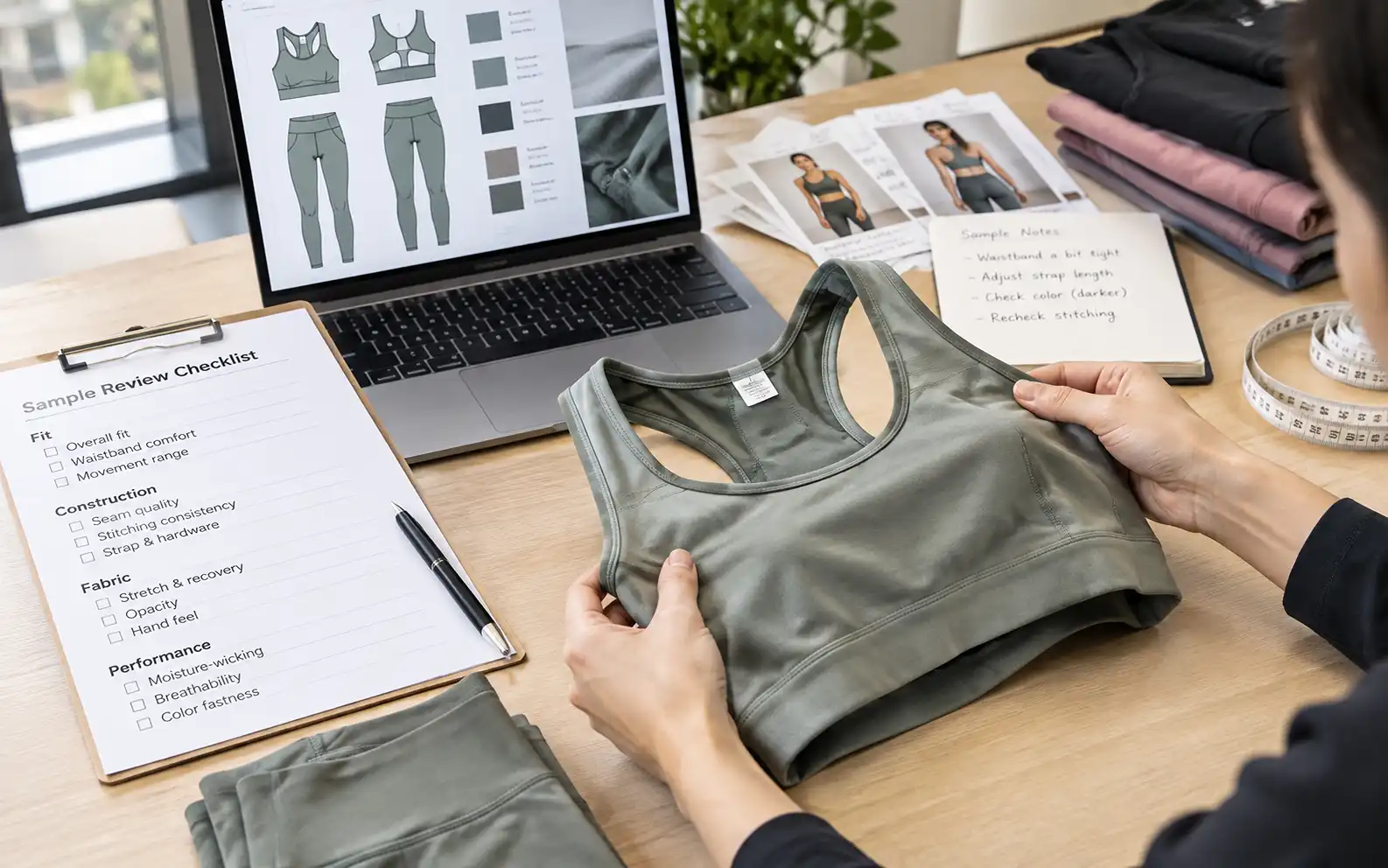
Once you’ve chosen a manufacturer, your designs can move into sampling. The first sample may look right but still have problems with fit, stretch, or comfort. Use it to find issues before approving the design.
Review Your First Sample
Try the sample on someone who matches your target size. Test it during the movements it was designed for, not just while standing still.
What to Check | How to Test It |
Fit | Compare key measurements and check comfort during movement |
Stretch and recovery | Check whether the fabric keeps its shape after repeated stretching and wear |
Opacity | Check whether underwear shows through when leggings stretch during squats |
Support | Check sports bra movement and strap stability during exercise |
Stitching | Look for uneven seams, loose threads, or pulling |
Wash performance | Wash the sample and check for shrinkage or color changes |
These checks help you spot common problems, but they do not replace lab tests for performance claims or required compliance.
Give Clear Revision Feedback
Avoid vague comments like “the waist feels too tight.” Explain where and when the problem happens. For example, does the waistband dig in when sitting or feel restrictive during squats?
Send marked photos and list each requested change. Keep earlier sample records so you can compare the revised version with the original.
8. Prepare Your Sportswear Brand for Launch
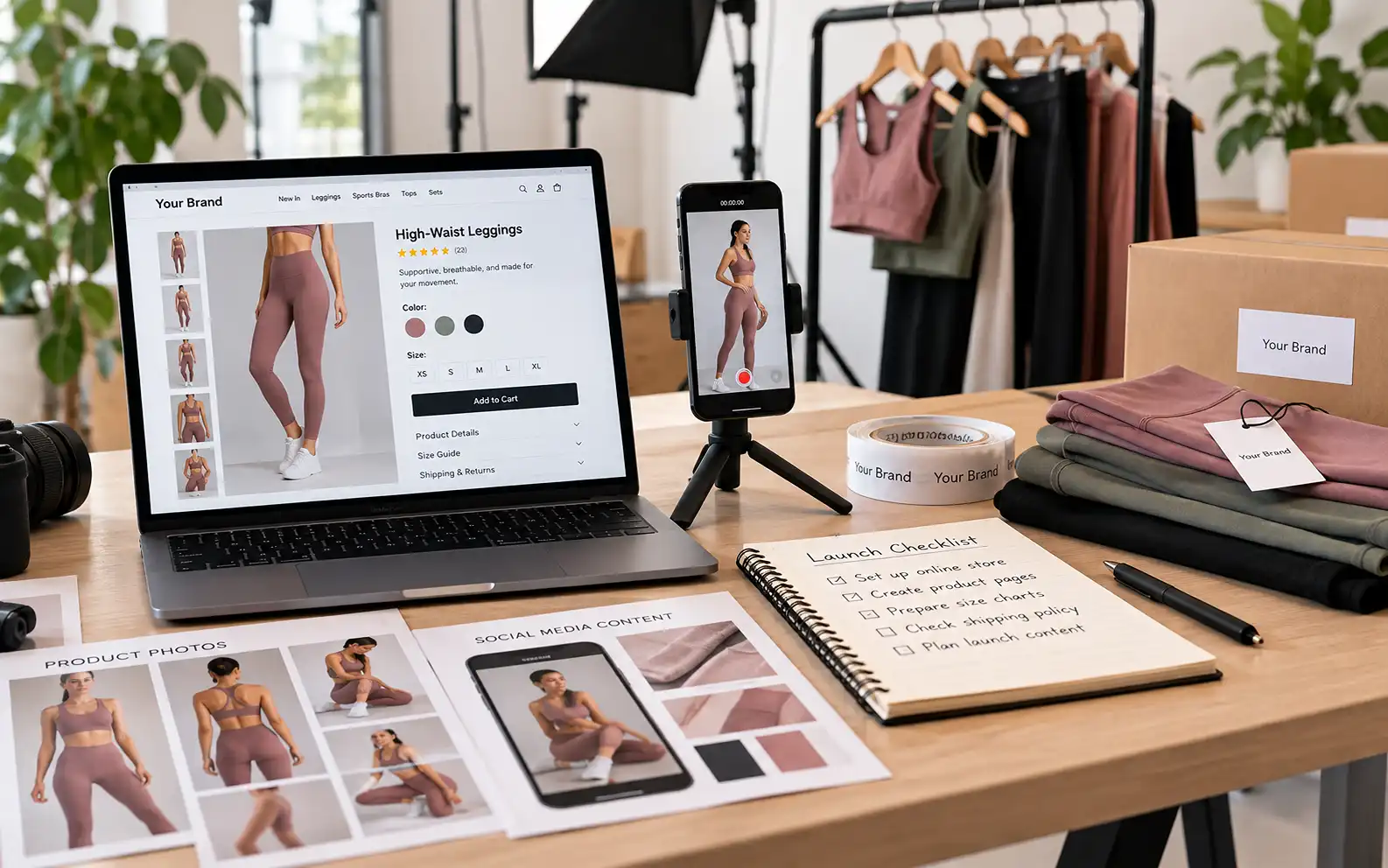
While your first order is in production, get your store and product information ready. Customers should be able to understand what they’re buying, choose the right size, and see when their order will ship.
Focus on these four tasks:
- Set up your sales channel. Build an online store or choose a marketplace. Test the checkout process and publish clear shipping and return policies.
- Create useful product pages. Use approved samples for photos and fit videos. Include size charts, fabric details, and care instructions. For leggings, show the waistband and inseam length. For sports bras, explain the intended support level.
- Verify product claims. Check that claims such as “quick-dry,” “high support,” or “squat-proof” match the product’s actual features and available test results.
- Prepare your launch content. Create a few product-focused posts or videos. Show how the garments fit and move instead of using vague claims like “premium quality.”
Before accepting orders, confirm when your stock will be available to ship. A factory’s estimated production finish date is not the same as your customer delivery date.