
Compare the 10 Chinese Jacket Manufacturers
Manufacturer | Best Fit | Main Buyer Benefit | Key Point to Check |
LuckPanther | Performance & active jackets | Stronger control of stretch fabrics, functional trims, and movement fit | Best suited to active styles rather than heavy winter outerwear |
Ginwen | Puffer & insulated jackets | Lower-volume entry for brands testing insulated styles | Compare fill consistency across several bulk pieces |
Auming Outdoor | Hardshell, rain & ski jackets | Strong technical focus on waterproof construction | Confirm the required waterproof level and seam-taping standard |
TZ Streetwear | Bomber, varsity & streetwear jackets | Good match for decoration-heavy designs | Approve embroidery, appliqué, and washes on the actual shell fabric |
DANIFIEL | Genuine leather jackets | Specialized leather handling rather than general apparel production | Better for leather programs than technical outerwear |
Mladen Garment | Functional & repeat-order jackets | Better match for established styles moving into regular production | Less attractive when the design still needs heavy development |
Yunli Apparel | Highly customized fashion jackets | Flexible sourcing across a wide customization range | Confirm who actually makes the sample and bulk order |
JIMJACKETS | Multi-category jacket programs | Can reduce the number of suppliers across a broader jacket range | Ask for 2–3 bulk examples close to your actual construction |
Ruiniu | Ski & technical outdoor jackets | Technical outerwear setup can support more demanding programs | Verify performance claims against your own finished-jacket spec |
Pinghu Times Fashion | Commercial winter outerwear | Better suited to established brands with proven volume | Check whether its order scale fits your inventory risk |
10 Jacket Manufacturers in China
Here are 10 manufacturers covering different jacket types and production strengths.
1. LuckPanther
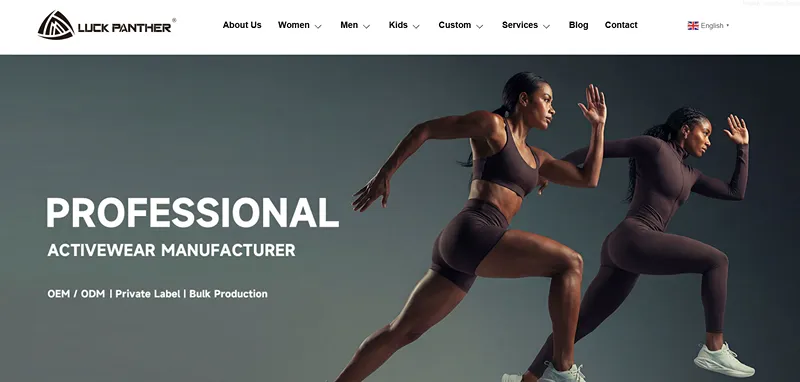
For complex jackets, we pay close attention to the points where different materials meet. Fabric stretch, zipper stiffness, lining tension, and elastic recovery should be checked together. If one component behaves differently, the jacket can twist, pull at the hem, or lose its intended fit.
At LuckPanther, our main focus is performance and active jackets. For styles with stretch panels, zipper pockets, drawcords, elastic hems, or reflective details, we check how these parts affect the garment during sampling instead of approving each detail on its own.
Where we fit best: Our stronger match is running jackets, training jackets, lightweight warm-ups, and other movement-focused styles. This is especially true when a design combines stretch fabric with functional trims. Heavy down parkas and highly technical alpine shells are not our main focus.
2. Ginwen
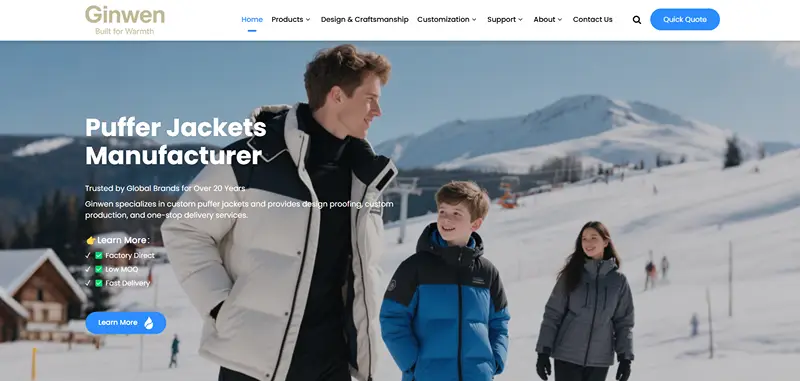
Ginwen is a stronger option for puffer, down, and insulated jackets. These styles depend heavily on filling control. Poor filling can leave flat areas, uneven chambers, or a bulky shape around the seams.
Ginwen lists an MOQ of 50 pieces per style and color, with mixed sizes allowed. This gives brands more room to test a new jacket design before scaling up.
Our take: When checking this type of factory, we look beyond one finished sample. We compare several pieces from the same batch. We check fill weight, quilting width, chamber shape, and left-to-right balance. We also check the zipper and armholes, where excess bulk often shows first. For buyers, consistency across several pieces matters more than one perfect sample.
3. Auming Outdoor
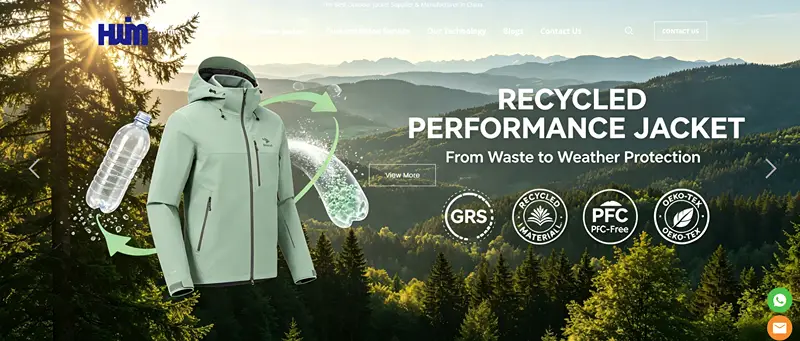
Waterproof fabric alone does not make a waterproof jacket. Stitching creates needle holes, so seam sealing becomes part of the performance spec. This is where Auming Outdoor gets more interesting. It works with 2L, 2.5L, and 3L fabrics, with both fully taped and critically taped construction.
We found a useful number in one project published by Auming. For an 800-piece hiking jacket order, its finished sample reached 10,200 mm waterproofness, and the taped seams passed its water penetration test.
For buyers, we would settle one question before sampling: full seam taping or critical seam taping? Full taping covers every sewn seam. Critical taping focuses on the main water-entry areas. The choice affects the construction, performance target, and cost.
4. TZ Streetwear
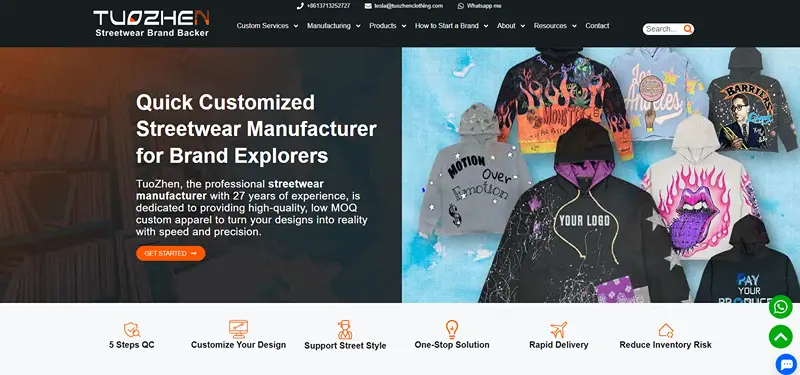
For TZ Streetwear, the interesting part is not technical performance. It is how much visual work can go into one jacket. Its bomber and varsity programs can combine embroidery, appliqué, patches, garment washing, rib trims, and custom hardware.
From our production experience, these details should be approved on the actual shell fabric before bulk production. Large embroidery can stiffen a panel. Heavy appliqué can pull lighter fabrics. Garment washing can also change the final shade and measurements.
TZ lists an MOQ of 50 pieces for many jacket programs. That makes it worth considering for brands testing a detailed bomber or varsity style. We would still approve the finished decoration on a complete sample—not just an artwork file or separate embroidery swatch.
5. DANIFIEL
DANIFIEL is different from most factories on this list: leather is the main event, not an extra product category. That matters if your jacket depends on real leather rather than coated or synthetic alternatives.
We would look at DANIFIEL for biker jackets, vintage styles, and structured fashion jackets. It works with goatskin, cowhide, and sheepskin, and has a team of 10+ leather craftsmen. The smaller setup suggests a specialist operation, so we would discuss expected order volume and capacity early rather than assume it can handle a large program.
For a genuine leather collection, we would be comfortable taking DANIFIEL into sampling. For technical outerwear that needs waterproof membranes, seam sealing, or other performance processes, we would move on to a different factory.
6. Mladen Garment
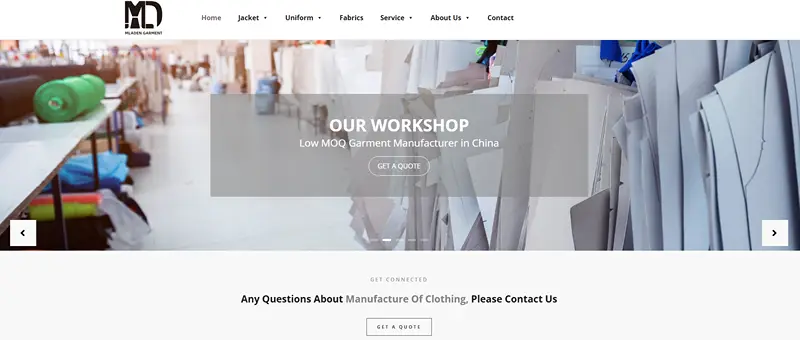
Mladen makes more sense when the buyer already has a clear jacket specification. If the fabric, construction, trims, and size chart are largely settled, the factory is easier to evaluate against a fixed production standard.
That changes our view of the factory. We would consider Mladen for established brands moving a proven jacket into repeat production, especially parkas, work jackets, padded jackets, and other functional styles. A startup still changing the silhouette, fabric, and details after every sample may need a more development-led supplier.
The main risk we would check is production control. Mladen uses manufacturing resources in both China and Bangladesh. Before placing an order, we would ask which facility will make the jacket, whether sampling and bulk will stay at the same site, and which processes are outsourced.
7. Yunli Apparel
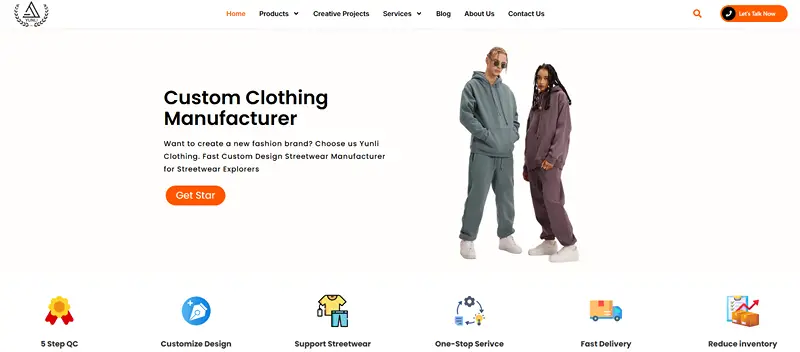
Yunli needs a little more due diligence than some factories on this list. It offers a wide range of custom jackets. It also says it works with 200+ apparel manufacturing partners. That changes how we would evaluate the supplier.
For buyers, this network can be useful. Yunli has more production resources to match different fabrics, finishes, and order needs. The trade-off is production visibility. With a network this large, we would not assume that the sample, bulk order, and repeat order will stay with the same production team. We would confirm this before production.
We would not reject Yunli because of this model. But we would not approve the supplier from one good sample either. If direct factory control matters, we would confirm who makes the sample and bulk order before moving forward.
8. JIMJACKETS
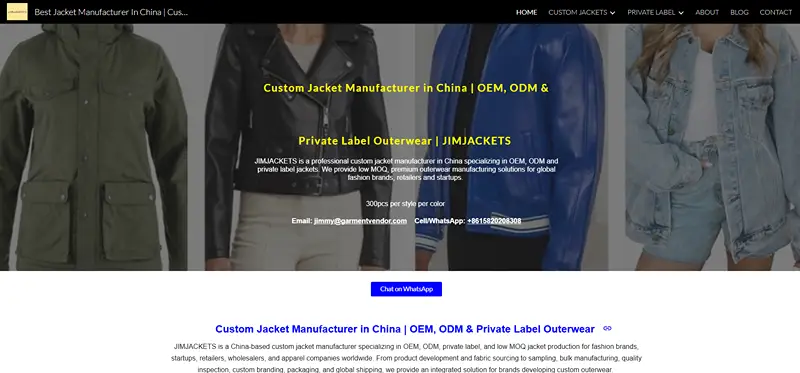
JIMJACKETS covers a wide range of outerwear. This can be useful for buyers sourcing several jacket categories from one supplier. But we would not assume that a broad product range means the same production depth in every category.
Its standard MOQ is listed at 300 pieces per style per color. At that volume, we would want more proof before placing a complex jacket order. We would ask for 2–3 comparable bulk-production examples. The construction, materials, and difficult details should be close to our own design.
Our verdict: JIMJACKETS is worth a closer look if you want to place several jacket categories with fewer suppliers. This can simplify sampling, order follow-up, and communication across the collection.
We would be more cautious if one highly technical jacket is the core of the program. In our experience, a long product list matters less than proof that the factory has already handled a similar construction at bulk scale.
9. Ruiniu
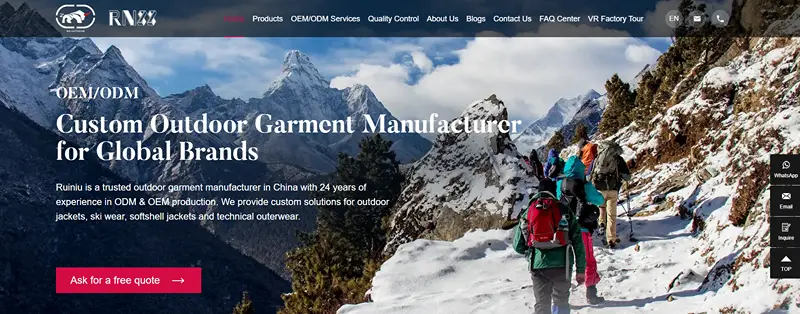
We would take Ruiniu seriously for a ski or outdoor jacket with measurable performance requirements. The factory shows more evidence of technical outerwear work than a typical general jacket supplier. It also presents past OEM projects involving waterproof and ski jackets.
But we would be careful with its performance claims. Ruiniu lists figures such as 15,000 mm waterproofness and 10,000 g breathability. Those numbers are useful for screening a supplier. They are not enough for us to approve a finished jacket.
From our experience, we would ask Ruiniu to prove the specification we actually plan to sell. If our product claim is 10,000 mm waterproofness, we want test evidence for that construction. We do not need the factory’s highest available number.
10. Pinghu Times Fashion Co., Ltd.
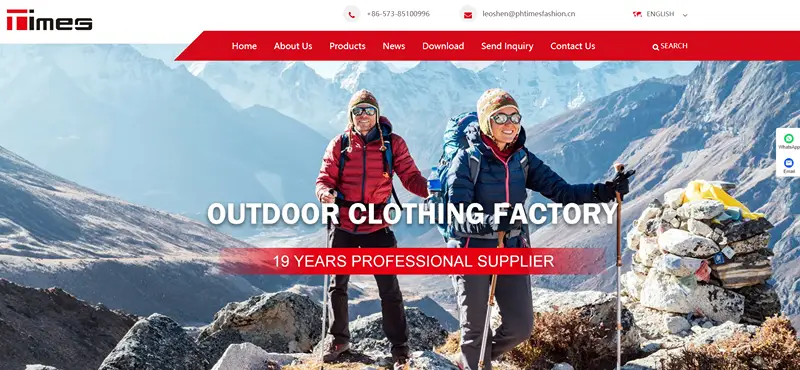
Pinghu Times makes more sense to us for brands that already have proven demand for winter jackets. Its disclosed customers include Mountain Warehouse, Stormberg, and Ellesse. It also reports producing more than 100 jacket styles each year for customers.
That gives us more confidence in its ability to handle commercial outerwear programs. But scale comes with a practical trade-off. Some of its down jacket programs start at around 500 pieces per color.
Our view: We would consider Pinghu Times after a jacket has already shown stable sales. At that stage, access to an established outerwear production system can be more valuable than very low order quantities.
For a new style with uncertain demand, we would take a different route. We would test the market with a lower-volume supplier first. We would not accept extra inventory risk just to work with a larger factory.
Which Jacket Manufacturer Fits Your Product?
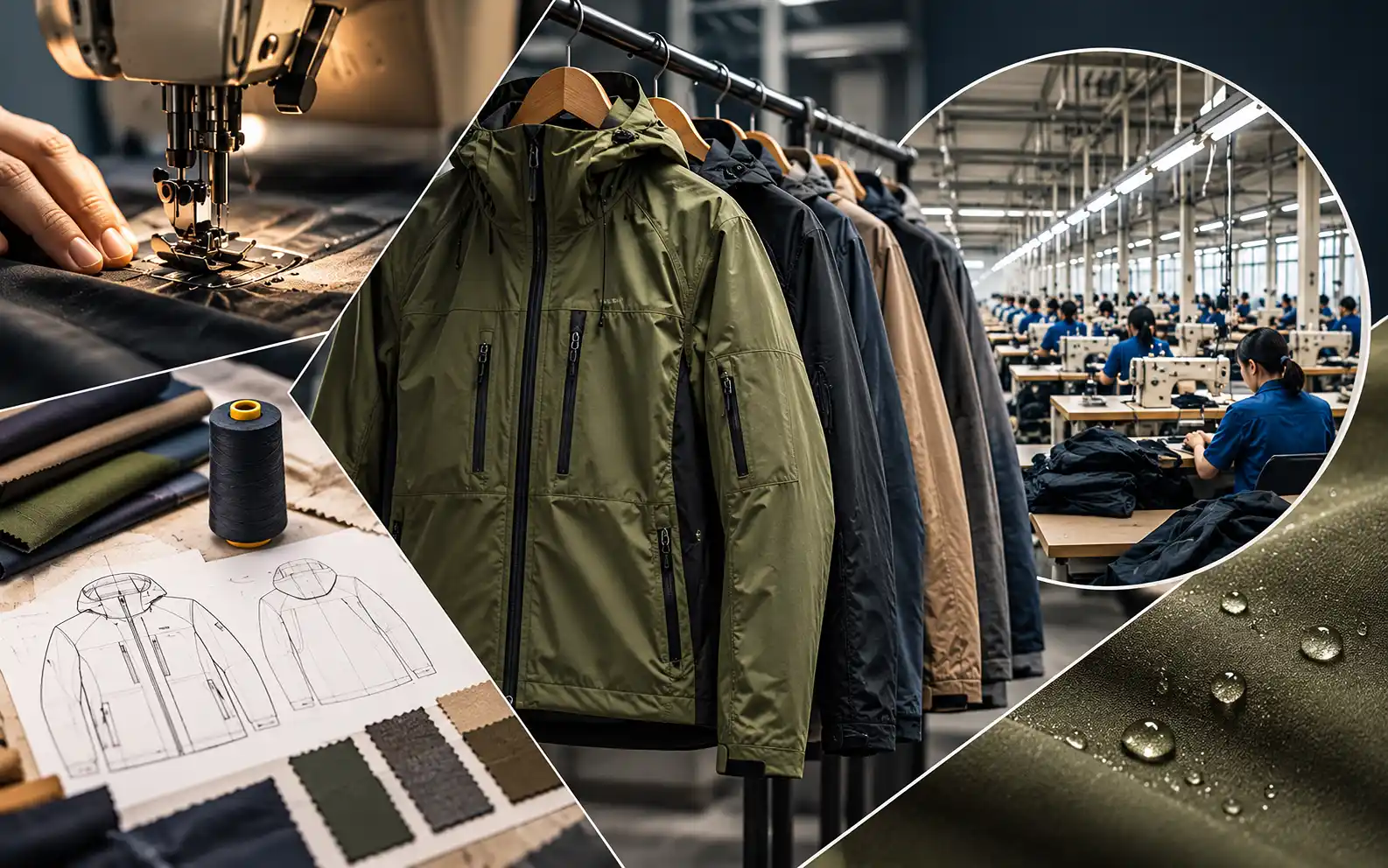
Do not choose a factory by jacket type alone. Two factories may both make jackets but have very different strengths.
We first look at what is most likely to go wrong. Then we choose the factory around that risk.
For Performance Jackets
Look at how much the jacket depends on pattern engineering.
A loose warm-up jacket may be fairly simple. A fitted running jacket is different. Curved seams, shaped sleeves, close hems, and body-mapped panels leave less room for error.
For these styles, we would choose a factory with regular activewear development experience. The closer the jacket follows the body, the more important pattern control becomes.
For Outdoor Jackets
Ask whether performance failure would make the jacket unusable.
A fashion rain jacket is not the same as a technical hiking or ski shell. The second needs much stronger control of weather protection.
For a technical shell, we would prioritize outdoor production experience and proper testing. A casual water-resistant jacket may not need that level of specialization.
Do not pay for technical capability your product does not need.
For Puffer or Insulated Jackets
Look at how much the jacket depends on insulation construction.
A lightly padded fashion jacket is different from a winter puffer built around loft and warmth.
For a true winter puffer, we would choose a factory that regularly produces insulated outerwear. The insulation is too important to treat as an extra process.
The more the insulation defines the product, the stronger this specialization should be.
For Fashion Jackets
For fashion jackets, we focus more on the approved appearance.
Wash effects, fading, distressing, trims, and unusual silhouettes can change during production.
We would keep an approved finished garment as the visual standard. Bulk pieces should be compared with that garment, not just measurements or screen photos.
For these jackets, appearance control may matter more than advanced technical equipment.
A Better Way to Choose
Before contacting a factory, identify the one failure that would hurt your jacket most.
- Movement problem → prioritize performance apparel experience.
- Weather protection problem → prioritize technical outerwear experience.
- Insulation problem → prioritize puffer production experience.
- Appearance problem → prioritize fashion development and finishing control.
Choose the factory around the hardest part of the jacket, not around the longest capability list.
What’s Next?
Once you have identified the right type of manufacturer, narrow the choice to 2–3 suppliers before sampling. Give each factory the same key requirements. This makes technical understanding, communication, and development support much easier to compare.
If you are developing a performance or active jacket, send us your design, tech pack, or reference sample. We can review the construction and point out the details that need to be confirmed before sampling.