Why Can Two Lycra Fabrics With the Same Composition Perform Differently?
1. Yarn Specifications
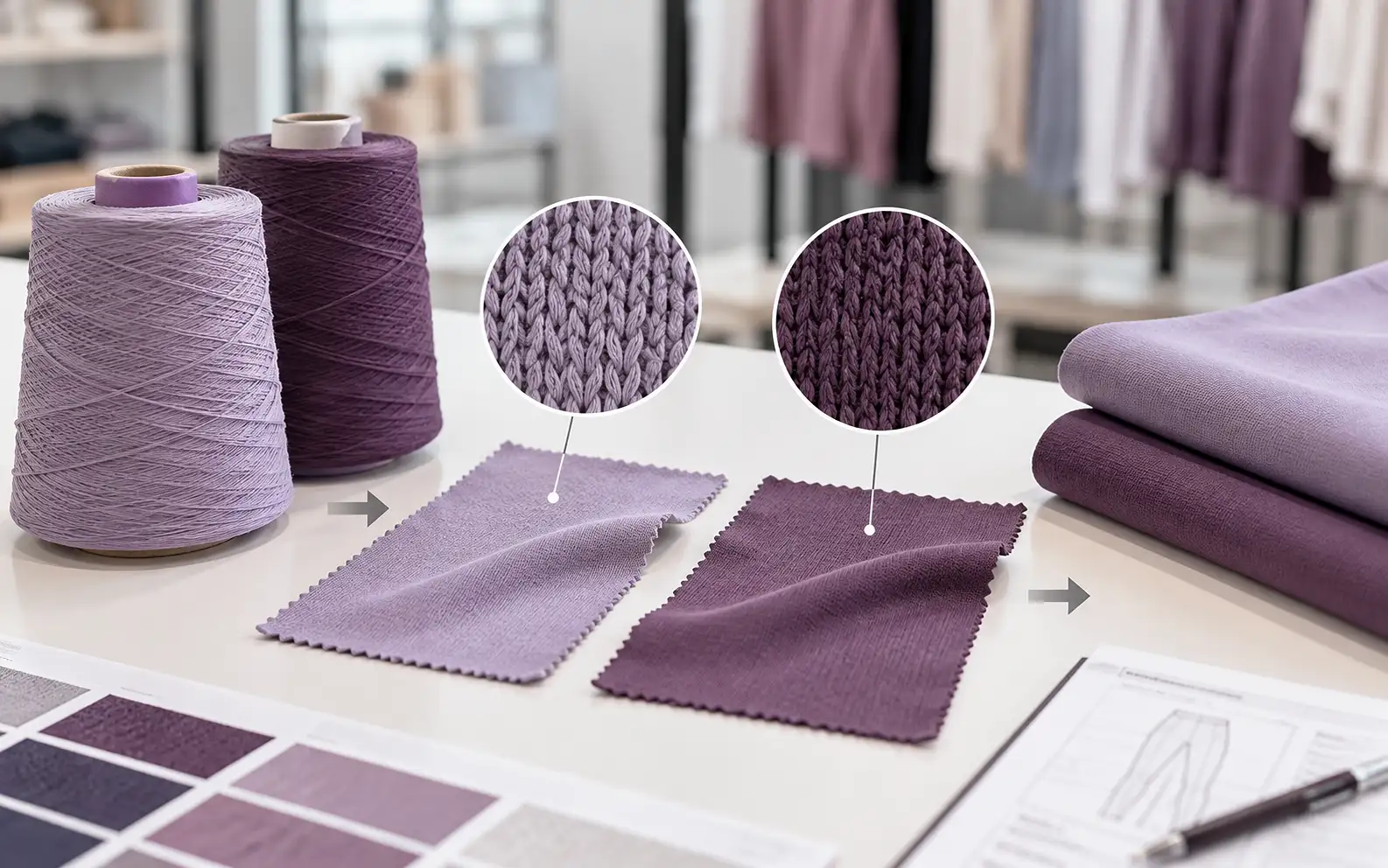
Elastane yarn thickness and how it is used in the fabric affect the force needed to stretch it. A thicker elastane yarn may create more resistance, but yarn tension and fabric construction also play a role.
The way nylon and elastane yarns are combined can also change the fabric’s surface and feel.
📌What you’ll notice: One fabric stretches easily when you pull it. Another takes more force, even though both have the same fiber percentages.
2. Knitting Construction
Knit structure affects how a fabric stretches in different directions. Single jersey and interlock fabrics, for example, have different loop structures that can change their thickness, stability, and stretch.
Loop density also affects coverage. A more open knit may reveal more skin when stretched, especially in light-colored leggings.
📌What you’ll notice: One fabric stays opaque during a squat test, while another becomes see-through at the hips or knees.
3. Fabric Weight and Density
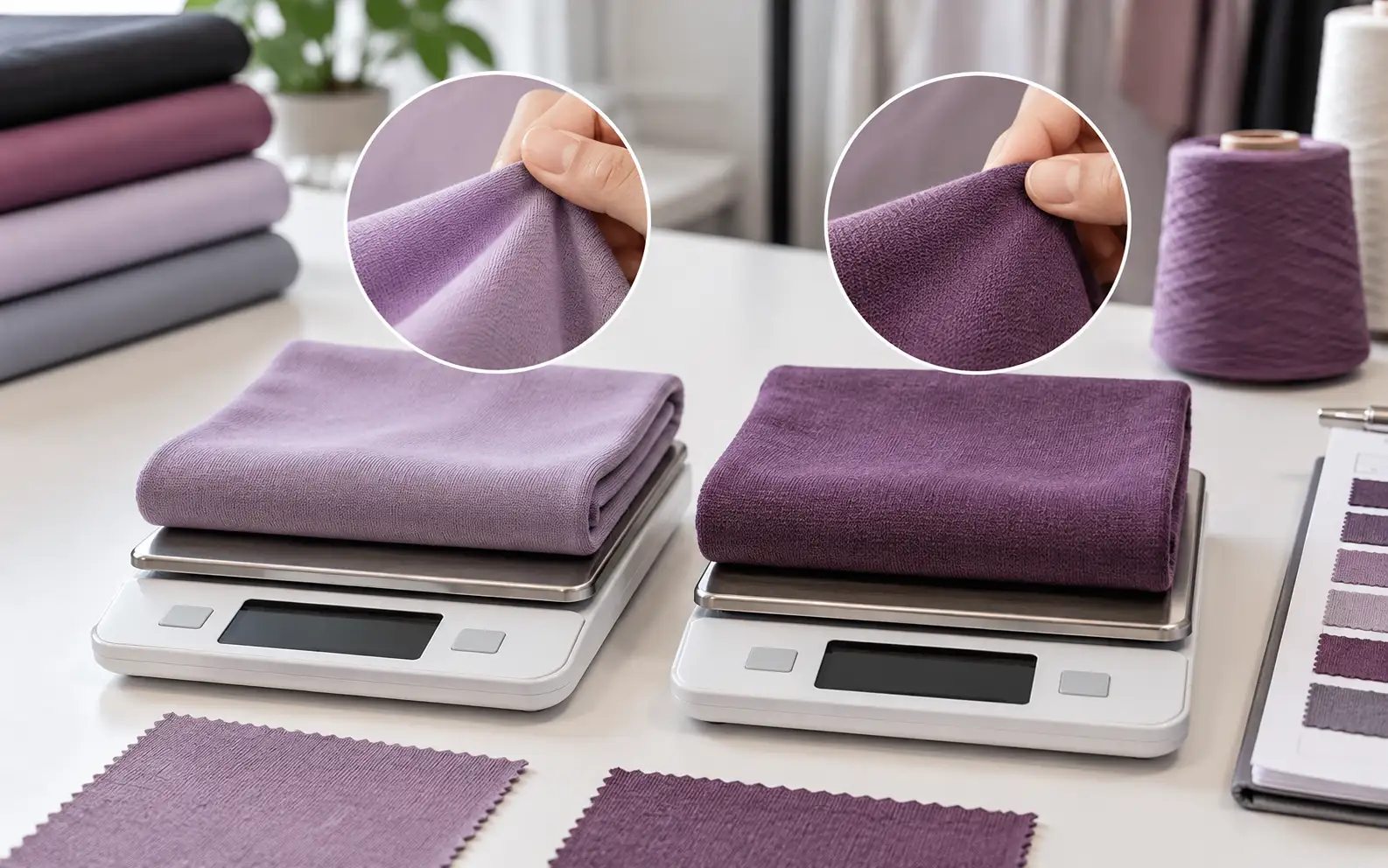
GSM measures fabric weight per square meter, not stretch resistance. Two 260 GSM fabrics can still differ in thickness and firmness because of their yarn sizes and knit structures.
📌What you’ll notice: Two 260 GSM swatches feel different in your hands. One feels dense and firm, while the other feels softer and more flexible.
4. Dyeing and Finishing
Heat setting helps control fabric width and dimensional stability. Changes in processing temperature or tension can also affect stretch and recovery. Softening treatments may alter the surface feel without changing the fiber composition.
Which Lycra Fabric Properties Matter Most for Different Activewear?
Start with the garment’s purpose, not the fabric label. A training legging, a sports bra, and a yoga top need different levels of stretch and support.
Product | Main Priority | Trade-Off to Consider | Buying Decision |
Leggings | Compression suited to the activity | Firmer fabric can restrict movement and make sizing less forgiving | Set the target fit for yoga, training, or daily wear before choosing fabric. |
Sports Bras | Support matched to impact level | Stronger fabric may make the bra harder to put on without solving support issues | Evaluate fabric together with the underband, lining, and straps. |
Yoga Tops | Freedom of movement | Strong pull-back can feel restrictive across the shoulders and chest | Prioritize comfortable movement over compression. |
How Should Buyers Compare Lycra Fabric Samples?
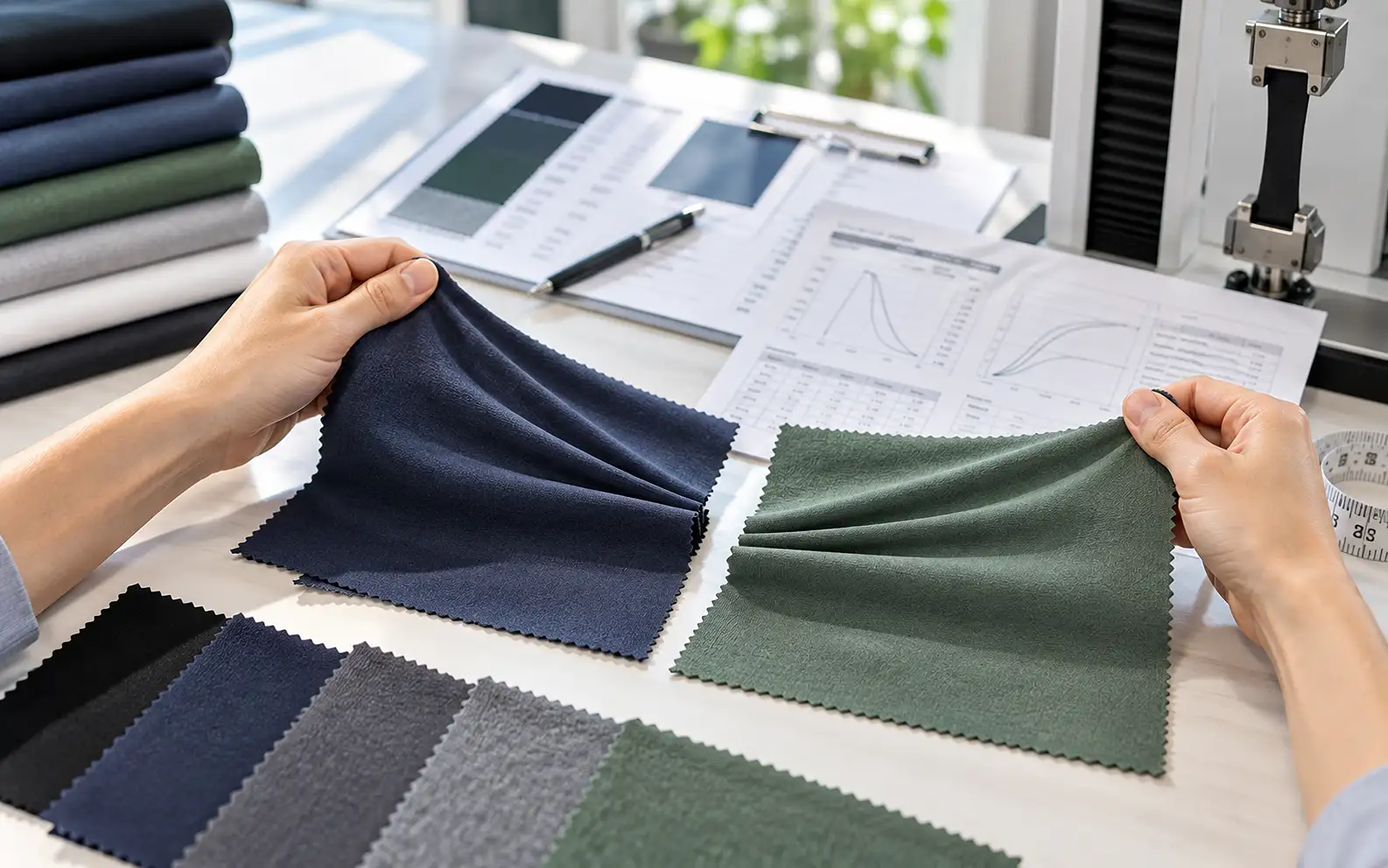
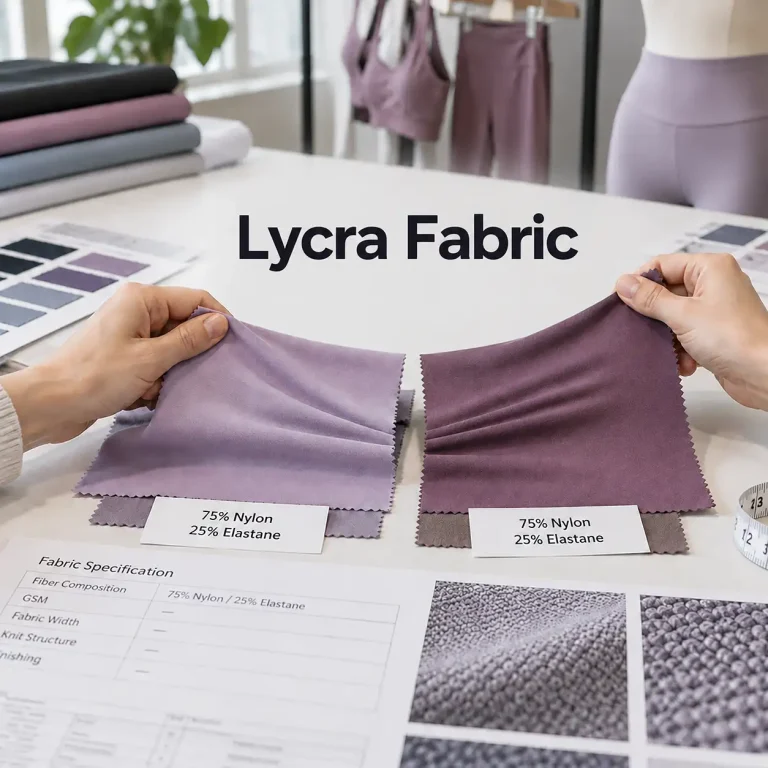
Compare the finished fabric specifications, stretch behavior, and test results under the same conditions. Here’s a practical way to evaluate samples from different suppliers.
Step 1: Verify the Fabric Specifications
Make sure both swatches are fully dyed and finished, not unfinished development samples.
Ask each supplier to confirm the yarn specifications, finished GSM, fabric width, and sample version. Record the color as well, since dyeing and finishing conditions may differ between shades.
Confirm that each swatch matches the fabric specification intended for production. Label it with a reference code, such as LF-01, and record the supplier, color code, and specification version.
Step 2: Compare the Swatches Side by Side
Use samples cut in the same direction and size. Check four things:
- Stretch direction: Compare how easily each fabric stretches across its width and length.
- Stretch resistance: Note which sample requires more force to stretch.
- Recovery: Stretch and release both samples in the same way. Look for visible distortion or remaining looseness.
- Coverage: Check whether the fabric becomes sheer when stretched to a level similar to actual wear.
These checks help identify differences, but they cannot replace controlled laboratory testing.
Step 3: Compare Test Results
Request test reports for the properties that matter to your product.
Test | Relevant Standard | What to Compare |
Stretch and recovery | ASTM D2594 or applicable ISO 20932 method | Elongation, recovery, test direction, and conditions |
Dimensional change after washing | AATCC TM135 or ISO 6330 with ISO 5077 | Length and width changes after specified wash and drying procedures |
Check that both reports use comparable methods and conditions. Also confirm that each report applies to the exact fabric specification being offered.
Can One Lycra Fabric Be Replaced With Another?
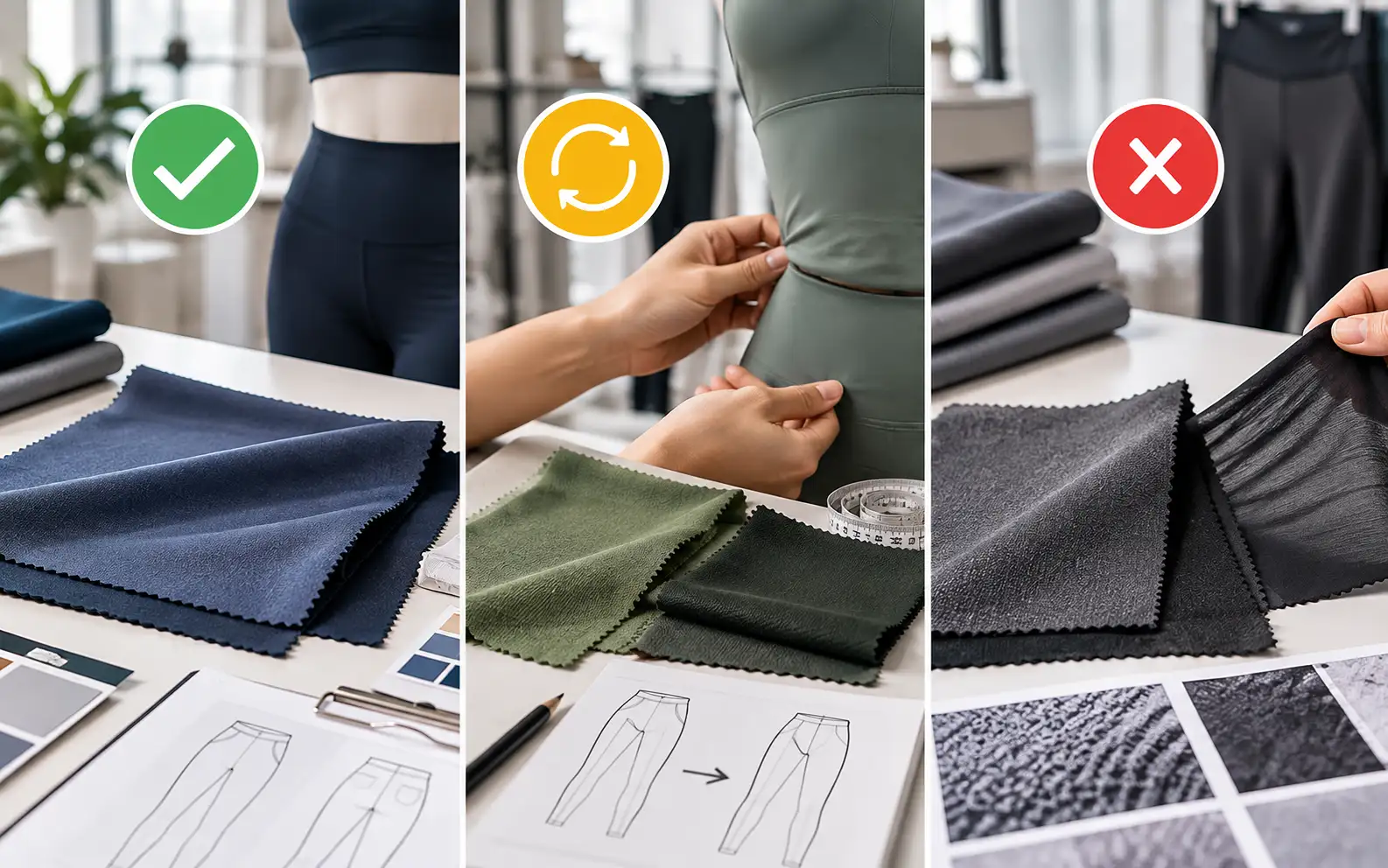
Yes, but only if the replacement meets the approved performance requirements and works with the intended garment fit. Matching fiber composition alone is not enough.
Once the fabric comparison is complete, there are three possible decisions:
Decision | When It Applies | Next Step |
Approve | Fabric passes the required tests, and the garment sample is approved | Record the new fabric code, supplier, and approved sample version. |
Revise | Fabric meets performance requirements, but the garment fit needs adjustment | Modify the pattern or construction and approve a revised sample. |
Reject | Fabric fails a critical performance requirement | Keep the original fabric or find another alternative. |
A pattern adjustment may correct fit differences caused by a change in stretch resistance. But it cannot fix poor elastic recovery or other failures in the fabric itself.
For each approved fabric change, record the material code, specification version, and approved garment sample ID together. Before bulk activewear production, confirm that the fabric lot matches the supplier’s delivery documents and approved material records. These records help trace material differences when a bulk order doesn’t match the sample.