
How Machine Washable Wool Works
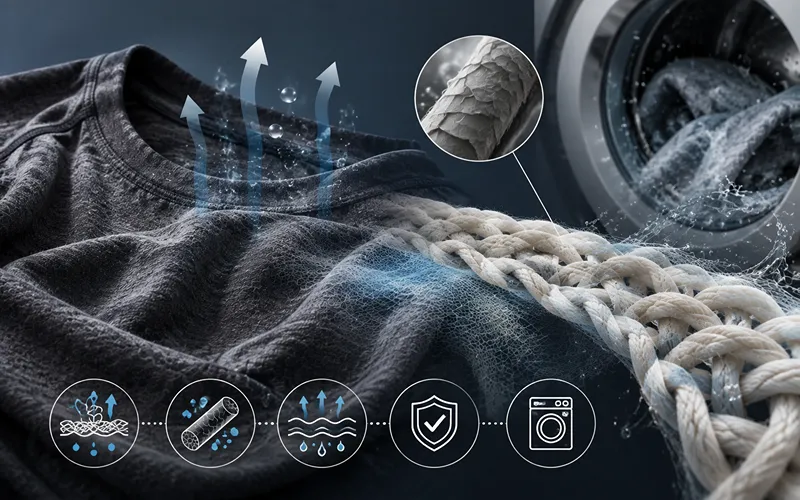
Untreated wool has tiny scales on its surface, kind of like shingles on a roof. Hot water and agitation make those scales lock together. That is what causes shrinking and felting.
Here is how machine washable wool fixes that.
The Hercosett process
This is the most common treatment. It smooths or removes the wool’s scales so they cannot lock together anymore.
Chlorine-free alternatives
Newer methods use enzymes or plasma instead of chlorine. According to The Woolmark Company, machine washable wool is achieved through advanced fiber engineering, including established Hercosett systems and newer chlorine-free alternatives. This is a real plus for buyers focused on sustainability.
Our own testing, as a manufacturer
We treat the wool without stripping away what makes it valuable as a sportswear fabric. The fiber still breathes. It still manages moisture. It still resists odor naturally. As a sportswear manufacturer in China, we run batches through 30-plus wash cycles and see shrinkage stay under 3%, well within industry tolerance for performance textiles.
The point is simple. You get wool that survives your customer’s laundry routine, without turning it into a different material.
Performance Comparison: Wool vs. Synthetics
Sportswear buyers usually ask the same three questions. Does it wick moisture? Does it smell? Does it keep up with hard use? Here’s how machine washable wool actually compares.
Performance Factor | Machine Washable Wool | Traditional Performance Fabrics |
Moisture absorption | Absorbs into the fiber, keeps skin drier | Wicks on the surface, dries fast |
Odor resistance | 66% less odor retention than polyester | Holds onto bacteria and smell faster |
Temperature regulation | Keeps body warm when wet, cool when dry | Cools fast but loses warmth when wet |
Wash durability (30+ cycles) | Under 3% shrinkage with proper treatment | Very stable, minimal shrinkage |
Stretch recovery | Natural elasticity, needs spandex blend for compression wear | Excellent, snaps back fast |
Best use case | Base layers, training wear, everyday activewear | High-intensity, fast-drying gear |
Moisture management
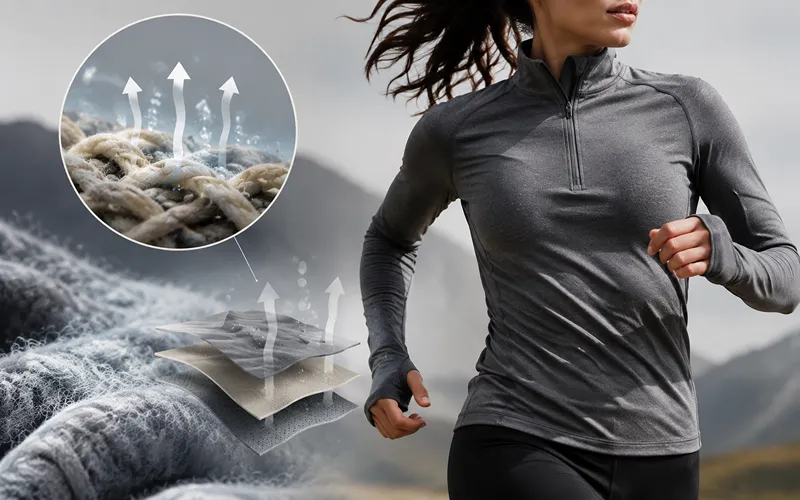
Wool absorbs moisture into the fiber itself, not just the surface. Wool fabrics can move 25% more moisture away from the skin than polyester fabrics, equal to a temperature drop of up to four degrees Celsius. A polyester fabric wicks moisture along the surface instead. That works fast for short workouts, but it can feel damp once you slow down.
Odor resistance
This is where wool pulls ahead by a wide margin. One New Zealand study with 13 trained smell assessors found wool fabrics retained 66% less body odor intensity than polyester fabrics after wear. Activewear clients tell us this constantly. Their customers want to wear a piece twice before washing it. Wool actually allows that. A modal fabric tends to hold onto bacteria faster, so odor builds up sooner.
Durability under repeat washing
This is the part we test ourselves. We run production batches through more than 30 wash cycles before approving them for bulk orders. Shrinkage stays under 3%, well within the tolerance sportswear brands expect from any performance textile.
Stretch and recovery
Here synthetics still have an edge. Fabrics like polyester and spandex blends bounce back to shape faster after heavy stretching. Wool has natural elasticity, but for compression-heavy pieces like leggings, we usually recommend blending wool with a small percentage of spandex to get that snap-back.
The right fabric choice can make a big difference in comfort, durability, and customer feedback. If you’re developing a new sportswear product, feel free to reach out and discuss your fabric requirements with us.
Where Wool Wins and Where It Doesn’t
Machine washable wool is not a universal replacement. It is a better fit for some products than others. Here is how we break it down for clients.
Where wool wins
Wool performs best in base layers, training tops, and everyday activewear. Think running shirts, casual joggers, and daily gym wear. These pieces benefit most from wool’s odor resistance and temperature control, without needing extreme stretch.
Where wool needs help
Compression-heavy pieces are a different story. Custom leggings need serious stretch and snap-back recovery. 100% wool can stretch, but not nearly as much as spandex blends. OPTIM Stretch technology blends wool with spandex or elastane to add elasticity while keeping the fabric breathable and durable. That is the approach we recommend for any high-compression product.
A category people forget: woven pieces
Wool is not just for knits. Other tailored structured pieces actually work well with machine washable wool. The fiber holds shape nicely in wovens, and the easy-care treatment means the piece survives regular washing instead of dry cleaning only.
Our honest recommendation
When a client asks for 100% wool in a compression product, we usually suggest a small percentage of spandex instead. It keeps the wool’s comfort and odor control, but adds the recovery a legging or bike short actually needs. For looser pieces, like tees, shorts, or skirts, we are comfortable running 100% wool.
Is Machine Washable Wool Right for Your Sourcing Strategy?
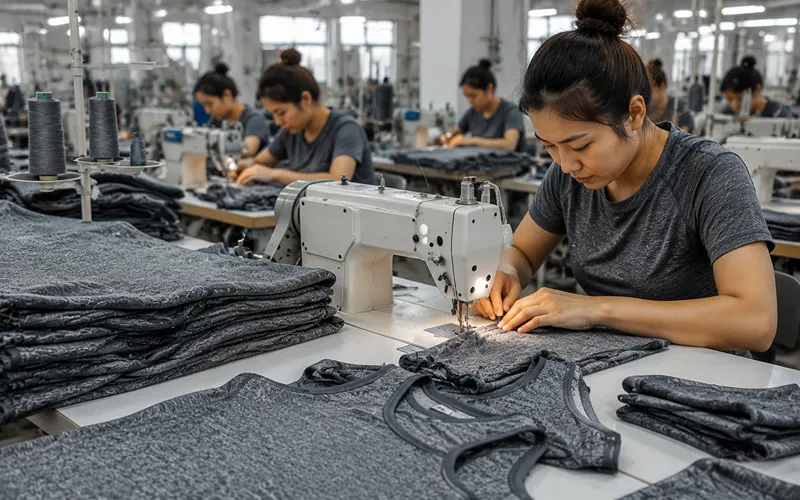
Sourcing wool comes down to a handful of practical factors. Here is what buyers actually need to plan around.
MOQ flexibility
Many mills require minimums of 1,000 yards or more per colorway. That does not work for a small brand testing a new line. As a wholesale activewear manufacturer, we set our starting MOQ at 300 yards per fabric type, so brands can launch a small capsule collection without overcommitting.
Sampling and lead time
Fabric sampling usually takes 10 to 14 days, depending on weight and finish. Bulk production adds another 4 to 6 weeks after approval. If you are targeting a spring launch, samples need to be locked in by early fall. Buyers who skip this timeline often end up rushing quality control.
Certification and traceability
More buyers now ask for proof, not just claims. Ask for a supplier’s Woolmark license number or mulesing-free sourcing documentation. If a supplier cannot produce paperwork on request, treat that as a warning sign, especially if your own brand markets sustainability.
Fabric weight for the right application
Machine washable wool typically ranges from 150 to 300 GSM for activewear. Lighter weights, around 150 to 180 GSM, suit base layers and warm-climate training gear. Heavier weights, 220 GSM and up, hold shape better for outerwear and cold-weather pieces. We help buyers match GSM to the actual end use, not just pick a default.
Payment and order structure
On a first order, ask about a 30/70 split payment instead of paying in full upfront. This protects your cash flow while still letting the supplier reserve production capacity for your run.
Start with a trial order of one or two colorways before committing to a full range. It costs slightly more per unit, but it lets you test fit and customer response before you scale into a larger production run.
Conclusion
So, can machine washable wool replace traditional performance fabrics? For many products, yes. For others, a blend works better. The right choice depends on what you are making, not which fabric sounds more impressive.
That is really the whole point of this guide. Match the fabric to the product, ask your supplier for real test data, and start small before you scale.
Have a product in mind? Talk to our team and LuckPanther will help you pick the right wool blend for it.