What Is Modal Fabric?
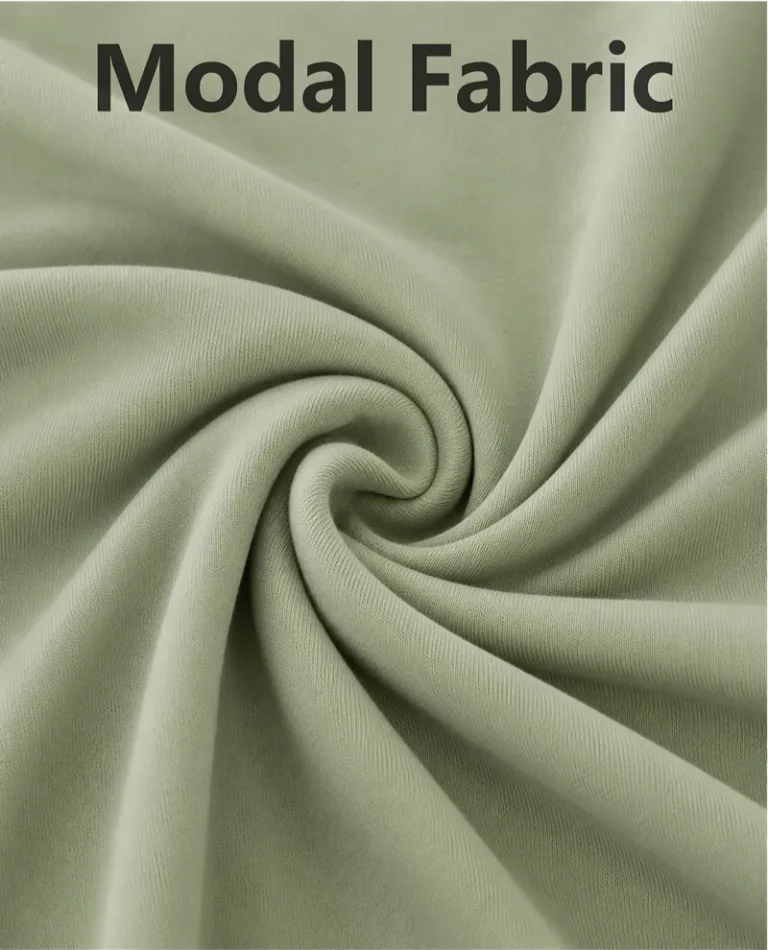
Let me break it down simply. Modal is a semi-synthetic fabric made from beech tree pulp. It’s technically a type of rayon — but a stronger, fancier cousin.
The process itself uses about 10 to 20 times less water than cotton farming. I’ve had buyers double-check that number with me more than once. It’s real, and it’s a strong sustainability talking point for your own buyers downstream.
Technically, modal is classified under ISO 206:1999(E) as a “high wet modulus” fiber. In plain English? It stays strong even when wet. Regular rayon gets weak and stretchy in the wash. Modal doesn’t.
| Fabric Specification | Example |
|---|---|
| Fiber Content | 92% Modal / 8% Elastane |
| Fabric Weight | 220 GSM |
| Construction | Single Jersey Knit |
| Stretch | 4-Way Stretch |
| Width | 160 cm |
| Hand Feel | Soft and smooth |
| Drape | High |
Fabric Spec Example: A 92% modal / 8% elastane fabric at 220 GSM. But these numbers are only an example, not a universal modal standard. Change the elastane content, GSM, yarn, or knit structure, and the fabric may perform very differently.
Benefits and Drawbacks of Modal Fabric
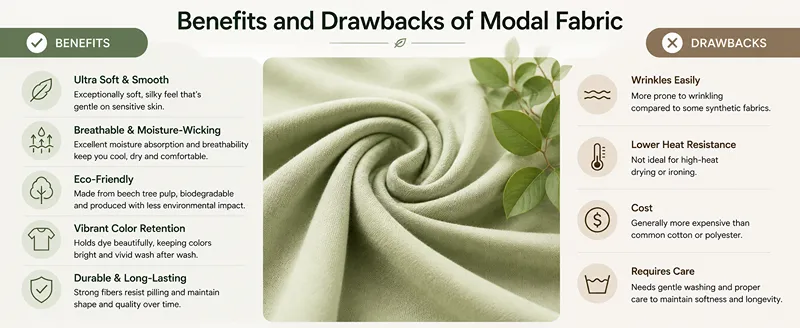
Modal has some clear advantages, but I would not call it a “perfect fabric.” No fabric deserves that title—not even the expensive ones!
Key Benefits
1. Softness
Softness is one of the strongest reasons to choose modal. Its modal fibers have low fiber rigidity, which helps create finer and softer textiles. Its TENCEL™ Modal fibers are also designed to keep their softness through repeated washing and drying.
2. Good moisture regulation
Modal fibers can absorb and release moisture. This helps the finished fabric create a drier microclimate next to the skin. That is useful for garments worn for long periods.
But here is an important detail: moisture absorption is not the same as quick drying. I would never choose modal for a sportswear collection based on the word “breathable” alone. For high-sweat products, drying speed and fabric construction still need testing.
3. Easy to use in fabric blends
This is one of modal’s most useful features for clothing development. For Chinese sportswear manufacturers, this flexibility makes it easier to adjust fabric performance for different product needs. You can use the blend to solve different problems. Modal + elastane can add stretch. Modal + cotton can work well for soft everyday basics. Modal can also be combined with synthetic fibers when more durability or performance is needed.
Main Drawbacks
Modal also has limits that I check before approving a fabric.
- Recovery can be limited. Modal itself does not give leggings strong compression or shape recovery. Elastane and fabric construction matter here.
- Pilling can still happen. Yarn quality, knitting, finishing, and abrasion all affect the result. “100% modal” does not mean “100% pill-proof.”
- It is not ideal for every workout. A soft modal knit may feel great in yoga or Pilates. For running or HIIT, I would compare its drying speed, recovery, and abrasion resistance with performance synthetics first.
My rule: Don’t choose modal because it feels amazing on a fabric hanger. Test it in the actual garment. A beautiful swatch and a great pair of leggings are two very different things.
What Is Modal Fabric Used For?
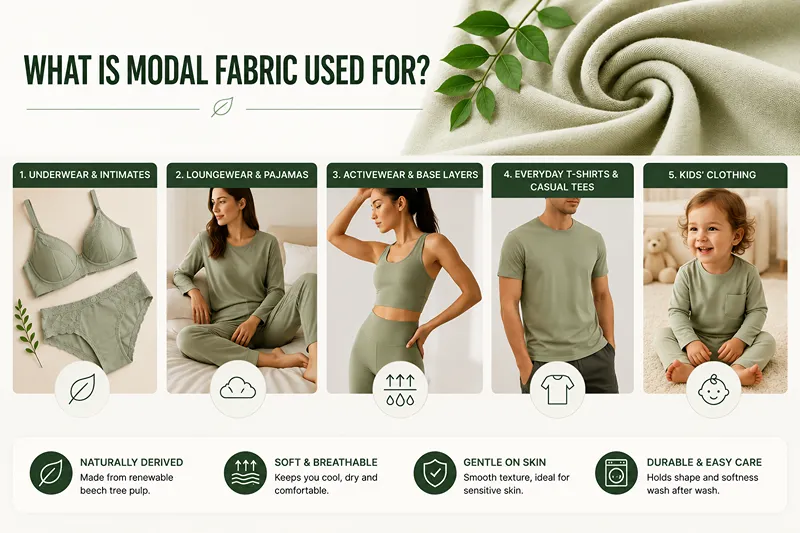
Over the years, I’ve seen modal show up in a handful of product categories again and again.
Apparel Categories
- Underwear and intimates. This is modal’s home turf. Brands like Calvin Klein and Hanro lean heavily on modal blends here, mostly because moisture control matters most against bare skin.
- Loungewear and pajamas. Soft hand-feel plus good drape makes modal a natural choice for anything meant to feel relaxed.
- Activewear and base layers. With 50% better moisture absorption than cotton, it’s a solid pick for low-to-moderate intensity workout gear. This also makes modal blends worth considering for brands developing products around searches such as “best yoga clothes Australia” .
- Everyday t-shirts and casual tees. Usually blended with cotton, often in the 5-30% range, to keep costs manageable while adding softness.
- Kids’ clothing. The gentle texture and low irritation risk make it popular for baby and toddler lines.
Beyond Apparel
Modal isn’t just for clothes. I’ve worked with buyers sourcing it for:
- Bed sheets and towels. Retail price premiums here run 25-40% over comparable cotton products. A solid margin opportunity if you’re supplying premium home textile lines.
- Curtains and other home textiles. The nice drape translates well from clothing to soft furnishings.
Modal vs Cotton vs Polyester
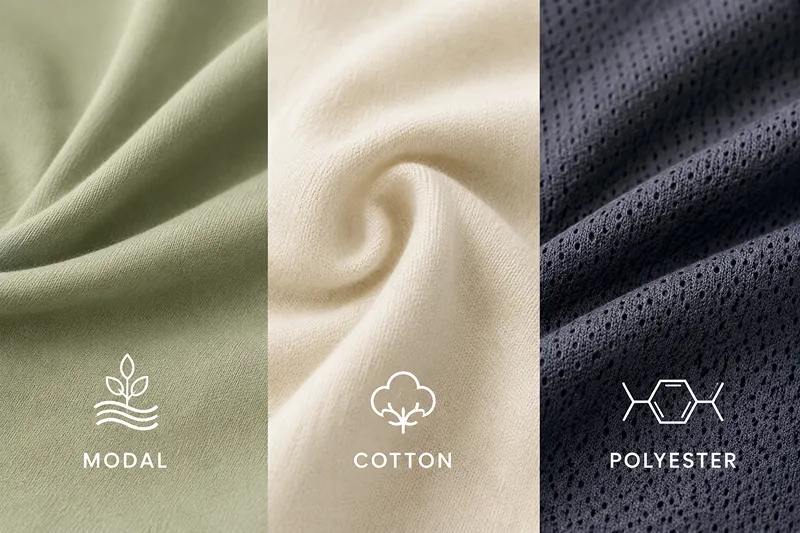
When I compare them for a clothing project, I usually look at comfort, moisture behavior, durability, and the final use.
Modal vs Cotton
Both fibers absorb moisture well, but they do not feel the same in a finished garment. Cotton has a moisture regain of about 8.5% under standard conditions. It also becomes stronger when wet.
Modal usually gives a smoother hand feel and more fluid drape. I tend to favor it when the product needs to feel softer or more refined. Cotton is often the easier choice for classic T-shirts and everyday basics.
Modal vs Polyester
The difference is clearer here. Modal absorbs and releases moisture through its cellulose structure. Polyester absorbs very little moisture, which is one reason it can dry faster.
That makes polyester useful for running tops, gym wear, and other products where quick drying and abrasion resistance matter. Modal makes more sense when skin comfort and softness are higher priorities.
So, Which One Should You Choose?
I would break it down like this:
- Choose modal for softness, drape, and close-to-skin comfort.
- Choose cotton for familiar everyday comfort and simple casualwear.
- Choose polyester when fast drying and durability matter more.
Learn more about woven fabric and lightweight and downproof fabric.
How to Choose Modal Fabric for Clothing
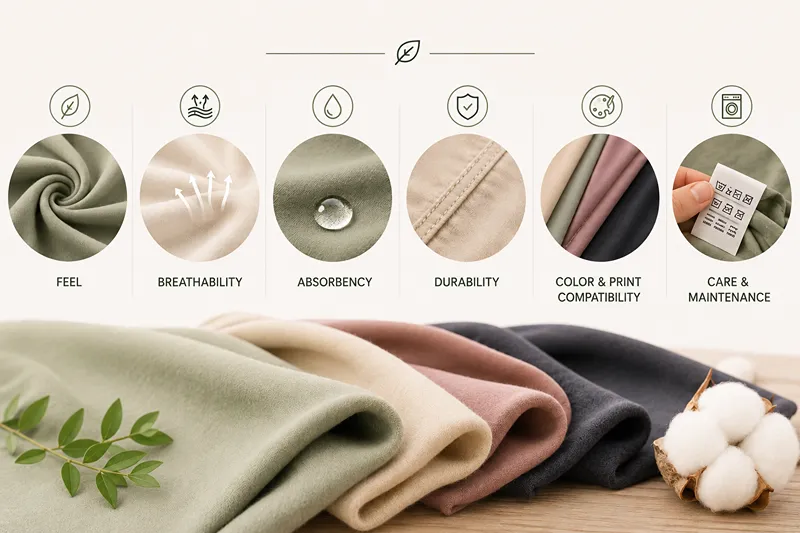
This is the part buyers actually message me about most. Picking modal isn’t hard once you know what to check. Here’s my usual checklist.
Check the Source First
Ask your supplier one simple question: is this Lenzing Modal, or generic modal? Lenzing controls a huge share of the premium market, and it comes with FSC certification and tighter quality control. Generic modal varies a lot by mill, so testing matters more if you go that route.
Match GSM to Your Product
GSM (grams per square meter) tells you the weight and feel.
- 120-160 GSM — light, drapey, good for loungewear and dresses
- 160-200 GSM — mid-weight, works well for everyday tees
- 200+ GSM — heavier, better for bedding and towels
Decide on Blend Ratio
Pure modal feels amazing but costs more and wears faster under stress. Most successful orders I’ve seen blend it:
- 95% modal / 5% spandex — for fitted garments needing stretch recovery
- 60% cotton / 40% modal — balances cost with modal’s softness
- 50/50 cotton-modal — a common sweet spot for everyday apparel
Budget Realistically
Expect to pay roughly €7 to €18 per meter, depending on GSM and blend. If a quote comes in way under €7, ask hard questions about fiber source and chemical recovery process. That price gap usually means corners got cut somewhere.
Request Documentation
Before placing a bulk order, ask for:
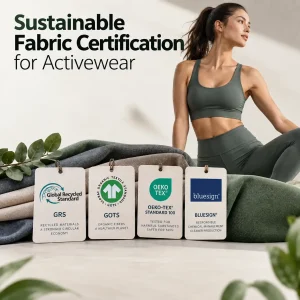
- OEKO-TEX certification (confirms no harmful chemical residue)
- FSC certification (confirms sustainable wood sourcing)
- Shrinkage test results after 3-5 wash cycles
- Colorfastness test results