What Are the Common Payment Terms in Apparel Manufacturing?
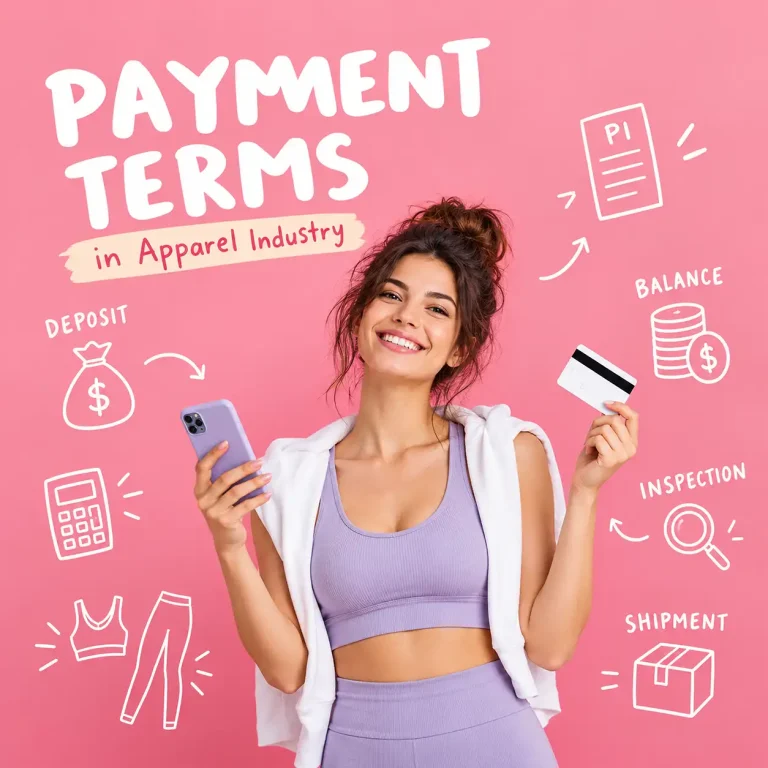
Payment terms define when a clothing factory gets paid and under what conditions. They may include an upfront deposit, a final balance, or an agreed credit period. Payment splits, bank arrangements, and credit terms work differently, so buyers should not treat them as interchangeable.
The table below compares five arrangements used in apparel orders.
Payment Term | Type | How It Works | When It May Be Used |
30% Deposit / 70% Balance | Payment split | Pay 30% upfront and the remaining 70% at an agreed milestone. | Bulk orders where both sides agree to staged payments. |
50% Deposit / 50% Balance | Payment split | Pay half upfront and half at the agreed balance date. | Orders with higher upfront material or customization costs. |
100% Advance Payment | Payment split | Pay the full amount before production begins. | Samples, small orders, or other orders requiring prepayment. |
Letter of Credit (L/C) | Bank-backed arrangement | The bank pays when the required documents comply with the L/C terms. | Orders where the parties agree to use documentary payment conditions. |
Open Account (e.g., Net 30) | Credit arrangement | Goods are supplied before payment, with payment due within the agreed period. | Buyers with approved credit terms. |
Two details matter when comparing these terms.
First, a 30/70 split describes how much you pay, not how you transfer the money. For example, both payments may be made by T/T (telegraphic transfer), while the balance deadline is set separately in the agreement.
Second, an L/C protects payment through document requirements, not garment inspection. Under ICC’s UCP 600 rules, banks check documents, not the actual goods. They do not verify fabric quality or stitching.
Why Do Clothing Manufacturers Require a Deposit?
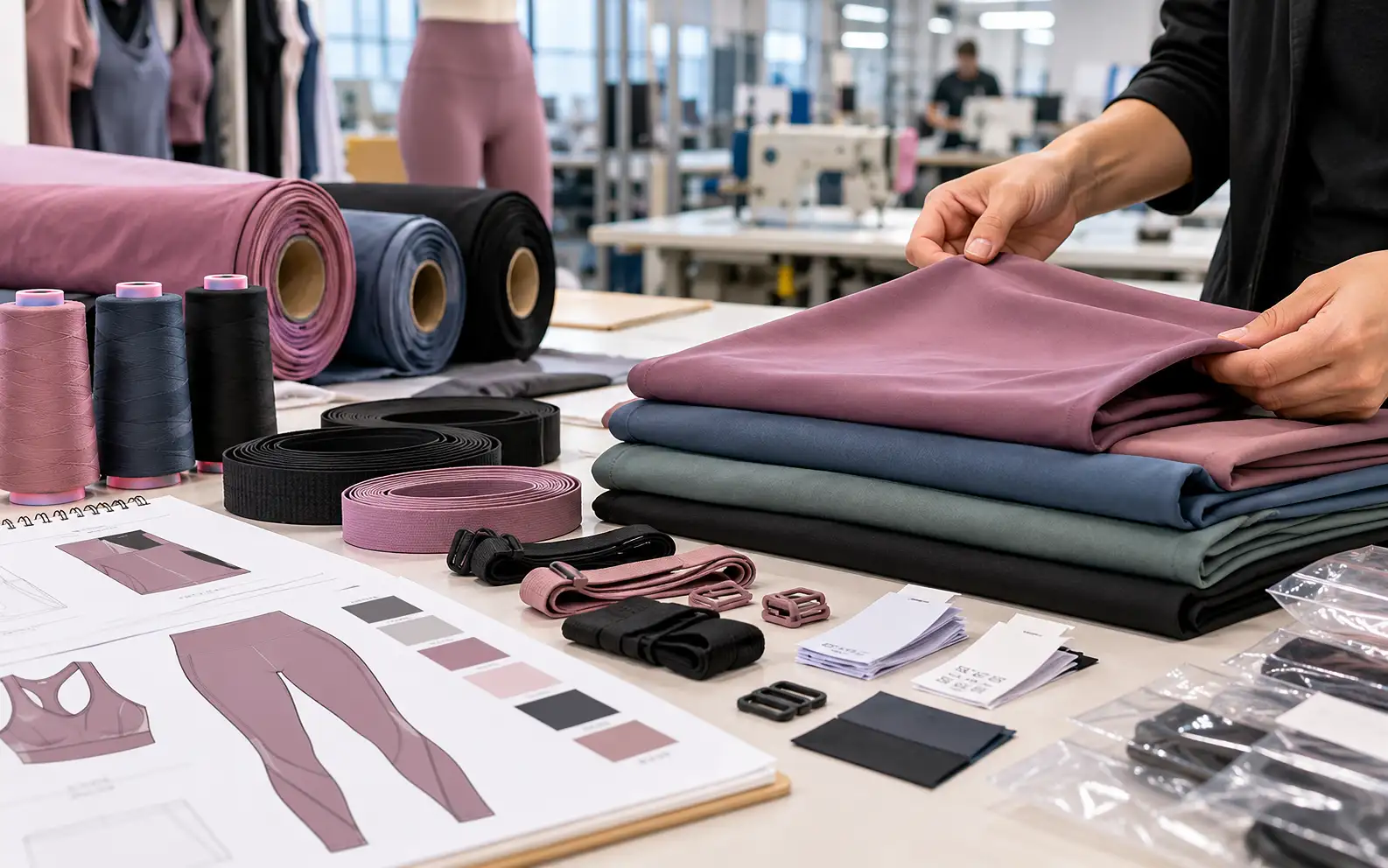
Clothing manufacturers require deposits to cover part of the upfront production costs and reduce the risk of order cancellation.
For a custom leggings order, we may need to purchase fabric and branded trims before cutting begins. Depending on the supplier’s terms, we may also need to pay for these materials before garment production starts.
Custom materials carry greater risk. A specially dyed fabric color, printed waistband, or branded care label may be difficult to reuse if the buyer cancels or changes the order. Once those materials are purchased, the factory may not be able to recover their full cost.
First orders also involve more uncertainty because the factory has no previous payment history with the buyer. A deposit helps limit that exposure, while the buyer pays only part of the agreed order value upfront.
When Should You Pay the Final Balance?
The final balance is due at the milestone agreed in your purchase order or Proforma Invoice (PI). This may be after production, after an agreed inspection, or before shipment. The exact timing should be confirmed before you pay the deposit.
Production Stage | What Buyers Should Confirm |
Before Deposit | PI, order specifications, quantity, and payment terms |
During Production | Approved sample version, materials, and production progress |
Before Final Payment | Completed quantity, inspection result if required, and exact balance amount |
Before Shipment | Shipping arrangements, required documents, and agreed release conditions |
Production completed does not mean inspection passed. A factory may finish 1,000 leggings, but an agreed inspection could still identify differences from the approved sample, such as incorrect measurements or color variations.
Passing inspection also does not automatically extend your payment deadline. If the agreement requires the balance before shipment, that condition still applies unless both sides agree to change it.
For example, a payment clause might state: “Balance due after the agreed inspection is passed and before shipment.” This is clearer than simply writing “70% before shipment.”
Before approving the PI, confirm whether inspection must take place before final payment and when the goods will be ready for release under the agreed shipping terms.
What Payment Terms Can Buyers Negotiate?

Buyers can negotiate the deposit percentage, final payment milestone, and terms for future orders. What a factory can accept depends on the order requirements, upfront costs, and the buyer’s payment history.
- Deposit percentage
Rather than simply requesting a lower deposit, ask whether the upfront amount can be adjusted based on the materials required for your order.
For example, if the factory can use existing fabric stock, it may have more flexibility than an order requiring newly sourced materials. However, a lower deposit is not guaranteed.
- Final payment milestone
If the proposed balance date does not fit your purchasing process, ask whether the factory can agree to a different, measurable milestone.
Any revised terms should state what must happen before payment becomes due. Avoid conditions based only on personal satisfaction, which can lead to disagreements.
- Terms for repeat orders
A reliable payment record and consistent order volume may give buyers more room to discuss future terms.
However, repeat orders do not automatically qualify for Net 30 or payment after delivery. Factories still need to assess credit risk and the costs of each order.
What Should Buyers Check Before Making a Payment?
Before paying a clothing manufacturer, check the Proforma Invoice (PI), bank details, payment schedule, approved specifications, inspection terms, and cancellation conditions. Missing information can lead to payment disputes, production delays, or unexpected costs.
Checkpoint | What to Verify |
Proforma Invoice | Product, quantity, total amount, currency, and payment split |
Bank Details | Beneficiary name, account number, and bank details verified through a trusted contact |
Payment Schedule | Deposit and balance amounts match the PI, with payment deadlines clearly stated |
Approved Specifications | Fabric, color standard, size breakdown, logo details, and approved sample version |
Inspection Agreement | Whether inspection is required and how the result affects final payment |
Changes & Cancellation | How deposits, purchased materials, and completed work are handled if the order changes or is canceled |
Bank details need independent verification. The FBI warns about business email compromise, including fraudulent payment requests. If an email claims the factory has changed its bank account, verify the change through a previously trusted contact channel before transferring funds.
Product specifications also need to match the order documents. For example, writing only “navy” on a leggings order may lead to different color interpretations. Reference the approved color standard and sample version so both sides work from the same specifications.
If the PI conflicts with the approved order details, request a corrected document before paying the deposit.
Conclusion
Good payment terms protect both the buyer and the manufacturer. Before placing an apparel order, confirm the deposit, balance deadline, inspection requirements, and what happens if the order changes.
At LuckPanther, we review product specifications and payment conditions during order confirmation so both sides have a clear reference before production begins. Clear terms help prevent disputes when the final balance becomes due. Contact us to discuss the payment terms for your next sportswear order.