What Is a Good Pilling Resistance Result for Sportswear?
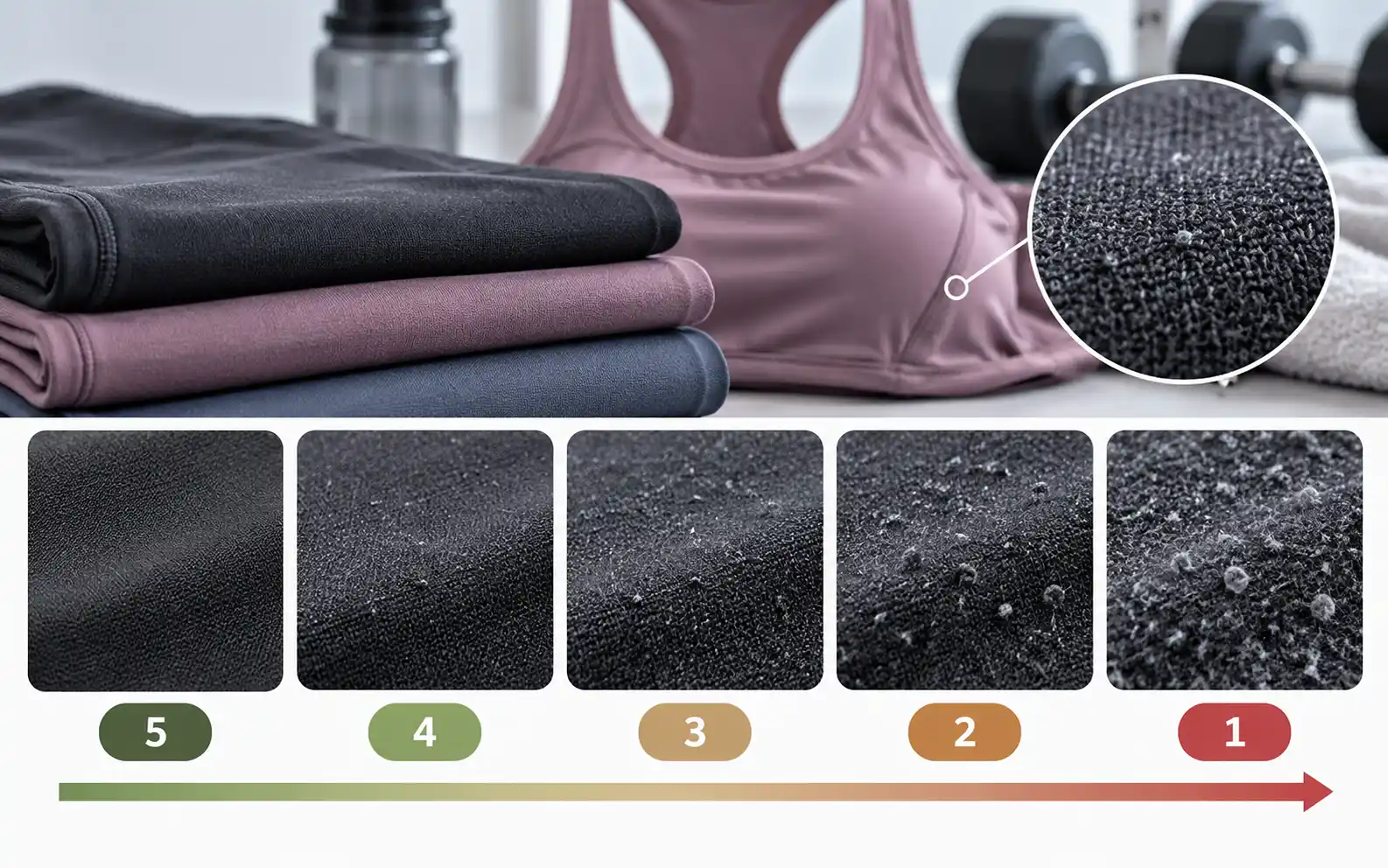
There is no single pilling grade that automatically passes every sportswear fabric. Under ASTM D4970/D4970M, pilling resistance is visually rated from 5 to 1. Grade 5 represents no pilling, while Grade 1 represents very severe pilling.
Pilling Grade | What It Means | Buyer Interpretation |
5 | No visible pilling | Excellent resistance |
4 | Slight pilling | Strong result |
3 | Moderate pilling | Needs further review |
2 | Severe pilling | Usually a concern |
1 | Very severe pilling | High risk |
The grade only shows how the tested specimen performed under defined test conditions. At our factory, we record the pilling grade together with the test method and test conditions.
Pilling Risk by Sportswear Type
Not every sportswear product faces the same pilling risk. What matters most is where repeated friction happens on the finished garment.
Leggings
The inner thighs, hips, and seat area face frequent rubbing. Contact with gym benches and machine seats can add more surface friction. When sourcing from a China leggings manufacturer, ask how the fabric is checked for these high-friction areas rather than relying only on the overall pilling grade.
Sports Bras
Underarms and side panels are common friction zones. Straps may also rub against the skin or an outer layer during movement. A good overall fabric result does not mean these high-contact areas should be ignored.
Training Tops / T-Shirts
Pilling can appear in isolated areas rather than across the whole garment. Backpack straps, outer layers, and repeated contact with gym equipment can create extra friction on the shoulders, back, or sides.
Jackets / Hoodies
Cuffs, underarms, and side areas often see more repeated contact than flat body panels. If the garment is designed for layering, we also consider where the outer surface may rub against other clothing.
For sportswear, we assess pilling risk by friction zone, fabric surface, and expected use. This helps us decide whether a test result that looks acceptable on paper is suitable for the finished garment.
What to Check Before Accepting a Pilling Result
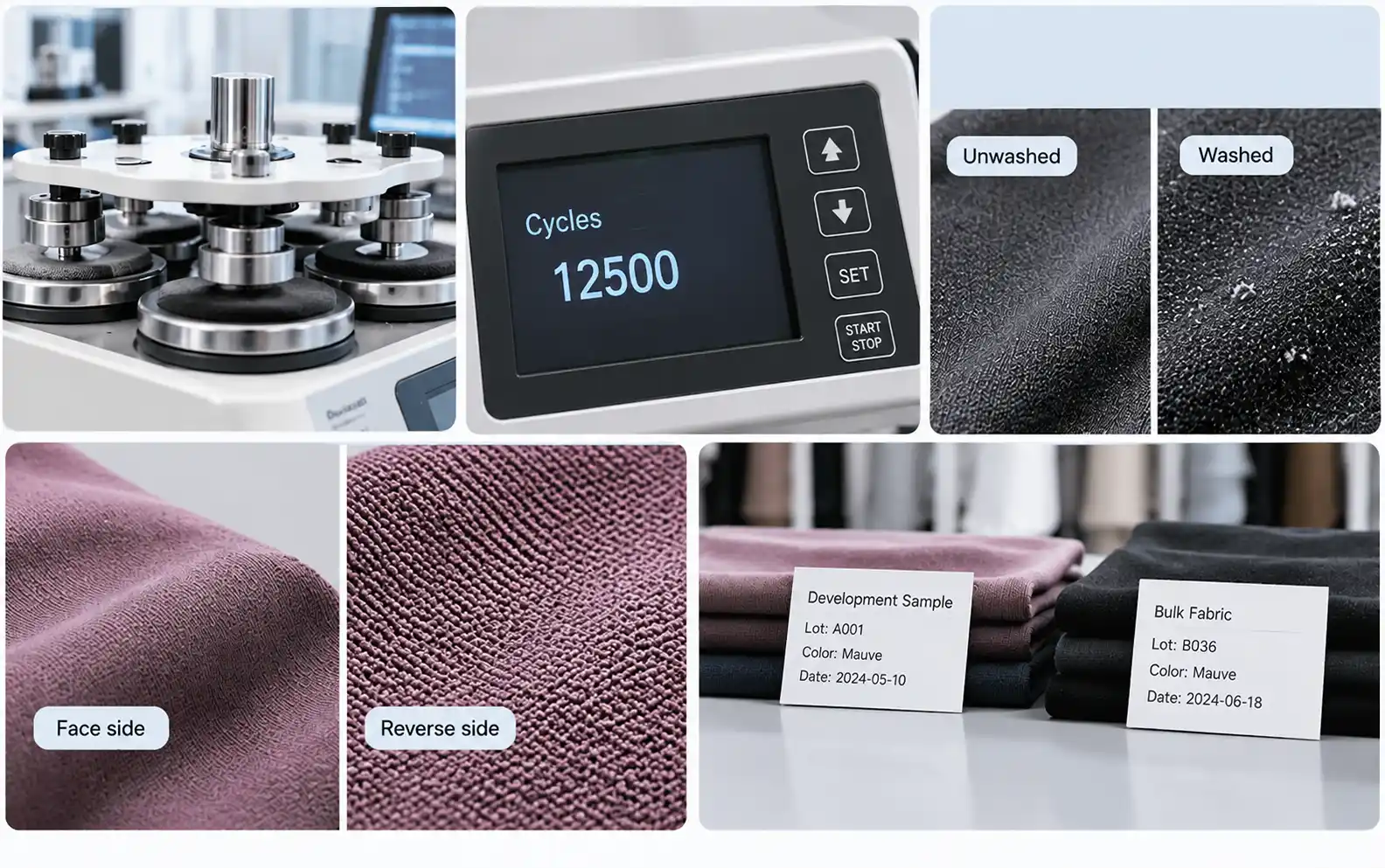
Before we use a pilling result for fabric approval, we trace it back to the test itself. The method, test point, fabric condition, tested side, and fabric lot tell us what that grade actually represents.
Check | Why It Matters |
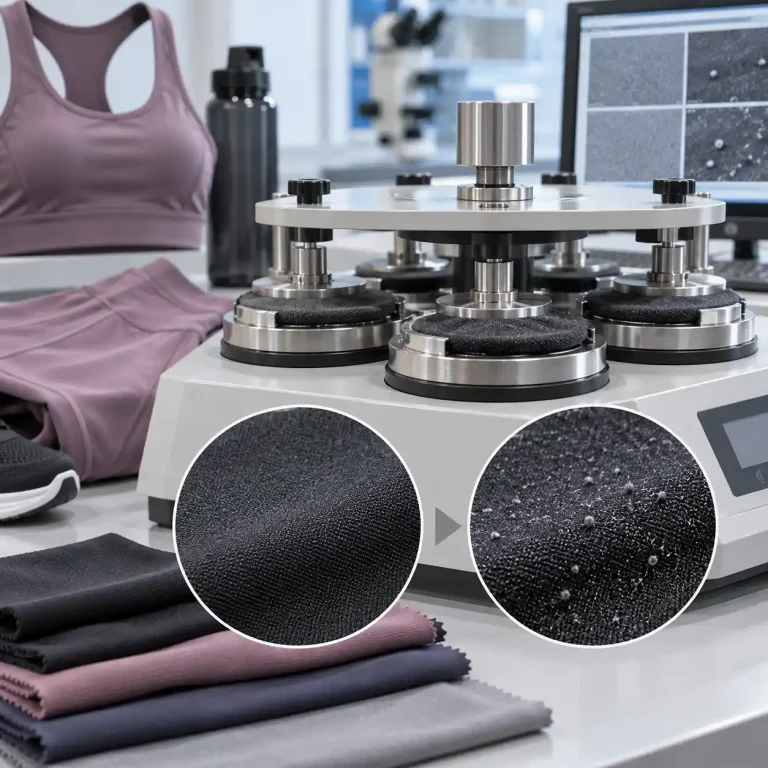
Test method | Different pilling test methods use different procedures and conditions. ISO 12945-2 specifies a modified Martindale method for evaluating pilling, fuzzing, and matting. Test results from different methods should not be treated as directly interchangeable. |
Test cycles / duration | The test interval affects how much stress the specimen receives. Check that the grade was recorded at the agreed test point. |
Fabric condition | New and washed fabric may show different surface behavior. The report should state what condition was tested. |
Tested side | The face and reverse sides can behave differently, especially when their surface structures are not the same. |
Fabric lot | Development samples and bulk fabric may come from different dye lots or production batches. |
For wholesale activewear orders, we keep the pilling grade together with the test details and the batch it represents. This prevents a development report from being reused as evidence for a different production batch without review.
If these details are missing, we ask for the full test information or retest the relevant fabric before making the approval decision.
Why Can Sportswear Still Pill After a Good Test Result?
Sportswear can still pill after getting a good test result because laboratory testing cannot reproduce every condition the finished garment will face. A good result lowers the risk of pilling, but it does not guarantee a pill-free garment.
Real Wear Creates Different Friction
Laboratory pilling tests expose specimens to controlled rubbing or movement under a defined method. Actual wear adds changing pressure, movement, moisture, and contact with other surfaces. These conditions are not identical to the laboratory setup.
Washing Can Change the Fabric Surface
Repeated washing may expose loose fibers or change the surface finish. An unwashed test specimen may therefore behave differently from the same fabric after repeated care.
Production Variation Can Affect Pilling
Changes in yarn, knitting, dyeing, or finishing can affect how fibers behave at the fabric surface. This is why we do not automatically treat a development sample result as proof of bulk fabric performance.
When Should You Approve, Retest, or Reject the Fabric?
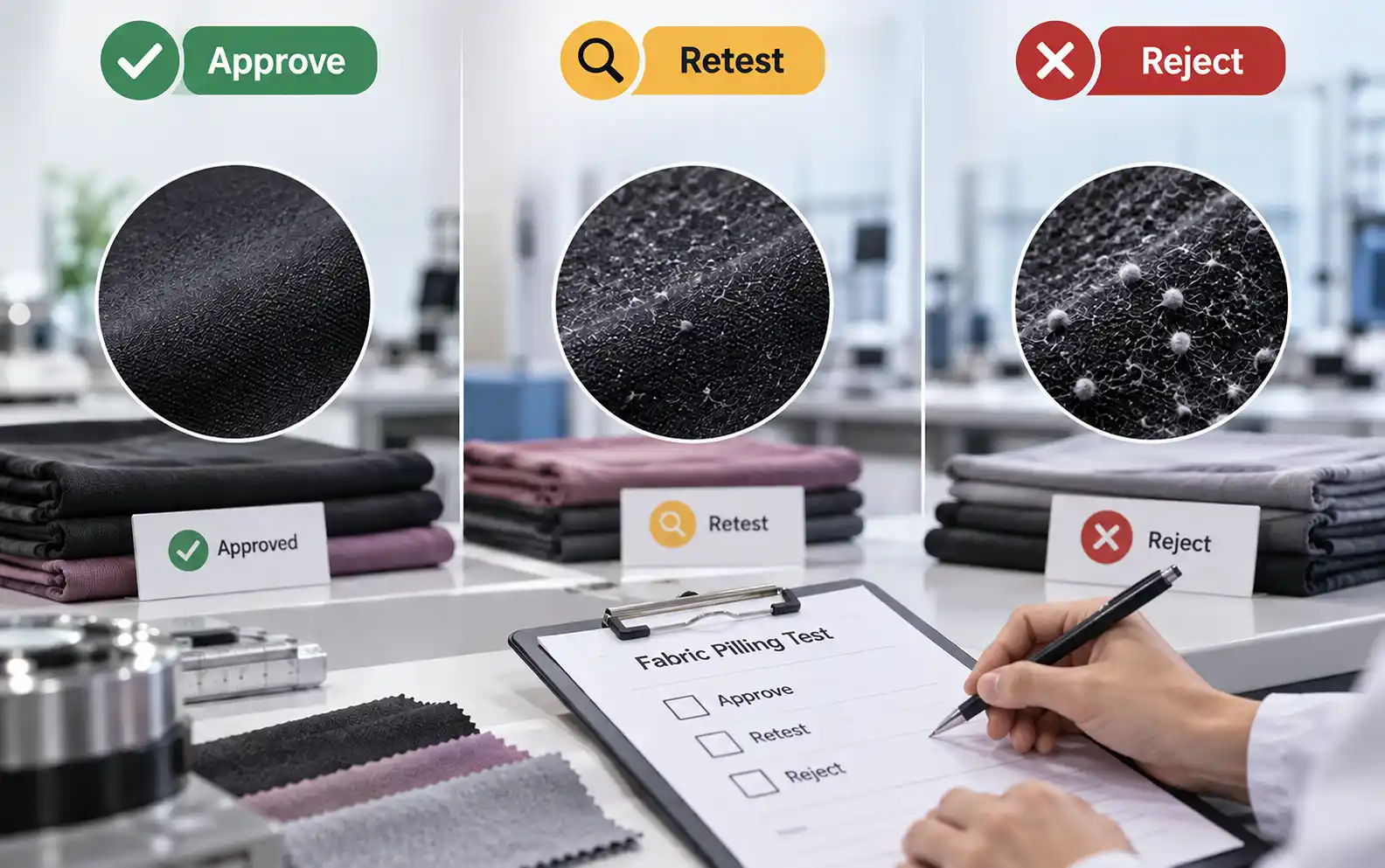
Once the test result and fabric conditions are confirmed, we use them to make one of three decisions: approve, retest, or reject.
Decision | When We Use It |
Approve | The result meets the agreed requirement, and the production fabric matches the approved standard. |
Retest | The result is borderline, the test information is incomplete, or something has changed in the production fabric. |
Reject | The result is below the agreed requirement, or retesting confirms that the production fabric does not meet the approved standard. |
A borderline result does not automatically mean rejection. We first identify what changed. This may mean confirming the test conditions, checking the production batch, or testing the relevant fabric again.
If you work with a sportswear manufacturer in China, agree on the pilling requirement before bulk production. It should become part of the approved standard used for sportswear quality control before the production fabric is released for cutting.