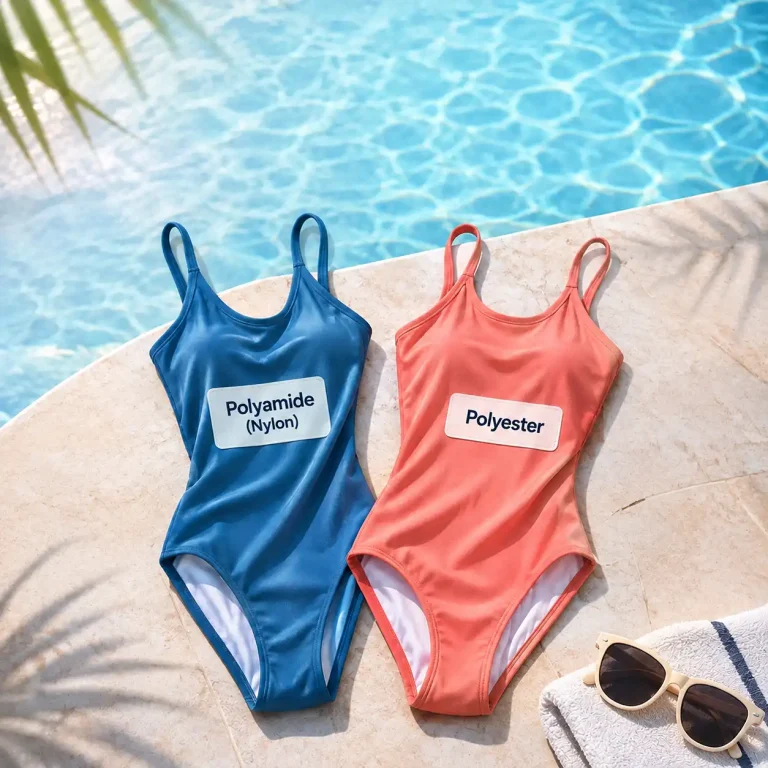
Polyamide vs Polyester Swimwear: Key Differences
The table compares 6 performance factors that matter when sourcing swimwear fabric.
Factor | Polyamide (Nylon) | Polyester |
Hand Feel | Often soft, smooth, and silky against the skin. | Can feel firmer, but yarn choice and finishing can improve softness. |
Chlorine Resistance | Generally less resistant to repeated chlorine exposure. | Generally offers better chlorine resistance. |
Water Absorption & Drying | Absorbs more moisture and may take longer to dry. | Absorbs less moisture and often dries faster. |
Stretch & Recovery | Stretch and recovery depend on elastane and fabric construction. | Stretch may come from elastane or PBT blends. Check recovery on the finished fabric. |
Color Performance | Color results depend on dye selection and finishing. Chlorine and UV may cause fading. | Dyes and finishing affect colorfastness. Test for the intended use. |
Durability | Good abrasion resistance, but repeated chlorine exposure can affect performance. | Often suits repeated pool use. Abrasion resistance still depends on construction. |
Fiber composition is a starting point, not a full performance specification.
Elastane affects stretch and recovery. Many stretch swimwear fabrics use around 15–25% elastane, but the ratio varies. Chlorine can also damage elastane over time.
Knit structure and fabric weight affect support, shape retention, and wet opacity. Two fabrics with the same fiber blend may perform differently because of their knit construction.
Dyes and finishing affect colorfastness, stability, and hand feel. Confirm these properties on actual samples.
Which Fabric Works Best for Your Swimwear Collection?
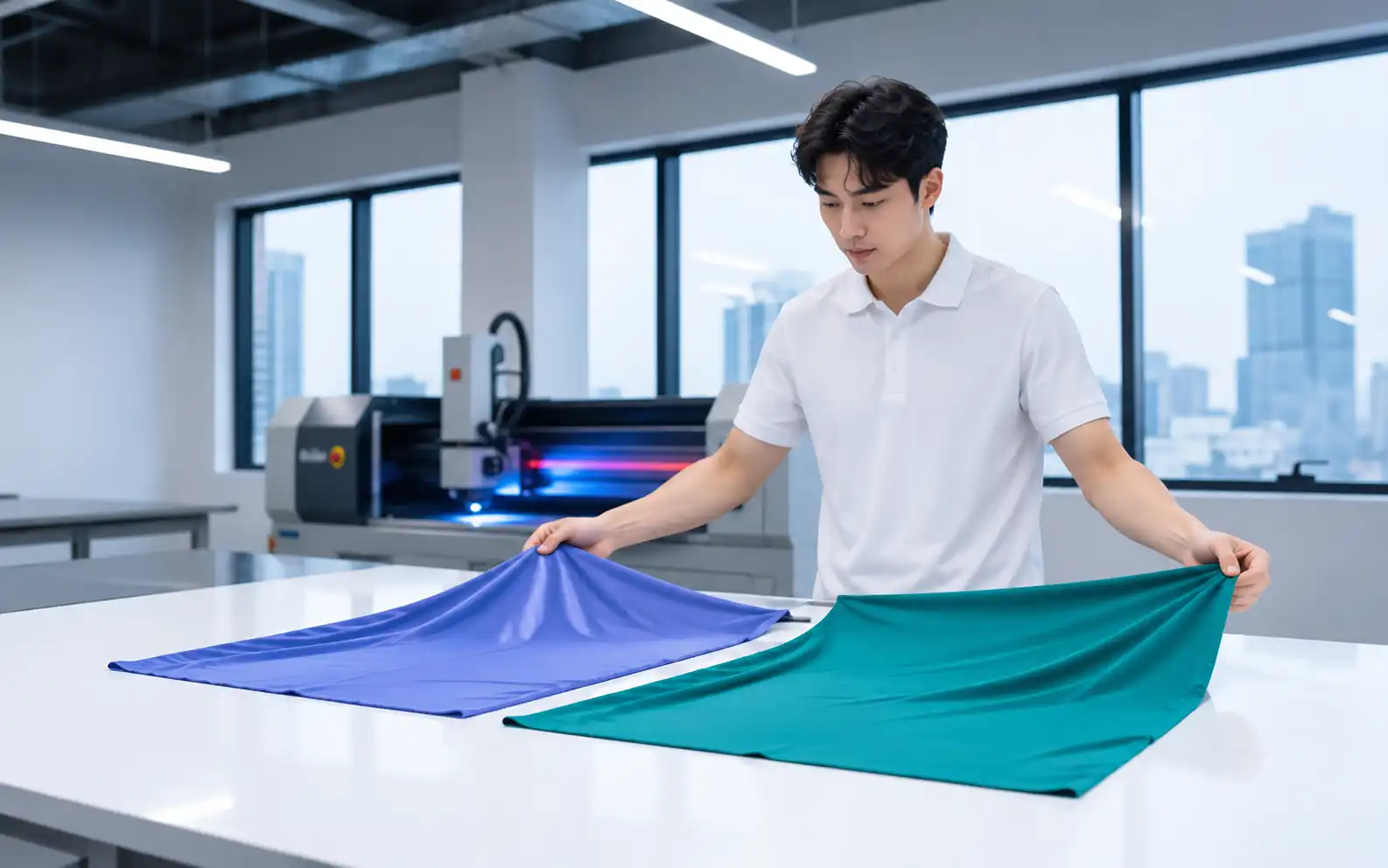
Start with how the swimwear will be used. Polyamide blends often suit fashion styles. Polyester blends are a useful option for regular pool training. Shaping styles need clear support targets.
Fashion and Resort Swimwear
Start with polyamide/elastane for beachwear and occasional pool use. Softness, drape, and appearance may matter more than long-term chlorine resistance.
Fine ribbed knits and smooth finishes are options for fashion styles. Some designs may start with 180–220 GSM fabric. Treat this as a sampling range, not a fixed requirement.
Light-colored, fine fabrics may need a lining to maintain coverage when wet. Decide on lining during sample development.
Training and Chlorine-Exposed Swimwear
Start with polyester-based fabrics for regular pool training. Swim clubs and school teams need fabric that can withstand repeated chlorine exposure.
Lower moisture absorption can help polyester fabrics dry faster between uses.
Some polyester fabrics feel firmer against the skin. Finer yarns and suitable finishes can improve softness. Compare finished samples before making your choice.
Polyamide remains an option for less frequent pool use. Base the final choice on the intended use and the approved sample.
What Fabric Specifications Should You Request?
A fabric name on a quote is not a full spec. “Nylon swim fabric, 200 GSM” leaves many details unclear. Ask your supplier for the following information before sampling.
Specification | What to Request |
Fiber Blend | Exact fiber percentages, elastane yarn specifications, and agreed composition tolerances. |
Fabric Weight | Target GSM and tolerance (such as ±5%). Confirm the condition used for weighing. |
Knit Construction | Warp or weft knit, gauge or density, main stretch direction, and usable fabric width. |
Stretch Specification | Stretch percentage in both directions, recovery requirements, and the measurement method. |
Color & Finish | Approved color reference, dyeing method, heat setting, and any claimed UV or chlorine-resistant treatment. |
Lining Fabric | Fiber content, GSM, stretch level, and color of the lining. |
The same elastane percentage does not guarantee the same stretch. Agree on a test method and target results before approving a substitute.
Check whether the proposed lining restricts movement at openings and curved seams.
Record the agreed details in a written fabric specification sheet. Ask the supplier to confirm it before sampling. Keep the sheet as a reference for fabric approval and bulk production. Need a reliable swimwear supplier? Read our guide to swimwear manufacturers in China.
How to Test Swimwear Fabrics Before Bulk Production
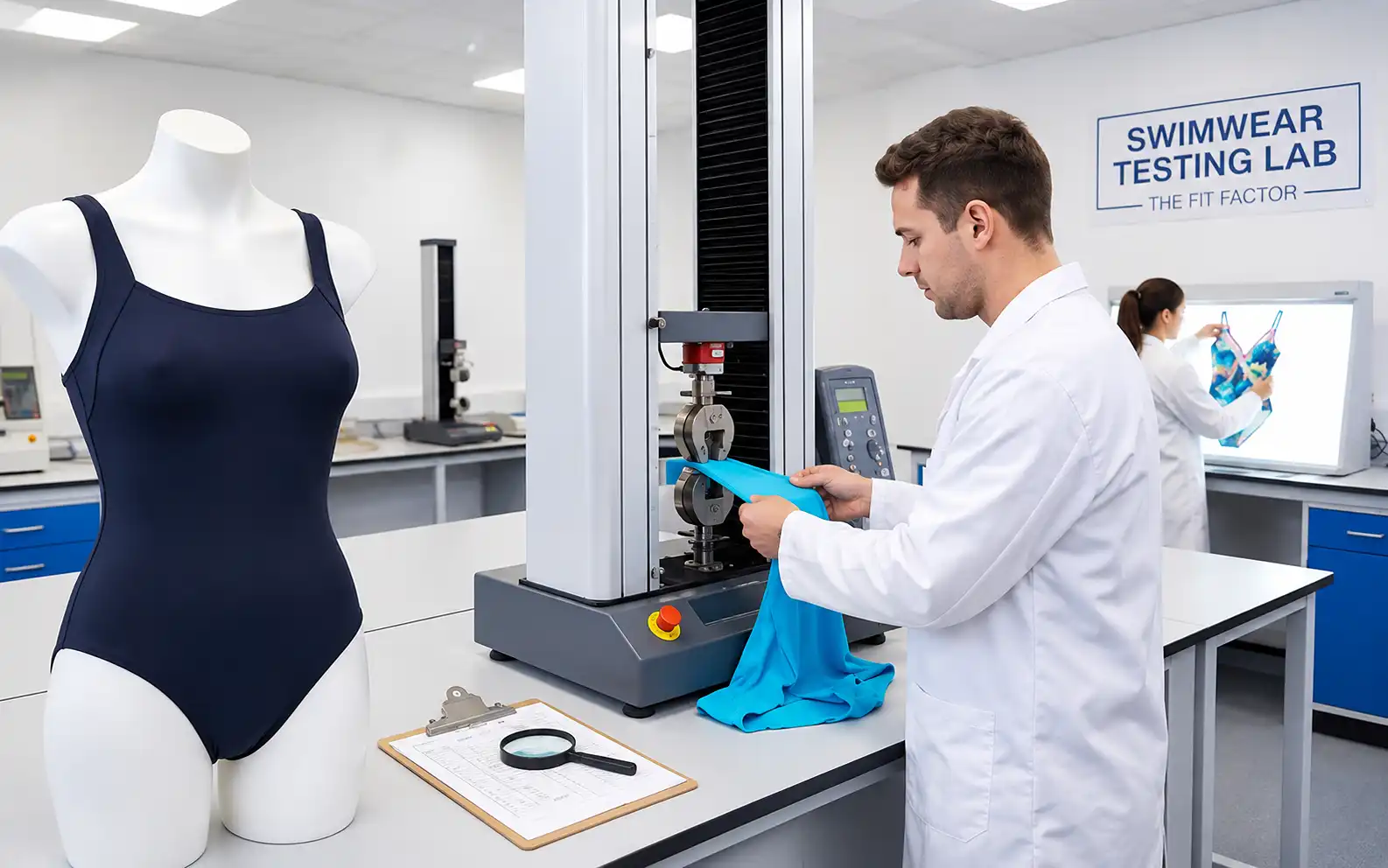
A spec sheet records agreed requirements. Testing shows whether a candidate fabric meets them. Use the following four checks before approval.
Keep a labeled reference swatch. Record test conditions so you can compare later fabric lots.
Chlorine Exposure
Request a pool-water colorfastness test, such as ISO 105-E03 or AATCC TM162. These tests measure color change under set conditions. Grade 4 can be an agreed target. It is not a universal pass mark.
Colorfastness does not show whether elastane keeps its stretch. For frequent pool use, request a separate chlorine-aging trial. Record the chlorine level, pH, exposure time, and cycles.