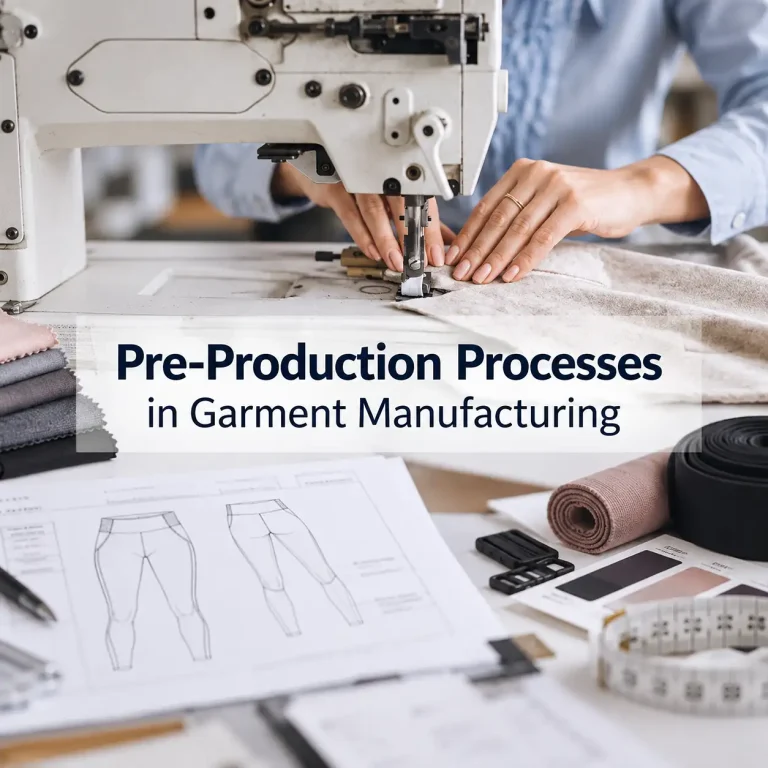
What Are Pre-Production Processes in Garment Manufacturing?
The process begins when a factory receives the buyer’s product requirements, whether through a design brief, tech pack, or initial concept. It ends when the required approvals are complete and the order is ready for bulk production.
Unlike cutting, sewing, and garment finishing, pre-production focuses on preparing and approving the requirements needed to begin those operations.
Typical Pre-Production Workflow
- Requirements Review
- Costing & Feasibility
- Pattern & Sampling
- Material Approval
- PP Sample Approval
- Production Planning
- PP Meeting & Production Release
These steps do not always happen in a fixed order. Material sourcing and sample development, for example, may run at the same time.
What Are the Key Pre-Production Steps in Garment Manufacturing?
1. Review Product Requirements and Technical Specifications

We review the tech pack, including flat sketches, measurements, fabric requirements, logo placement, and stitching details. We also consider how the garment will be used, since running and yoga leggings may need different levels of compression, coverage, or seam placement.
Next, we identify missing or conflicting information. For example, the size chart may specify a 70 cm inseam while the reference sample measures 68 cm. We clarify these differences with the buyer before they affect pattern development or production.
2. Confirm Costing and Manufacturing Feasibility
We assess whether the design can be produced consistently at the planned order quantity and within the target cost. Pricing depends on fabric consumption, trims, construction methods, and production complexity.
We also identify details that may cause problems in bulk. A heat-transfer logo may crack if it cannot withstand the fabric’s stretch, while lightweight mesh can pucker if the sewing settings are unsuitable.
If adjustments are needed, we discuss suitable materials or construction changes with the buyer before confirming the production method and cost estimate.
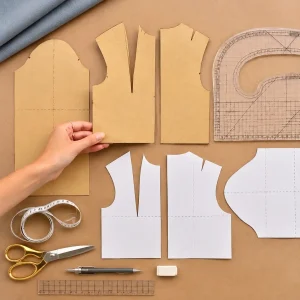
3. Develop Patterns, Samples, and Size Grading
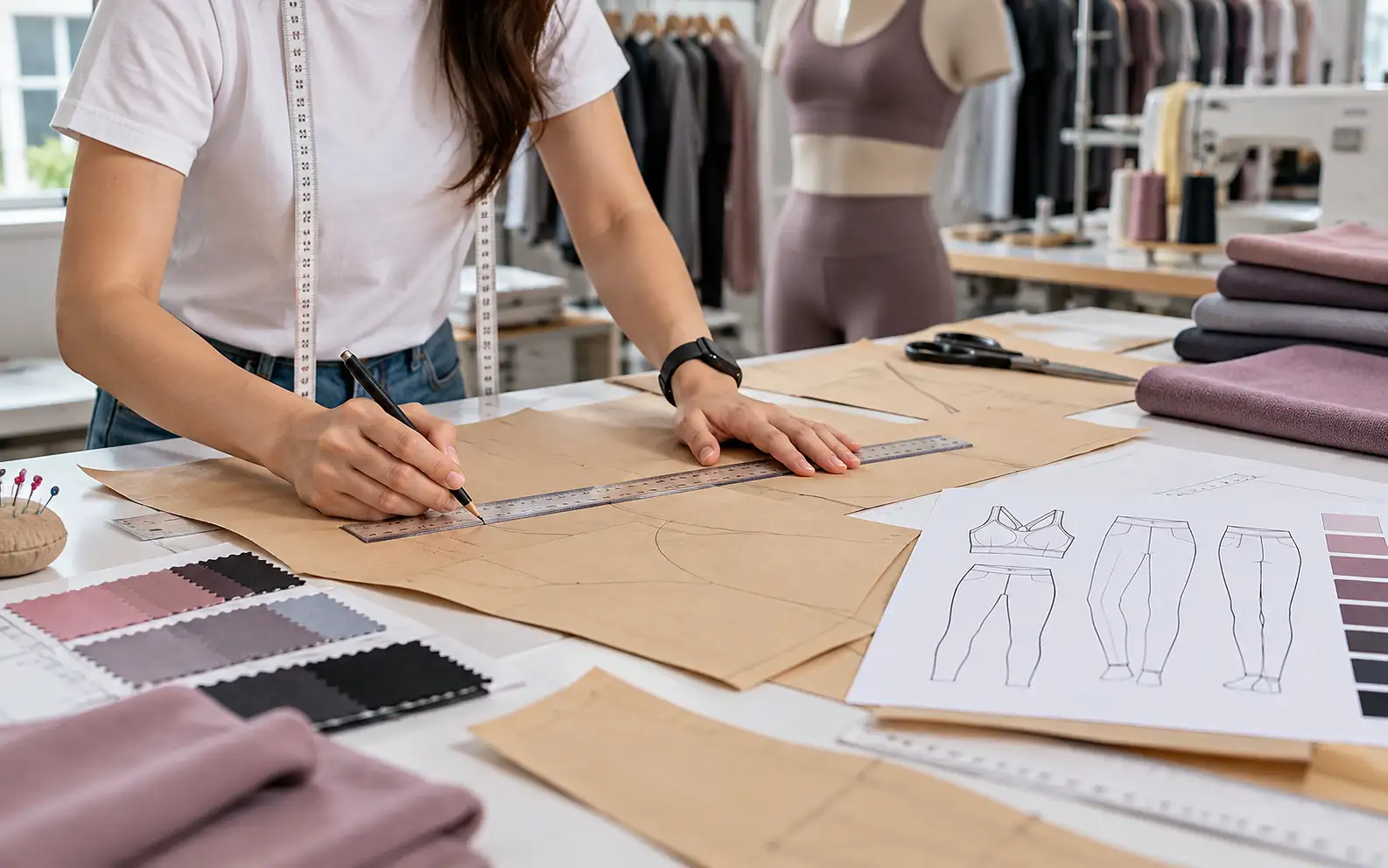
Our pattern maker develops the first pattern from the agreed specifications. We then make a fit sample in the selected base size and check its measurements and fit.
For leggings, this includes the waistband, crotch fit, inseam, and fabric coverage during movement. We revise the pattern based on feedback until the base-size sample is approved.
Next, we grade the pattern using the approved measurements and grading rules. ASTM D5219 provides standard terminology for body measurements used in apparel sizing. We may also make size-set samples to check fit across the required size range.
4. Source and Approve Fabrics and Trims
We confirm fabric specifications, including fiber content, GSM, width, color, and stretch requirements. Trims such as elastic, thread, labels, and logo applications are also checked against the approved requirements.
Material testing depends on the product. Common checks include shrinkage, colorfastness, stretch recovery, and pilling resistance. Fabric shrinkage can be evaluated using methods such as AATCC TM135.
Once bulk materials arrive, they are checked against the approved references and specifications. Any differences outside the agreed requirements must be resolved before the affected materials are used.
5. Prepare and Approve the PP Sample
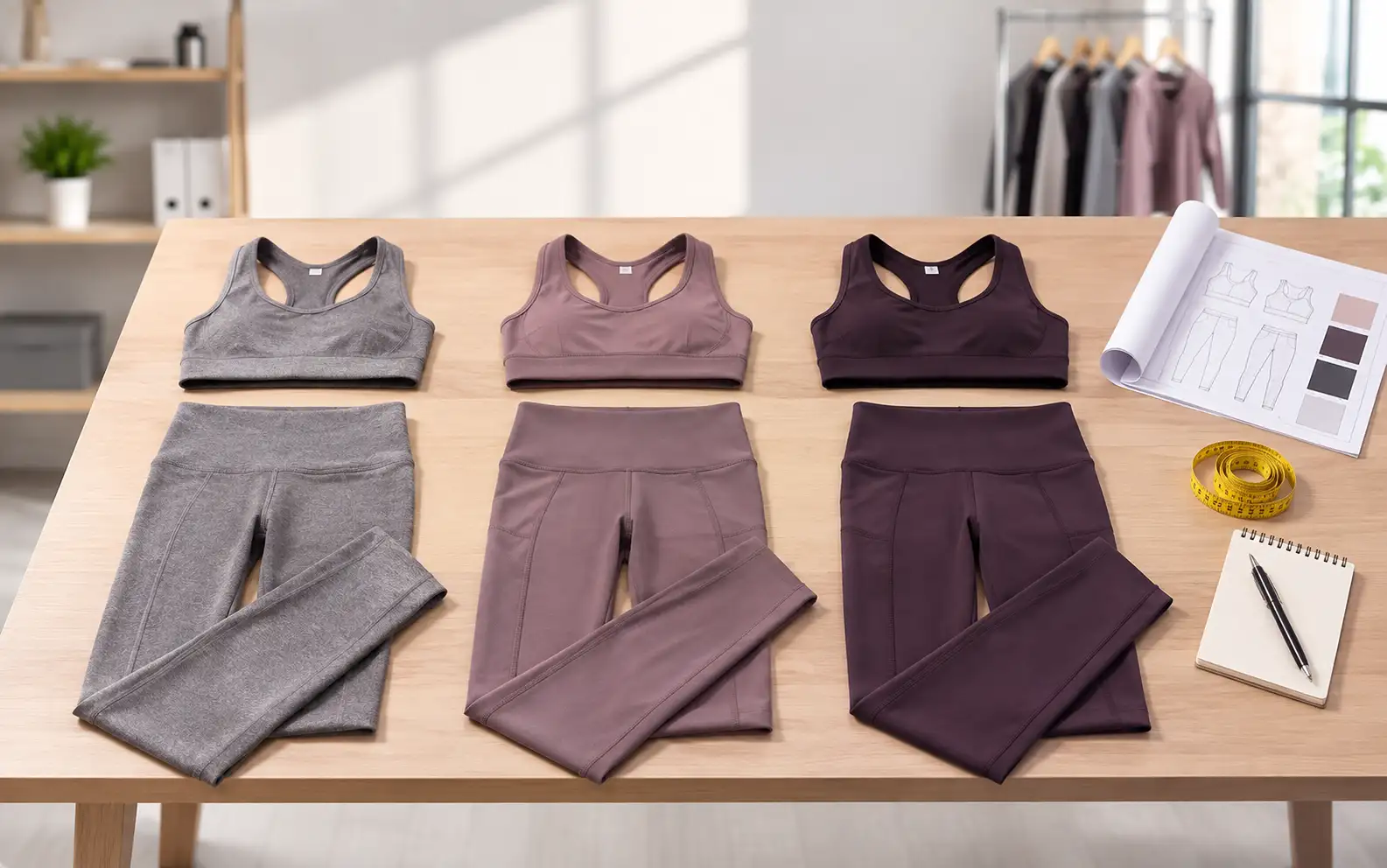
A pre-production (PP) sample confirms the garment design using approved production materials, trims, and construction methods. Unlike an earlier fit sample, it serves as a reference for bulk production.
We check the PP sample against the final specifications, focusing on:
- Measurements and construction
- Stitching and seam appearance
- Logo and label placement
- Overall garment finish
Required corrections are documented and approved before the affected work proceeds. The approved PP sample becomes a reference for production checks.
PP sample approval does not automatically mean the factory is ready to begin bulk production.
6. Plan Materials, Cutting, and Production
We check material quantities, stock availability, and delivery dates. Fabric requirements are calculated using the marker layout, fabric width, and expected cutting waste.
We break down the order by style, color, and size to prepare cutting quantities and batches.
Production documents are prepared for the relevant teams, including graded patterns, cutting instructions, sewing requirements, logo placement guides, and packing specifications.
For wholesale activewear orders, we also check line capacity and equipment availability to establish a production schedule based on confirmed resources.
7. Conduct the Pre-Production Meeting

The pre-production meeting brings the relevant teams together to review production readiness.
Merchandising confirms order details and buyer approvals. The technical team checks the approved sample and construction requirements, while production reviews the schedule and QC confirms inspection points.
The teams verify that everyone is using the same approved specifications. They also identify key production risks, assign responsibility, and review unresolved issues.
Issues that could affect the next production stage must be resolved before that work begins. Other items may remain open with a clear owner and deadline.
The meeting ends with a documented decision to release or hold the affected production work.
How Does a Factory Confirm Production Readiness?
After the PP meeting, the approved production documents must reach the teams responsible for cutting, sewing, and quality control.
The production team should have the latest patterns, specifications, and PP sample references. Outdated versions must be removed from use to prevent conflicting instructions.
Before the affected work begins, the factory also checks that the required materials are available and any blocking issues have been resolved.
Once sewing starts, the first completed pieces can be compared with the approved PP sample to catch differences before more garments are produced.
Buyers can ask the factory to confirm the planned start date, material readiness, and whether any unresolved issues could affect production.