Best Private Label Activewear Manufacturers Compared
| Manufacturer | Location | MOQ (Custom Private Label) | Product Specialty | Best For |
|---|---|---|---|---|
| Wearzio | Global sourcing network | 300–1,000 pieces per style for private label orders | Hybrid model: catalog-based private label + full custom OEM/ODM | Brands wanting flexibility between ready-catalog and full custom |
| Tack Apparel | Long Beach, California, USA | Around 50 pieces per style | Cut & sew, gym wear, hoodies, embroidery, screen printing | Startups testing small runs with US-based production |
| LuckPanther | Dongguan, China | 200–300 pcs | Yoga wear, compression wear, sports bras, leggings | Brands planning custom collections and repeat orders |
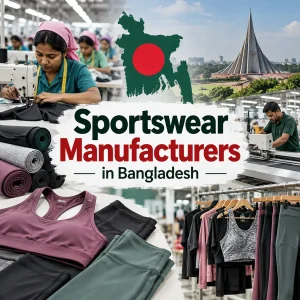
| Ananta Group | Dhaka, Bangladesh | Not publicly listed (large-scale focus) | Activewear, denim, outerwear, intimates, casualwear | Established brands needing large-volume, multi-category sourcing |
| Affix Apparel | Los Angeles, California, USA | 50 pieces (no strict MOQ policy) | Hoodies (specialty), leggings, sportswear, T-shirts | Small/emerging brands ships to US, Australia, UK, Canada |
| Activewear Bali | Bali, Indonesia (PT King Trading, since 1993) | 300 pieces combined per PO across mixed styles | Leggings, sports bras, studio/gym wear | Brands wanting fast turnaround with duty-free Bali sourcing |
| Aktive Apparel | Europe (multilingual support) | 500 pcs/style/color for full custom; 300 pcs/style/color using blank styles | Sustainable/eco-conscious fitness apparel | Brands prioritizing sustainability with EU-standard QC |
| AuraeFit | China (2,200 sqm facility) | As low as 5 pieces for startup orders | Leggings, sports bras | Very early-stage brands needing near-zero commitment |
| Cord Apparel | Missouri City, Texas, USA | Flexible/low (no fixed number published) | Gym wear, swimwear, underwear, T-shirts, leggings | US brands wanting one factory across multiple categories |
| Art Lethe | Europe | Around 100 pieces per style, flexible for long-term partners | Seamless sportswear (single-knit, no side seams) | Brands specifically targeting seamless leggings/tops in the EU market |
Suggested Reading:
1. Wearzio
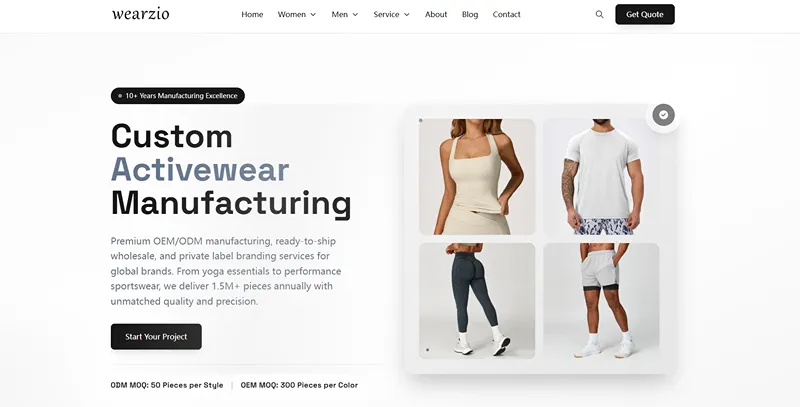
We spent time digging into Wearzio’s own numbers, and they’re worth sharing. If you’re comparing private label activewear manufacturers for your next collection, Wearzio’s track record is a good place to start.
The company was established in 2014 and has since delivered more than 150 million garments to over 500 global partners across Europe, America, Australia, and Southeast Asia. That’s over a decade in business, not a factory that popped up last year.
Here’s what stood out to us as we reviewed their setup:
- MOQ: 300–1,000 pieces per style for private label orders, which sits in the “serious brand” range rather than the true startup range.
- Certification: They hold ISO 9001 certification and use OEKO-TEX certified materials, so quality checks aren’t just marketing talk.
- Business model: Hybrid supplier. You can start with a catalog-based private label, then move into full custom OEM/ODM once you know what sells.
- Branding support: Woven labels, hang tags, packaging, and even screen or sublimation printing are handled in-house, per their private label services.
2. Tack Apparel
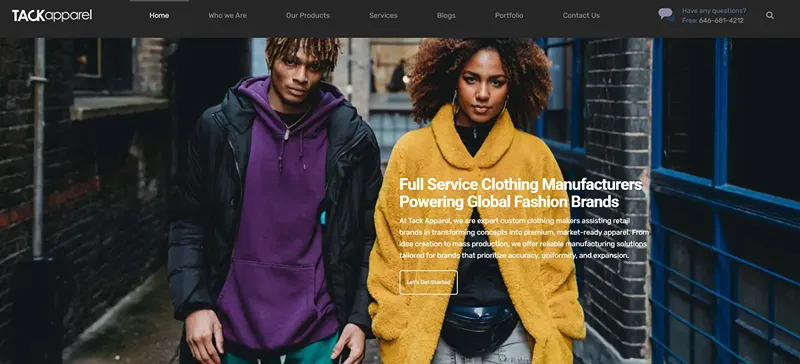
Tack Apparel solves a problem a lot of new brands run into fast: minimums that eat your whole budget before you’ve sold a single unit. Their MOQ sits at around 50 pieces per style, which is low enough to test a design without committing to a warehouse full of stock.
Being based in Long Beach, California changes the day-to-day experience too. No customs delays, no 6am calls to match a factory’s time zone, no waiting three weeks just to see a fabric swatch. For a US brand, that proximity alone can shave weeks off your launch timeline.
One detail we liked: a pre-production sample comes free with any confirmed order after deposit. Plenty of private label activewear manufacturers charge for every sample round, so this quietly saves you money before production even starts.
3. LuckPanther
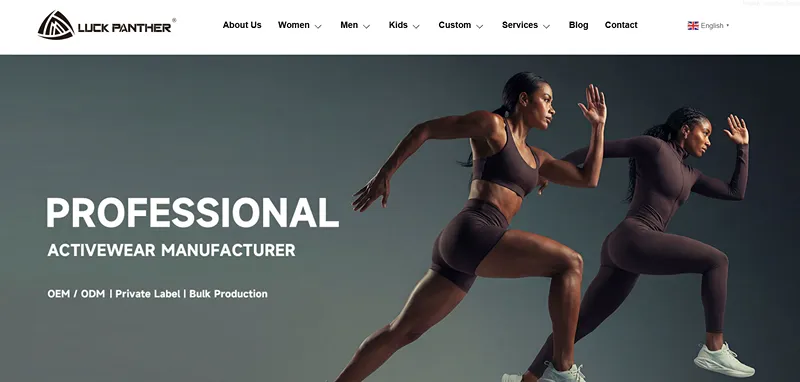
LuckPanther makes more sense when a brand already knows which styles it wants to keep selling. For repeat styles, the main production concern is keeping the approved standard consistent from one order to the next.
For a repeat legging, we compare the new production against the approved version. We check the fabric reference, garment measurements, waistband construction, seam placement, logo position, and color standard. A reorder should not become a new version of the same SKU.
This works better for brands with core styles that stay in the collection. These may include leggings, sports bras, or matching sets. It is less relevant for buyers testing many ready-made styles in very small quantities.
Best fit: Brands building core private-label styles that will be reordered.
Watch for: Any change in fabric, trims, or construction should be approved first. Do not replace the original specification without review.
4. Ananta Group
Ananta Group operates on a completely different scale than most names on this list. Founded in 1992, the group has grown to 8 companies with around 12,000 workers, producing well over a million garments a month across categories like activewear, denim, outerwear, intimates, and casualwear.
This isn’t a factory chasing small brands. Their client roster includes GAP, H&M, George, and Joe Fresh, which tells you the volume and consistency they’re built for. If you’re comparing private label activewear manufacturers by scale alone, Ananta sits near the top of that list.
A few numbers back this up. In 2021, Ananta began building its own integrated textile and apparel industrial park on 150 acres in Chittagong, a move that only makes sense if you’re planning for serious long-term volume.
If you’re already selling six figures a year and need a manufacturer who’s worked with GAP-level buyers, Ananta brings a kind of production discipline smaller factories can’t match.
5. Affix Apparel
Here’s what we noticed first when reviewing Affix Apparel: a lot of their public materials repeat the same three claims — no MOQ, LA-based, over a decade of experience — across nearly every page on their site.
Their stated minimum is 50 pieces per style, and that number shows up consistently across their private label, hoodie, and sportswear pages, not just buried in one spot. Consistency across a factory’s own materials is a small but real trust signal.
Unlike LuckPanther, which publishes specific certifications like ISO and SGS testing, Affix doesn’t list any third-party quality certifications on its public pages. That doesn’t mean their QC is weak. It means you’ll need to ask directly, request AQL inspection reports, or ask for references from current clients before committing to a bulk order. Their 10+ years in business and shipping to the US, UK, Australia, and Canada suggest real operational history, but we couldn’t independently verify order volumes or client names the way we could with Ananta’s disclosed retail partners.
6. Activewear Bali
Activewear Bali makes an unusual claim right. Their MOQs aren’t the lowest in the market, and they say that’s on purpose. Custom and catalog styles can share one purchase order, with a combined MOQ of 300 pieces, and swimwear can be added to that same order at just 30 pieces per style once the threshold is met.
Unlike a typical sportswear manufacturer in China, which usually sources fabric domestically at scale, Activewear Bali claims to operate under a Bonded Tax Free Facility with 85+ in-stock colors imported from Korea and the US. That should mean lower import duty passed to buyers, but they don’t publish actual pricing or landed-cost comparisons anywhere, so you’ll need to request a quote to confirm the advantage holds up.
Our take: the 3-to-5-week bulk production window is competitive for the region, and the combined-MOQ structure is genuinely useful if your line spans both activewear and swim. Just don’t take the tax-free sourcing claim at face value — ask for a landed-cost breakdown before you assume it beats a China-based factory on price.
7. Aktive Apparel
Aktive Apparel positions itself differently — less “we’re the cheapest” and more “we speak your language, literally.” That focus on client communication shaped most of what we found reviewing them.
Here’s what stood out during our review:
- Communication setup: Support in seven languages, plus workflow compatibility with Slack, Asana, Basecamp, WhatsApp, and WeChat. For a brand managing production across time zones, this often matters more than shaving a few cents off unit cost.
- Sourcing transparency: Vague. Most factories on this list name a city — Long Beach, Dongguan, Bali. Aktive’s materials mention meeting European and US quality standards but never name a specific facility or country of manufacture. That’s a gap worth asking about directly.
- Client fit: Built for brands planning a season ahead, not reacting to a trend or restocking fast.
One thing to note when vetting private label activewear manufacturers: If a company is clear about communication tools but vague about factory location, ask them directly. Don’t assume anything. Ask where the garments are actually made before you get attached to the pitch.
If leggings or yoga wear make up most of your line, it’s worth comparing more China-specific options. See our breakdown of the top yoga wear suppliers in China and China leggings manufacturers for more choices at different MOQ tiers.
8. AuraeFit
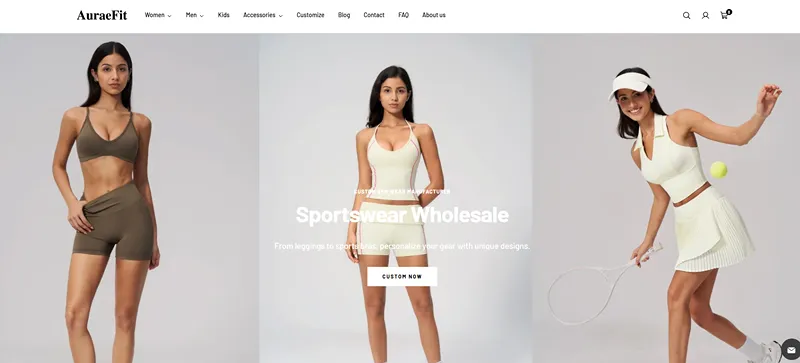
AuraeFit’s biggest selling point is the number “5” — as in, 5 pieces per order. Their homepage advertises a 5-piece minimum, their FAQ page states the MOQ starts at 10, and 100 pieces per style as the more realistic entry point for private label work.
What we could confirm: they’re a China-based factory running a 2,200 square meter production facility, and their specialty is narrow and focused. That specialization can work in your favor if those two categories anchor your collection.
Here’s what stood out during our review:
- Speed: Standard orders are typically completed within about 2 weeks, among the fastest turnarounds on this list.
- Risk level: Even at the more realistic 100-piece tier, this is still lower-commitment than most factories here.
- Category focus: Strongest in leggings and sports bras, not a full activewear catalog.
9. Cord Apparel
Cord Apparel has a smart setup. Small runs and samples stay in Missouri City, Texas. Bigger reorders can move to their international network for lower prices. This gives you close US oversight at first. Then you get cheaper pricing once you scale up. One thing to ask them: how do they match dye lots between the two? You don’t want a reorder to come back a slightly different color.
Their catalog is wide too. They make T-shirts, hoodies, swimwear, leather goods, and activewear, all under one roof. That’s handy if you’re building a yoga or leggings line. Fewer vendors means less to manage. This works whether you’re launching in the US, or you’re chasing the best yoga clothes Australia shoppers actually want.
Our verdict: this is a strong pick if US-based quality control matters for your first run. Just confirm one thing before going all in: how they keep reorders consistent.
10. Art Lethe
Art Lethe builds on seamless knitting. It’s not just an add-on for them. This matters a lot. Cut-and-sew leggings use side seams. Those seams can chafe. They can wear out fast. Seamless construction knits the whole garment in one tube. No seam means nothing to break down mid-workout. This fits right into current quick dry sportswear trends.
Customers want lighter builds now. They want seam-free designs, not bulky panels. Just make sure Art Lethe runs real seamless knitting machines. Don’t settle for tighter stitching dressed up as “seamless.”
A true seamless line lets you request zone compression too. Think of a firmer waistband. Think a lighter knit at the thigh. No extra seam needed. Ask for a swatch card before you lock your tech pack (not to be confused with seamless bonding, a different technique that fuses panels without stitching). It should show knit density across different zones, not just one fabric sample.
Verdict: Best for technical seamless activewear, especially yoga and compression pieces. Ask for: a zone-compression swatch and their current knitting gauge range.