
What Should Sample Revision Feedback Include?
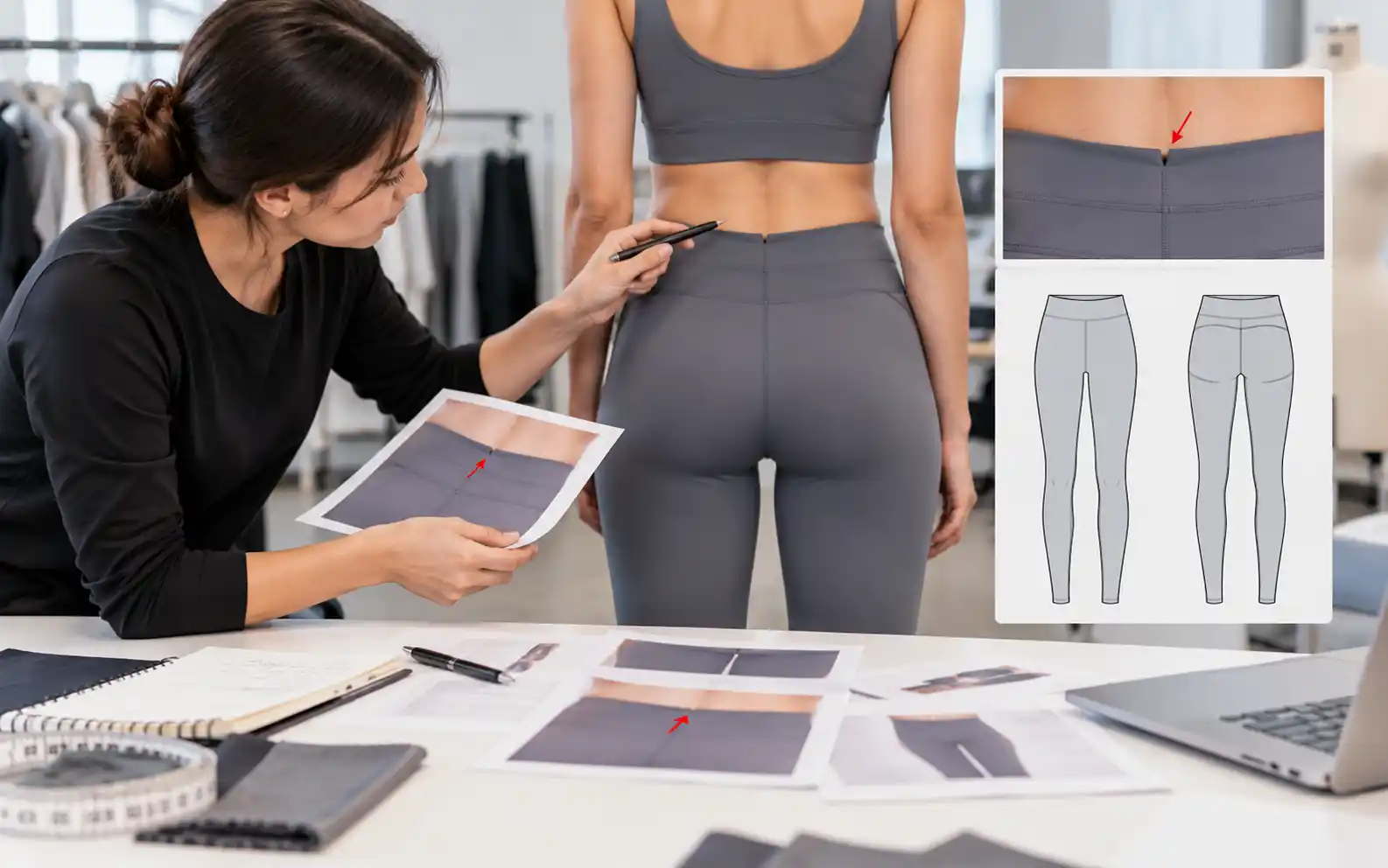
A clothing sample revision note should include five things: the problem area, the problem, the required change, a visual reference, and any approved details that should remain unchanged.
Here is an example using a leggings sample with a gap at the back waistband:
Include | Example |
Problem area | Waistband |
Problem | Gaps at center back |
Required change | Reduce back waistband width |
Reference | Marked fit photo |
Keep unchanged | Front rise and waistband height |
Problem area. Name the exact location. Use the same part names as your tech pack, such as waistband, front rise, armhole, or inseam.
Problem. Record the visible issue, not a general impression.
Required change. State the adjustment and add a measurement when known.
Reference. Add a marked fit photo when the problem is easier to show than describe. Number the photo if you have several revision comments.
Keep unchanged. Record details that are already approved. A pattern adjustment can affect nearby measurements or fit points, so this helps the factory understand the boundary of the revision.
How to Give Clear Revision Comments
A clear sample revision comment should identify the exact problem, describe when it appears, and give a measurable change when possible. The goal is to give the pattern maker something they can check on the next sample.
Describe What You See and When It Happens
Avoid comments based only on general fit or feel. Describe the visible problem instead.
- ❌ Neckline looks weird.
- ✅️ Neckline stands away from the body at the front.
- ❌ Sleeves feel tight.
- ✅️ Sleeves pull across the upper arm when raising both arms.
- ❌ Leggings do not fit well.
- ✅️ Front crotch pulls when squatting.
For activewear, movement matters. If a problem appears only when squatting, bending, sitting, or raising the arms, include that movement in the comment. Use the same body measurement definitions between sample rounds.
If the issue appears only on one side, record that too. “Left armhole” and “both armholes” may require different pattern checks.
Make the Revision Measurable
Replace words such as “slightly,” “a little,” or “more” with a measurement when you know the required change.
- ❌ Make the front rise slightly higher.
- ✅️ Increase the front rise by 1 cm.
If you do not know how much to change, do not guess. Tell us the fit result you want instead. For example, “the rise should sit at the belly button.” Our pattern makers can review the adjustment and confirm the direction with you before moving forward. We would rather check the revision with you than make you guess.
Separate Fit, Fabric, and Construction Problems
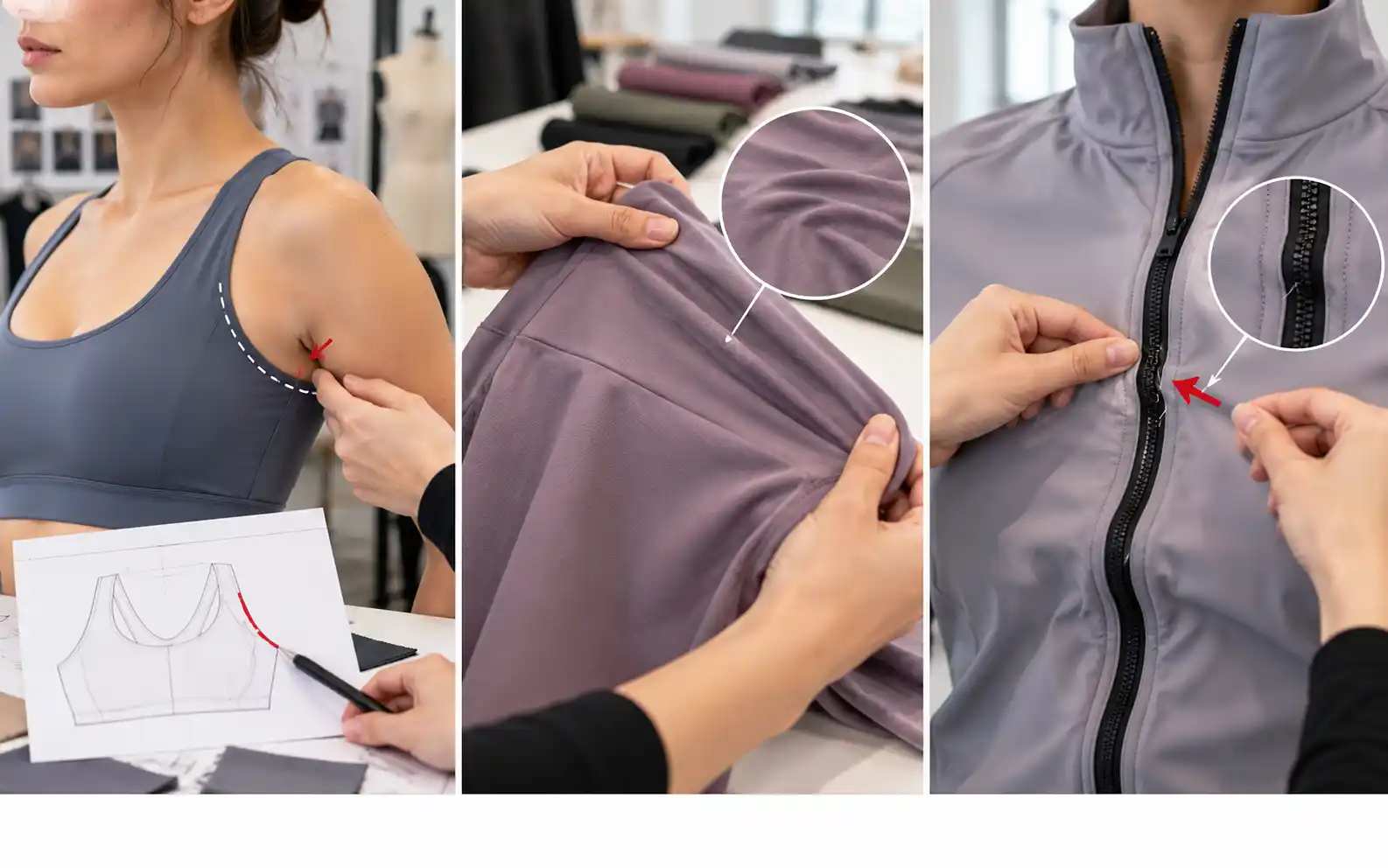
Before asking the factory to make a revision, check what is actually causing the problem. A similar-looking issue may come from the pattern, fabric, or construction, and each needs a different response.
Problem Type | Sample Issue | What to Check |
Pattern | Sports bra armhole cuts into the underarm | Armhole shape and pattern balance |
Fabric | Yoga top loses its shape after wear | Fabric recovery and stability |
Construction | Jacket zipper area looks wavy | Sewing tension and zipper application |
For example, a wavy zipper does not automatically mean the front panel needs to be reshaped. The first check should be whether the zipper application or sewing tension is causing the distortion.
We use this check before deciding what to revise. It helps avoid changing the pattern when the real problem is somewhere else.
If you cannot identify the cause, mark the issue on a photo and describe what you see. The factory can review whether the pattern, material, or sewing process needs attention.
Show the Factory What Should Not Change
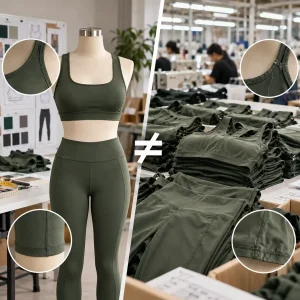
A good revision comment should tell the factory what to change and what has already been approved.
For example:
A pattern or construction change can affect nearby areas, so keep approved points visible on every revision sheet.
You can use a simple format:
Change: Move strap position 1 cm inward.
Approved: Neckline depth, underband position, body length.
After each sample review, add newly approved details to the list. Do not remove earlier approvals unless you decide to revise them again.
In our sample development, we also record approved points before the next sample starts. This gives our pattern and sample teams the same reference when working on the next revision.
How to Organize Multiple Sample Revisions

When a sample has multiple revisions, keep every comment in one master file, assign each comment a number, and track its status from one sample round to the next.
Number Every Comment
Use a simple comment ID such as C01, C02, C03. Keep the same ID until that issue is closed.
No. | Area | Revision | Status |
C01 | Bra strap | Move inward 1 cm | Open |
C02 | Increase opening width | Approved | |
C03 | Sleeve hem | Correct wavy stitching | Recheck |
The comment number gives the buyer and factory one reference. Instead of searching through old messages, both sides can refer directly to “C03.”
Keep One Master Revision File
Do not split final revision instructions across email, chat, voice notes, and separate photos.
Use one Excel sheet or shared document and name each version clearly, for example:
Style123_Sample2_Revision
If a revision changes during a chat or call, update the master file so both sides are working from the same version. Keep previous comments rather than deleting them so you can see what changed between sample rounds.
Track What Is Still Open
Use a simple status such as Open, Approved, or Recheck.
When the revised sample arrives, review it against the same comment numbers and update the status. On our side, we use these references when checking revisions with the sample team before the next round starts.