Choosing seamless vs seamed leggings depends on your design, fit requirements, and how much customization your brand needs.
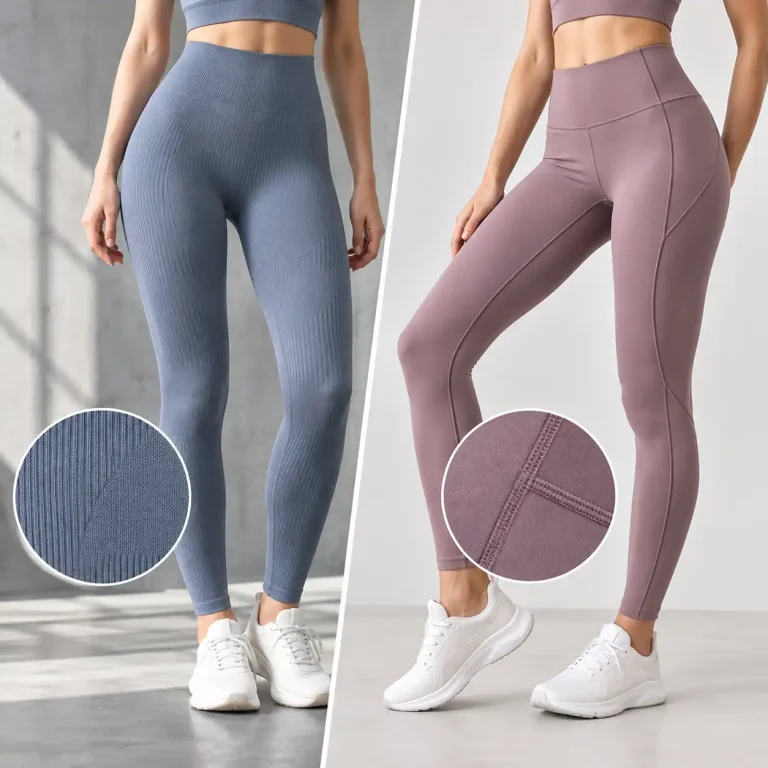
Seamless leggings use knitted structures to create shaping, texture, and compression zones with fewer sewn seams. Seamed leggings use cut fabric panels, making it easier to adjust patterns, add pockets, or combine different fabrics.
The tricky part? A design that works well with cut-and-sew production may need major changes to become seamless. Not every leggings factory has the equipment or skills for both.
Table of Contents
Seamless vs Seamed Leggings: Key Differences
For brands sourcing leggings, the main differences come down to production methods, design limits, and quality checks.
Factor | Seamless Leggings | Seamed Leggings |
Manufacturing | Circular knitting with finishing and assembly | Fabric panels cut and sewn together |
Fit & Shaping | Controlled through knit zones and yarn tension | Controlled through patterns, seams, and fabric stretch |
Design Flexibility | Knit textures and compression zones | Pockets, shaped panels, and fabric combinations |
Yarns must suit the knitting equipment | Wider choice of stretch fabrics | |
Affected by yarn supply and machine setup | Affected by fabric minimums and cutting needs | |
Knit defects, zone placement, size consistency | Seam strength, panel alignment, measurements |
One detail worth checking is the actual seam construction. Seamless does not mean completely seam-free. Some styles still have sewn seams at the gusset or other joining points. Seamless knitting is also different from seamless bonding, which joins fabric using heat and bonding films rather than traditional stitching.
Seamed leggings are not lower in quality simply because they have more seams. Fabric recovery, seam strength, and pattern accuracy matter more than seam count alone.
Our advice: Ask your manufacturer for a construction sample before approving the design. Check the inside of the leggings, especially the gusset, waistband, and joining seams. Product photos rarely show these details clearly.
How Customization Differs Between Seamless and Seamed Leggings
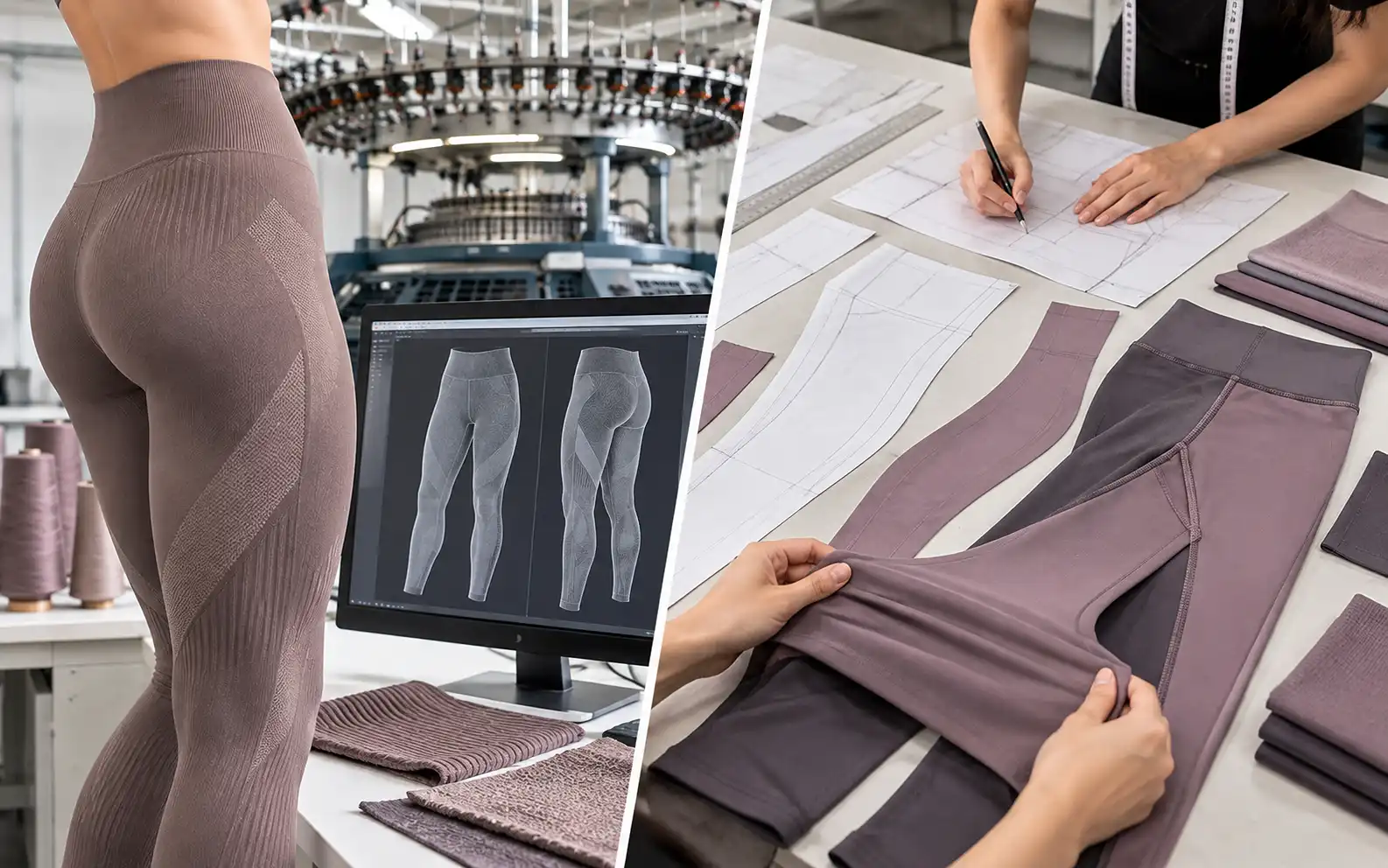
Seamed leggings are usually easier to modify, while seamless leggings require changes to the knit structure for many design adjustments.
Seamless Leggings
Compression zones, ribbed waistbands, and knit textures are built into the knitting program. Moving a compression zone may also change how the fabric stretches around the hips or thighs.
Even a small adjustment can require changes to the knitting program and a new sample to check the fit.
Our tip: Confirm the placement of compression zones and knit textures before sampling. If you request changes later, ask the factory which other areas of the garment may be affected.
Seamed Leggings
With cut-and-sew construction, we can adjust individual pattern pieces. For example, changing the crotch curve or waistband height does not always require a complete redesign. We still check how each change affects the overall fit.
When adding contrast panels, we check the stretch and recovery of each fabric. If one panel stretches less than the others, it can create unwanted tension around the hips or thighs.
Size grading also needs separate checks. We adjust key measurements across sizes rather than increasing every pattern piece by the same amount.
Suggested Reading: What’s the Difference Between Athletic Leggings and Regular Leggings?
Which Leggings Should Your Brand Choose?
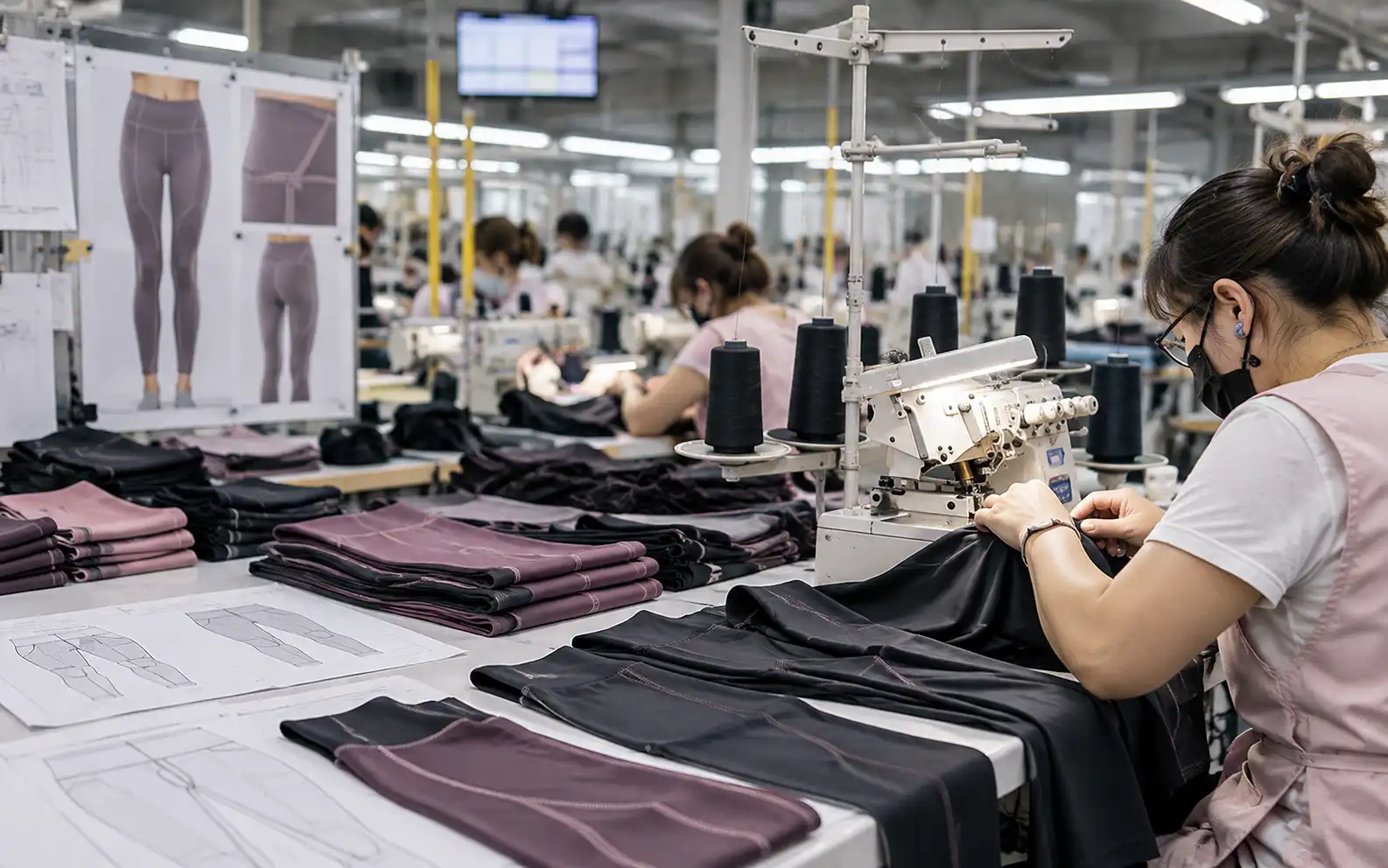
Seamed leggings are often easier to develop with a custom sportswear manufacturer, especially when your brand expects several fit revisions or wants to use existing stretch fabrics. Seamless leggings may be a better fit for designs that need custom knit structures, provided your manufacturer has the right equipment.
Your Production Plan | Better Starting Point | What to Confirm |
Several rounds of fit revisions | Seamed | Pattern changes and sample approval process |
Zoned compression design | Seamless | Knitting capability and zone placement |
Using available stock fabrics | Often seamed | Fabric availability and cutting needs |
Custom knitted patterns | Seamless | Knitting program and yarn compatibility |
Different compression levels across sizes | Either | Compression targets and fit testing for each size |
Before You Place an Order
We recommend confirming three details before moving into production:
- Factory capability: A China leggings manufacturer should be able to develop the required knit structure or pattern. If production is outsourced, confirm who approves samples and manages quality checks.
- MOQ by color and style: For wholesale activewear orders, ask what drives the minimum order. Seamless production may depend on yarn availability and knitting setup. Seamed production often depends on fabric and trim minimums. Request separate MOQ details for each color and design.
- Bulk consistency: Keep an approved sample with confirmed measurements and construction details. For bulk checks, compare key measurements and stretch recovery across sizes, not just the garment’s appearance.

Frequently Asked Questions
No. Each construction needs different technical details. Seamless tech packs should specify yarns, knit zones, and compression placement. Seamed leggings need pattern measurements, panel details, and stitching requirements. Both still need size charts and fit specifications.
Ask for proof of custom knitting development, not just catalog samples. Share a design with specific compression zones or knit textures. Ask the factory to explain how it would produce them and show similar work. Changing colors or sizes alone does not prove original development capability.
Yes, if the factory's MOQ and customization options fit your order. Existing seamless styles with limited changes may be easier to source in small quantities. Fully custom knit structures can require higher minimums. Ask which design changes are possible without developing a new knitting program.
Final Thoughts
The best construction is the one your manufacturer can develop and reproduce consistently. Before committing to a design, make sure its fit, materials, and construction can meet your production requirements.
Still deciding between seamless and seamed leggings? We help you identify possible design limits and choose a practical development approach before sampling. Get in touch with us now.
Chelsea Lin
Chelsea Lin is an activewear production specialist with over 10 years of experience in sportswear manufacturing, product development, and quality management. She specializes in leggings, yoga wear, sports bras, and custom activewear development.
Her expertise covers fabric evaluation, technical development, sampling, production management, and AQL-based quality inspections, helping brands improve material selection, garment performance, and production consistency.
- Pattern Making in Clothing: Process, Fit, and Sizing November 7, 2026
- Hoodie Manufacturers USA: 10 Suppliers Compared November 6, 2026
- Where Is Lululemon Made? What Startups Can Learn November 6, 2026
- 10 Clothing Manufacturers in Vietnam to Know November 5, 2026
- Polyamide vs Polyester Swimwear: A Sourcing Guide November 5, 2026
Our Fact Checking Process
We prioritize accuracy and integrity in our content. Here's how we maintain high standards:- Expert Review: All articles are reviewed by subject matter experts.
- Source Validation: Information is backed by credible, up-to-date sources.
- Transparency: We clearly cite references and disclose potential conflicts.