List of 10 Sportswear Manufacturers in USA
| Manufacturer | Production Focus | Manufacturing Model | Better Fit For |
|---|---|---|---|
| Augusta Sportswear Brands | Teamwear & performance uniforms | Sublimation and decorated teamwear programs | Teams, schools & uniform programs |
| ARGYLE Haus of Apparel | Custom apparel & athletic wear | U.S. development + cut-and-sew manufacturing | Brands needing close product development |
| Plucky Reach | Custom cut-and-sew apparel | LA development & production network | Brands developing custom sportswear |
| Seam Apparel | Custom sportswear | Development + cut-and-sew production | Brands needing custom fit & construction |
| US Clothing Company | Contract garment production | Buyer-supplied materials + contract sewing | Brands with established material sourcing |
| Full Speed 100 | Multi-category apparel | Full-service cut-and-sew + sourcing | Mixed sportswear collections |
| Lefty Production Co. | Activewear & athleisure | Development + specialized cut-and-sew | Custom stretch & fitted sportswear |
| Rajco USA | Teamwear & performance uniforms | Custom sports uniform production | Clubs, teams & performance uniforms |
| SCORE Sports | Custom team uniforms | Custom uniform programs | Leagues, schools & team orders |
| Royal Apparel | Knit athletic apparel | U.S. manufacturing + private label | Performance basics & training layers |
1. Augusta Sportswear Brands
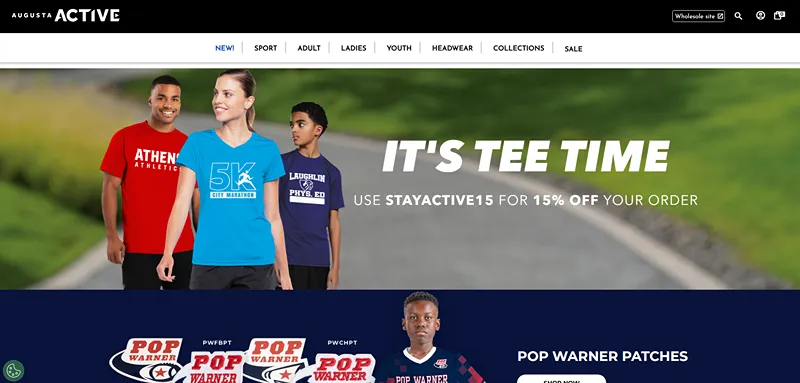
Here’s what stood out in our review. Augusta offers a sublimation program called FreeStyle. It has a “Turbo” option that promises decorated goods in just 5 days. Sublimation works by using heat to push dye deep into the fabric. That’s why the colors last so long on performance gear. We also found a one-year warranty against manufacturing defects.
Our concerns? Pricing isn’t shown online. You’ll need to go through a dealer or ask for a quote directly. That’s one more step compared to other sportswear manufacturers in USA with clear wholesale pricing. Also, Augusta’s style still leans team-uniform, not fashion-forward. So if you’re building a lifestyle sportswear label, it might feel more “school gym” than “studio.”
Our verdict: Augusta is a strong pick if speed and durability matter more to you than trendy design. If you’re launching a fashion-first activewear brand, it’s still worth a call. Just come ready with your own design specs, since their strength is execution, not creative direction.
2. ARGYLE Haus of Apparel
ARGYLE is more relevant when U.S. production has a clear value for the product. We would consider it for fitted activewear that may need close development control. A basic style with an approved pattern gives buyers less reason to pay for domestic production.
We would also test the factory with the hardest style in the collection. For a line with leggings, sports bras, and basic tops, start with the legging or bra. These products expose problems with stretch fabric, seam control, and fit faster than a basic top.
Do not judge the factory only by whether the first sample looks good. Check how it handles corrections. A capable factory should identify the cause of a fit or construction problem and apply the change without creating a new problem elsewhere.
Best fit: Brands that need U.S. production for technically demanding activewear.
Our check: Start with the product most likely to expose production weaknesses.
3. Plucky Reach
Plucky Reach is worth considering for sportswear with more complex construction. But we would not judge its capability from the product range alone.
Before placing an order, we would ask for a recent bulk-production sample with similar construction. Then inspect the inside as carefully as the outside. Look for puckering around curved seams, uneven stitching at seam intersections, twisted panels, and poor finishing around openings.
These problems often appear where several operations meet. A clean product photo may not show them. A finished production sample will.
We would also compare two or three pieces of the same style. If the construction looks different between pieces, we would resolve that before approving production.
Our decision would depend on the quality of comparable bulk work, not the number of sportswear categories it says it can produce. We would use the same standard when comparing Plucky Reach with Chinese sportswear manufacturers: ask for recent bulk work that is close to your own construction.
4. Seam Apparel
For Seam Apparel, we would pay more attention to sample-to-bulk consistency than to the number of customization options listed on the website. This is especially important for leggings and fitted sportswear, where small production changes can affect fit.
In projects we have handled, a 1–2 cm change in waistband or hip measurements can already change how a legging feels on the body. Fabric tension and stitching can create additional variation even when the pattern stays the same.
That is why we would ask Seam Apparel to confirm three points before bulk production:
- What measurement tolerance is used during final inspection?
- Is bulk fabric checked against the approved sample?
- How are stretch, seams, and finished measurements inspected?
These questions are also useful when comparing U.S. suppliers with China leggings manufacturers. Location matters less than whether the factory can reproduce an approved sample consistently.
5. US Clothing Company
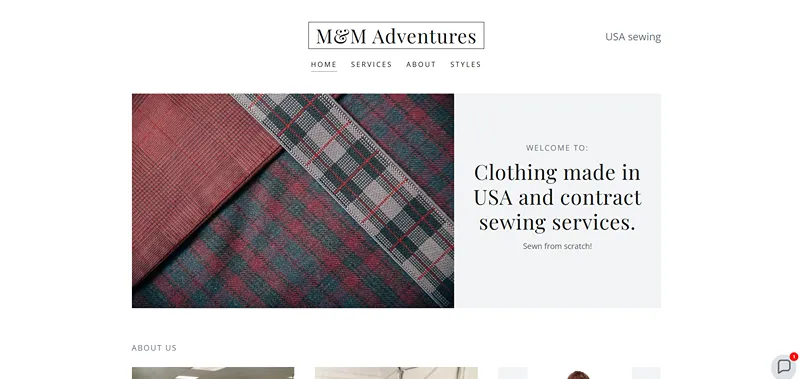
US Clothing Company is a better fit for buyers who already control their materials and product specifications. Its contract sewing model puts more sourcing responsibility on the buyer.
Before placing an order, we would define who supplies the fabric, trims, labels, and decoration. We would also define who approves each item before it reaches the factory. This prevents production from stopping because a material is late, incorrect, or not approved.
Fabric needs extra attention. We would confirm usable width, shrinkage, color, and required quantity before cutting. If the usable width changes, the original fabric consumption may no longer work.
This model can work well for brands with established material suppliers. Buyers comparing private label sportswear manufacturers should check how much sourcing support is actually included. US Clothing Company is less practical if you expect one factory to manage most of the supply chain.
For contract sewing, the sewing price is only one part of the sourcing decision. Buyers also need clear responsibility for every material before production starts.
6. Full Speed 100
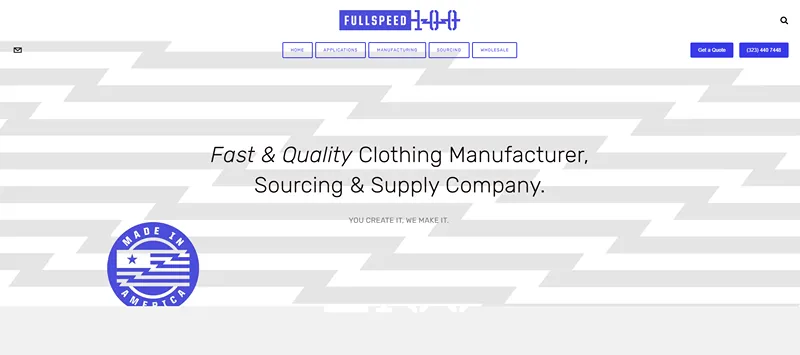
Full Speed 100 is a broad cut-and-sew operation rather than a sportswear-only specialist. We see that as useful for brands building mixed collections. A range with training wear, casual pieces, and outerwear may be easier to manage through one production partner.
The limitation is specialization. Performance garments can require very different production skills. A lightweight running shell may need seam taping and ventilation panels. A training short may need stretch binding, mesh inserts, and secure pocket construction. Full Speed 100 lists these technical capabilities, but we would still verify recent work close to the planned product.
For us, the company looks stronger as a multi-category production partner than as a factory we would automatically choose for one highly specialized sportswear category. Brands developing a broad collection may find that flexibility useful. Buyers developing one technical product should judge the relevant production experience first.
7. Lefty Production Co.
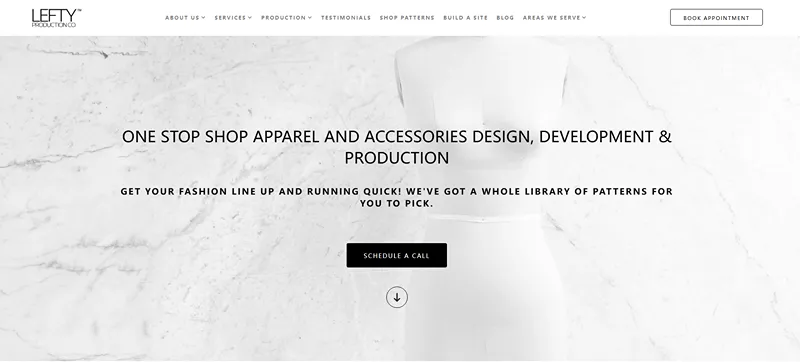
Lefty Production Co. lists pattern making, grading, sample making, fabric sourcing, cutting, and sewing within its production capabilities. The CFDA directory also identifies flatlock activewear, leggings, bike shorts, and bra tops among the products it can handle. This combination matters because development and sewing decisions for stretch garments need to work together.
For buyers researching what makes quality activewear different from regular clothing, we would pay particular attention to Lefty’s flatlock capability. Flat seams can reduce bulk and skin friction in close-fitting garments, but buyers should still inspect stitch stretch and seam recovery on the actual sample.
We also see its in-house development steps as useful for brands responding to activewear trends 2027, especially when new silhouettes require repeated fit adjustments before production.
Our suggestion is to send Lefty a complete tech pack and evaluate the first sample against it. The CFDA Production Directory can be used to verify its listed production capabilities.
8. Rajco USA
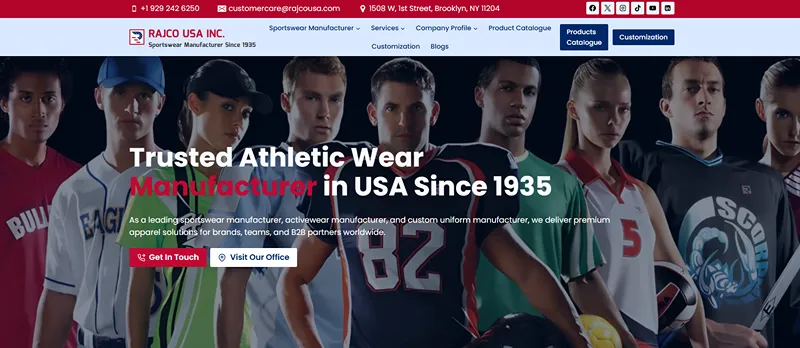
Rajco USA’s fabric specs tell us more than a general service list. Recent products use 140 GSM interlock and KK mesh and 195 GSM Micro Dry-Fit polyester. Its rugby uniforms also use 92% recycled polyester and 8% spandex.
Based on our production experience, these fabrics are a good match for teamwear and performance uniforms. They work well for products where breathability, printing, and team colors matter. We would look at Rajco for soccer, basketball, rugby, or club uniforms first.
Buyers comparing sportswear manufacturers in USA should also look at product experience. If you need brushed leggings or compression yoga wear, ask Rajco for samples of these exact products. Making a good sports jersey does not always mean a factory can make a good pair of leggings.
9. SCORE Sports
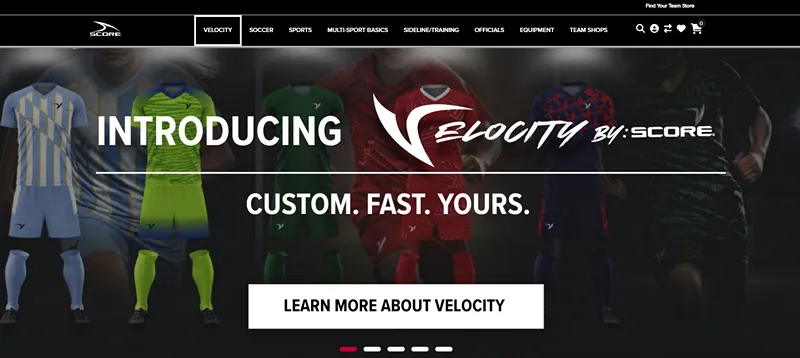
The detail we would watch most with SCORE Sports is production timing. Its custom program lists a 50-player minimum per item and color. Production normally takes 4–5 weeks after artwork and sample approval. SCORE also warns that timing can change during busy seasons.
This tells buyers something important. When comparing sportswear suppliers in USA, do not compare lead times as a single number. Ask when the production clock starts and what must be approved first.
In our experience, teamwear orders often become late before sewing even begins. Logo changes, player numbers, sizing, and artwork approval can easily add extra days. For a league with a fixed opening date, we would build at least 2–3 weeks of buffer beyond the quoted production time.
10. Royal Apparel
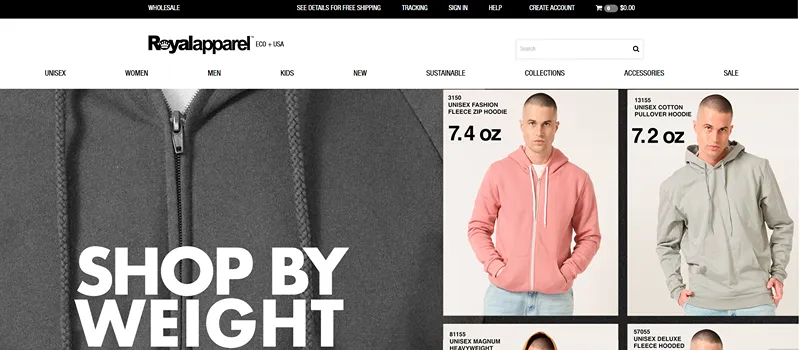
Royal Apparel is a stronger choice for knit sportswear basics than highly engineered performance apparel. Its fabric range is built heavily around jersey, fleece, cotton/poly blends, RPET, and other knit materials.
That production base fits products such as performance tees, warm-up tops, sweatshirts, and lightweight training layers. One useful reference is its 4.4 oz polyester performance tee. The construction uses a rib collar and double-needle hems. This is closer to performance basics than complex technical sportswear.
We would be more cautious with products that depend on bonded construction, complex support structures, or several technical materials in one garment. We found less public evidence that these are core Royal Apparel production areas.
Royal Apparel has a credible U.S. manufacturing base, with the clearest fit in knit-based athletic apparel. It is worth shortlisting for wholesale activewear such as performance basics and training layers. We would require stronger production evidence before assigning highly engineered sportswear.
When Does U.S. Sportswear Manufacturing Make More Sense?
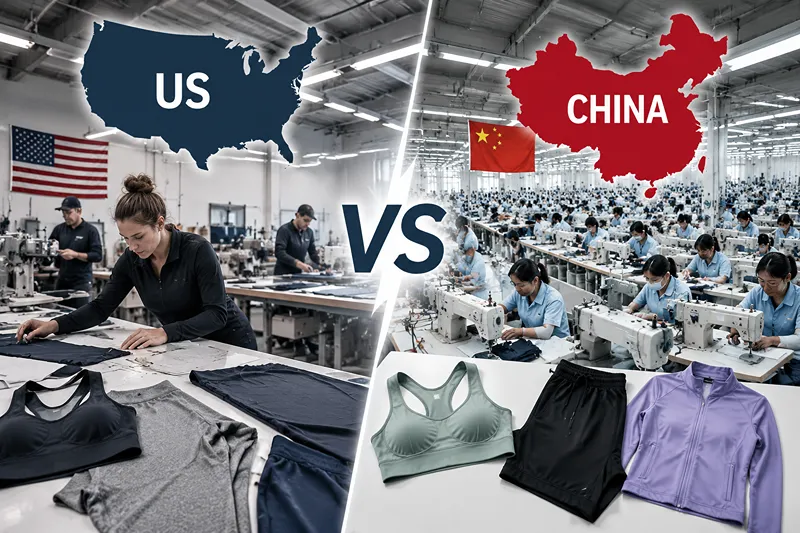
U.S. manufacturing makes more sense when domestic production is required or when closer access to the production team is important.
China can make more sense when a project requires more supply-chain coordination. Activewear production may involve fabric sourcing, trims, garment production, printing, packaging, and quality control. Keeping these steps within an established manufacturing network can make complex custom projects easier to manage.
The better choice depends on what the project needs from the supply chain, not production cost alone.
| Sourcing Need | U.S. Production May Fit Better | China Production May Fit Better |
|---|---|---|
| Production origin | U.S. production is required | Production location is flexible |
| Development | In-person review is important | Remote development works for the project |
| Materials | Main fabrics and trims are already confirmed | More material sourcing is required |
| Supply chain | Fewer outside suppliers need coordination | Several production steps need coordination |
| Shipping | Domestic freight is a priority | International freight can be planned in advance |
The right location depends on how much sourcing support, supplier coordination, and local production access your project needs. Once that is clear, compare factories against the actual construction and materials of your product.
Have a specific style in development? Discuss your project requirements with LuckPanther.