Which Fabric Certification Does Your Activewear Need?
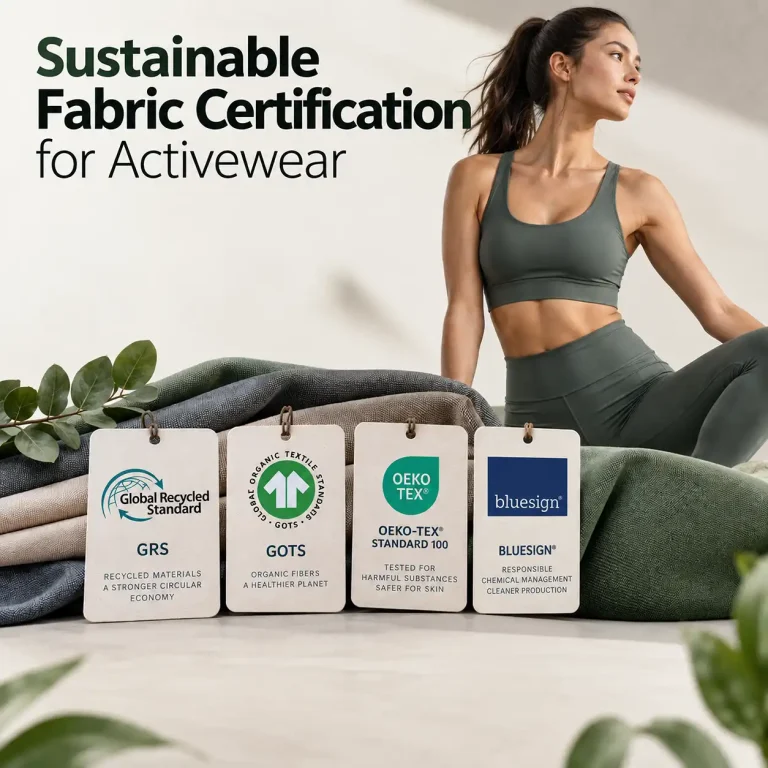
Start with the claim you want to verify. Different certifications prove different things. This is the quick map we use when discussing certified fabrics with buyers:
If You Need to Verify… | Look For |
Recycled polyester or nylon | |
Organic cotton or other organic fibers | GOTS / OCS |
Harmful substance testing | OEKO-TEX STANDARD 100 |
Chemical and processing controls | bluesign / bluepass |
GRS: Care About It When You Sell “Recycled”
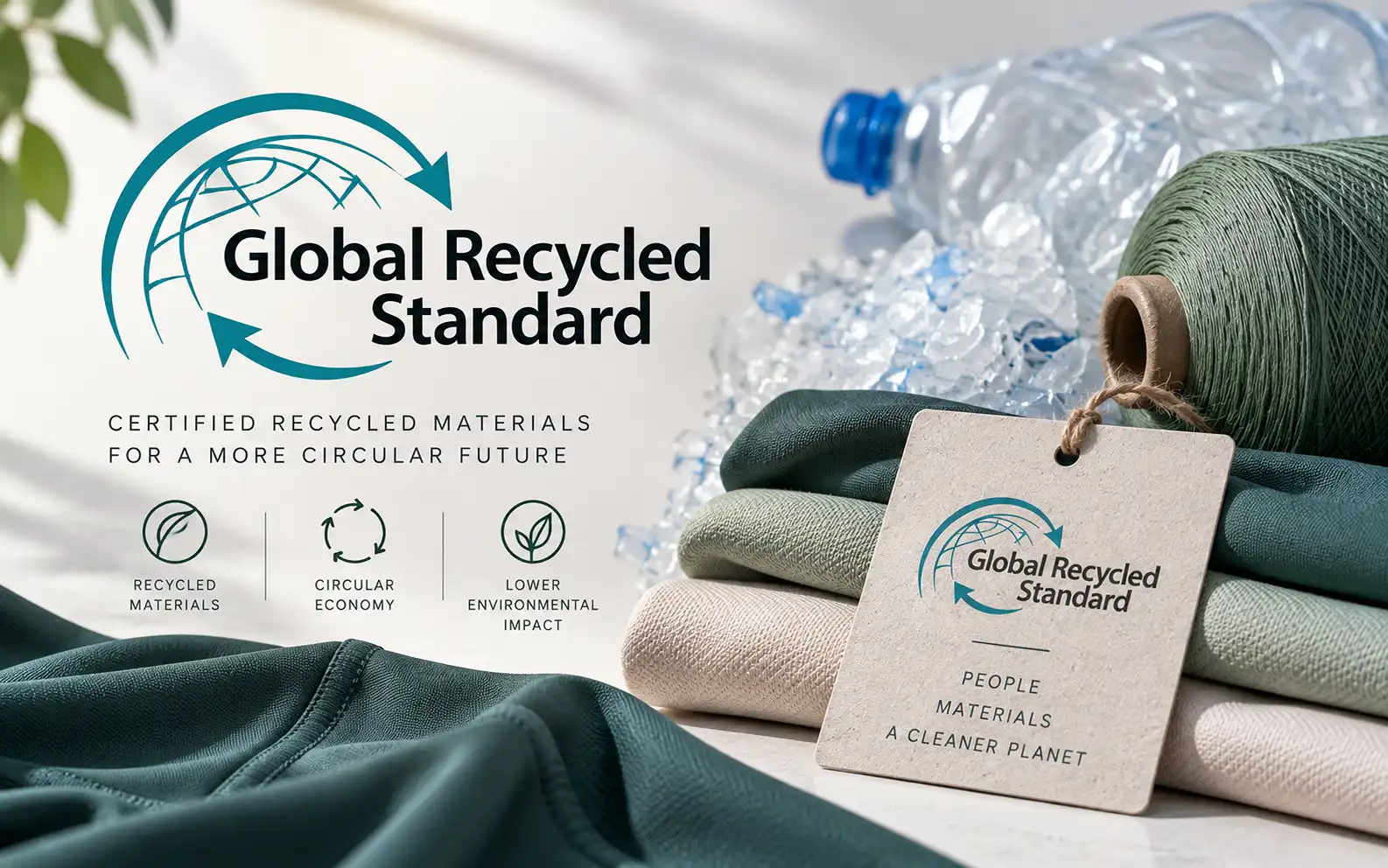
Selling recycled polyester leggings or recycled nylon sports bras? GRS is usually the first certification to check.
GRS verifies recycled content and tracks certified material through the supply chain. It also includes requirements for chemical use, environmental practices, and social conditions.
GRS can be used as a B2B certification tool for products with at least 20% recycled content. Consumer-facing GRS product claims require at least 50%.
If you work with a China sportswear manufacturer, confirm the exact recycled percentage and what transaction documentation can support your order.
RCS is a simpler option when the main goal is to verify recycled content and chain of custody without the additional social, environmental, and chemical requirements of GRS.
GOTS: Care About It When You Sell “Organic”
GOTS is mainly relevant when organic fibers are central to the product, such as organic cotton T-shirts, hoodies, or joggers.
Under GOTS, products labeled “Organic” must contain at least 95% certified organic fibers. The “Made with (x%) organic materials” grade requires at least 70%.
Many performance leggings rely heavily on nylon or polyester blended with elastane. In these cases, we first check whether a GOTS request actually matches the planned material. If the goal is only to verify organic content, OCS may be another option.
OEKO-TEX STANDARD 100: Care About It When Skin Contact Matters
Leggings, sports bras, and training tops can stay against the skin for hours. That makes harmful substance testing a practical concern.
OEKO-TEX STANDARD 100 tests textiles and their components for harmful substances. Depending on the certified article, this can include fabric, thread, zippers, prints, and other components. Many skin-contact activewear products fall under Product Class II.
But OEKO-TEX STANDARD 100 does not prove that a fabric is recycled or organic. A fabric can pass the testing requirements and still be made from 100% virgin polyester.
bluesign / bluepass: Care About the Manufacturing Process
For technical activewear, chemical and processing controls can matter as much as the fiber claim.
The bluesign system looks at chemical inputs, resource use, worker safety, and environmental impact during textile production.
In 2026, bluesign began transitioning its product designations to bluepass. What was previously known as a bluesign® APPROVED textile is moving to bluepass Article, while finished consumer products use bluepass Consumer Product.
When sourcing, we check the status of the actual material. We do not assume every fabric from a bluesign System Partner carries the same status.
Is Your Supplier’s Certificate Actually Valid for Your Fabric?
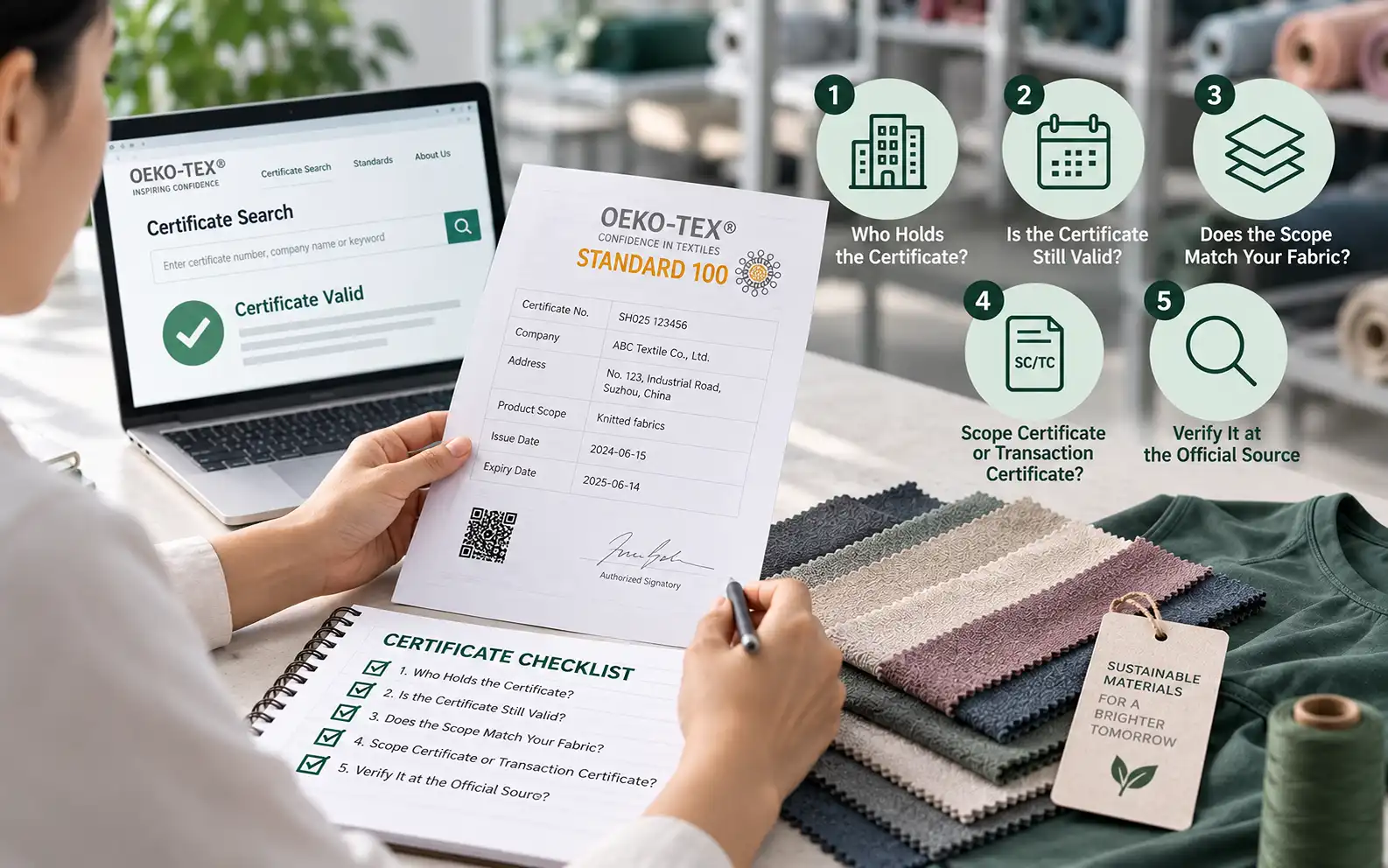
A certificate PDF is only a starting point. The real question is: does the certification actually apply to the fabric and order you are buying?
Before we book certified fabric for a client, we verify five things.
① Who Holds the Certificate?
Match the company name and address to the supplier involved in your order. The certificate may belong to a fabric mill, garment factory, or another company in the supply chain.
If dyeing or printing is subcontracted, confirm whether those facilities also matter to the certification claim.
② Is the Certificate Still Valid?
Check the issue and expiry dates. Make sure the certificate was valid for the relevant production or transaction period under that standard.
If it has expired, ask for the renewed certificate before relying on the claim.
③ Does the Scope Match Your Fabric?
A valid certificate can still be irrelevant to your order. Check the scope for three things:
- Material: Does it cover the material you are buying?
- Product: Does it include knitted fabric, garments, or the relevant product category?
- Process: Does it cover the processing involved, such as dyeing or printing?
Do not assume everything a certified supplier produces falls within its certification scope.
④ Scope Certificate or Transaction Certificate?
These documents answer different questions.
Scope Certificate | Transaction Certificate | |
What it proves | The organization is certified for defined products and activities | Specific certified goods moved through the supply chain |
What it covers | Certified entity, products and processes | Transaction or shipment details |
Why buyers check it | To verify supplier scope | To verify traceability of the certified goods |
A Scope Certificate does not prove that every roll you buy is certified.
For orders requiring transaction-level certification, confirm whether a Transaction Certificate (TC) is required, who will provide it, and when it can be issued. When you receive it, match the seller, buyer, product description, quantity, and transaction details with your order.
OEKO-TEX STANDARD 100 works differently. It does not use Transaction Certificates in the same way as GRS, RCS, GOTS, or OCS.
⑤ Verify It at the Official Source
Use the official database or verification tool for the relevant standard:
Certification | Where to Verify |
GOTS | GOTS Certified Suppliers database |
OEKO-TEX | OEKO-TEX Label Check |
GRS / RCS / OCS | Textile Exchange Find a Certified Company / Authenticate a Transaction |
bluesign / bluepass | Official bluesign partner or product information |
Certification Does Not Mean the Fabric Is Right for Activewear
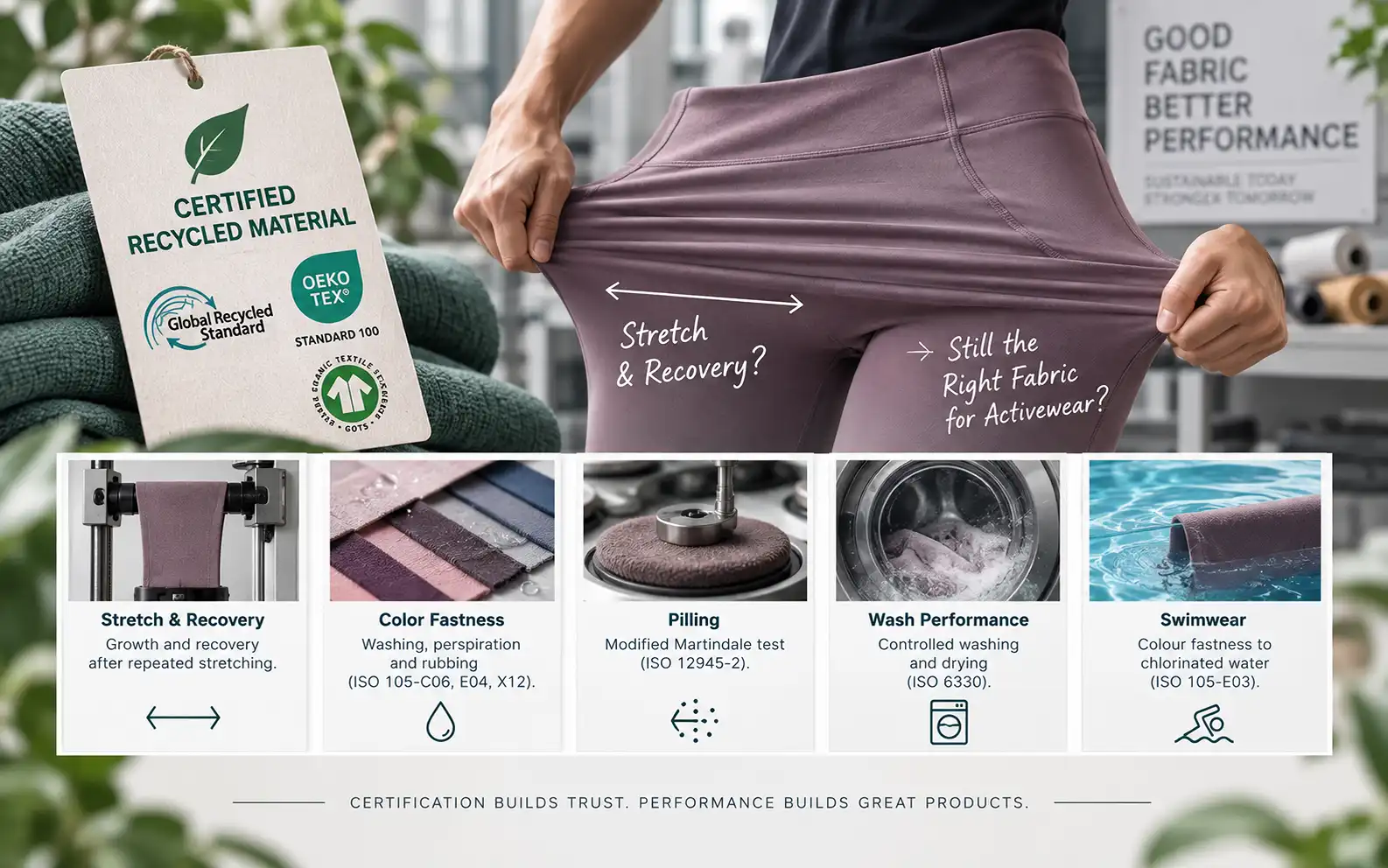
A certified fabric can still fail as an activewear fabric.
Certification may verify recycled content, harmful substances, or processing controls. It does not tell you whether the fabric will recover after stretching, hold color, resist pilling, or keep its shape after washing.
We have seen certified recycled nylon pass the paperwork check but recover poorly after repeated stretching. For compression leggings, that can mean baggy knees and a waistband that loses its hold.
If you are sourcing from a China leggings manufacturer, check fabric performance separately from certification. Before approving a fabric for bulk, confirm the performance the garment actually needs:
Property | What We Check |
Growth and recovery after repeated stretching | |
Washing, perspiration, and rubbing (ISO 105-C06, E04, X12) | |
Pilling | Modified Martindale test (ISO 12945-2) |
Wash performance | Controlled washing and drying (ISO 6330) |
Colour fastness to chlorinated water (ISO 105-E03) |
For swimwear, chlorine colorfastness is only one check. Stretch retention after pool exposure needs separate evaluation.
For activewear sourcing, treat certification and fabric performance as two separate checks. Certification supports the material claim. Testing tells you whether the fabric can handle the product. If you need help matching certification requirements with the right activewear fabric, send us your material requirements.