
Why Swimwear Fit Fails More Often Than Other Apparel
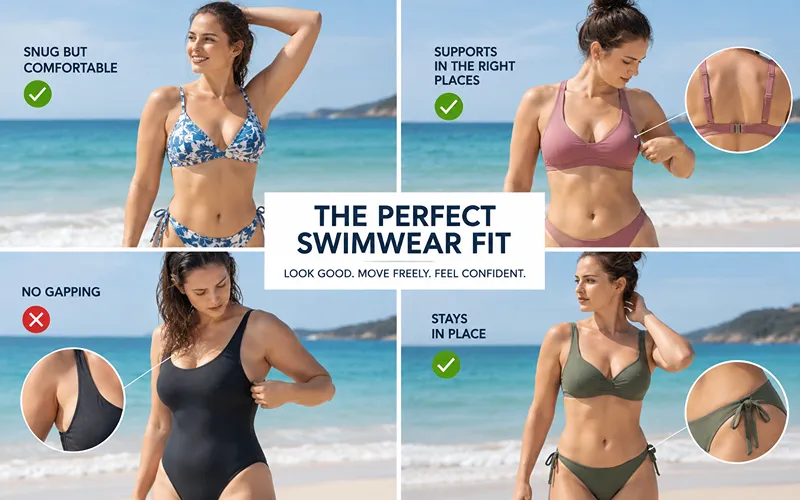
Swimwear has very little room to hide a fit problem. A small change around the cup, leg opening, or neckline is easy to feel once the suit is stretched on the body. From our own development and production work, four areas cause the most trouble.
Good stretch does not guarantee good recovery in swimwear fabric. We never treat “4-way stretch” as enough information for fit. If the fabric stays slightly longer after repeated stretching, a fitted bottom can start to sag or gape. We check recovery before the pattern and fit are locked.
What is inside the swimsuit can change the outside fit. A firmer lining can reduce stretch. A different molded cup can change the neckline and bust shape. We fit these parts together with the shell fabric instead of treating them as separate details.
A dry fitting does not tell the whole story. Water can change how the fabric sits and how much coverage it gives. For new fabrics, we check the suit wet as well as dry, especially around lighter colors and high-stretch areas.
Elastic application can change from one sewing line to another. This is why we do not judge leg openings by elastic width alone. We also check how much elastic is fed into a set seam length and compare the finished opening with the approved sample.
Where These Swimwear Manufacturers Differ
Manufacturer | Main Swimwear Focus | What Stands Out | Buyer Use Case |
LuckPanther | Custom fashion & performance swimwear | Lining, coverage & fabric performance control | Brands with specific fit and performance requirements |
ASG Fashions | Custom swimwear & small test runs | Very flexible order entry & fast sampling | New styles and smaller first orders |
Wavezone Swim | Swimwear, rashguards & sunwear | Swim + sun-protective product range | Mixed swim and sunwear collections |
Joy Sportwear | Custom printed swimwear | Pattern development & digital printing | Print-led collections with frequent style updates |
Coolsun | Custom & ready swimwear styles | Stock samples for early workmanship checks | Buyers screening suppliers before custom development |
Abely Fashion | Custom & plus-size swimwear | Seam construction & wider size development | Plus-size or construction-focused collections |
OUTPACE | Custom swimwear development | 3D review before physical sampling | Styles with complex visual details |
MLY Apparel | Custom swimwear | Rapid prototyping workflow | Buyers focused on shorter development cycles |
Mayi Swimwear | Private-label & custom swimwear | Client references, NDA support & clear order terms | Brands with original prints or unreleased designs |
YUCAI | OEM/ODM swimwear | Existing ODM styles with customization | Brands starting from factory-developed swimwear styles |
10 Swimwear Manufacturers China
No single factory fits every swimwear project. The list below focuses on where each manufacturer differs and what those differences may mean for your next order.
1. LuckPanther
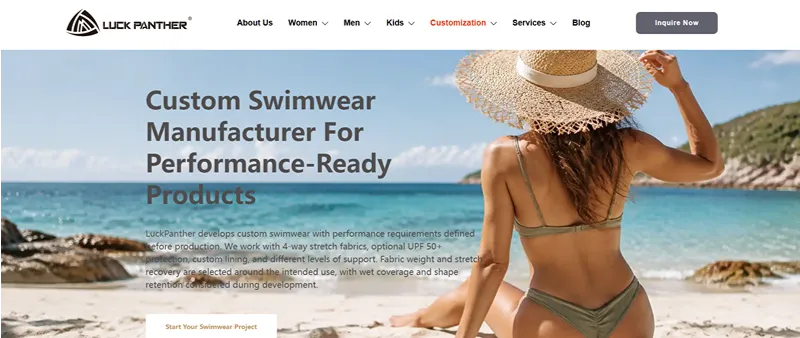
LuckPanther has a China sportswear manufacturer background. Two areas stand out in our swimwear work: lining control and fabric performance.
For light-colored swimsuits, we do not choose single or double lining from a fixed rule. We check the shell and lining together under stretch. More lining can improve coverage, but it can also make the suit feel firmer. Our advice is to approve the final fabric combination, not the shell fabric alone.
We also consider chlorine exposure when choosing fabric for pool-focused styles. A fabric that feels good during sampling still needs to hold its color, stretch, and recovery through repeat use.
Our take: LuckPanther is more relevant when coverage and fabric performance are key requirements.
2. ASG fashions
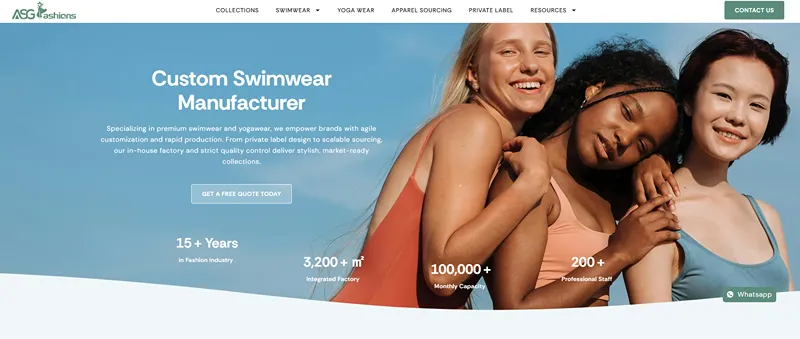
ASG Fashions may be useful when you want to test a swimwear style without jumping straight into a large order.
Some programs list an MOQ as low as 1 piece. That gives a new brand room to test fit and print before holding too much stock. But here is what we would confirm first: does that MOQ still apply when you add a custom fabric, molded cup, print, or trim?
A low garment MOQ does not always mean every custom component has the same minimum. This is an important question to settle before you approve a quote.
ASG also lists a 7–10 day sampling time. Faster sampling can help when cup position, coverage, or leg openings need another fit round.
Our take: ASG is more relevant when the first order is being used to validate a new style before scaling.
3. Wavezoneswim
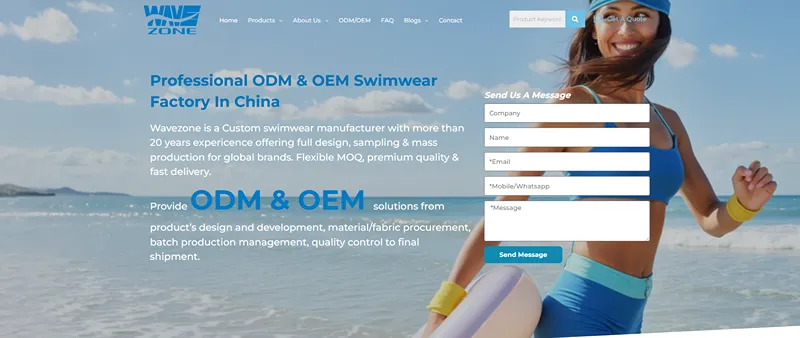
Wavezone is worth a look if your collection goes beyond bikinis and one-pieces. Its range also includes rashguards, sun shirts, and other active styles.
This can help buyers building a mixed swim-and-sun collection. You may not need a separate supplier for each product type. But we would check one thing first. Are these products handled by the same development team and production site? This can make it easier to keep fabrics, prints, and sizing consistent across the line.
Wavezone also shows UPF 50+ rashguard options. If UPF is part of your product claim, ask for the test report for the exact fabric in your order. Do not rely on the rating shown for a similar fabric.
4. joysportswear
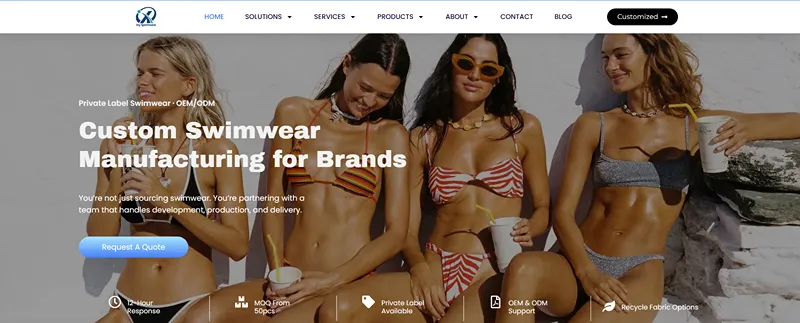
Joysportswear develops a paper pattern for each custom design. The value is not simply avoiding a standard block. For swimwear, the pattern needs to match the actual fabric, coverage, and support of that style.
Its in-house dye sublimation printing is another useful point.This can suit collections with all-over prints or seasonal color changes, especially when recycled fabrics are part of the brief. Joy also lists GRS and OEKO-TEX certifications. We would ask for the current certificates and check their scope if either is part of your sourcing requirement.
From our experience, this setup becomes more useful when a collection changes prints or silhouettes often. Keeping pattern development and printing close together can also reduce back-and-forth during sampling.
5. Coolsun
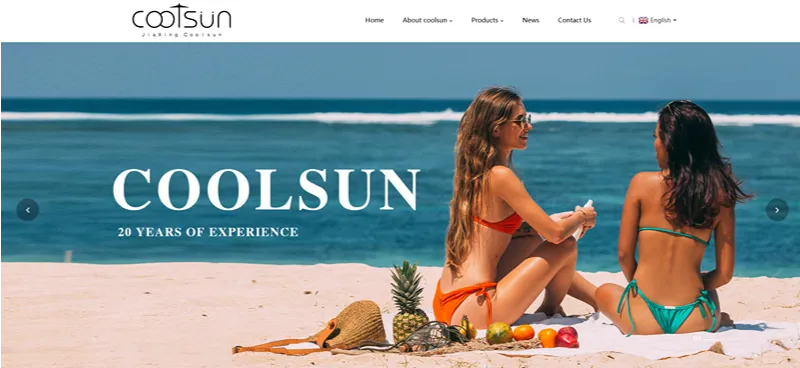
Coolsun offers stock samples across several swimwear styles. That gives buyers a useful first step before paying the custom sample development cost for a new design.
When we review a stock sample, we focus on details that should reflect the factory’s sewing control. Look at seam consistency, elastic application, edge finishing, and skipped stitches. These details tell you more than whether the sample happens to fit your model.
A stock sample can help you judge workmanship, but it should not be used to approve the fit of a custom swimsuit. Change the fabric, cup, straps, or coverage and the result can fit differently.
6. Abely Fashion
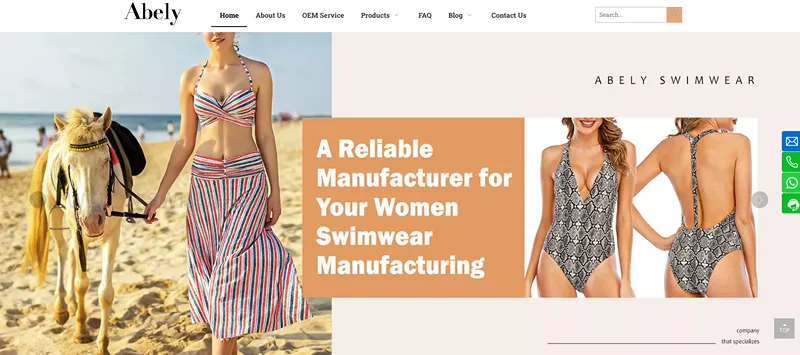
Abely Fashion talks in detail about seam construction, including 4-needle 6-thread stitching for performance swimwear. That caught our attention because seam choice is something buyers can actually check, not just a general “high quality” claim.
We would ask to see the actual seam on a sample. Then ask why that stitch was chosen for that area. A good answer should cover stretch, seam bulk, and how the seam behaves when the fabric is pulled. Don’t ask only what stitch a factory uses. Ask why it works for that seam.
Abely also offers plus-size swimwear. Plus-size swimwear needs proper size grading, not proportional enlargement of one base size. Bust support, strap position, leg openings, and coverage may need separate adjustments as sizes increase. We would ask how these points are checked across the size range.
7. OUTPACE
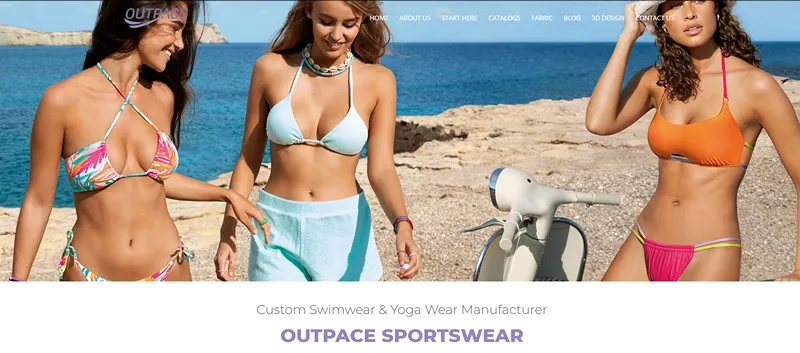
OUTPACE uses 3D models before moving a design into physical sampling. For us, the useful part is knowing what to approve in 3D and what still needs a real swimsuit.
We would use the 3D stage to check print scale, color blocking, panel lines, strap position, and hardware placement. These details are easier to change before the first fabric is cut.
But a 3D swimwear sample cannot replace a physical fit sample. It cannot fully show how stretch fabric, elastic, or support will behave on the body. Those points still need to be checked on the real garment.
OUTPACE also keeps fabric, print, pattern, and accessory libraries. We would confirm that any material selected during 3D development is actually available for the final order.
8. MLY apparel
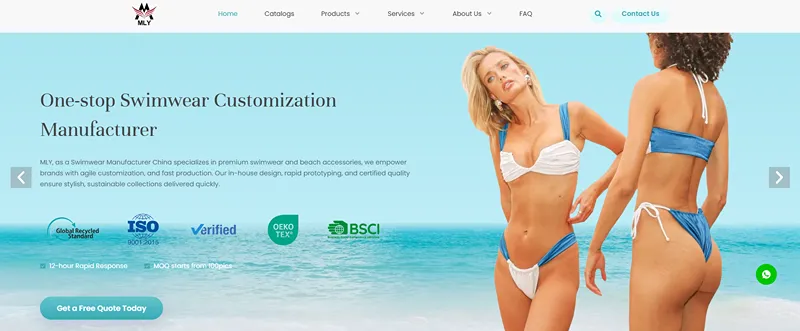
MLY advertises 1-hour rapid prototyping. We would clarify exactly what that hour includes before using it to plan a launch.
Does it mean a digital prototype, an initial pattern, or a finished garment ready for fitting? More important, when does the clock start? A fast first step means little if fabric confirmation, pattern changes, or sample sewing still takes several more days.
Prototype time and physical sample time are not the same thing. When we compare sampling schedules, we prefer to break the process into stages instead of relying on one headline number.
MLY also makes specific claims about wash durability and color retention. If these points matter to your order, ask for the color fastness test method and results for the actual fabric being quoted.
For us, MLY is interesting because its speed claims are specific enough to verify. Before building them into your production calendar, get the exact deliverable and timeline in writing.
9. Mayi Swimwear
Mayi lists clients such as Curvy Kate, Ivory Rose, New Look, and ASOS. We see these names as a reason to investigate, not proof of current production quality. Ask when the work was done and whether the relationship can be verified. A client logo is a screening signal, not proof of quality.
Mayi also says it works under an NDA for client designs, prints, and ideas. We would review it before sharing original artwork. Taking steps to keep business information secret is part of trade secret protection. Check what the NDA covers, who can access your files, and how long it lasts.
Its MOQ is also clear: 100 pieces per style and color, with a 50-piece option at a higher unit price. This makes a smaller test order easier to budget.
10. YUCAI

YUCAI’s ODM library raises one question we would settle early: how much of the swimsuit becomes yours after customization?
Take a bikini from an existing style library. You may change the fabric and print, then adjust the straps, cup shape, or bottom coverage. The finished piece can look very different, but the original pattern may still come from a shared ODM base.
YUCAI says selected ODM styles can be made exclusive. We would ask what that means for the actual swimsuit. Can another buyer use the same cup shape and strap layout? What about the same bottom pattern with a different print?
Customizing an ODM swimsuit does not automatically make its base design exclusive. If this matters to your brand, define which pattern pieces and design details are protected, where the exclusivity applies, and how long it lasts.