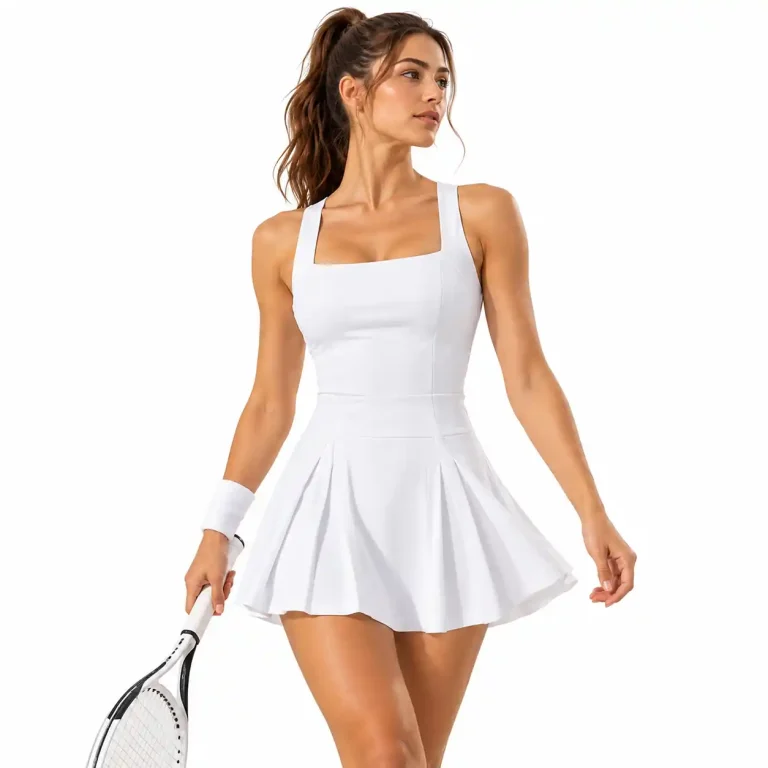
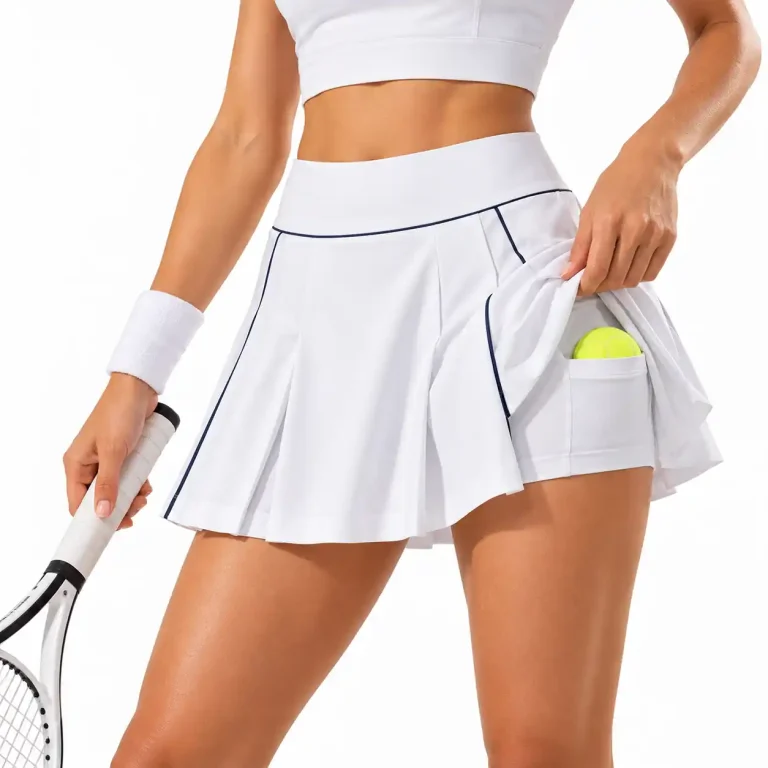
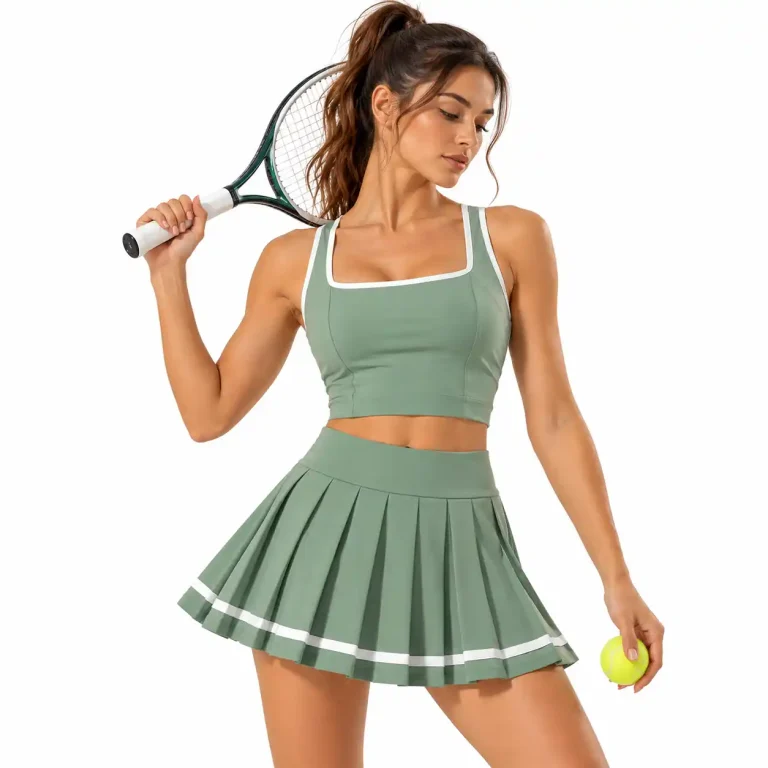
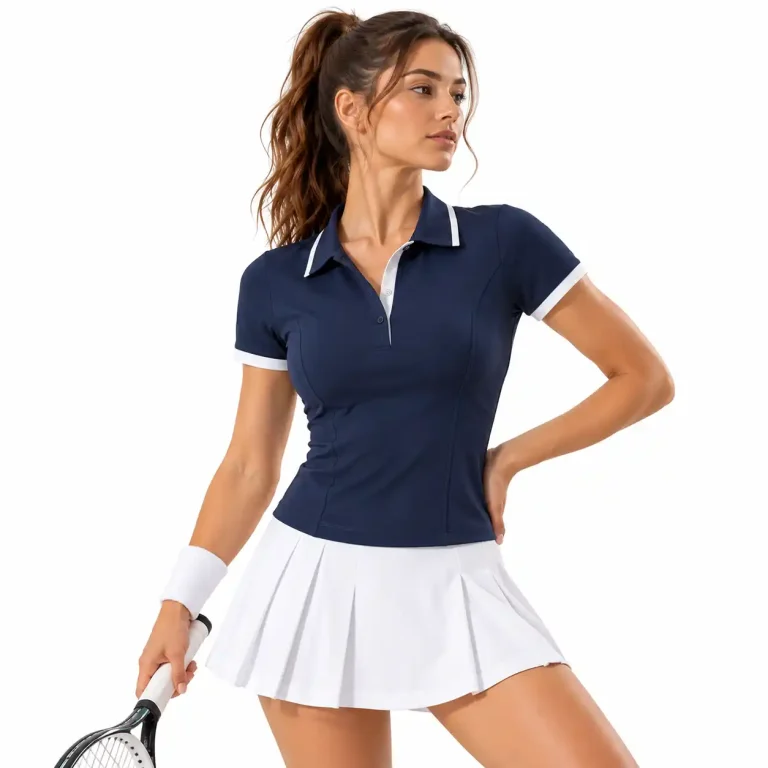
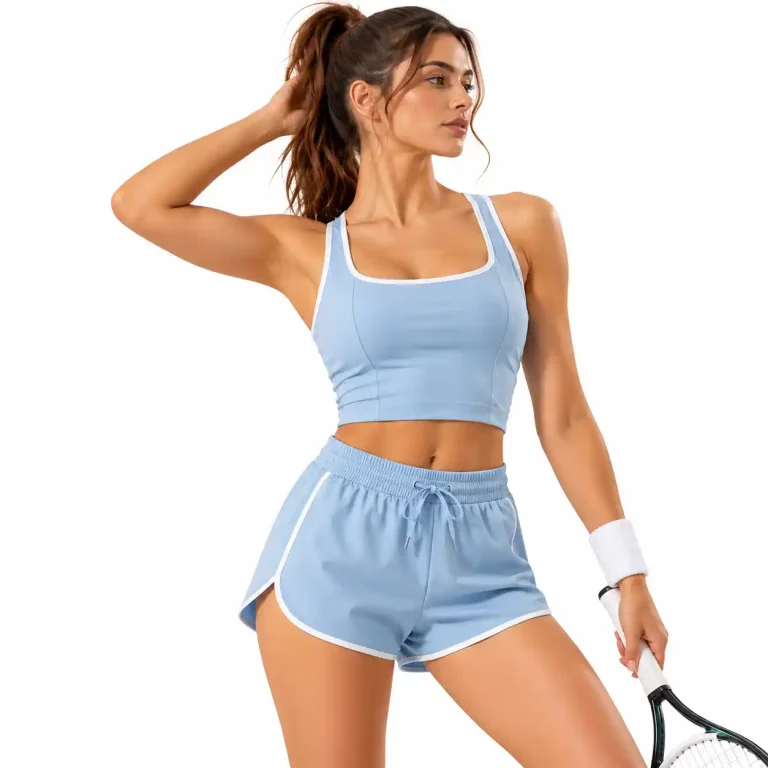
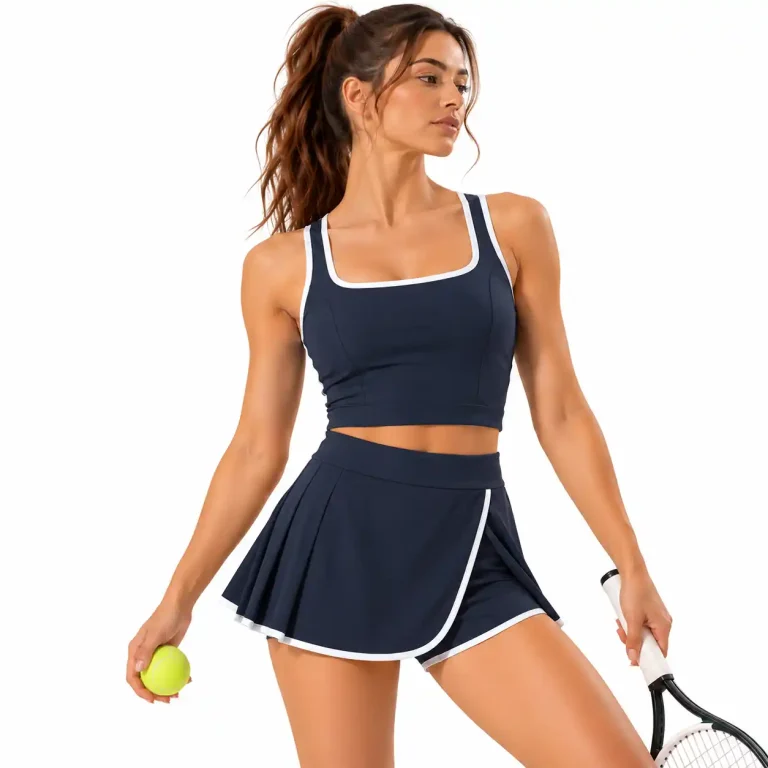
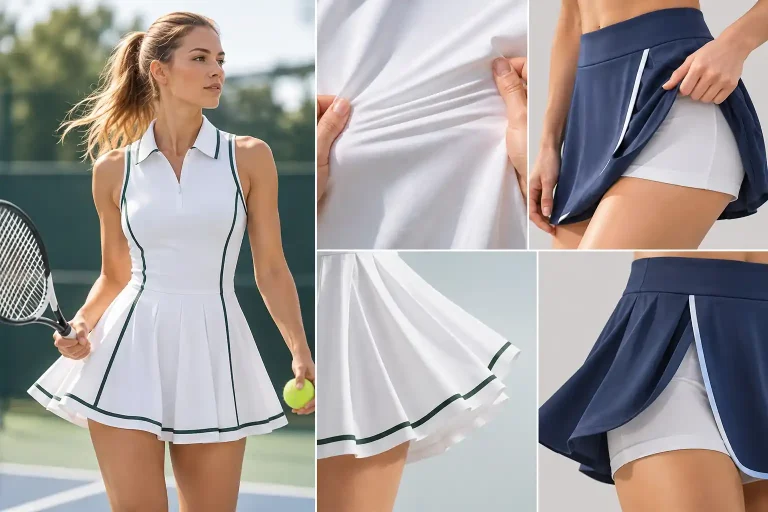
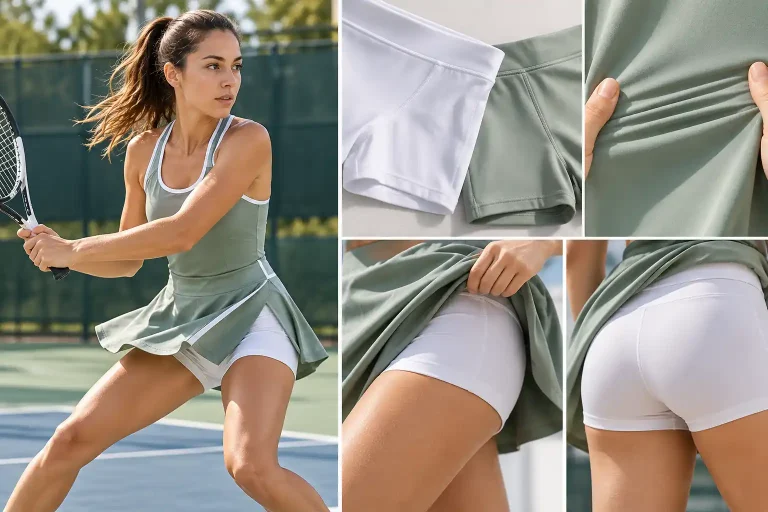
LuckPanther provides custom production for brands sourcing from tennis clothing manufacturers. We develop dresses with built-in bras or shorts. Skorts can include ball pockets, pleats, and different inner-short structures. Tops can be adjusted for better shoulder movement on court. This gives you more flexibility to build tennis styles around your own design instead of standard factory templates.
LuckPanther helps you carry the same brand identity across custom and private-label tennis clothing. Each detail can be adjusted to fit the look of your collection.
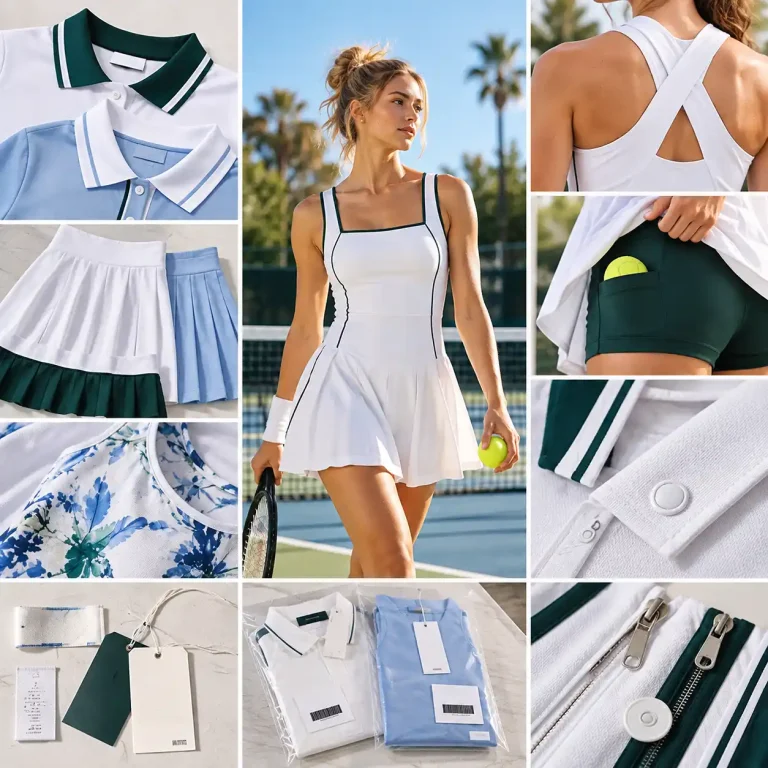
Color Placement: Add contrast colors to polo collars, plackets, skort waistbands, skirt hems, side panels, or binding. Use the same accent color across tops and bottoms to connect the collection.
Logo Placement: Place logos on the chest, center back, sleeve, skirt hem, or waistband. Use heat transfer or silicone logos on fitted tennis wear, or embroidery on polos and jackets.
Custom Prints: Add prints to the full garment or selected areas. Side panels, skirt sections, and back panels can carry prints without covering the whole style.
Labels & Hangtags: Add woven neck labels, printed size labels, care labels, hangtags, and barcode tags with your own brand information.
Trims: Match zipper pulls, buttons, binding, piping, and elastic details to your collection colors. Logo zipper pulls can also be added to jackets and zip-neck tops.
Packaging: Pack each style with branded polybags, size stickers, barcode labels, and the packing details required for your retail system.
Build Out Your Tennis Collection
Tennis Dresses
Tennis Skorts
Tennis Skirts
Tennis Polos
Tennis Shorts
Tennis Sets
How We Check Tennis Fit Before Approval
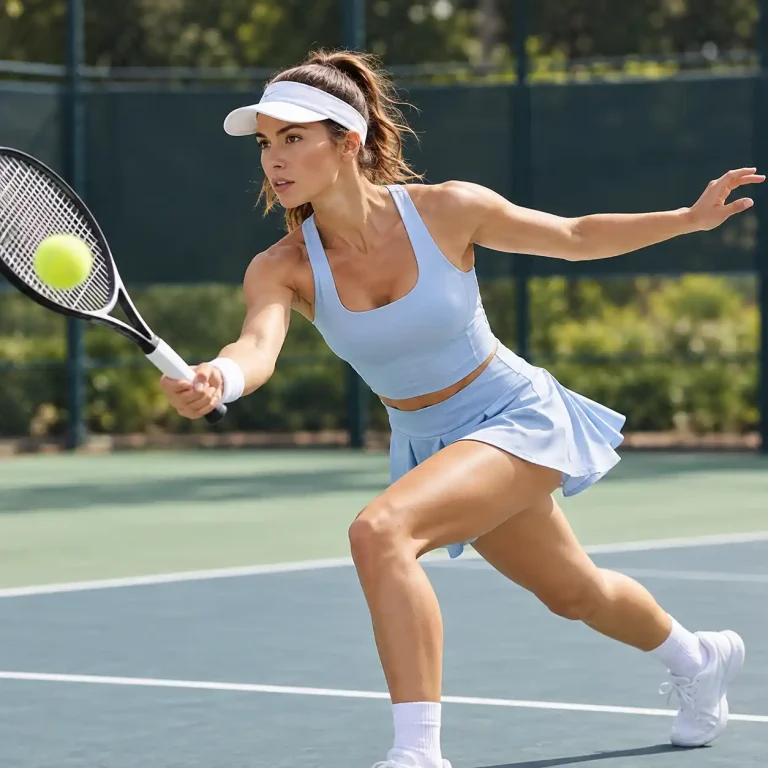
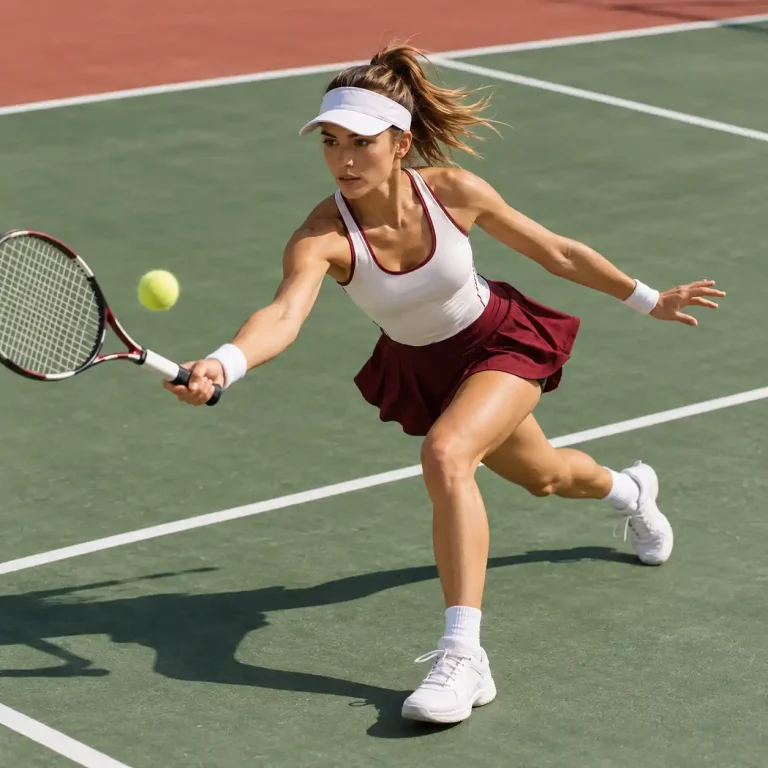
A tennis fit is not approved from standing measurements alone. We check dresses and skorts during serves, side steps, and lunges to find problems that may require a pattern change.
Tennis Dress Ride-Up
We check how far the hem lifts during a serve. If the whole dress pulls upward, we review the armhole, body length, and waist position instead of simply adding more length.
Skort Coverage
During side steps and lunges, we check how the skirt opens over the inner shorts. Skirt length and volume are adjusted together so the design keeps its intended shape and coverage.
Inner-Short Movement
Built-in shorts can roll at the leg opening or pull against the outer skirt. We check the inseam, thigh opening, and liner fit before approving the skort.
Pleated Skirt Movement
Pleats can spread too far during lateral movement or fail to fall back into shape. We review pleat depth, placement, and skirt volume when this happens.
Catch the Details Before They Reach Production
Pleats, liners, pockets, and fabric choices can change how a tennis style turns out. Get these details aligned before they become bulk production issues.
Different tennis clothing styles need different fabric properties. We select the fabric based on the structure and use of each product.
Tennis Dresses & Skorts
Nylon-spandex and polyester-spandex interlock work well for fitted tennis dresses and skorts. Dresses need good stretch and recovery. For skorts, we also look for clean drape. The outer skirt should fall smoothly over the inner shorts.
Tennis Polos & Tops
Performance pique gives tennis polos more structure at the collar and placket. Lightweight jersey creates a softer tennis top. Mesh can also be added to selected areas for ventilation.
Tennis Inner Shorts & Liners
Nylon-spandex or polyester-spandex jersey can be used for built-in shorts and liners. We prefer a lighter construction with good recovery. It should sit smoothly under the tennis skirt or dress. We also check opacity at the seat and thigh.
How Your Tennis Style Moves Into Production
When working with tennis clothing manufacturers, each style should pass clear approval points before bulk production starts.
01 — Design Review
We review your tech pack, sketch, or reference sample. For dresses and skorts, we confirm the liner, pocket, pleat, and support structure before sampling.
02 — Fabric Selection
Fabric is matched to the style. We confirm stretch, recovery, drape, and opacity where needed. White and light colors receive an extra opacity check.
03 — First Sample
The first sample turns the design into an actual garment. We check measurements, construction, pocket position, skirt length, and how the inner and outer layers sit together.
04 — Fit & Court Movement
The sample is checked during serves, side steps, and lunges. Any fit or movement issue is recorded before the next sample is approved.
05 — Final Approval
The approved sample becomes the production reference. Fabric, color, measurements, construction, logo placement, and trims are confirmed before bulk cutting.
06 — Bulk Production
Bulk garments are produced against the approved reference. Any change in fabric, construction, or confirmed details must be reviewed before it replaces the approved standard.
Check which production steps are handled inside the factory. Ask about pattern making, sampling, cutting, sewing, and QC. For tennis wear, request recent production photos or videos of dresses, skorts, polos, or similar styles.
No. A sketch, reference sample, product image, or partial tech pack is enough to start. Before sampling, confirm key measurements and construction details. Fabric, colors, branding, and size specifications should be documented before bulk production.
Start with a base size for your target market, then build the grading from it. Check measurements by product type. Tennis dresses need length control, while skorts require separate measurements for the skirt and inner shorts.
MOQ can apply by style, color, fabric, or custom component. One skort in four colors may have different requirements from four styles sharing one fabric. Custom fabric, printing, labels, and trims may also have separate minimums.