
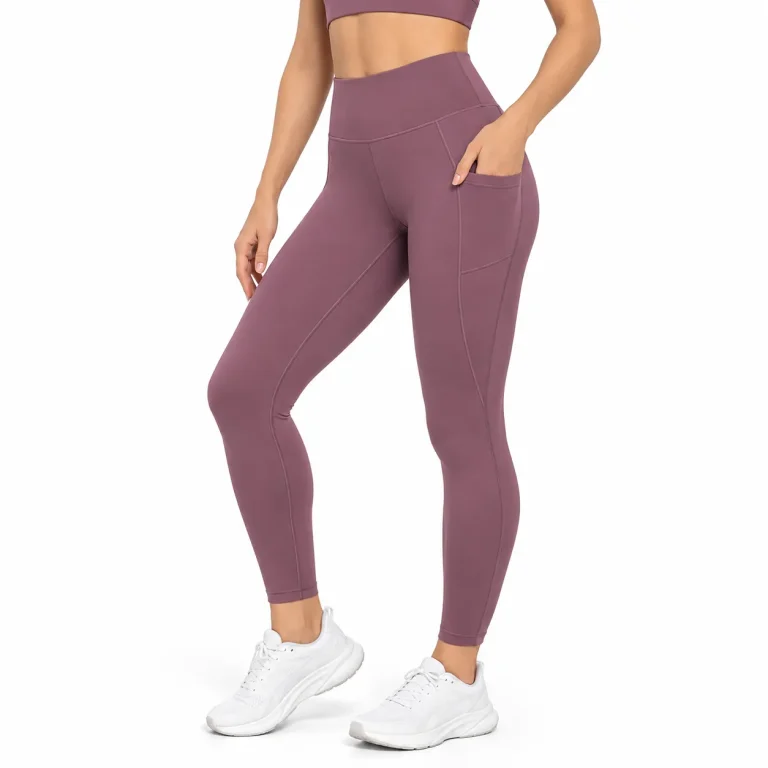
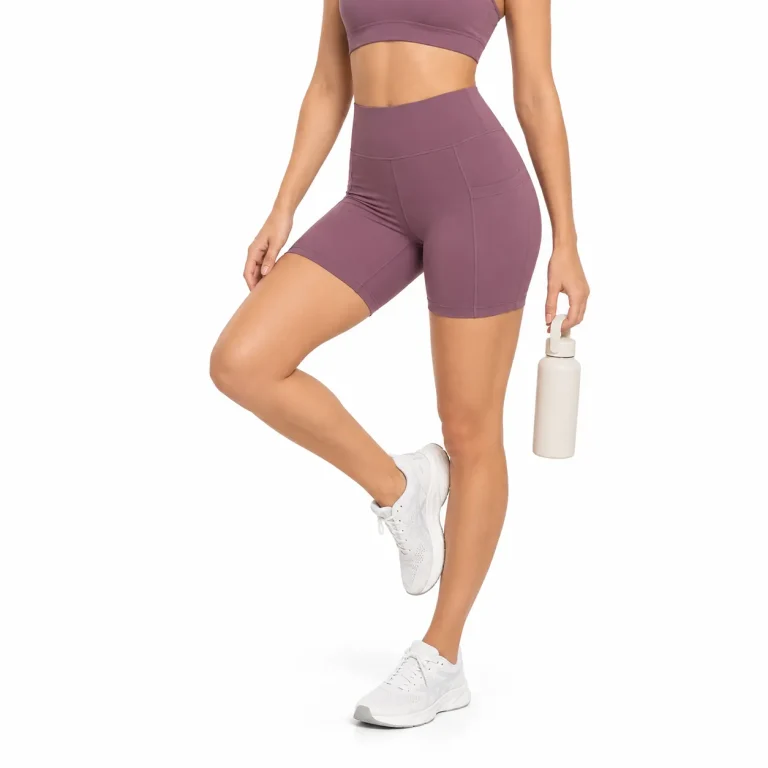
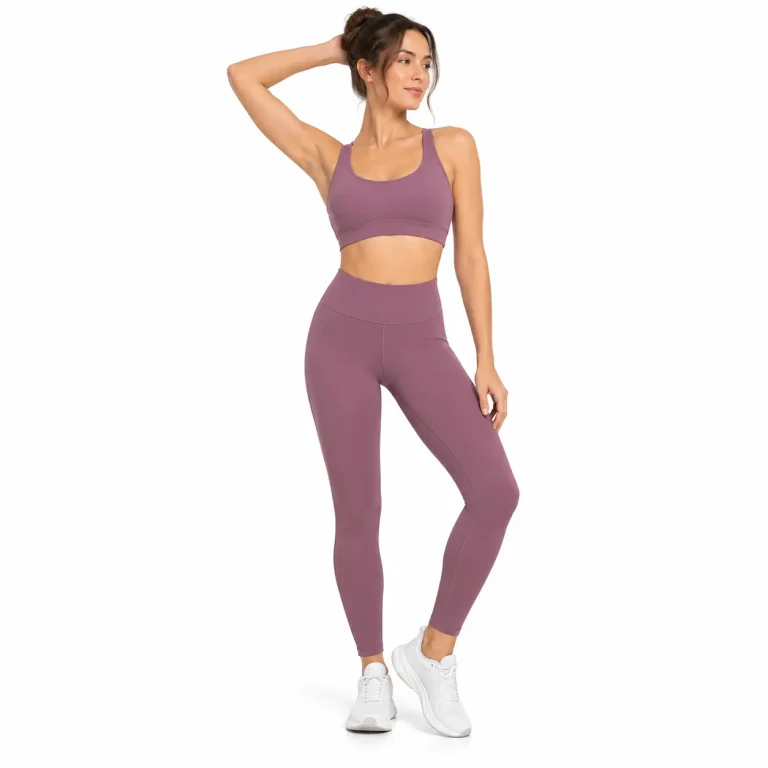
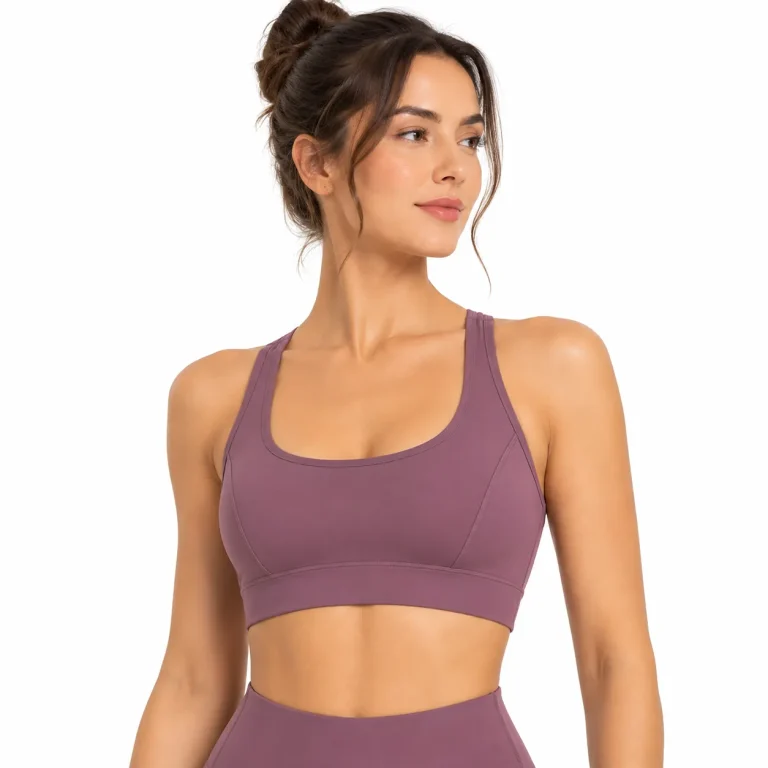
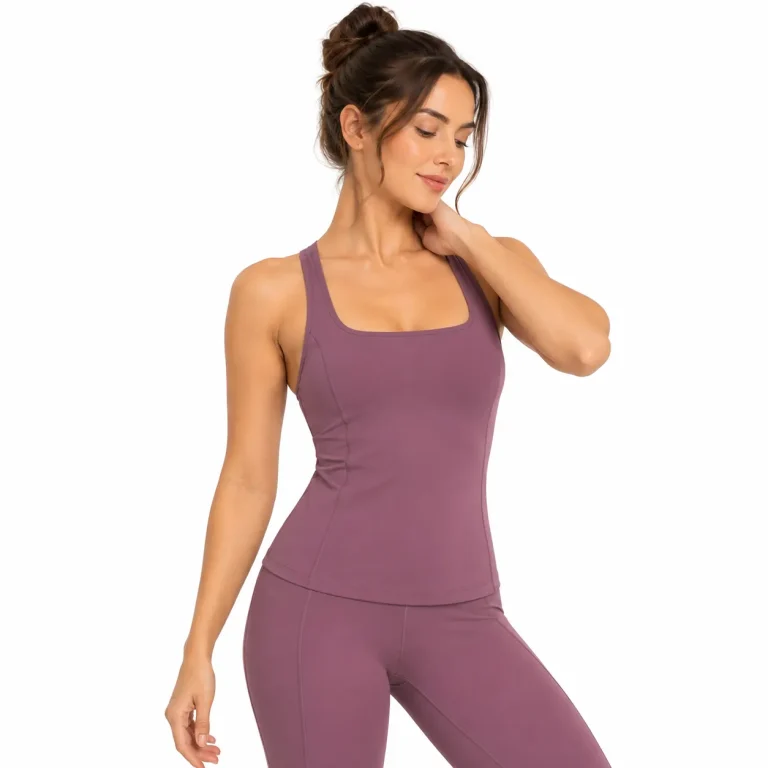
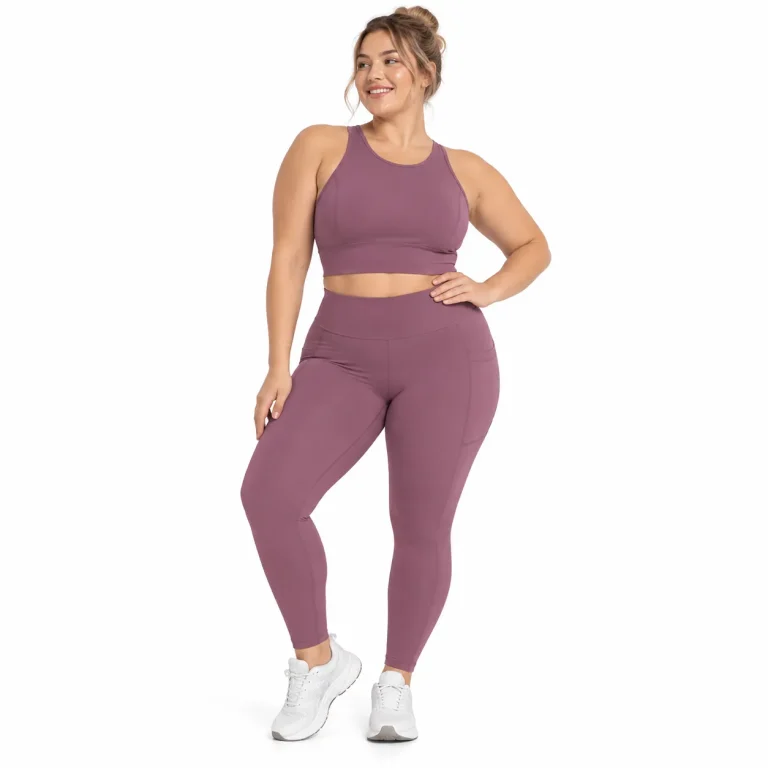
LuckPanther develops custom leggings, sports bras, shorts, and yoga sets with 17+ years of activewear manufacturing experience. Start from 100-200 pieces per style, approve your fit and fabric through sampling, and move into 30-45-day bulk production with AQL 2.5 final inspection.
We match the fabric to the support, coverage, and hand feel your yoga style needs. Here are four common options we use for custom yoga wear development.
For supportive leggings, we typically work with 220–260 GSM fabrics containing 20–30% spandex. The dense knit gives better coverage across the seat and knees, while strong recovery helps a high-rise waistband hold its shape after repeated stretching.
A good option for soft, second-skin leggings and matching yoga sets. We usually evaluate 210–250 GSM options and control the brushing level carefully. Too much surface brushing can increase pilling, while weak recovery can leave bagging at the knees and waistband.
Better suited to hot yoga and training-focused styles where sweat management matters more than a buttery-soft finish. We check wet appearance, drying performance, stretch opacity, and colorfastness, especially on black, navy, burgundy, and other deep shades.
Often used for fitted yoga bras, tops, shorts, and fashion-led sets. Rib structures spread apart under tension, so we check opacity at the hip and seat and recovery around waistbands and bra underbands rather than approving the fabric from a flat swatch alone.
Share your target launch date and order plan with LuckPanther. We’ll work backward from your deadline to identify when development, approval, production, and shipment need to be completed—before you commit to the launch date.
A sample can match the measurement chart and still pull, roll, or shift during movement. At LuckPanther, we review the fit on-body before locking the base-size pattern for grading.
For high-rise leggings, we check the waist opening, waistband height, and waist-to-hip shaping together. A typical high-rise waistband may be around 8–12 cm deep, but the final depth depends on the design. During fitting, we check for gaping when standing, rolling during forward bends, and downward movement during squats before adjusting the waistband pattern.
A 1–2 cm change in rise or crotch shaping can noticeably change how leggings sit on the body. We check the front for excess fabric or visible crotch lines, then check whether the back rise still covers the body during a deep squat. Front and back rise are corrected separately instead of adding the same amount to both.
For yoga bras, we check the underband, strap length, neckline, and armhole as one fit system. During sampling, strap or underband adjustments may be made in small increments such as 0.5–1 cm because even a small change can alter neckline position and pressure around the shoulder or ribcage. We correct the pattern rather than relying on shorter straps to compensate for a loose underband.
We approve the base size first before grading the full range. Waist, hip, rise, inseam, underband, and strap length do not increase at the same rate. For example, a 4 cm body-circumference grade does not mean adding 4 cm to every pattern edge. Each measurement point receives its own grade rule so the proportions of the original fit are maintained across sizes.
We were developing a high-rise legging and sports bra set, but the first legging sample rolled slightly at the waist during bending. LuckPanther adjusted the waistband and rise pattern for the second sample instead of just making the waist tighter. The revised fit was much closer to what we wanted, and we used that version as the reference for bulk production.
We originally selected a soft brushed fabric for our leggings because we liked the hand feel. During sampling, the LuckPanther team pointed out that the recovery was too weak for the compression level we wanted. We switched to a denser nylon-spandex option and tested another sample before confirming production. It added one sample round, but saved us from using the wrong fabric for the full order.